Custom Umbrella Sleeve Printing for Retail Brand Programs
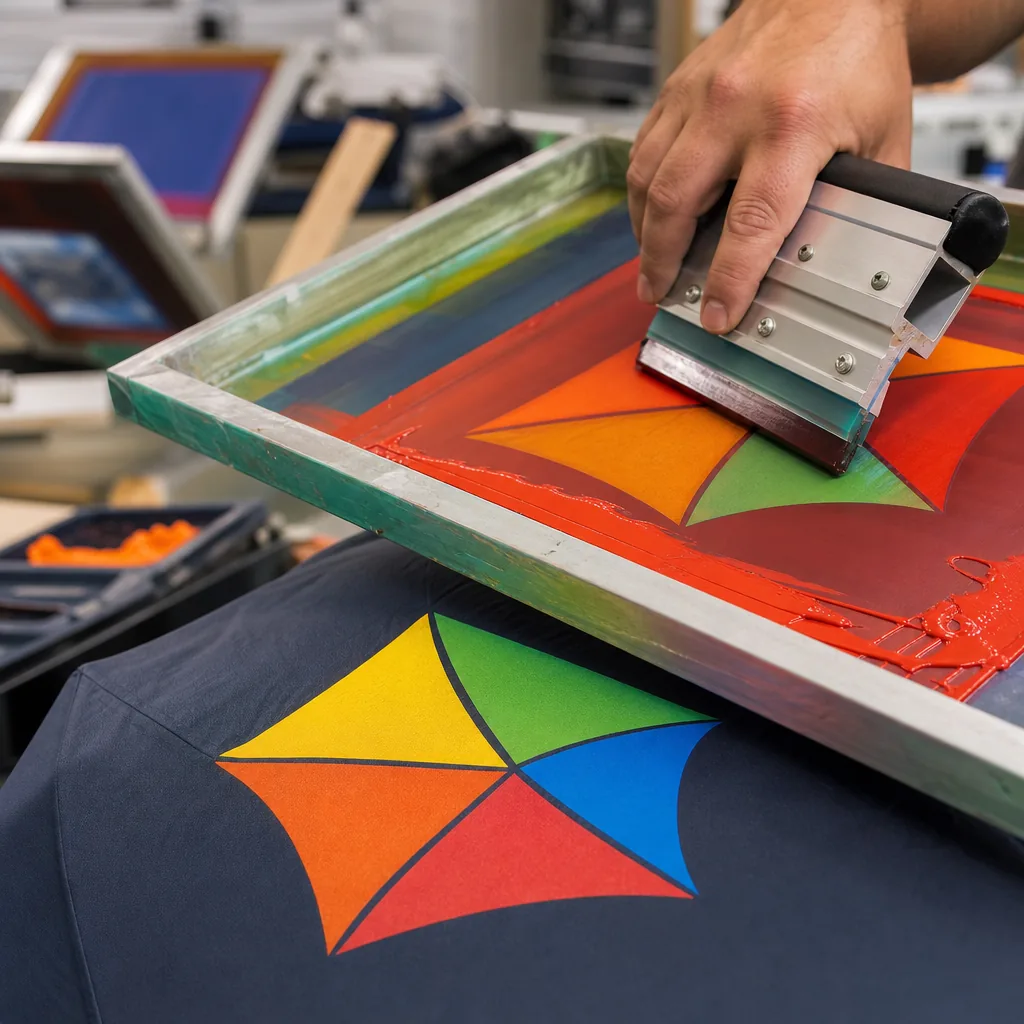
Retail umbrella programs often stumble at the sleeve stage, where brand graphics, barcode placement, film thickness, and pack-out method all affect sell-through, transit damage, and line efficiency. At the factory floor level, custom umbrella sleeve printing has to be planned against MOQ, color tolerance, drying time, and final inspection standards so the packaging works in stores and runs cleanly in production.
When a Printed Sleeve Adds Branding Value
custom umbrella sleeve printing makes sense when the sleeve remains in daily use after the sale. That is why 21" and 23" folding umbrellas are the best candidates: users put them back into a tote, desk drawer, locker, or car pocket after each use, so the branded sleeve keeps showing up long after a polybag, hangtag, or gift box is discarded. By contrast, 27" and 30" stick umbrellas are less dependent on a pouch, so sleeve branding usually delivers less value. For retail umbrella branding, hotel gift shops, campus bookstores, museum stores, and gift programs, the sleeve works as a permanent accessory rather than temporary packaging. It also helps private label umbrellas sold in seasonal color stories, where a wordmark, capsule name, or SKU color cue may read more cleanly on the pouch than across multiple canopy panels.
Branded umbrella sleeves are most useful when the canopy is a poor print surface for small or precise artwork. On 3-fold auto-open-close frames with 8K or 10K ribs, panel seams and the curved face of 190T or 210T pongee can distort fine type, care icons, QR codes, and small identification marks; the sleeve gives you a flatter, more controlled print area. That matters for school programs, where many students carry the same black or navy compact umbrella and need fast identification in a shared bin, and for hotel or resort programs that need to separate guest-use units from retail stock without adding extra canopy logos. Durability is the real decision point for umbrella pouch customization: side seams, opening edges, and strap stitches often fail before the frame, so sleeve construction should match the umbrella’s use cycle. In mid-volume runs, adding sleeve print usually costs less than upgrading retail packaging and often adds only 3 to 7 days if the pouch uses the same fabric lot as the canopy.
Sleeve Materials, Construction, and Brand Fit
Sleeve construction should be set by the umbrella frame and packed profile before artwork is approved. Straight umbrellas usually fit best in a tapered slip sleeve with one closed end and one side seam. Compact 2-fold and 3-fold frames need a wider pouch body and a larger mouth so users can repack the umbrella without stressing the seam or permanently deforming the opening. Common builds are open-top slip sleeves for lower-cost programs, flap-top sleeves with hook-and-loop closure for better retention, and drawstring pouches when presentation carries more weight than unit cost. A practical fit standard for branded umbrella sleeves is sleeve circumference about 8 to 15 mm larger than the rolled canopy diameter. That allowance matters most on 21 inch and 23 inch auto-open-close compacts, where the runner, shaft cluster, and handle bulk make the packed shape thicker than sample photos suggest. A sleeve that looks crisp at approval can still generate retail complaints if the mouth stretches out after repeated use.
Fabric matching affects cost, print quality, and perceived value, so it should be specified with the canopy, not after. For custom umbrella sleeve printing, the safest choice is to stay in the same fabric family as the umbrella: 190T pongee for promotional programs, 210T pongee for better opacity and cleaner print definition, and polyester twill for a more premium hand feel. Shade control is also more reliable when sleeve and canopy come from the same dye lot, especially for navy, forest green, and saturated red under store lighting. Coating finish needs the same discipline: a Teflon-finished canopy or matte UV canopy can look mismatched beside an uncoated sleeve even if both target the same Pantone. Premium umbrellas also justify upgraded sleeve specifications. If the frame uses fiberglass ribs, a double-canopy vented build, or a UPF 50+ canopy, align the sleeve with 210T pongee, cleaner edge binding, bar-tacked opening points, and sewn-in woven labels. On 27 inch and 30 inch styles with thicker ferrule caps, fiberglass stretchers, or EVA or POE trim, confirm the final packed diameter after pressing before bulk cutting.
Print Area, Artwork Constraints, and Readability
For custom umbrella sleeve printing, the usable area is set by the sewn sleeve, not the flat dieline. On most 21 to 23 inch folding umbrella sleeves, the reliable logo zone is typically 18 to 22 cm long and 3.5 to 5 cm wide on slim polyester, 190T pongee, or 210T pongee. Actual width changes with construction: a single-fold seam usually preserves more face width than a bound seam, while taper at the tip and bulk at the opening reduce readable space at both ends. For 27 to 30 inch straight umbrellas, sleeve length increases, but the safe print width still narrows quickly near the opening, tip, and any hook-and-loop closure. For retail consistency, place primary branding in the center third of the sleeve and hold 8 to 10 mm clearance from side seams, drawcord channels, tabs, and hem turns. That safe zone is more useful than the nominal tech-pack width because stitch take-up, taper, and fabric torque change how artwork reads after sewing, packing, and store handling.
Orientation should follow how the product is merchandised. Vertical artwork running from opening to tip is usually the safest choice on slim folding sleeves because it uses the longest uninterrupted panel and minimizes visual wrap. Horizontal logos can work on wider straight-umbrella sleeves, but on narrow tubes they often lose balance once stitched. Simplified artwork also prints more reliably on curved, stitched surfaces: hairlines below 0.3 mm, micro text, QR codes, and soft gradients tend to break up or lose contrast, especially with screen print on dark 190T/210T pongee or transfer print near seam distortion. One-side printing is the lower-risk option for branded umbrella sleeves because centering, registration, and AQL 2.5 inspection are easier. If a retail program requires two-side printing, keep the front for the master logo and limit the back to a short URL, collection name, or care mark. For logo scaling, set the mark at about 55 to 65 percent of usable sleeve width; on a 4 cm safe width, that means roughly 22 to 26 mm logo height for consistent retail umbrella branding across umbrella pouch customization, hangtags, and private label umbrellas.
Cost Drivers, MOQ, and Lead Time Planning
custom umbrella sleeve printing affects unit cost in three places: material, sewing, and print setup. The sleeve is effectively a second SKU, so buyers pay for extra fabric before decoration starts. A basic straight pouch in 190T pongee usually adds about 0.18 to 0.35 meters per unit, with usage tied to umbrella size: a 21-inch 3-fold consumes less than a 23-inch auto-open or 27-inch golf umbrella. Upgrading the sleeve to 210T pongee, POE, EVA, or PVC raises material cost again. Sewing is the next driver. The lowest-cost build is a side-seam sleeve with an open top; adding a wrist strap, hook-and-loop closure, piping, woven label, or reinforced tip pocket increases labor because the pouch runs slower than standard canopy panel operations. Setup is the third cost center. Spot-color artwork requires separate screens, small runs may shift to transfer film, and full-bleed designs need sublimation layout plus color matching to the canopy. For costing, treat the sleeve as a finished accessory with its own BOM, labor content, and packing steps, not as a minor print add-on.
MOQ usually rises when branded umbrella sleeves are added because the factory must manage a second material and sewing flow. A standard umbrella-only program may start around 300 to 500 pieces for common 21-inch or 23-inch folding models, but umbrella pouch customization is typically more efficient at 500 to 1,000 pieces per colorway, especially when sleeve and canopy fabric are sourced together to reduce shade variation. If the sleeve uses a different substrate from the umbrella—such as an EVA pouch on a pongee canopy or a heavier 210T sleeve for private label umbrellas—minimums can move higher because mills and trim suppliers are less flexible on small lots. Sampling also slows down. A stock umbrella sample may be ready in 3 to 5 days, while a sleeve program often needs 7 to 12 days for pattern approval, print strike-off, and folded-fit testing. After sample approval, bulk umbrella-only orders often run 25 to 35 days; adding sleeves commonly adds 5 to 12 days, pushing DDP retail umbrella branding programs into the 35- to 45-day range. For AQL 2.5 inspection, check sleeve fit, print alignment, and seam strength as separate checkpoints.
Inspection Standards and Shipping Terms
For custom umbrella sleeve printing, use AQL 2.5 with a defect checklist built around what fails at retail: seam quality, print position, color consistency, and carton presentation. Inspect stitch density, skipped stitches, thread tension, and edge twist after the umbrella is inserted and removed 3 to 5 times. On 190T or 210T pongee, the sleeve should stay straight without puckering; on PVC, EVA, or POE, watch for needle cut-through and stress whitening at the seam. Check print position after final pressing and packing, not only before folding, because narrow sleeves can shift during heat-set packing. A workable standard is ±3 mm for a small pouch logo and no more than ±5 mm for longer branded umbrella sleeves. If the program covers umbrella pouch customization for multiple sizes, test fit on a 21-inch compact, 23-inch straight, and 27-inch golf umbrella so the sleeve is secure without looking strained or loose.
Color should be approved against a signed master sample and checked lot by lot under D65 lighting, since sleeve material can absorb ink differently than the canopy. For screen print, heat transfer, or sublimation, set either a defined Delta E limit or a visual pass standard, then verify incoming fabric, in-line output, and final packed goods. For retail umbrella branding and private label umbrellas sold as sets, compare the sleeve print to the canopy print side by side; the buyer is approving one package, not separate parts. Carton inspection under AQL 2.5 should confirm inner and master carton counts, gross weight, shipping marks, barcode readability, care-label attachment, drawcord length, drop resistance, moisture protection, and whether sleeves are packed flat, rolled, or pre-fitted. On freight terms, FOB Ningbo or Shanghai can make the unit quote look lower, but the buyer still pays ocean freight, destination charges, customs clearance, duty, and final delivery. DDP gives a cleaner total-program comparison across suppliers, especially when evaluating custom umbrella sleeve printing, but only if each supplier also breaks out production lead time, export booking, and transit; a 35-day factory schedule does not protect the launch date if carton failures add 7 to 10 days of rework.
Frequently Asked Questions
Can every umbrella style include a printed sleeve?
No. Straight umbrellas often ship without sleeves, while folding umbrellas are the most common fit for sleeve customization. The sleeve pattern also has to match the folded dimensions of the final frame.
Does sleeve printing slow production significantly?
It can add time because the sleeve is a separate cut-and-sew component. Buyers should usually allow extra sampling time and a longer bulk schedule than a standard umbrella without a branded sleeve.
What artwork specs should we send for custom umbrella sleeve printing?
Most factories will ask for AI or PDF vector files with fonts outlined, CMYK colors, and a dieline-confirmed layout. If the sleeve includes barcode, hang hole, or size callouts, those positions should be locked before sampling to avoid rework.
Can umbrella sleeves be matched to our retail barcode and display requirements?
Yes, sleeves can be set up with UPC/EAN barcodes, SKU codes, country-of-origin text, and retailer-required warning copy. Buyers should confirm barcode size, scan orientation, and hang display direction during pre-production approval.
How do MOQ and lead time usually change when adding a printed umbrella sleeve?
A custom printed sleeve often adds a packaging MOQ, commonly around 1,000-3,000 pieces depending on material and print method. Lead time typically increases by about 7-15 days after artwork approval, especially if a physical packaging sample is required before mass production.
Looking to Launch Your Custom Umbrella Line?
ZheBrella is a Zhejiang-based OEM/ODM umbrella manufacturer with 17 years of export experience. Free design, low MOQ from 100 pieces, windproof construction, full-color print.
Get Free Quote Now »People Also Search For
Related Articles
Repeat Pattern Umbrella Printing for Retail Brand Programs
Plan repeat logos, monograms, and brand motifs across umbrella panels with print method choices, fabric specs, MOQ, samp...
Read More »
How to Specify Branded Umbrellas for Retail and Corporate Programs
Build a practical spec for branded umbrellas that protects logo placement, color control, packaging, and landed cost acr...
Read More »Retail Umbrella Header Cards That Improve Shelf Branding
Design retail umbrella header cards that carry brand identity, product claims, barcodes, and planogram needs without slo...
Read More »