Repeat Pattern Umbrella Printing for Retail Brand Programs
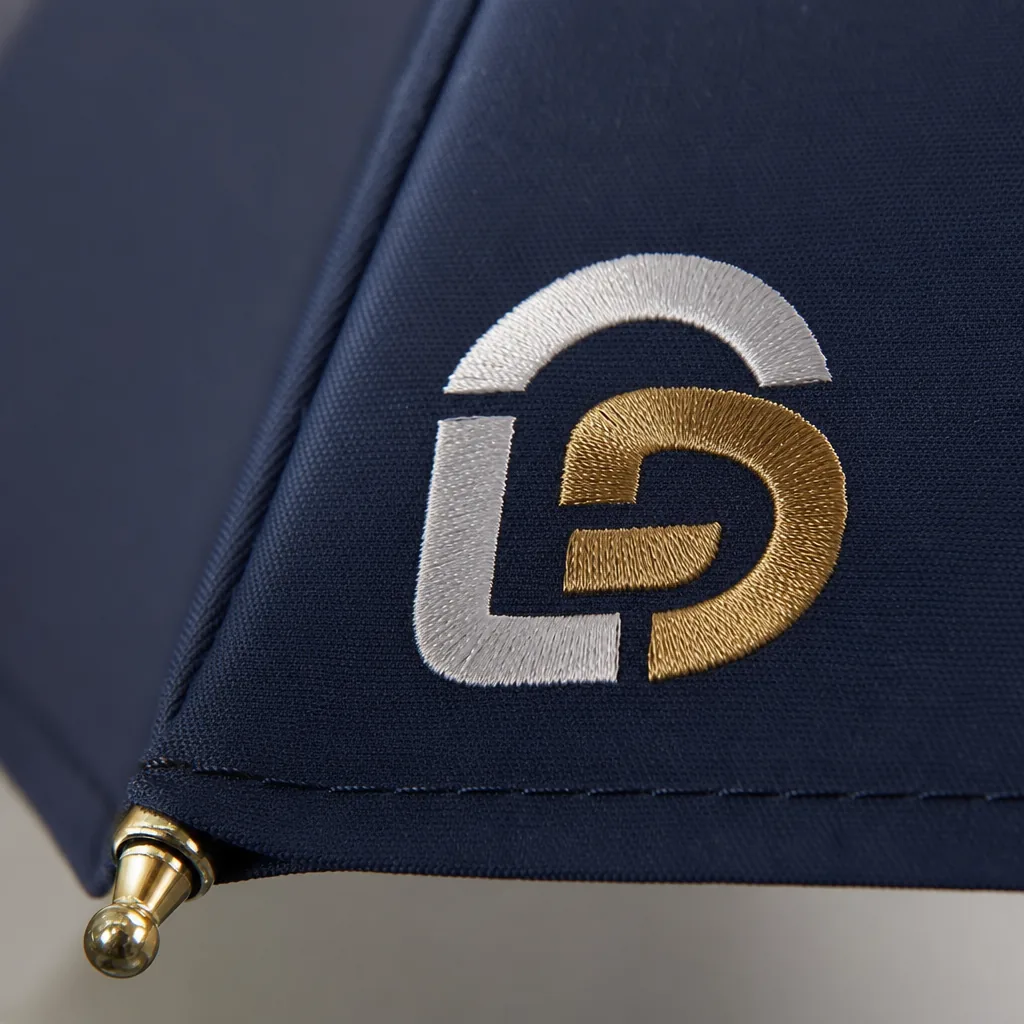
Retail umbrella programs can fall apart when a neat artwork file meets eight cut panels, fabric stretch, seam allowances, and color drift across a bulk run. On our Songxia production floor, repeat pattern umbrella printing starts with checking motif scale, panel layout, fabric coating, and print process before sampling, so logos or monograms line up cleanly and survive real QC checks. The goal is not just a good first sample, but repeatable results at carton quantity.
Why Repeat Patterns Work for Retail and Promo Umbrellas
Repeat pattern umbrella printing works because an umbrella is not viewed like a flat poster; it is seen moving, opening, closing, and rotating above shoulder height. A single chest-sized logo on one panel can look cheap in retail, especially on 23" and 27" models, while branded umbrella patterns make the product feel designed rather than decorated. We see this most often in hotel branding, museum shops, college bookstores, golf events, and fashion capsule collections. Monograms, mascot icons, licensed motifs, small geometric marks, and tone-on-tone logos can cover all panels without making the canopy look like a giveaway item. For private label umbrellas, this is the difference between a promotional accessory and a sellable SKU with a hangtag, barcode, care label, and retail-ready sleeve.
Pattern scale must be adjusted to the frame, not just copied from a fabric swatch. On a standard 8K umbrella, each panel is wide enough that a 25–45 mm repeat logo can breathe, but on a 16K umbrella the same artwork gets chopped into narrower triangular panels and may look busier after sewing. For umbrella monogram printing, I usually prefer a smaller repeat on 16K frames and a slightly larger repeat on 8K or 10K frames, especially with 190T or 210T pongee where print edges stay clean. If the design includes mascots or licensed characters, the artwork should be nested so faces and key shapes do not land directly on seam allowance, rib tips, or the top notch area. That planning matters more than most buyers expect.
Viewing distance decides whether a logo should be readable or simply recognizable. At 2–3 feet, a hotel crest or fashion monogram can be small and repeated, because the customer sees it while holding the handle or browsing a retail rack. At 10–20 feet in rain, only contrast, spacing, and the larger rhythm of the repeat pattern umbrella printing are visible. For retail umbrella branding, we often prepare one print layout for close-range merchandising and another for outdoor visibility, even when the brand assets are identical. A dark navy canopy with a low-contrast black monogram may look premium indoors but disappear on a rainy street; a white mascot repeat on red 210T pongee reads much faster. Our standard practice at ZheBrella is to check printed strike-offs on actual cut panels before bulk sewing, because a flat digital mockup never shows seam breaks, panel curvature, or how the repeat aligns around the crown.
Choosing Fabric and Print Method for Pattern Clarity
For pattern clarity, 210T pongee usually gives a cleaner result than 190T because the yarn count is tighter and the surface is smoother after calendering. On small repeats, thin pinstripes, micro florals, or umbrella monogram printing, that tighter weave helps hold the edge of the artwork instead of letting ink feather into the yarn gaps. 190T pongee is still a practical fabric for promotional and entry retail programs, especially when the artwork uses medium-scale motifs, bold logos, or darker backgrounds where slight dot gain is not obvious. It also has a softer hand feel and folds a little easier on compact 21" and 23" frames. For premium private label umbrellas, I push buyers toward 210T when they care about registration, rich color, and shelf appearance. The cost increase is usually modest compared with the cost of rejected canopies caused by fuzzy repeats or inconsistent panel-to-panel color.
Digital printing is the better choice for repeat pattern umbrella printing when the design has gradients, photographic elements, watercolor effects, or more than four to six colors. Sublimation on white 190T or 210T polyester pongee gives strong color penetration and keeps the hand feel light because there is no heavy ink layer sitting on top. It is also more forgiving for branded umbrella patterns where each panel needs a continuous-looking repeat after sewing, because artwork can be nested and adjusted digitally before cutting. The weak point is color control: Pantone matching is achievable within tolerance, but neon orange, deep navy, and certain corporate reds may shift after heat transfer. Our standard practice at ZheBrella is to run a strike-off on the actual production fabric, then check it under D65 light before bulk cutting. For retail umbrella branding, that sample approval step matters more than the printing machine brand.
Screen printing is still the most economical and stable method for limited-color, high-volume orders, especially one- to three-color repeats on 23", 27", or 30" stick umbrellas. If a retailer needs 5,000 to 50,000 pieces with a simple geometric repeat, logo scatter, or two-color monogram, screen printing gives stronger spot-color control and lower unit cost once the screens are made. It also performs well on darker pongee when using opaque inks, though the hand feel becomes slightly heavier if the ink coverage is large. The production risk is registration across eight panels: on 8K and 10K umbrellas, every panel must be cut in the same direction and sewn consistently, or the repeat will jump at the seam. For repeat pattern umbrella printing, buyers should send vector artwork with repeat dimensions, Pantone codes, and desired canopy layout, not just a flat mockup. That reduces sampling time and avoids surprises before AQL 2.5 inspection.
Building a Repeat That Survives Panel Cutting and Sewing
The first mistake in repeat pattern umbrella printing is treating the canopy like one flat circle. A retail umbrella is usually 8K, 10K, or 16K panels, and every seam becomes a hard visual break after cutting and sewing. On a standard 23" straight umbrella, each triangular panel has bias stretch, seam allowance, and rib alignment that can shift the print 2–4 mm even in a well-controlled line. I do not recommend placing a full logo, face, animal, or product icon directly across a rib seam unless the artwork is designed to tolerate interruption. For branded umbrella patterns, the safer method is to build a staggered repeat where important motifs sit inside the live print area of each panel, with at least 12–18 mm clearance from stitch lines and 25–35 mm from the panel tip and top notch. This keeps the pattern intentional after the canopy is tensioned over steel or fiberglass ribs.
Panel orientation matters as much as the repeat tile. With umbrella monogram printing, a diagonal or half-drop repeat usually hides cutting variation better than a rigid grid, especially on 190T or 210T pongee where sublimation and heat-transfer registration can vary slightly between panels. For private label umbrellas, we often mark one master panel as the visual anchor, then rotate or mirror the remaining panels depending on whether the buyer wants a continuous all-over pattern or a directional retail display effect when the umbrella is closed. Large logos should be reduced, staggered, or separated with secondary elements so they do not land half on one panel and half inside a seam allowance. A 5–8 mm bleed beyond the cut line is still necessary, but that bleed should contain background texture, not critical brand marks.
Double-canopy vented windproof umbrellas need two separate layout plans, not one artwork file duplicated twice. The outer canopy is what the customer sees first, so retail umbrella branding often uses the repeat pattern there, while the inner canopy may carry a calmer logo lockup, color flood, or contrast print visible through the vent when the umbrella flips in wind. On 27" and 30" golf umbrellas rated for 50+ mph wind-tunnel testing, the vent overlap and tie points can cover parts of the inner print, so safe zones must account for both rib seams and vent stitching. Our standard practice at ZheBrella is to create panel templates showing seam allowance, rib pocket position, cap hole, Velcro strap area, and runner clearance before sampling. This avoids approving a beautiful flat repeat that becomes awkward once sewn, tensioned, inspected under AQL 2.5, and packed for retail.
Sampling, MOQ, and Lead Time for Patterned Umbrellas
For repeat pattern umbrella printing, I do not approve bulk cutting from a PDF mockup alone. The first control point is a strike-off print proof on the actual canopy fabric, usually 190T or 210T pongee for retail umbrellas, or POE/PVC when the buyer wants a transparent fashion style. The strike-off checks repeat scale, logo spacing, seam loss, color density, and whether the pattern still reads correctly after the canopy is divided into 8K or 10K panels. Umbrella monogram printing is especially unforgiving because a 3 mm shift at the panel edge becomes visible once the canopy is sewn onto the frame. After the strike-off is approved, we make a pre-production sample with the correct frame, handle, tips, runner, tie wrap, sleeve, barcode label, and carton mark. That sample is the real approval standard for retail umbrella branding, not the flat artwork file.
MOQ depends less on the umbrella size and more on fabric sourcing and print method. For standard 21 inch folding or 23 inch straight umbrellas using stock 190T pongee, screen printing a simple branded umbrella pattern may start around 500 to 1,000 pieces per design, assuming limited colors and shared fabric inventory. Full-panel digital printing or sublimation normally pushes MOQ higher, often 1,000 to 3,000 pieces, because the factory must manage print batching, cutting direction, and panel matching waste. Private label umbrellas with custom woven labels, molded handles, special ribs, or UPF 50+ coating add separate MOQs from component suppliers. A buyer should also budget time for AQL 2.5 inspection because patterned canopies create more visual checkpoints: color variance, repeat alignment, ink penetration, panel orientation, and contamination marks show up faster than on a solid navy or black umbrella.
Lead time should be planned backward from the retail launch date, not from the purchase order date. A practical schedule is 5 to 7 days for artwork checking and strike-off, 7 to 12 days for the pre-production sample, and 30 to 45 days for bulk production after approval for normal screen or heat-transfer work. Full-panel digital repeat pattern umbrella printing often needs 45 to 60 days because printing, curing, panel cutting, sewing, and frame assembly cannot all run in parallel without losing alignment control. FOB Ningbo or Shanghai is usually clean for experienced importers, but DDP planning is safer for retail programs with fixed shelf dates because customs clearance, duty, inland delivery, and appointment scheduling are already built into the timeline. Our standard practice at ZheBrella is to lock the approved sample, carton specs, and inspection checklist before fabric printing starts, since changes after that point create scrap, not flexibility.
QC Checks for Consistent Pattern Placement in Bulk
Consistent placement starts before the canopy reaches a sewing machine. For repeat pattern umbrella printing, the first QC gate is after cutting: every fabric stack is checked against the approved strike-off and panel template, not just the top layer. On 190T and 210T pongee, we allow tighter control than on stretchier coated fabrics; printed motifs must sit inside the marked safe zone, with registration drift normally held within 2–3 mm from panel to panel. For branded umbrella patterns with logos, crests, or stripes, the cutter confirms grain direction, print face, and panel orientation before bundling. A common factory mistake is mixing left-leaning and right-leaning panels in the same bundle, which makes the pattern rotate incorrectly around the umbrella. Our standard practice at ZheBrella is to label each bundle by SKU, colorway, panel number, and sewing sequence so the operator cannot accidentally place panel 3 where panel 5 belongs.
After sewing, the critical checks are panel sequence, seam alignment, and color consistency under controlled light. We open the canopy on the actual frame size, whether 21-inch folding, 23-inch stick, or 30-inch golf umbrella, because a pattern that looks acceptable flat can distort badly once tensioned over 8K, 10K, or 16K ribs. For umbrella monogram printing and retail umbrella branding, the inspector checks that the central motif is not swallowed by the top notch, cap, or seam allowance, and that repeat lines flow cleanly across adjacent panels. Seam-to-seam mismatch is measured at the rib line and near the outer edge; for premium private label umbrellas, I usually recommend rejecting anything beyond 3 mm on geometric repeats or border prints. Color is checked against the approved sample using a light box or D65 daylight, because navy, burgundy, and dark green can shift noticeably after sublimation or heat-transfer curing.
Final packing inspection should not be treated as a carton-count exercise. Under AQL 2.5, we pull finished umbrellas by lot and inspect open-canopy appearance, print defects, handle orientation, sleeve matching, hangtag accuracy, barcode labeling, and carton marks. For repeat pattern umbrella printing, the inspector should open each sampled unit fully, rotate it 360 degrees, and confirm the pattern reads consistently from every viewing angle. Typical major defects include wrong panel order, obvious seam jump, upside-down logo panels, color contamination, ghosting, and mixed colorways in one inner box. Minor defects may include small print specks outside the main viewing zone, slight sleeve shade variation, or a tiny registration shift that does not affect brand presentation. Before sealing export cartons for FOB or DDP shipments, packing staff should verify SKU separation, PO quantity, moisture protection, and metal-frame dryness, especially on steel ribs, because a perfect print still fails retail inspection if rust marks transfer onto the canopy in transit.
Frequently Asked Questions
Can a repeat pattern run continuously across umbrella seams?
It can be visually aligned, but true continuous matching is limited because umbrella panels are cut and sewn individually. A well-designed staggered repeat reduces visible breaks at rib seams.
Is digital printing required for allover umbrella patterns?
Not always. Digital printing is best for gradients, photos, and many colors, while screen printing can be cost-effective for simple one- to three-color repeats at higher quantities.
How should artwork be prepared for a repeat pattern across multiple umbrella panels?
Use vector files in AI, EPS, or editable PDF and build the repeat to the panel shape, not a flat rectangle. Most factories will ask for seam allowance, logo spacing, and a panel-by-panel layout proof so pattern breaks at stitching lines can be checked before sampling.
What MOQ usually applies for repeat pattern or monogram umbrella programs?
MOQ commonly starts around 300-500 pieces per design for standard models, but custom fabric printing often becomes more cost-efficient at 1,000 pieces or more. If you need Pantone matching, woven labels, or custom handles, the practical MOQ may increase depending on material sourcing.
What QC points matter most for branded repeat-print umbrellas before shipment?
Buyers usually check print registration across adjacent panels, color consistency to approved Pantone standards, and logo orientation when the umbrella is opened and closed. A pre-shipment inspection should also confirm rub resistance, water repellency, and count defects such as skewed seams, ghosting, or misaligned repeats.
Looking to Launch Your Custom Umbrella Line?
ZheBrella is a Zhejiang-based OEM/ODM umbrella manufacturer with 17 years of export experience. Free design, low MOQ from 100 pieces, windproof construction, full-color print.
Get Free Quote Now »People Also Search For
Related Articles
Repeat Logo Pattern Printing for Branded Umbrellas
Use repeat logo patterns to create ownable umbrella canopies, with guidance on scale, panel alignment, 190T/210T pongee,...
Read More »
Repeat Pattern Umbrella Branding for Retail Collections
Build repeat pattern umbrellas with clean panel alignment, fabric selection, rib planning, MOQ, and inspection rules for...
Read More »
Repeat Pattern Umbrella Printing for Retail Collections
Plan repeat-pattern umbrella canopies for retail lines with panel layout, fabric choice, color control, sampling, MOQ, a...
Read More »