Branded Umbrella Counter Displays for Impulse Retail Sales
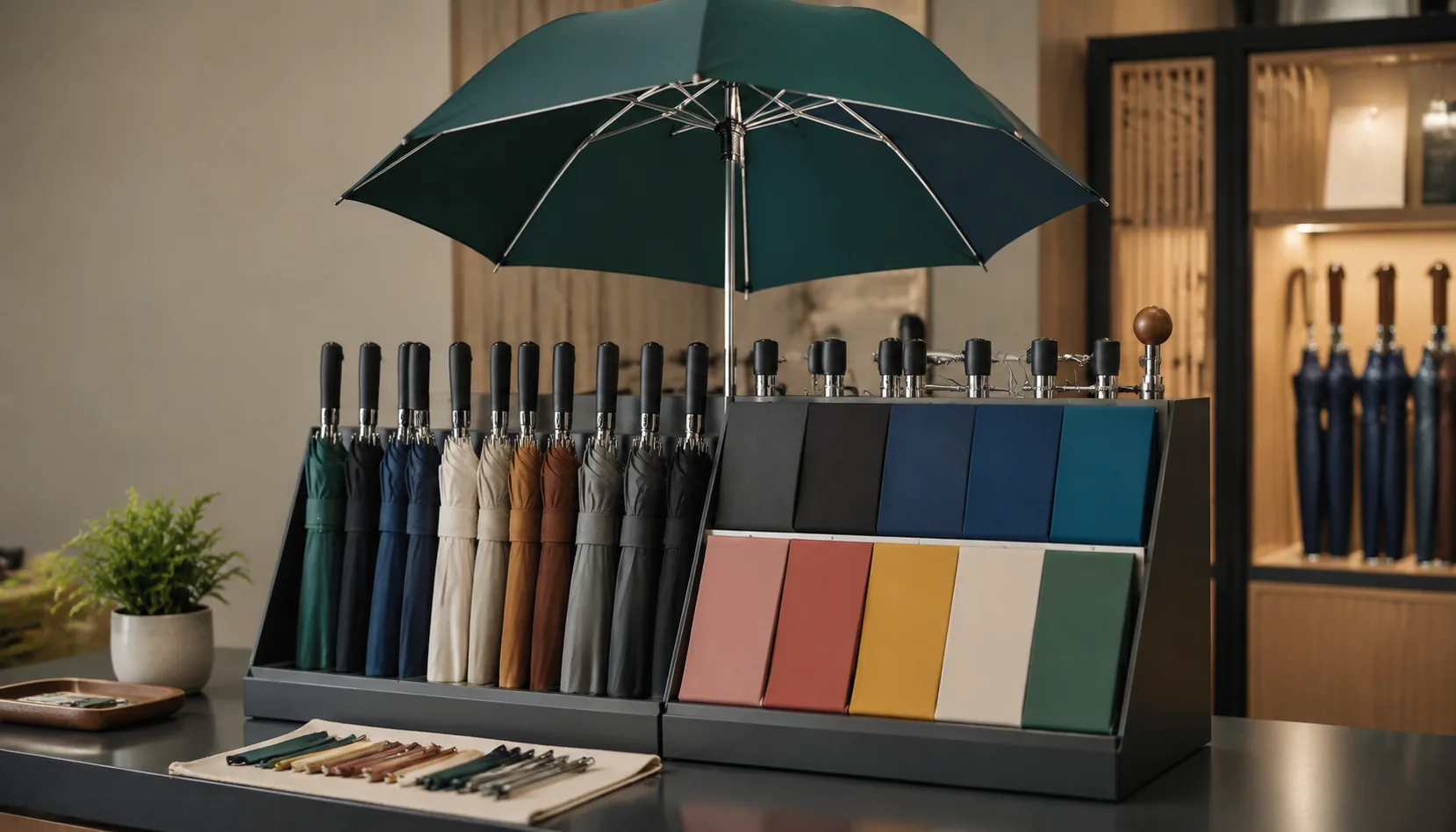
At retail counters, umbrellas have only a few seconds to earn attention, and a weak display can leave good stock hidden, crushed, or hard to scan. When we build branded umbrella counter displays on our Songxia factory floor, we check more than graphics: rib length, sleeve thickness, barcode position, carton compression, and how the display survives packing and shelf replenishment all decide whether the promotion sells smoothly.
Choose the Right Counter Display Format
PDQ trays are the safest default for branded umbrella counter displays when the store wants fast checkout placement without giving up much footprint. A good tray for 21" mini manual or mini auto-open umbrellas is usually 280–360 mm wide, 220–300 mm deep, and 80–120 mm high, holding 12, 18, or 24 units depending on handle diameter and sleeve thickness. I prefer 350 gsm art card laminated to E-flute corrugated for promotional runs because it survives carton compression better than thin display board. The weak point is replenishment discipline: if staff pull units from the front and leave empty holes, the retail umbrella display looks tired by day three. For private label umbrella merchandising, print the tray with one clear price callout, barcode area, and color dots; don’t waste space on long weather copy nobody reads at the register.
Small corrugated bins work better when the buyer wants more capacity and less frequent restocking, especially in convenience stores, airport shops, campus stores, and seasonal front-end programs. A compact umbrella packaging setup with 25–35 cm sleeves can fit 36–60 pieces in a bin footprint around 400 x 300 mm, but the bin must be low enough for shoppers to see the handle colors without digging. For 190T pongee compact models, a 5-fold manual umbrella packs tighter than a 3-fold auto-open-close, so confirm the packed diameter before locking the die-line. Bins are slower for visual recovery than PDQ trays, but faster for replenishment because staff can drop in full inner cartons of 12 or 24 units. Our standard practice at ZheBrella is to test one loaded sample in a master carton for rub marks, crushed corners, and tray collapse before mass printing.
Acrylic holders and gravity-feed formats are more selective tools. Acrylic holders look cleaner for department stores, museum shops, hotel boutiques, and premium logo programs, but they usually hold only 8–16 compact umbrellas and cost far more to ship because they cannot be flattened like corrugated. They are a poor choice for high-theft or outdoor entrance areas unless the store accepts tethering or frequent staff checks. Gravity-feed displays make sense when all units share the same packed diameter, usually slim 21" manual umbrellas or mini auto-open models in cylindrical sleeves; they keep the umbrella POS display faced-up and speed shopper selection. The downside is tolerance: a sleeve that grows from 38 mm to 45 mm after adding EVA pouch, hangtag, or barcode label can jam the chute. For branded umbrella counter displays, choose gravity-feed only after testing production-packed samples, not CAD dimensions.
Build the Display Around the Umbrella Spec
The umbrella spec has to drive the display, not the carton artwork. For branded umbrella counter displays, I start with folded length, folded diameter, and handle projection before talking about graphics. A 21" manual compact with an 8K steel frame often folds to 9.5–11" long and sits well in a 60–70 mm pocket, but the same canopy with an auto-open-close shaft can be 12–13" long and heavier at the top. If the pocket is too shallow, shoppers pull one unit and three more lean forward. If it is too tight, the sleeve scuffs and the first 20 pieces on the counter look shopworn before they sell.
Handle shape changes the display angle more than buyers expect. A flat EVA or plastic crook-style grip nests cleanly, while a rubberized T-handle, wooden hook, or oversized promotional grip needs extra clearance at the front lip. Sleeve thickness also matters: 190T pongee in a thin self-fabric sleeve behaves differently from PVC window packaging, POE sleeves, or compact umbrella packaging with hang tabs and barcode cards. For a retail umbrella display, we usually test the actual packed umbrella, not a CAD outline, because stitching seams, cord locks, snap buttons, and heat-transfer logo patches all add millimeters that affect pocket tolerance.
Frame type decides the depth and the lean-back angle. Compact 8K steel frames are dense but predictable, so a 10–15 degree display angle normally keeps the weight stable. Fiberglass ribs reduce corrosion complaints and improve wind recovery, but they can make the folded bundle slightly springier, especially in 10K or 16K layouts. Double-canopy windproof models need more depth because the vent layer, extra seam allowance, and reinforced rib joints add bulk; a 23" double-canopy auto-open model may need a pocket 20–30 mm deeper than a basic 21" compact. In private label umbrella merchandising, a good umbrella POS display protects the folded shape first and sells the brand second.
Use Packaging Graphics to Clarify the Offer
Header cards should do the heavy lifting for branded umbrella counter displays because shoppers decide in seconds, not after reading a full spec sheet. I would put the product name, size, canopy material, and opening mechanism on the front panel in a clean hierarchy, then use side panels for the details that matter at shelf distance: 21" or 23" compact size, auto-open or auto-open-close, fiberglass or steel frame, and whether the canopy is 190T or 210T pongee. A retail umbrella display works best when the graphics answer three questions immediately: what is it, why is it better, and what should the customer trust on the claim. If you print UPF 50+, windproof, or double-canopy, those should tie back to real test data or a verified construction spec, not loose marketing language. For private label umbrella merchandising, that credibility matters more than decorative artwork.
Color coding is the fastest way to separate SKUs without making the counter look busy. I prefer one color band for size, another for opening mechanism, and a third for the key feature, because that keeps an umbrella POS display readable from a distance and still gives the buyer enough information to compare models. For example, blue can mean UV-protected, red can mean auto-open, and black can mean wind-resistant, but the system has to stay consistent across the line or staff will mispick stock. Compact umbrella packaging also benefits from feature icons that are boring and precise: vented double canopy, fiberglass ribs, 210T pongee, or Teflon coating, each shown with a simple icon and a short label. ZheBrella’s standard practice is to keep the icon set tied to the actual BOM and test records so the artwork and the product never drift apart.
QR codes add value only when they go to something useful, not just a homepage. On branded umbrella counter displays, I would link the code to a spec page with opening cycle videos, fabric test notes, wind-test results, and a clean comparison chart between models, because that reduces questions at the counter and gives retail staff a fast selling tool. A QR code can also support private label umbrella merchandising by pointing to multilingual product sheets, compliance documents, or a short brand story for gift and promotional buyers, but it should never be the main source of information on the package. The package still has to stand alone with clear header cards, readable side panels, and iconography that survives shrink wrap, lighting glare, and small-format printing. If the display only looks good in a mockup, it will fail on a crowded counter.
Plan Barcodes, Pricing Zones, and Retail Compliance
Display artwork and umbrella packaging should be approved as one retail system, not two separate PDFs. The buyer sees a countertop story, but the store scans individual units, audits country of origin, and returns defects against the sellable SKU. If the sleeve says UPF 50+ but the header card only says “sun protection,” compliance teams may hold the shipment until claims, test reports, and labeling match. The same applies to private label umbrella merchandising: logo size, Pantone color, care text, fiber content for pongee or POE/PVC/EVA canopy, and mechanism description—manual, auto-open, or auto-open-close—must be consistent across sleeve, hang tag, display tray, and carton. Our standard practice at ZheBrella is to run a pre-production layout check with dielines, barcode scan test, carton mark review, and AQL 2.5 inspection checklist before mass printing; fixing a routing-label conflict after 5,000 trays are printed costs more than checking it before plates are made.
Test Cartonization, Assembly, and Store Durability
Cartonization decides whether a counter unit arrives as a selling tool or as a repair project for store staff. For branded umbrella counter displays, we usually test two formats: flat-pack displays with separately packed umbrellas, and pre-loaded displays where the compact umbrellas are already inserted at the factory. Flat-pack reduces freight cube and protects printed header cards, but stores must assemble the retail umbrella display correctly, which is risky for convenience chains and event retail with high staff turnover. Pre-loaded saves labor and improves launch consistency, but the master carton must control movement with dividers, corner blocks, and a tight inner carton count, commonly 12, 24, or 36 pieces depending on 21 inch folding umbrella size and handle shape. For compact umbrella packaging, I prefer individual polybag plus belly band or kraft sleeve, then a display tray with no more than 8 to 12 units per facing so shoppers can pull one unit without collapsing the front lip.
A real umbrella POS display should pass abuse closer to small-parcel delivery than showroom handling. We run drop testing on the export carton from 76 cm for cartons under 10 kg, checking display board cracking, umbrella tip punctures, handle scuffing, and whether the header card still locks upright after impact. Edge crush strength matters more than buyers expect; a weak 5-ply carton with poor ECT can arrive oval-shaped after container stacking, even if the umbrellas are fine. For pre-loaded counter displays, I like reinforced corrugated side walls, bottom pad, and a separate top void filler so ribs, wrist straps, and hang tags do not rub through the printed tray. Our standard practice at ZheBrella is AQL 2.5 final inspection covering barcode scan rate, display assembly fit, print registration, carton markings, quantity per inner, umbrella open-close function, canopy stains, and packaging orientation before release.
MOQ and replenishment planning should be set around carton efficiency, not only umbrella price. A practical MOQ for private label umbrella merchandising is often 1,000 to 3,000 pieces per artwork, with sample lead time around 7 to 12 days for blank structure samples and 12 to 18 days for printed display plus umbrella samples. Mass production normally needs 30 to 45 days after artwork approval, longer if custom molded handles or UPF 50+ coated 190T pongee canopies are involved. FOB freight looks cheaper on the invoice, but bulky counter displays punish container utilization; DDP can make the real landed cost clearer when cartons move by LCL, courier, or air for launch deadlines. For replenishment, lock the display footprint, carton count, and barcode location first, then forecast by store count: one display live, one backroom refill, and a 10% buffer for seasonal rain spikes or event sell-through.
Frequently Asked Questions
Should counter displays ship pre-loaded with umbrellas?
Pre-loaded displays save store labor but need stronger corrugated structure and better transit testing. Flat-pack displays reduce damage risk and freight volume but require store assembly.
How many umbrellas fit in a typical counter display?
Capacity depends on folded length, sleeve thickness, and handle shape, but compact umbrellas often fit in 12- to 24-piece displays. Larger auto-open or windproof models usually need fewer units per tray.
What information should be printed on an umbrella counter display for retail buyers?
Most retailers require brand artwork, product name, barcode or SKU, color/style callouts, country of origin, and any safety or material labels. For chain stores, the display carton should also match their carton mark and case-pack requirements.
How many compact umbrellas usually fit in one countertop display?
Common counter displays hold 12, 18, 24, or 36 compact umbrellas depending on the folded umbrella size and packaging style. A 24-piece display is often used for impulse retail because it balances visibility with manageable counter space.
Can the display be shipped pre-packed with umbrellas inside?
Yes, counter displays can be supplied pre-packed and then placed into a master carton for export. Buyers should confirm drop-test requirements, inner support structure, barcode placement, and whether the display needs to be shelf-ready on arrival.
Looking to Launch Your Custom Umbrella Line?
ZheBrella is a Zhejiang-based OEM/ODM umbrella manufacturer with 17 years of export experience. Free design, low MOQ from 100 pieces, windproof construction, full-color print.
Get Free Quote Now »People Also Search For
Related Articles
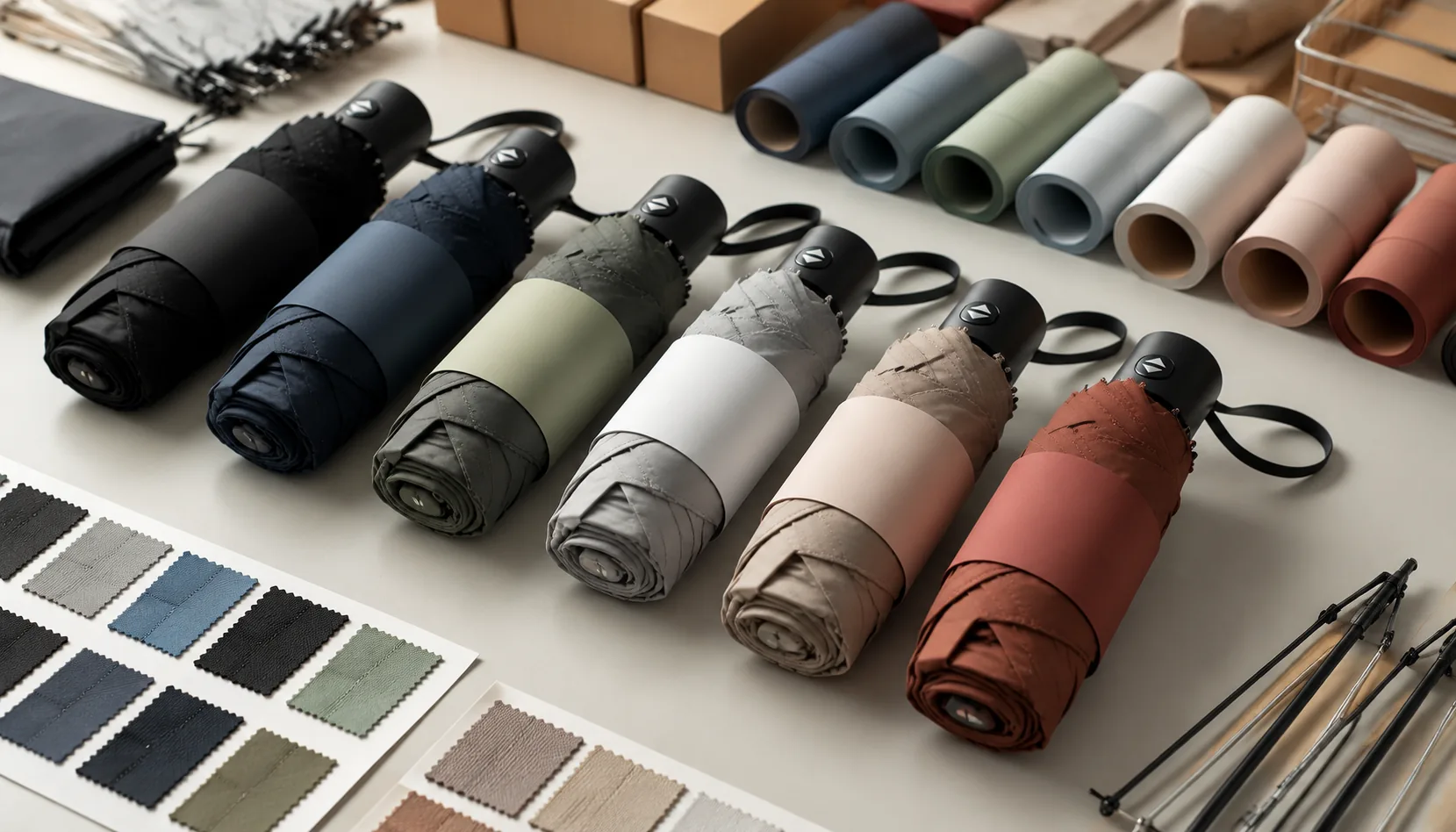
Branded Belly Bands for Compact Umbrella Retail Packs
Use belly bands to add brand impact, barcode space, and product cues to compact umbrella packs without raising MOQ or sl...
Read More »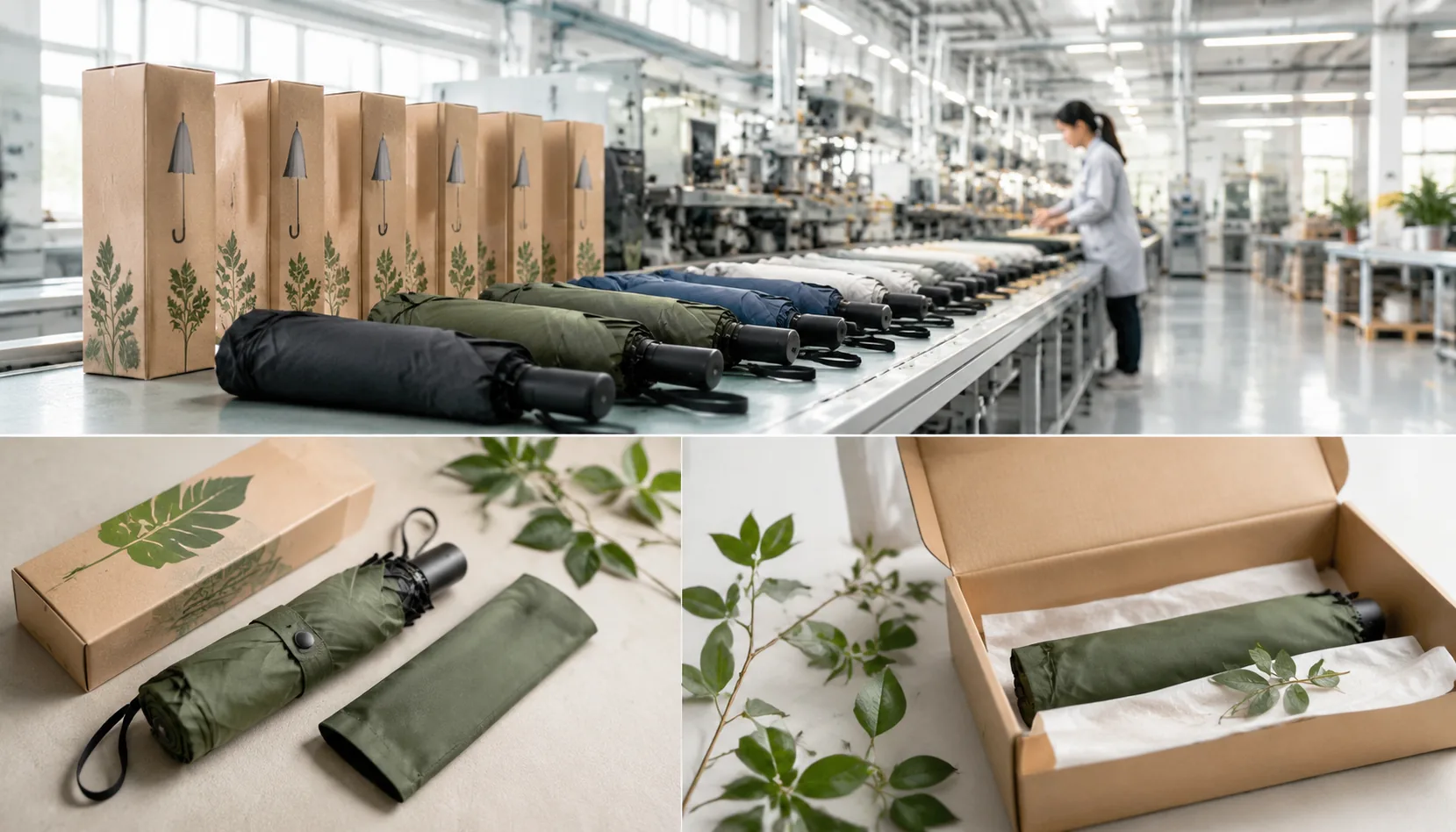
Sustainable Branded Umbrella Packaging Without Weak Displays
Build greener umbrella packaging that still protects auto-open frames, supports brand claims, and passes retail handling...
Read More »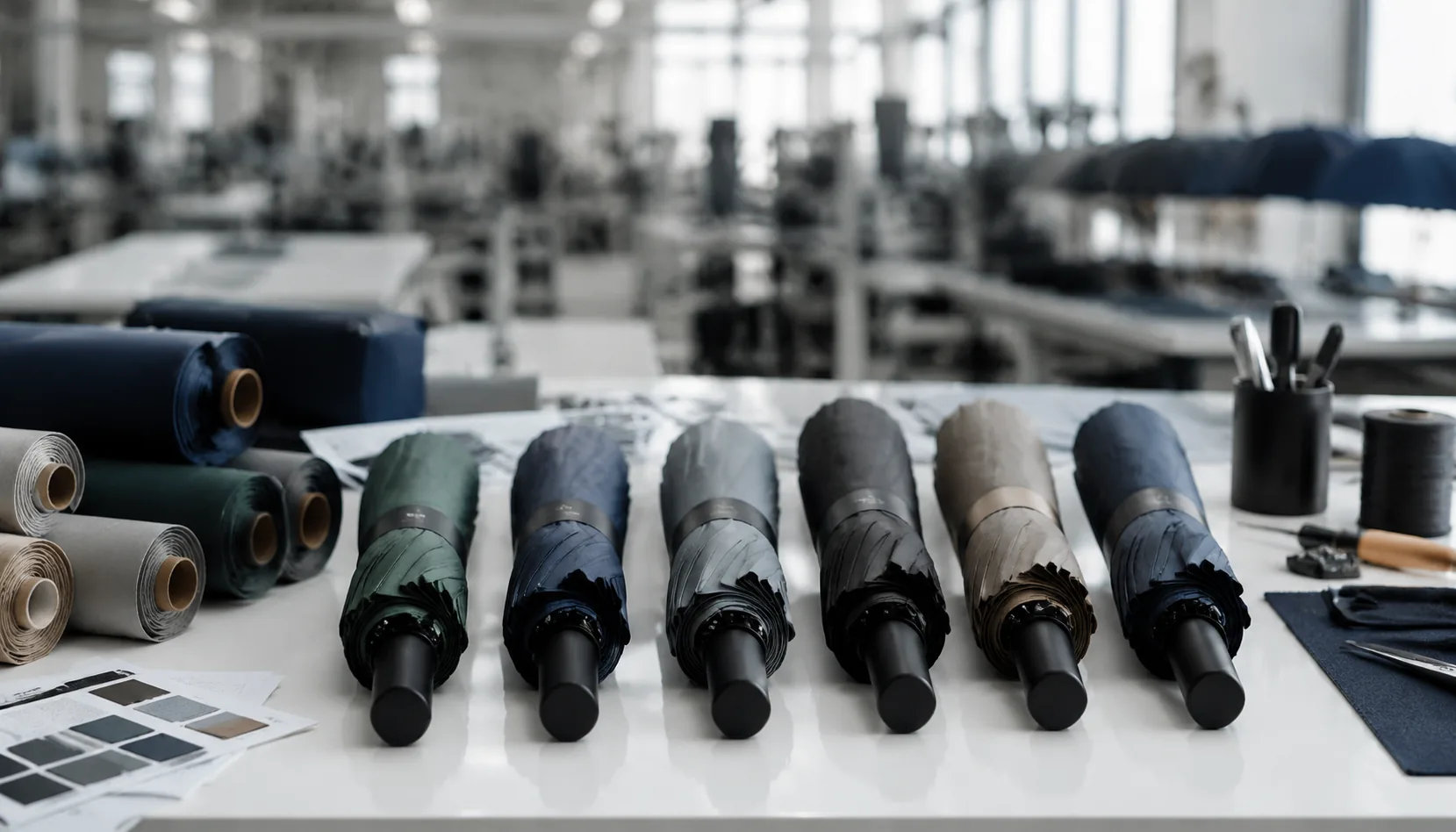
Branded Umbrella Belly Bands for Retail Gift Presentation
Plan branded belly bands with logo, SKU, and gift messaging while keeping canopy quality visible, with material, sizing,...
Read More »