Branded Umbrellas for Insurance Agents and Claims Teams

Insurance teams need umbrellas that do more than carry a logo; they have to hold up in wet parking lots, wind-driven storm response, and repeat field use without failing at the ribs, fabric, or print. For branded umbrellas for insurance agents, the real challenge is matching brand presentation with practical specs like canopy material, wind resistance, minimum order quantity, and reorder consistency across agents, adjusters, and claims crews.
Why Umbrellas Fit Insurance Customer Touchpoints
Branded umbrellas for insurance agents make sense because they show up at the exact moments when customers are already thinking about protection: agency welcome kits, annual renewal handoffs, roadside checks, and home-claim visits after heavy rain or wind. A 21" or 23" compact auto-open model fits neatly into a client packet, while a 27" or 30" stick umbrella reads better for field teams and community events. In practice, insurance promotional umbrellas outperform paper mailers because people keep them in cars, entryways, and office cabinets for months, sometimes years, and the logo keeps getting seen every time the weather turns.
For claims adjusters, the product has to be more than a logo carrier. Claims adjuster rain gear usually needs fiberglass ribs, a windproof double-canopy vent, and a pongee 190T or 210T canopy with a Teflon or UV coating so the umbrella still works during storm response, not just in a photo op. That is why storm response umbrella sourcing is usually tied to utility, not decoration: if the frame survives 50+ mph gusts and the mechanism opens cleanly with one hand, the field team will actually use it instead of leaving it in the trunk.
Custom corporate umbrellas also fit community outreach better than flyers or small swag because they are visible in bad weather, which is when insurance buying intent is high. A well-built umbrella becomes a moving signboard at school events, disaster-preparedness drives, and neighborhood cleanups, where people immediately associate the brand with practical help. ZheBrella’s standard practice is to match the build to the use case, because a cheap steel-rib gift umbrella and a true windproof field umbrella are not the same product, and buyers who mix them up usually end up with returns or dead inventory.
Match Umbrella Types to Agents, Adjusters, and Clients
For branded umbrellas for insurance agents, the right build depends on where the umbrella lives: in a car trunk, at a front-desk cabinet, or in a claims vehicle that gets used in bad weather. Compact auto-open folding models are the practical choice for agents who need something that fits a glove box and still opens one-handed at a client site; I usually spec 21" or 23" canopies with 8K fiberglass ribs and an auto-open mechanism because steel sticks in a compact frame add weight without much benefit. If the line is price-sensitive, a steel shaft with mixed steel/fiberglass components is acceptable, but only when the buyer understands it is a value line, not a wind-rated product. For insurance promotional umbrellas handed out after policy sign-off, compact folding formats are easier to distribute, ship, and store than full-size sticks.
For office gifting, 23-inch stick umbrellas are cleaner and read more “executive” than a collapsible model, especially when the logo needs a large panel and the receiving client will actually keep it in a car or umbrella stand. These custom corporate umbrellas are typically built with a straight steel shaft for lower cost, or a fiberglass shaft if the buyer wants better corrosion resistance and less rattling, and they take screen print or heat-transfer decoration well on pongee 190T or 210T canopy fabric. I would not overbuild this category unless the client works in a storm-heavy market; for most office-gift programs, a 23" manual-open stick with 8K ribs is the best balance of appearance, cost, and durability. ZheBrella’s standard practice is to separate this from claims adjuster rain gear so the gifting spec does not get dragged up to field-duty pricing.
For field adjusters, 30-inch golf umbrellas are the correct tool because they cover paperwork, a phone, and a person standing in rain or sleet, and they hold up better during storm response umbrella sourcing than smaller promotional sizes. This is where double-canopy vented windproof construction matters: fiberglass ribs, reinforced stretch points, and a vented top reduce inversion when gusts hit, and the better builds are routinely designed to survive 50+ mph winds in practical use rather than just look good on paper. If the budget allows, a 30" auto-open golf umbrella with a fiberglass frame and Teflon-coated pongee is the most useful claims adjuster rain gear; if cost is tighter, a steel-shaft version still works, but it should be positioned as a utility item, not a severe-weather umbrella.
Branding Choices That Stay Professional in Regulated Markets
Branded umbrellas for insurance agents should look disciplined first and promotional second. In regulated markets, the safest layout is a single small logo on one panel, usually 3 to 4 inches wide, or a clean wordmark on the sleeve instead of loud all-over print. We usually push PMS color matching on the canopy and trim so the umbrella sits inside the agency’s brand system, not next to it. For insurance promotional umbrellas, 190T pongee is the normal choice for volume programs because it prints cleanly, dries fast, and keeps cost under control.
For claims adjuster rain gear, I prefer 210T pongee when the brief calls for a heavier hand and a more executive feel. The extra fabric density helps the canopy hold shape in real wind, and it gives a better base for subtle tone-on-tone artwork, heat transfer logos, or a matte finish that does not read as cheap plastic. Reflective piping around the edge is worth adding for field teams working early mornings, dark parking lots, or storm debris zones; it improves visibility without turning the umbrella into safety equipment theater.
Co-branding works when the hierarchy is clear: the local agency name should stay primary, with carrier or program branding secondary and smaller. That is especially useful for storm response umbrella sourcing, where regional offices need one umbrella family that can be reused across offices without violating brand rules. For custom corporate umbrellas, the best results come from restrained panels, one or two colors max on the canopy, and printed sleeves or hangtags for extra message space rather than crowding the canopy itself.
Procurement Specs for Regional and National Rollouts
For branded umbrellas for insurance agents, the first mistake is buying one national stock plan and pretending every branch moves the same way. A practical rollout starts by setting MOQ by branch tier: small offices may only need 100 to 300 units per style, while metro and coastal branches often justify 500 to 1,000 units because claims traffic spikes after severe weather. Carton allocation matters more than most buyers admit. Standard packing is 12 or 24 pieces per carton for 21" compact models, with 8K or 10K fiberglass frames usually shipping more efficiently than heavier steel builds. If the program includes claims adjuster rain gear, keep one style spec per role and one spare carton buffer per office so field teams are not waiting on a cross-country transfer when a storm lands.
For insurance promotional umbrellas, I would build reorder buffers before rainy season and again before hurricane season, not after branch managers start asking for extras. A 15% to 25% safety buffer is usually enough for stable regions, but coastal markets need more aggressive planning because emergency use burns through inventory fast. Sample-to-mass-production lead times are typically 7 to 10 days for pre-production samples, then 20 to 35 days for bulk after artwork and materials are approved; screen print runs are faster than sublimation if the canopy is a simple pongee 190T or 210T. ZheBrella keeps approved strike-off artwork on file for repeat orders, which saves reproofing time and reduces color drift on custom corporate umbrellas and storm response umbrella sourcing programs.
On logistics, FOB works when one central buyer wants to consolidate freight and then distribute internally, but DDP is cleaner for multi-office distribution because each branch gets landed cost with duties, inland delivery, and customs handled upfront. For dispersed insurance networks, that usually cuts admin noise and avoids freight surprises on smaller branch drops. The rule I use is simple: if the buyer has one receiving warehouse and an experienced import team, FOB is fine; if the rollout touches 10 or 50 offices, DDP is usually worth the margin. For repeat business, the approved strike-off is not just an art file — it is the control point for exact logo placement, Pantone matching, and panel layout on future insurance promotional umbrellas, which is how you keep reorders from turning into new projects every quarter.
Quality Control for Field-Use Reliability
For branded umbrellas for insurance agents, I do not trust a sample approval alone; field use exposes weak springs, crooked ferrules, and sloppy sewing fast. Our standard practice is AQL 2.5 inspection on incoming frames and finished goods, then a separate functional check on every lot: auto-open timing, button rebound, shaft lockup, rib alignment, and tip-to-tip symmetry. If the frame walks off center or the canopy sits twisted, that umbrella will fail in a parking lot during a hail event, not in a showroom.
Print and sewing checks matter just as much. We verify print adhesion after rubbing and tape pull, because insurance promotional umbrellas often use dense logos that crack first at the fold lines. Seam leakage is checked with a water spray or soak test along panel joins, especially on pongee 190T or 210T canopies with PU or UV coatings. For claims adjuster rain gear and storm response umbrella sourcing, I also insist on windproof frame testing on sample units, including repeated flex cycles and a controlled gust test; a double-canopy vented build should keep shape better than a cheap straight-rib steel frame.
For deployment, carton drop checks are worth the extra minutes because claims-team shipments get handled badly at branch depots and truck docks. We test master cartons from multiple faces and corners, then confirm that umbrellas still open cleanly after transit shock, with no broken stretchers, split handles, or popped canopy stitches. Barcode labels or branch-specific tagging should be applied at carton level and, if needed, on individual sleeves so field managers can issue the right size and mechanism quickly. That matters whether you are buying custom corporate umbrellas for one office or splitting a national order across dozens of branches.
Frequently Asked Questions
What umbrella size works best for insurance claims adjusters?
A 27- to 30-inch golf umbrella is best for adjusters who need coverage while inspecting vehicles or property. Choose fiberglass ribs and a double-canopy windproof design for exposed, rainy sites.
Can an insurance group customize umbrellas by branch or agent name?
Yes, branch-level customization can be handled with shared canopy colors and variable logo panels, but MOQ usually applies per artwork version. For smaller branches, use a master brand design and add branch labels on packaging.
What umbrella specs work best for claims adjusters who are outside in wind and rain?
For adjusters, buyers usually choose a 23- to 27-inch umbrella with fiberglass ribs, a vented canopy, and a fiberglass shaft for better wind resistance. A 190T or 210T pongee canopy is common because it dries quickly and handles repeated field use better than basic polyester.
What MOQ is typical for branded insurance umbrellas?
Most OEM umbrella programs start around 300 to 500 pieces per design, depending on model and print method. If you need multiple logo versions for agents, adjusters, and storm-response kits, it is often more efficient to keep the umbrella model the same and vary only the branding.
How should an insurance team plan reorders before storm season?
A practical reorder plan is to confirm artwork, frame type, and packaging 6 to 8 weeks before peak season. Many buyers keep 10% to 15% extra inventory for field replacement, since rush production after a major storm can extend lead times.
Looking to Launch Your Custom Umbrella Line?
ZheBrella is a Zhejiang-based OEM/ODM umbrella manufacturer with 17 years of export experience. Free design, low MOQ from 100 pieces, windproof construction, full-color print.
Get Free Quote Now »People Also Search For
Related Articles
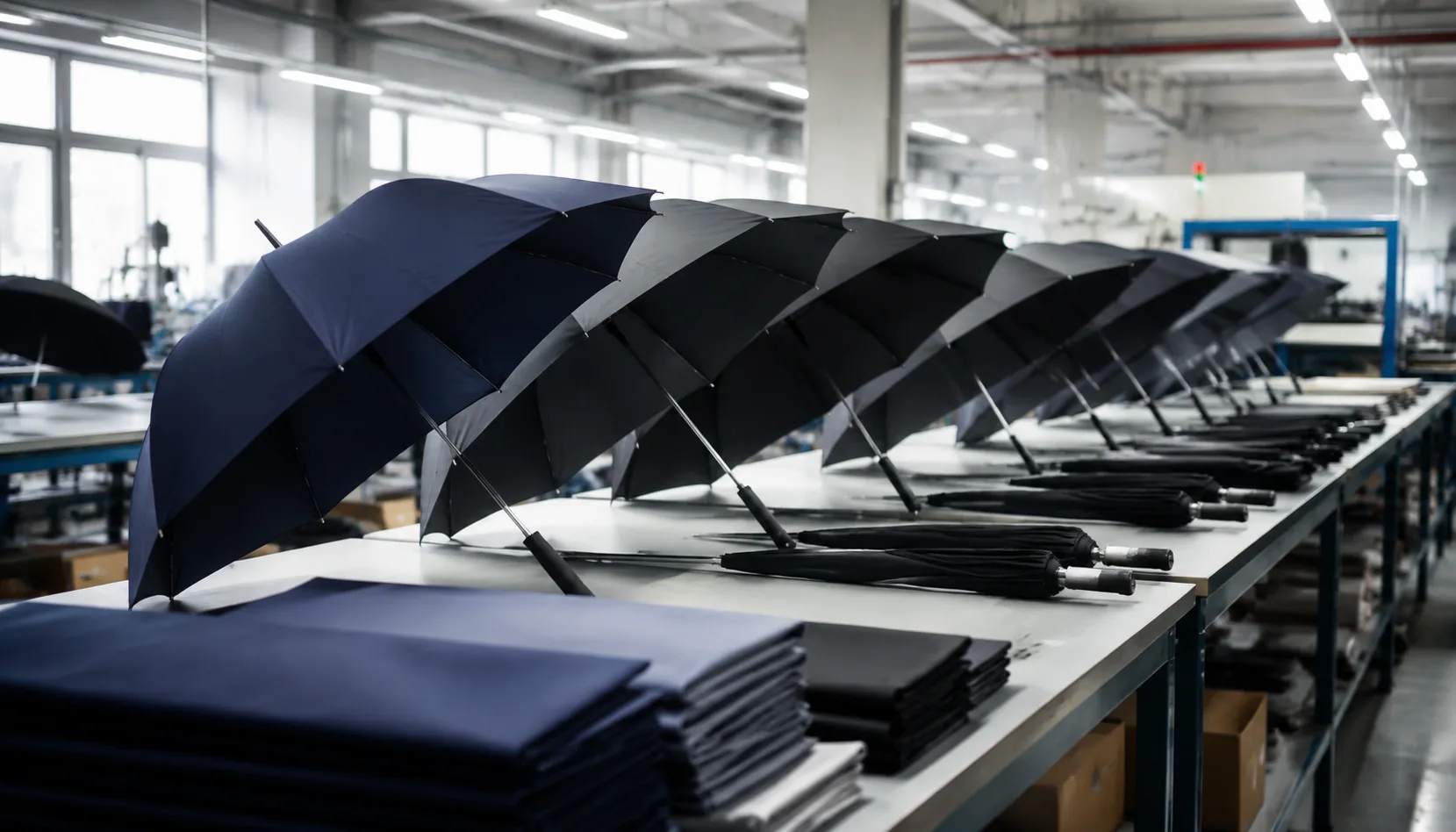
Branded Umbrellas for Insurance Claims and Agent Teams
Plan storm-season umbrella specs for adjusters and agents, from 190T pongee and fiberglass ribs to MOQ, AQL checks, and ...
Read More »
Branded Umbrellas for Insurance Adjusters and Claim Teams
Specify durable branded umbrellas for claim teams working in rain, hail, and heat, with ribs, canopy fabrics, QA, MOQ, a...
Read More »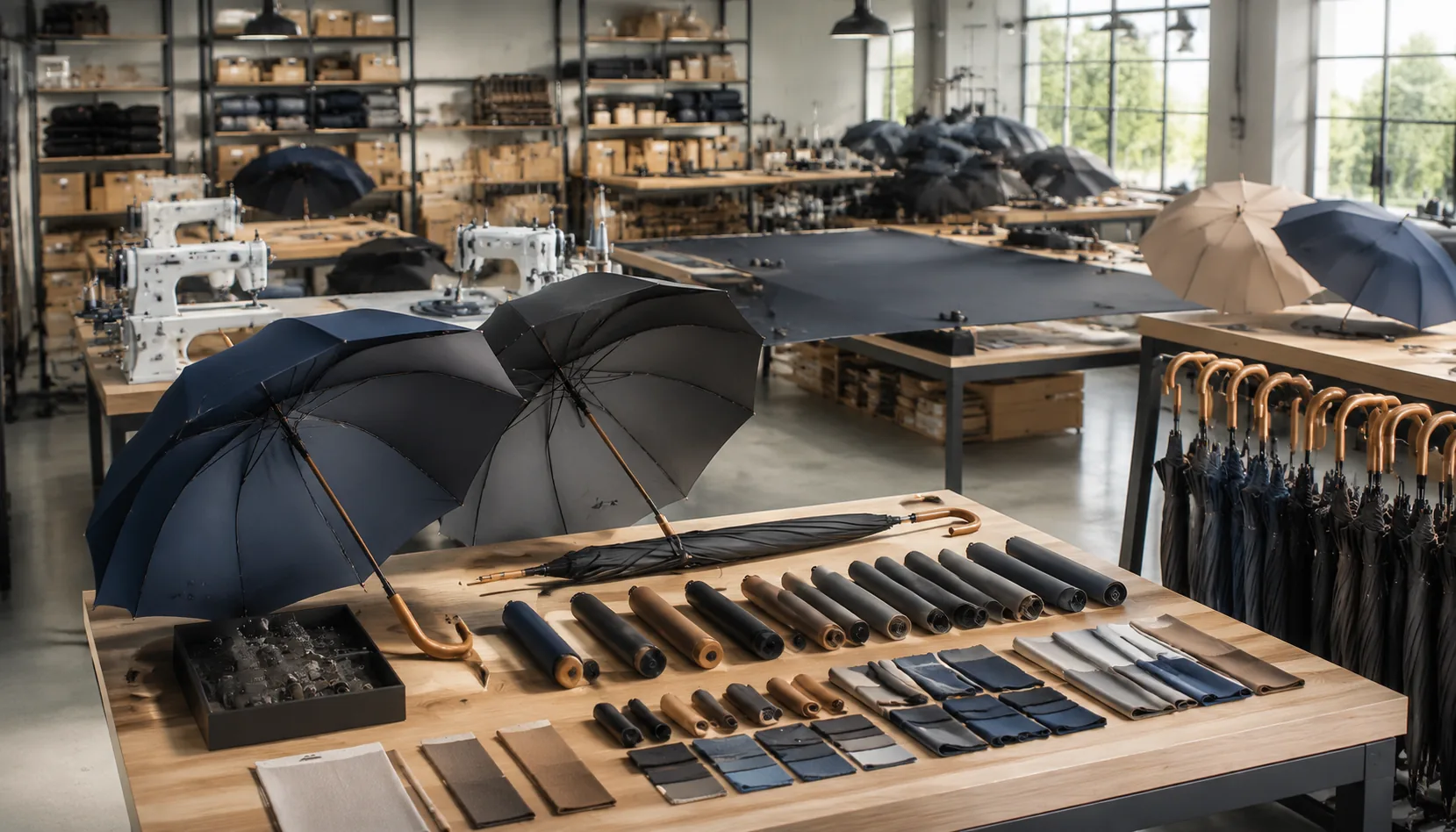
Branded Umbrellas for Insurance Agencies and Claims Teams
Plan umbrella programs for insurance agencies, adjusters, and storm-season clients with durable specs, tiered MOQs, and ...
Read More »