Branded Umbrellas for Insurance Adjusters and Claim Teams
Claim teams work where weather is worst: curbside inspections in rain, hail, and punishing heat, often with no second chance for gear failure. Well-made insurance adjuster umbrellas need more than a logo—they have to open reliably, shed wind, and survive daily handling, which is why factory-side choices in ribs, canopy fabric, seam control, QA, MOQ, and delivery timing matter.
Why Claim Teams Need a Different Umbrella Spec
Insurance adjuster umbrellas are not the same spec as a giveaway umbrella from a trade show table. Claim teams spend their day climbing ladders, photographing roof damage, walking wet parking lots, and moving in and out of vehicles with one hand already occupied by a phone, clipboard, or camera. For that workflow, a manual umbrella is usually too slow, and a flimsy frame is a liability; auto-open or auto-open-close models with 23" or 27" canopies are the practical baseline, with fiberglass ribs handling sudden gusts better than thin steel wire that bends after one bad storm.
Wind resistance matters because adjusters do not work in calm weather. A double-canopy vented frame, a 10K or 16K rib layout, and a pongee 190T or 210T canopy with Teflon coating hold up far better during roof inspections, vehicle damage checks, and catastrophe response when the weather is still moving. For branded umbrellas for insurance companies, visibility also matters: high-contrast panels, reflective trim, and clean logo placement keep staff recognizable to policyholders and contractors without looking like random claim team rain gear.
The branding side is not cosmetic if the umbrella is going to live in the field for months. Bulk umbrellas for field staff should print well on dark canopies, survive repeated wet-dry cycles, and still look professional when a claims manager arrives at a customer site in heavy rain. ZheBrella’s standard practice is to spec storm response promotional umbrellas around actual field use: one-hand operation, reinforced shaft joints, and enough panel area for a logo that reads from a distance without crowding the design.
Frame and Canopy Choices for Storm Response Work
Steel ribs still make sense for lower-cost branch giveaways when the umbrella is mostly a desk handoff or an occasional car-to-building carry. They are cheaper, stiffer in a straight-line bend, and fine for simple branded umbrellas for insurance companies that need volume without demanding long service life. For insurance adjuster umbrellas, though, steel starts to lose the argument once the user is outside in real weather: repeated flexing at the runner and rib joints shows up fast, and bent steel ribs usually mean a dead umbrella rather than a repairable one. If the order is meant for claim team rain gear, I would treat steel as a budget choice for marketing events, not for daily field use.
Fiberglass is the better call for field adjusters because it bends and springs back instead of staying deformed, which matters when someone is walking a roofline, standing at a damaged property, or opening and closing the canopy all day. For bulk umbrellas for field staff, a fiberglass frame also keeps weight down, which is not a small thing when the person is carrying a tablet, camera, clipboard, and samples. On the production floor, I see the difference most clearly at the ferrule and joint points: fiberglass tolerates gusts and repeated cycles better, while steel gives you more rust risk if the umbrella lives in a wet car trunk. That is why storm response promotional umbrellas meant for actual deployment should not be built like giveaway stock.
For size and rib count, 8K is the practical compact option: it folds smaller, packs easily in a vehicle, and works well for adjusters who need something that fits behind a seat or in a laptop bag. If the goal is better coverage, go to 16K or a double-canopy vented design. The extra rib count smooths the canopy shape, spreads load more evenly, and the vent helps wind escape instead of pushing the frame inside out. For severe-weather programs, I would pair fiberglass ribs with 190T or 210T pongee and a vented top; that combination gives you a more credible field tool than a basic straight-rib promotional umbrella, especially when the buyer expects the umbrella to survive repeated storm season use rather than just one photo op.
Branding, Visibility, and Safety Considerations
For insurance adjuster umbrellas, the first thing I look at is whether the branding survives real field use, not just a mockup on a white background. Panel printing is the practical choice: one-color logos or a two-color mark placed on alternating gores stays readable when the umbrella is open in a parking lot, on a wet curb, or beside a damaged roofline. With branded umbrellas for insurance companies, the logo needs to sit high enough on the canopy to avoid being blocked by the hand, and large enough to read from 10 to 15 feet away. Standard programs usually spec 190T pongee because it holds ink well and keeps cost under control; if the buyer wants a smoother retail-grade finish, 210T pongee is the better call.
Visibility matters as much as logo size. Reflective piping on the edge of the canopy or along the shaft helps field staff stay seen during dusk inspections, traffic-side walkarounds, and storm work, and a light-colored interior makes the umbrella less oppressive for the user while also improving camera visibility in documentation photos. For claim team rain gear, I prefer a pale gray, silver, or white interior paired with a darker exterior, because it gives a cleaner look without making the outside branding too busy. On storm response promotional umbrellas, avoid tiny artwork near the tip or seam lines; those get lost once the umbrella flexes and the panels shift in wind.
Placement should be decided around the inspection workflow, not the art file. If the team carries bulk umbrellas for field staff, put the insurer name on two opposite panels and keep any claim hotline or web address off the lower hem, where it disappears behind raincoats and clipboards. ZheBrella’s standard practice is to proof logos on an open frame so the buyer can see how much of the mark is visible when one hand is holding a tablet or sample paperwork. That matters because an umbrella used on site is both a rain tool and a moving sign, and the branding has to stay legible while someone is walking, crouching, or taking photos of damage.
Procurement Planning for Regional and Catastrophe Teams
For insurance adjuster umbrellas, the procurement decision starts with the build, not the logo. A 21" or 23" auto-open umbrella with fiberglass ribs is usually the safest spec for vehicle kits and field bags; 27" stick umbrellas make more sense for roadside inspections and supervisor use; 30" golf-size frames are better for catastrophe teams that spend all day outside. In practice, MOQ depends on construction: 300-500 pieces for one-color printed manual or auto-open styles, 500-1,000 pieces for auto-open-close or double-canopy vented frames, and 1,000+ pieces if you want custom handle, canopy color, or special packaging. For branded umbrellas for insurance companies, buyers should also decide early on canopy fabric, since 190T pongee prints cleanly and holds up better than cheap polyester, while POE or PVC makes more sense only when you want see-through rain gear at lower price points.
Sample approval should be treated like a hard gate, not a courtesy step. Standard practice is to confirm artwork size, Pantone color, panel layout, and logo placement on a digital mockup first, then approve a physical pre-production sample if the order is above a normal replenishment run or if the logo has fine text, gradients, or a second decoration method. Once artwork is confirmed, typical production lead times run about 15-20 days for repeat bulk umbrellas for field staff, 20-25 days for new print setups, and 25-35 days if the order includes custom handle tooling, UV coating, or mixed sizes across several SKUs. For storm response promotional umbrellas, the fastest jobs are simple one-logo orders on standard frames; anything with special packaging, hangtags, or retail cartons adds days because packing has to be checked line by line.
FOB is the better choice when the buyer is consolidating freight, mixing umbrellas with other SKUs, or shipping to a forwarder that already handles import clearance and final-mile routing; it gives more control over the ocean rate and lets one regional distribution center receive a full container. DDP makes more sense when claim team rain gear has to go directly to branch offices, temporary catastrophe hubs, or multiple states where the buyer does not want to manage customs, duty, and last-mile coordination. The tradeoff is simple: FOB usually lowers unit cost on larger, planned programs, while DDP reduces internal admin work for smaller regional drops or urgent restocks. For insurance adjuster umbrellas going to several offices at once, I usually recommend DDP only when the ship-to list is messy; if the network is stable and volumes are high, FOB is cleaner and cheaper over time.
Quality Checks Before Deploying to the Field
For insurance adjuster umbrellas, I would not release a production lot until the moving parts are tested harder than a normal retail umbrella. Auto-open and auto-open-close units should be cycled at least 20 times per inspected sample, checking that the runner locks cleanly, the button does not stick, and the shaft does not wobble after repeated opening. On 23" and 27" field models, rib alignment matters because adjusters often work one-handed while holding tablets, claim folders, or ladders; uneven 8K or 10K ribs create canopy twist and early fabric tearing at the tips. Fiberglass ribs should flex back without whitening or cracking, while steel ribs need clean riveting and no burrs at the stretcher joints. For bulk umbrellas for field staff, AQL 2.5 is commonly used for major defects, with critical defects such as exposed sharp metal, failed locking, or broken tips treated as zero-tolerance.
Branding checks are just as important as mechanical checks, especially on branded umbrellas for insurance companies where the umbrella may be photographed at a loss site. Screen printing should be rubbed with dry and wet cloth to confirm ink cure, while heat-transfer logos need edge-pick testing so the carrier film does not lift after folding. On 190T or 210T pongee, I prefer checking logo position against a paper template because a 10 mm drift looks sloppy once the canopy is fully tensioned. Print adhesion should also be checked after a water-repellency test, not before it. A simple spray test can confirm beading on Teflon-coated fabric, while UV-coated UPF 50+ panels should be verified against the approved material label and supplier test report. Our standard practice at ZheBrella is to inspect both open-canopy appearance and folded appearance, because claim team rain gear spends half its life packed in vehicle trunks.
Carton testing should match field deployment, not showroom storage. Storm response promotional umbrellas are often shipped by regional offices, moved between vans, and handed out during hurricane, hail, or flood events, so export cartons should pass corner, edge, and flat drop checks before release. I normally look for 5-ply outer cartons on heavier 27" or 30" golf umbrellas, inner polybags that do not trap moisture, and divider packing when handles are coated or printed. After a carton drop, inspectors should reopen samples and check ferrules, end tips, handle caps, and push buttons for cracks or loosened glue. Carton marks must match the purchase order, including model, color, logo version, quantity, and destination branch if shipped DDP. A good final inspection report should include defect photos, sample size, AQL result, water test notes, and carton condition, so the buyer can approve release without guessing what will happen when the umbrellas hit the field.
Frequently Asked Questions
What umbrella size works best for insurance claim adjusters?
A 42-48 inch folding umbrella is practical for car use and site visits, while a 54-62 inch straight umbrella offers better coverage for roofline or property inspections. Fiberglass ribs are preferred for adjusters working in storm conditions.
Can umbrellas be shipped to multiple branch offices?
Yes. A factory can pack by branch, apply carton marks, and ship under FOB for your freight forwarder or DDP for door delivery. Allow extra lead time for split packing and address verification.
What canopy size works best for insurance adjusters in the field?
For most adjusters, a 55- to 62-inch canopy gives enough coverage for walking inspections and note-taking in rain. If the team works in exposed storm zones, a 68-inch golf-style canopy is often better for extra protection.
What QA checks should a buyer require for branded umbrellas used by claim teams?
Ask for frame opening-cycle testing, wind resistance checks, fabric water-repellent testing, and print adhesion inspection. Many B2B buyers also request random carton checks and pre-shipment photo approval before release.
What is a typical MOQ and delivery window for custom umbrellas for insurers?
MOQ is often 300 to 500 pieces per design, depending on the frame and print method. Standard production usually takes 25 to 40 days after artwork approval, with air freight or sea freight available for different delivery timelines.
Looking to Launch Your Custom Umbrella Line?
ZheBrella is a Zhejiang-based OEM/ODM umbrella manufacturer with 17 years of export experience. Free design, low MOQ from 100 pieces, windproof construction, full-color print.
Get Free Quote Now »People Also Search For
Related Articles
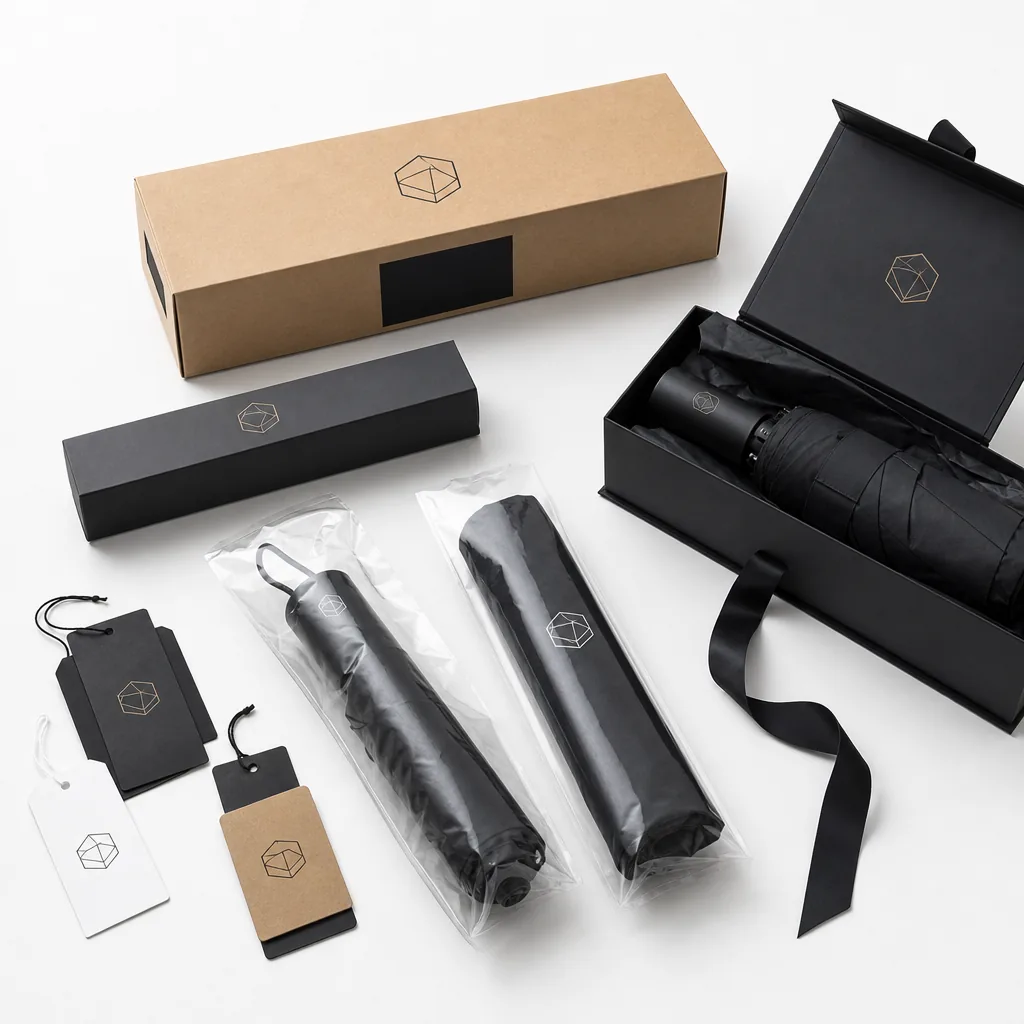
Branded Umbrellas for Insurance Adjuster Field Kits
Plan durable umbrellas for storm-claim teams with windproof frames, fast decoration, kit packing, and lead times that su...
Read More »
Umbrella Specs for Insurance Adjusters and Claims Teams
Source umbrellas for insurance field teams with windproof frames, hands-on inspection needs, logo placement, lead times,...
Read More »Custom Umbrellas for Insurance Claims and Field Adjusters
Source umbrellas for claims adjusters and CAT teams with durable specs, fast deployment, QC standards, and logistics pla...
Read More »