Branded Umbrellas for Insurance Adjuster Field Kits
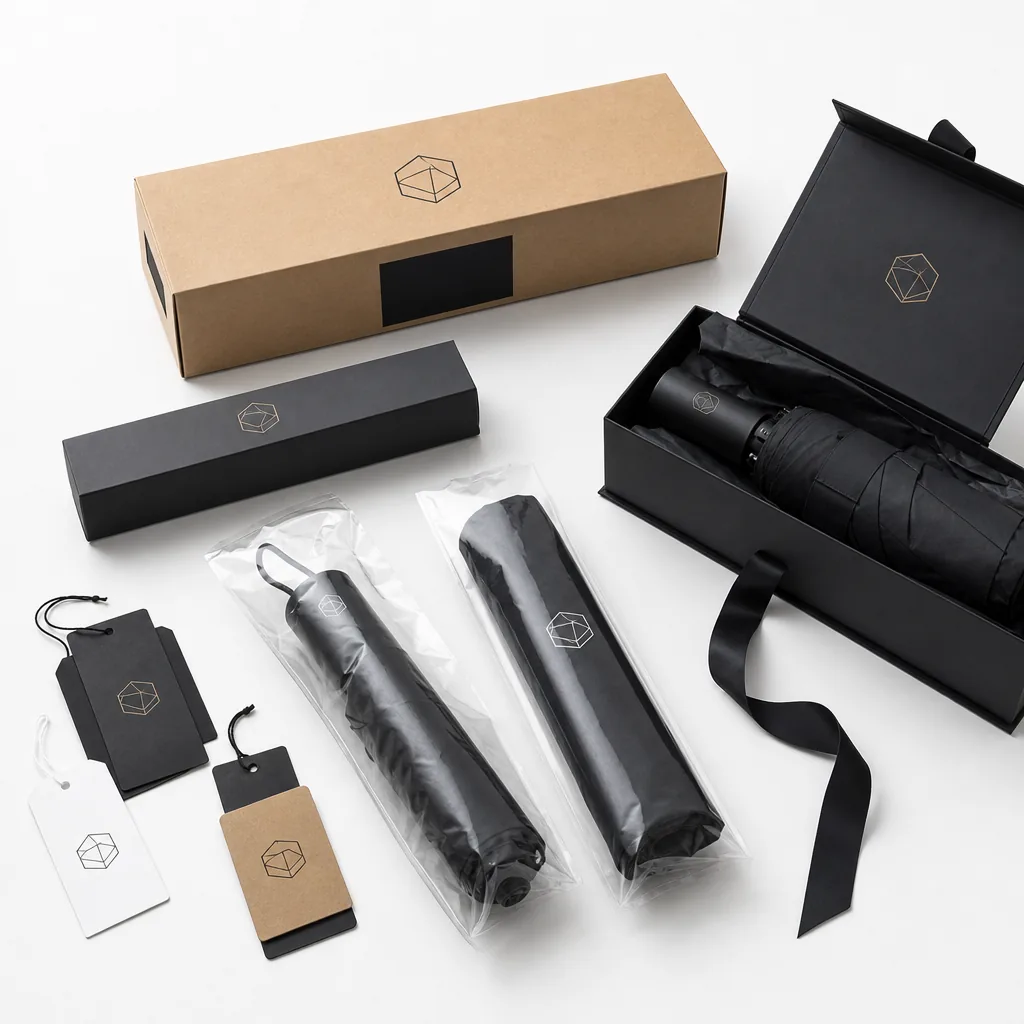
After a hailstorm or hurricane, adjusters need field kits that are ready to ship by region, hold up in wet parking lots and damaged job sites, and still carry the carrier’s brand cleanly. On our factory floor, insurance adjuster umbrellas are built around practical details: wind-resistant ribs, stable shafts, decoration that can move fast without smearing or peeling, and carton packing that fits the kit workflow instead of slowing deployment.
Why Claims Teams Need Umbrellas in the Field
Claims work does not wait for dry weather, and that is exactly why insurance adjuster umbrellas belong in the kit instead of the office closet. A roof inspection after hail or wind loss often starts in light rain, with the adjuster moving between ladder, eave, gutter, and photos of damaged shingles. A 23" auto-open umbrella gives one-hand deployment while the other hand holds a tablet, chalk, moisture meter, or phone. For tighter movement around vehicles, a 21" windproof compact umbrella with fiberglass ribs is easier to manage than a golf model, especially in parking lots where doors, mirrors, and camera angles matter. I would not specify cheap 8K steel ribs for this work; they bend after a few gusts and make the brand look careless. A 10K fiberglass frame with 190T or 210T pongee canopy is the minimum practical build for repeated field use.
Catastrophe response exposes the weakness of ordinary storm response promotional products. After a hurricane, derechos, or a week of flood claims, adjusters may handle 8 to 14 site visits per day, often moving from a damaged roof to a wet driveway appraisal to a policyholder conversation at the front door. The umbrella is not only for the person; it protects claim forms, loss worksheets, printed scope notes, thermal paper receipts, tablets, and camera lenses from water spotting. For insurance claim team gear, I prefer auto-open or auto-open-close mechanisms because adjusters are constantly entering rental vehicles, mobile command trailers, hotel lobbies, and insured properties. Double-canopy vented windproof designs make sense in coastal and plains states, where gusts over 35 mph are normal during response windows. A properly built unit can survive 50+ mph wind-tunnel testing, but only if the rib joints, runner, shaft, and canopy tension are specified together.
Branded field kits are judged in the first 30 seconds of a policyholder visit. A wet clipboard, dripping sleeve, or umbrella that flips inside out sends the wrong signal when the insured is already frustrated. Insurance adjuster umbrellas should carry restrained branding: a one- or two-panel screen print, heat-transfer logo, or reflective edge detail, not a carnival-style full canopy unless the carrier specifically wants high visibility at a catastrophe site. Our standard practice at ZheBrella is to test logo placement after rain shaking, because dense prints on 210T pongee can crack or look uneven if the coating and ink are mismatched. For procurement, a realistic program is 500 to 2,000 pieces, AQL 2.5 inspection, 25 to 35 days production after artwork approval, and FOB Ningbo or DDP delivery depending on whether the buyer has an established import process.
Frame and Canopy Specs for Storm Response
For vehicle trunks, CAT duty, and months of storage between storms, specify fiberglass ribs instead of painted steel. Steel can reduce unit cost and feel rigid in a sample, but once the coating is scratched, wet pongee, salt air, and muddy job sites accelerate rust. Fiberglass flexes under gust load and returns to shape, reducing bent ribs when an adjuster is juggling a phone, clipboard, tape measure, or roof diagram. For insurance adjuster umbrellas in branded field kits, use an 8K compact model with a 21" or 23" arc, 3-fold shaft, fiberglass ribs, steel or aluminum center shaft, and a rubberized handle that stays secure in wet hands. Keep finished weight around 320-420 g so the kit remains practical for daily field use rather than overloaded.
Choose 190T pongee when the program is cost-controlled, and move to 210T pongee when the carrier needs a tighter weave, cleaner hand feel, and sharper logo edges. Both fabrics support screen printing and heat transfer, but 210T usually gives better definition for white logos, small claim-team text, and multi-location branding across storm response promotional products. Use a water-repellent finish as the baseline; consider Teflon coating on larger programs where faster runoff and shorter drying reduce sleeve odor and vehicle mess. Auto-open should be the default because adjusters often exit the vehicle with files, a tablet, or a phone already in hand. Auto-open-close adds convenience, but it raises cost and introduces more moving parts, so approval should include tighter QC tolerance and acceptance of a higher unit price.
For branch offices, catastrophe command centers, and customer-facing claim tents, use a 16K stick umbrella instead of a compact. A 27" or 30" fiberglass 16-rib frame gives steadier coverage, stronger logo visibility, and enough space for two people reviewing photos or policy notes. Double-canopy vented windproof construction is a performance requirement, not a style option: the upper canopy releases pressure so gusts pass through instead of inverting the frame. At ZheBrella, storm-response builds are checked with repeated open-close cycling and wind checks before AQL 2.5 final inspection. A balanced insurance claim team gear program pairs 8K windproof compact umbrellas in vehicle kits with 16K vented stick umbrellas at offices and events, while keeping fabric, logo placement, and color consistent across both insurance adjuster umbrellas.
Branding, Color, and Visibility Requirements
For insurance adjuster umbrellas, limit canopy branding to one or two panels instead of repeating art across all 8 panels. On a 21-inch or 23-inch canopy, a single 18-22 cm logo is usually the cleanest choice and stays readable at about 10-15 meters in rain. It also reduces panel-to-panel registration risk on 190T or 210T pongee, where coatings can soften fine lines and small type. If buyers need more identification, place the primary logo on one panel and a secondary wordmark, QR code, or regional team ID on the opposite panel. That layout improves print consistency, controls unit cost, and shortens approval time for screen printing versus multi-position heat transfer on small runs. Keep artwork simple: bold vector shapes, 1-2 print colors, and no gradients. Simple art typically clears screen printing approval faster, while complex files often require digital transfer sampling and can add several days before production starts.
Dark canopy colors are the practical standard for insurance claim team gear because navy, charcoal, and black hide mud, standing water splash, and roadside grime better than white or light gray. The visibility tradeoff is real, so specify reflective piping on canopy seams, reflective edge trim, or a bright interior accent panel rather than relying on reflective ink, which is less reliable on wet fabric. On windproof compact umbrellas with fiberglass ribs and auto-open frames, these details make crews easier to spot during roadside or roofline inspections without forcing a lighter brand color. For branded field kits and other storm response promotional products, a Pantone-matched dark canopy with one high-contrast print color, usually white or silver, stays legible in overcast light and avoids the production delays common with 3-color artwork. For kit control, print the storage sleeve with a department name, catastrophe team code, or phone number, then add a woven handle tag, rubber pull, or small heat-transfer sleeve mark to separate regional inventories without changing canopy art. That reduces SKU complexity and supports fast-turn orders in the 15-25 day range.
Packing and Distribution for Regional Deployments
Regional storm deployment breaks down when cartons arrive as generic promo inventory. Pack insurance adjuster umbrellas one per clear polybag so 190T pongee canopies stay clean in trucks, warehouse cages, and response trailers. Insert the sleeve and silica gel before master packing, then apply a scannable SKU, branch sticker, or claims-zone label at unit level when kits will be split downstream. Match the umbrella format to field use: a 23" auto-open compact fits adjuster bags, while a 27" stick umbrella works better when vehicle storage is available and rain coverage matters more than pack size. Master cartons should show branch name, claims zone, item color, logo version, quantity, carton sequence, and gross weight, not a generic “umbrellas” mark. For 500-1,000 units, carton counts commonly run 24 or 36 pieces depending on frame size; use 5-ply K=A export cartons for DDP routes with multiple handling points before regional delivery.
Bundling turns branded field kits into usable insurance claim team gear instead of loose merchandise. A practical storm response promotional products kit can combine one windproof compact umbrella, a lightweight EVA or PVC poncho, a clipboard for claim forms, and a zip document wallet for photos, receipts, and policy papers. For hurricane, hail, or flood work, specify fiberglass ribs instead of thin steel ribs; add a vented double canopy when the budget can absorb the upgrade. A 21" compact is easier to issue in bulk, but a 23" canopy gives better coverage when an adjuster is reading roof notes, photographing damage, or holding paperwork in wind. Pack each bundle in a larger OPP bag or paper sleeve, then label cartons by deployment region, branch code, or claims zone, such as Southeast CAT Team, Midwest Hail Desk, or Coastal Flood Unit. Factory sorting reduces warehouse touches and prevents mixed-carton searches during surge response.
MOQ for custom color or logo insurance adjuster umbrellas usually sits at 500-1,000 units; stock black or navy with one-panel screen printing may start lower when artwork is simple. Lead time is typically 25-40 days after artwork approval: allow 25-30 days for one-color screen printing on 190T pongee, and 35-40 days for multi-panel decoration, heat-transfer logos, custom sleeves, or mixed branch labeling. Approve carton marks before mass packing, because relabeling finished export cartons delays dispatch and raises picking-error risk. For FOB Ningbo or DDP delivery to regional distribution centers, reserve 2-3% extra units for replacement stock, branch miscounts, or late roster additions. AQL 2.5 inspection should check opening function, print placement, carton assortment, barcode readability, and kit completeness before shipment leaves the Songxia umbrella cluster.
Quality Checks and Import Terms Procurement Should Set
Write AQL 2.5 directly into the PO and name each inspection point, or approval turns into a subjective ship-date argument. For insurance adjuster umbrellas, the functional standard should match the frame ordered: on a 21-inch or 23-inch auto-open folding model, inspectors should cycle sampled units open and closed 10 times and reject delayed spring release, partial canopy opening, shaft drag, or any runner that does not lock on the first push. Specify rib material and construction, not just appearance. For storm response promotional products, a vented 8K or 10K frame with fiberglass ribs is a lower-risk baseline than low-grade steel, which can pass visual inspection but take a permanent set after one inversion. If a supplier uses the term windproof, require the factory’s in-house test record and state the target in the PO, such as 45 to 50 mph. That gives procurement a measurable basis for durability, replacement cost, and field failure risk.
Most failures show up after the first wet deployment, so canopy, decoration, and packaging need separate acceptance criteria. On 190T or 210T pongee, inspectors should check coating uniformity by light test and spray test and reject dry-looking streaks or seam-area leakage. If UV treatment is specified, require UPF 50+ documentation rather than a line-item claim. Print adhesion should follow the decoration method: tape-pull and rub resistance for screen print, edge-lift inspection after folding for heat transfer, and color migration plus panel alignment checks for sublimation. For branded field kits and insurance claim team gear, add carton drop testing from 80 to 100 cm on corners, edges, and faces to catch bent tips, scuffed handles, crushed sleeves, and transit damage before shipment. On terms, FOB Ningbo is usually the better fit for centralized importers moving windproof compact umbrellas through a nominated forwarder and one U.S. warehouse. DDP is better for insurers shipping to multiple offices that want one landed price; if you choose DDP, state whether duties, customs exams, palletization, branch labeling, and final-mile delivery to each address are included. A practical lead time for custom production is 25 to 35 days after artwork approval, plus transit, with extra days for barcode labels, split packing, or office-specific carton marks.
Frequently Asked Questions
Should insurance adjuster kits use compact or full-size umbrellas?
Compact auto-open umbrellas fit vehicle kits and field bags better. Full-size 16K stick umbrellas are better for branch offices, catastrophe centers, and customer handoff points.
What fabric is best for storm-response insurance umbrellas?
190T pongee is a cost-effective choice for large field programs, while 210T pongee gives a smoother hand feel and stronger retail-grade presentation. For sun-heavy regions, add UPF 50+ coating.
What umbrella specifications work best for insurance adjusters working storm claims?
Most field teams choose 21 to 23 inch compact umbrellas with fiberglass ribs, a windproof frame, automatic open and close, and a water-repellent pongee canopy. A reinforced sleeve or EVA case is useful when the umbrella is packed into a claim response kit.
Can umbrellas be packed directly into insurance adjuster field kits?
Yes. Factory kit packing can include individual polybags, printed sleeves, barcode labels, carton marks, and grouped packing by regional deployment list. Buyers should confirm kit contents, carton quantity, and final delivery addresses before mass production.
What lead time should insurers plan for branded storm response umbrellas?
For logo-printed compact umbrellas, sampling usually takes 5 to 7 days and bulk production often takes 25 to 40 days after artwork approval. Rush orders may be possible for existing umbrella models if the order uses standard fabric colors and simple decoration.
Looking to Launch Your Custom Umbrella Line?
ZheBrella is a Zhejiang-based OEM/ODM umbrella manufacturer with 17 years of export experience. Free design, low MOQ from 100 pieces, windproof construction, full-color print.
Get Free Quote Now »People Also Search For
Related Articles
Branded Umbrellas for Insurance Adjusters and Claim Teams
Specify durable branded umbrellas for claim teams working in rain, hail, and heat, with ribs, canopy fabrics, QA, MOQ, a...
Read More »Custom Umbrellas for Insurance Claims and Field Adjusters
Source umbrellas for claims adjusters and CAT teams with durable specs, fast deployment, QC standards, and logistics pla...
Read More »
Branded Umbrellas for Insurance Adjusters and Restoration Crews
Plan durable branded umbrellas for adjusters and restoration teams with windproof frames, fast lead times, logo placemen...
Read More »