Custom Umbrellas for Insurance Claims and Field Adjusters
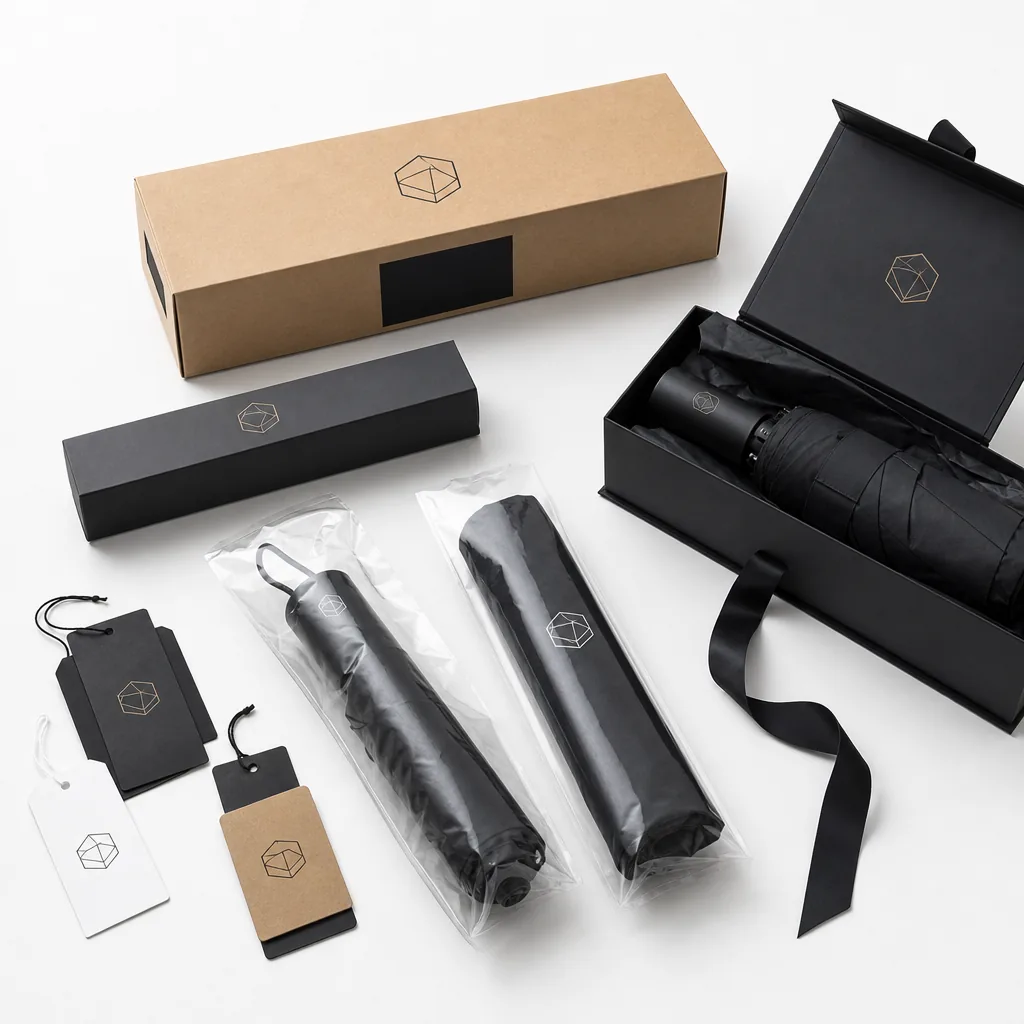
When claims activity spikes after storms or other losses, field teams need gear that survives constant handling, opens fast in bad weather, and arrives where adjusters are actually working. We build insurance adjuster umbrellas for that environment every day in our Songxia factory, where panel tension, rib strength, coating consistency, and packing efficiency are checked against the realities of distributed field operations, not showroom expectations.
- 1. How Claims and CAT Teams Use Umbrellas in the Field
- 2. Field-Ready Specs for Wind, Mud, Vehicles, and Repeated Use
- 3. Design Choices That Support Operations and Brand Visibility
- 4. Inspection Standards, Durability Checks, and Risk Reduction
- 5. Ordering Strategy for Regional Branches and Emergency Deployment
How Claims and CAT Teams Use Umbrellas in the Field
Insurance adjuster umbrellas are field tools first. On property inspections, customer home visits, and roadside claim support, the adjuster is moving with a tablet, camera, moisture meter, and claim notes, so the canopy has to open fast and close cleanly with one hand. For that use case, 23" or 27" umbrellas with fiberglass ribs and auto-open or auto-open-close mechanisms are the practical default; they are easier to carry in a vehicle and less likely to fail when a gust hits a driveway or porch. A steel shaft can lower unit cost, but fiberglass ribs do the real work when the umbrella is used all day, folded wet, and stuffed into a door pocket. Branding is secondary here. If the umbrella cannot handle repeated wet-dry cycles and constant in-and-out use, a logo will not save it.
CAT teams use the same product differently during storm-response deployments. In temporary field offices, parking lots, mobile command units, and door-to-door damage assessments, catastrophe response umbrellas need to cover people, clipboards, and equipment cases while leaving one hand free. A double-canopy vented frame is more useful than a decorative top because it releases wind instead of trapping it, and 190T or 210T pongee with a Teflon or UV coating helps the canopy dry faster and resist mud, roof grit, and staining. For roadside claim support, 30" bulk windproof umbrellas give better coverage when the team is unloading cases or standing beside a vehicle in rain. That is why claims team branded umbrellas are ordered in volume: durability, quick access, and weather resistance come before appearance.
When branding is added, it should not change the spec. A screen-printed logo on a dark canopy or a heat-transfer mark on a sleeve is usually enough for visibility at policyholder visits and temporary sites. The build should stay conservative: fiberglass ribs for wind performance, a steel shaft only where cost matters, and an easy push-button open for glove use. Buyers should also confirm AQL 2.5 inspection, MOQ, and lead time before storm season, along with FOB or DDP terms if the delivery window is tight. In this segment, insurance adjuster umbrellas are judged on how quickly they deploy, how well they hold up in bad weather, and whether the next shipment arrives before the next claim surge.
Field-Ready Specs for Wind, Mud, Vehicles, and Repeated Use
For insurance adjuster umbrellas, start with the carry method and the inspection route. A straight-shaft 27" or 30" model is easier to store upright in a truck bed, SUV cargo area, or site bag, and it dries cleaner after mud or roof runoff because the frame does not depend on hinge sections. A compact 21" or 23" foldable makes more sense for urban claims, parking-garage inspections, or adjusters who must keep an umbrella in a door pocket or briefcase, but the extra joints add wear. If the user is carrying a tablet, clipboard, sample tags, or a phone, auto-open should be the baseline for one-handed deployment; auto-open-close is only worth the added cost when the workflow involves constant in-and-out vehicle movement. For claims team branded umbrellas, choose size around the job: 27" for general field adjuster gear, 30" when coverage matters more than pack size.
Wind performance should be specified up front, not assumed. Catastrophe response umbrellas and other bulk windproof umbrellas should use a double-canopy vented design so gusts can vent instead of inverting the canopy; that is the practical choice for storm calls, open lots, and exposed properties where 50+ mph wind is a real risk. Fiberglass ribs are the better field option because they flex and recover after loading, while steel ribs add weight and are more likely to bend permanently if the umbrella is caught in wind or dropped in a vehicle. For canopy fabric, pongee 190T is the lower-cost choice for shorter service life, while 210T offers a tighter hand feel and better durability for programs expected to see heavier use. A fiberglass frame with 190T or 210T pongee gives buyers a better cost-to-life balance than a thin steel build.
Repeated use in mud, wet trunks, and crowded vehicles is where umbrella programs fail, so the purchase spec should address wear, not just appearance. Ask for a shaft finish that wipes clean, a runner that keeps moving after grit gets inside, and tip hardware that stays seated after repeated drops into a floorboard. For recurring deployment across a claims department, auto-open and a straight handle usually give better grip and control than a manual-fold design, especially with gloves or wet hands. Buyers should also require AQL 2.5 inspection on frame function, canopy stitching, and print registration so the production lot matches the approved sample. That level of control is what separates a low-cost promo item from insurance adjuster umbrellas built for 30 to 40 field days of use.
Design Choices That Support Operations and Brand Visibility
For roadside loss sites, flood zones, and storm-damaged neighborhoods, visibility should be the first spec. Build insurance adjuster umbrellas in safety yellow, blaze orange, or bright red; avoid navy or black, which disappear in rain, dusk, and body-camera footage. For photo readability at 10 to 20 feet, place one large logo on the center panel or on two opposing panels, and keep it clear of the hem and vent area. A 23" or 27" canopy in 190T or 210T pongee gives a cleaner print surface than glossy PVC and holds screen print or heat-transfer graphics better through daily claims work. If the program needs a more polished look for insurer or broker brand programs, specify a 16K frame; use 8K when cost control is the priority for bulk windproof umbrellas.
If reflective detail is available, put it on the sleeve or edge binding rather than across the full canopy. A reflective sleeve helps claims team branded umbrellas stand out when adjusters move between vehicles at night, but too much tape can make the product read as safety gear instead of professional field adjuster gear. For operation, auto-open or auto-open-close mechanisms are practical because adjusters often carry a tablet, clipboard, or camera in one hand. Keep the logo upright and centered so it stays visible when the user is walking, standing beside a car, or holding the canopy over a damage note. Using the same logo position across all sizes reduces artwork changes, limits reorder errors, and keeps procurement specs stable.
When buyers want a premium appearance, a 16K vented double-canopy frame with a simple one- or two-color mark usually looks more controlled than a crowded promo layout. Use the same placement on every size so catastrophe response umbrellas and everyday field kits stay consistent across crews, regions, and reorder cycles. Before production, lock the art area, canopy color, rib count, and sleeve detail so the logo does not shrink below photo-readability. That approach supports brand visibility in customer interactions, lowers reprint risk, and gives the team a durable presentation tool that still looks organized after repeated deployment in rough weather.
Inspection Standards, Durability Checks, and Risk Reduction
For insurance adjuster umbrellas, the buying decision should hinge on field reliability, not logo placement. Lock the specification with an approved pre-production sample before bulk production: 8K, 10K, or 16K frame, fiberglass or steel ribs, pongee 190T or 210T canopy, and auto-open or auto-open-close mechanism. Then run opening-cycle tests on the sample and first lot to verify spring return, latch engagement, shaft wobble, runner travel, and consistent button release after repeated use. A sticking button or loose shaft turns field adjuster gear into a delay during a claim day, especially when crews are moving between vehicles, roofs, and temporary staging areas. For claims team branded umbrellas and catastrophe response umbrellas, the sample is the control point that prevents a cosmetic approval from becoming a functional failure in production. Buyers should also confirm the target pack method and replacement plan early, because the same model often needs to support branch-office use and emergency redeployment on short notice.
Rib-joint inspection is the main durability check for bulk windproof umbrellas. Inspect ferrule crimp, hinge play, rivet bite, and rib seating so fiberglass ribs load evenly and steel joints do not loosen after repeated opening and closing. On 8K and 10K frames, poor alignment shows up fast in side wind; on 16K vented frames, ring alignment and joint consistency matter more than decoration. After mechanical checks, review water repellency and finish: the canopy should shed water cleanly, with no pinholes, broken stitches, loose threads, dye streaks, print cracking, or scratched ferrules. Finish inspection should be done under AQL 2.5 before shipment, including handle fit, tip caps, edge tape, and overall decoration so cosmetic defects do not enter a client-facing kit. That level of inspection reduces warranty claims, avoids field replacements, and keeps the umbrella suitable for repeated use in rain-heavy inspection work.
Packaging and overage planning are part of risk control, not an afterthought. The approved pre-production sample should define the repeatable standard for fabric weight, rib type, handle mold, logo placement, and carton pack method, so QC can compare every batch against one signed reference. Buyers should also order spare-unit overage, because branch offices and catastrophe staging sites often need immediate replacements before a new print run or reimport can be scheduled. Carton robustness matters during transfers between offices and disaster zones: double-wall outer cartons, corner protection, and sensible pack counts help prevent crushed tips, bent shafts, and canopy creases. For insurance adjuster umbrellas, that protection lowers landed cost by reducing damage in transit and makes redeployment faster when stock has to move from a local branch to a catastrophe site on short notice.
Ordering Strategy for Regional Branches and Emergency Deployment
For normal claims operations, split inventory into two buckets: a base stock for weekly branch use and a small reserve for seasonal spikes. The base program should be standardized across offices so you can move cartons fast and avoid mixed rib counts, handle styles, and print setups. A practical spec for insurance adjuster umbrellas is a 21" or 23" auto-open model with fiberglass ribs, a 190T pongee canopy, and a black POE or matte polyester finish. That keeps the look neutral for field visits while staying light enough for everyday field adjuster gear. If you add claims team branded umbrellas, hold them until branch demand is stable, because panel printing, proof approval, and revised packing usually raise MOQ and slow repeat orders. Ask suppliers to quote blank and branded programs side by side, plus AQL 2.5 inspection and carton labels by branch so receiving is faster and reorders stay clean.
For storm season, keep surge stock as bulk windproof umbrellas at the main warehouse or a 3PL hub near a coastal or storm-prone lane. The usual catastrophe response umbrellas spec is a 23" or 27" auto-open model with 8K or 10K fiberglass ribs, a vented double canopy, and a Teflon or UPF 50+ finish when crews work in rain and sun. Repeat orders with the same panel layout often ship in 25 to 35 days after artwork approval; first-time custom builds, special handles, or mixed-size cartons can push that to 40 to 50 days. MOQ is typically lower for blank stock and higher for custom builds, so pre-approve canopy colors, panel count, and logo placement before storm season starts. That reduces risk when you need replacement inventory quickly and keeps field adjuster gear available without waiting on new sampling.
Use FOB when your team controls freight and wants to consolidate at a regional import point, national DC, or 3PL hub that can break pallets by branch. Use DDP when you need direct delivery to regional offices and do not want staff handling customs, brokerage, or local last-mile issues; it is especially useful for emergency drops where those charges can wipe out savings. For planned annual replenishment, FOB usually gives better cost control. For short-notice deployment, DDP is often the safer choice because the supplier manages door-to-door delivery. Ask for one quote that includes lead time, MOQ, carton count, and Incoterm so you can compare landed cost by lane and keep insurance adjuster umbrellas moving from base stock to storm reserve without schedule gaps.
Frequently Asked Questions
What umbrella style is best for insurance field adjusters?
A 23-inch to 27-inch auto-open umbrella is often the best fit because it gives enough coverage for inspections while still fitting easily in most vehicles. Compact styles save space, but straight models usually last longer under heavy daily use.
Is a double-canopy frame worth the extra cost for CAT teams?
Yes, in many storm-response environments the upgrade is justified because double-canopy construction improves venting and reduces inversion risk in gusts. For routine branch use in milder climates, a standard single-canopy frame may be enough.
What umbrella specs work best for insurance adjusters in the field?
For field adjusters, look for a 23-27 inch canopy, fiberglass frame, 190T or 210T pongee fabric, and windproof construction with reinforced ribs. A straight or EVA handle is common for all-day use during inspections.
Can a custom umbrella order be split across multiple regional offices?
Yes. Many B2B buyers ship one PO to several warehouse or branch locations. A typical factory can support carton labeling by location, mixed-size packaging, and staggered delivery schedules if planned before production.
What is a typical MOQ and lead time for claims team branded umbrellas?
For OEM/ODM umbrella programs, MOQ often starts around 300-500 pieces per design, depending on the model and print method. Lead time is usually 25-40 days after sample approval, with rush options sometimes available for repeat orders.
Looking to Launch Your Custom Umbrella Line?
ZheBrella is a Zhejiang-based OEM/ODM umbrella manufacturer with 17 years of export experience. Free design, low MOQ from 100 pieces, windproof construction, full-color print.
Get Free Quote Now »People Also Search For
Related Articles
Branded Umbrellas for Insurance Claims and CAT Response
Source umbrellas for claims teams and catastrophe response with durable frames, fast deployment specs, QC controls, and ...
Read More »
Umbrella Sourcing for Insurance Claims and Catastrophe Teams
Source durable umbrellas for insurance adjusters and CAT teams with windproof frames, fast deployment, QC standards, and...
Read More »Umbrella Specs for Insurance Adjusters and Claims Teams
Source umbrellas for insurance field teams with windproof frames, hands-on inspection needs, logo placement, lead times,...
Read More »