Storm Umbrellas for Retail: Specifying Heavy-Rain Builds
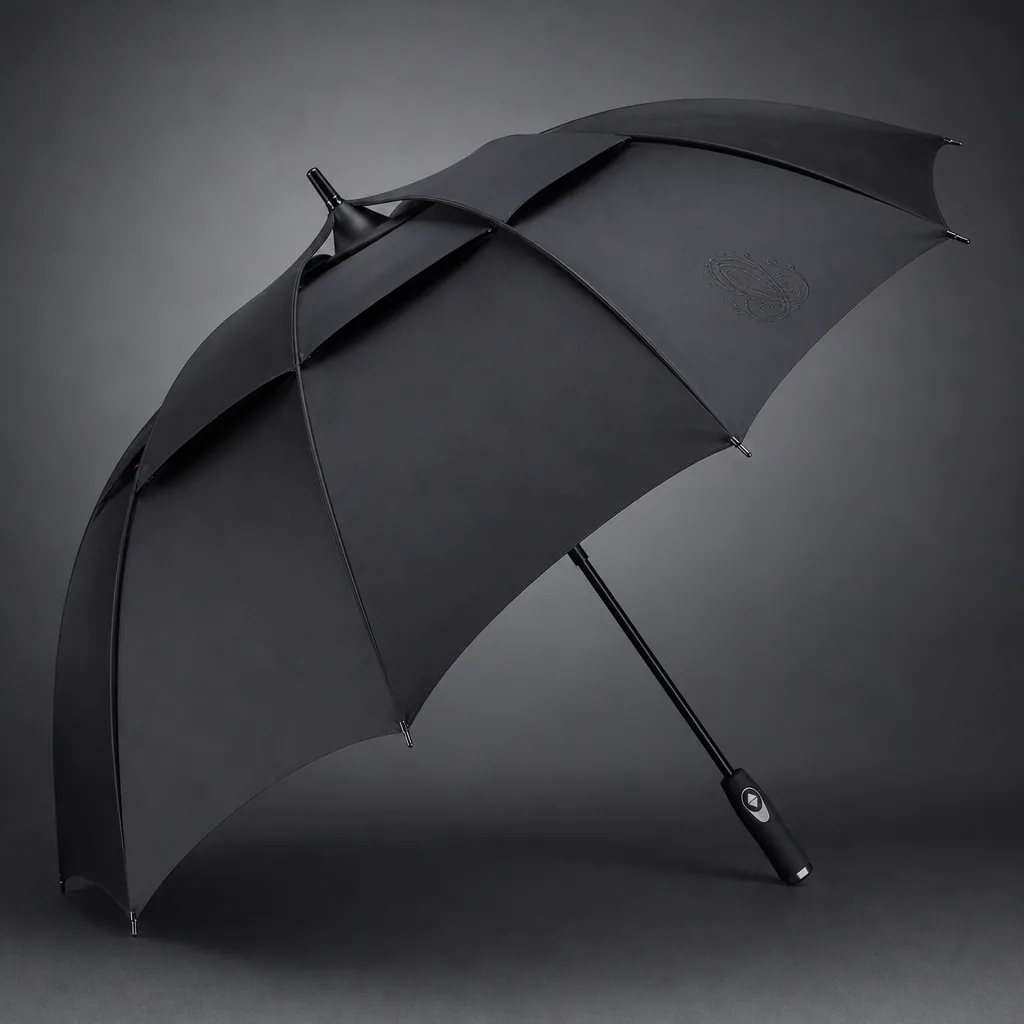
When buyers specify storm umbrellas for retail, the risk is not just a wet customer; it is returns, bent ribs, delayed replenishment, and a product line that fails in the first heavy rain. On our Songxia factory floor, the difference starts in the build sheet: vented double canopy, fiberglass frame, 210T pongee, reliable auto-open parts, and inspection points that match the order quantity, lead time, and carton plan before production starts.
Define the Storm Umbrella Performance Target
The performance target for storm umbrellas for retail should start with rain load, gust behavior, and daily handling, not diameter alone. A 30 inch golf canopy looks impressive on a shelf, but it is the wrong answer for a commuter who fights subway stairs, revolving doors, and wet bus queues. For heavy rain umbrellas, I normally define the build around three checks: canopy fabric that sheds water fast, a rib system that recovers after inversion, and a shaft/runner set that does not wobble after 200 to 300 open-close cycles. A practical retail spec is 190T or 210T pongee with Teflon water-repellent treatment, fiberglass ribs in 8K or 10K layout, and a wind-tunnel target of 50+ mph for compact and straight models. Steel ribs can reduce cost, but they bend permanently after a hard gust; fiberglass costs more but saves returns.
Compact storm models fit travel, drugstore, corporate gift, and convenience retail channels, where pack size matters as much as coverage. A 21 inch or 23 inch auto-open-close umbrella with 8K fiberglass ribs, black metal shaft, three-fold frame, and 190T pongee canopy is usually the best balance. The weak points are the folding joints and spring mechanism, so buyers should not over-spec a compact as if it were a golf umbrella. If the channel sells to office commuters, add a rubberized handle, wrist strap, sleeve with drain tolerance, and AQL 2.5 inspection focused on runner lock, rib tip stitching, and automatic rebound. For OEM storm umbrellas, I would avoid oversized compact canopies above 23 inch unless the frame tooling is proven, because extra fabric area increases torque at every hinge during side gusts.
Straight and golf-style builds serve different buyers. A 23 inch or 27 inch straight umbrella works for department stores, hotels, city retailers, and uniform programs because the single shaft is stronger, the silhouette looks cleaner, and the price can still sit below a premium golf model. Golf-style builds at 30 inch, often with 8K, 10K, or 16K fiberglass ribs, EVA handle, and double canopy vented construction, are better for outdoor events, resorts, sports brands, and warehouse clubs. A double canopy storm umbrella releases uplift through the vent layer instead of forcing the ribs to take the full load, which is why a serious wind resistant umbrella supplier will ask for wind rating, canopy diameter, rib count, and fabric weight before quoting. Our standard practice at ZheBrella is to align the frame class with the retail use case first, then price FOB or DDP with realistic MOQ and 30 to 45 day lead time assumptions.
Select Canopy Fabric and Water Resistance
For premium storm umbrellas for retail, I usually specify 210T pongee because the yarn density gives a tighter hand, cleaner print surface, and better resistance to water pressure during sustained rain. It is not “waterproof” like PVC sheet, but with a proper C6 or C0 water-repellent finish, a 210T polyester pongee canopy beads water fast and sheds runoff before it can sit on the seams. In factory testing, the difference shows up after 10–15 minutes of heavy spray: 190T can still pass for ordinary rain, but 210T keeps a drier inner face and looks less tired after repeated open-close cycles. For retail shelves, that matters because consumers judge quality the first time they shake it dry at a doorway.
190T pongee still has a place in value heavy rain umbrellas, especially 21" and 23" compact models where price pressure is real and the frame is not being sold as a 50+ mph wind product. The risk is not just lower fabric density; cheaper programs often pair 190T with thin coating, loose lockstitch sewing, and poor panel matching. A good value build should still use even seam allowance, tight topstitching around each rib tip, and controlled panel tension so water does not pool between 8K ribs. If a buyer asks a wind resistant umbrella supplier for a low-cost item, I would rather reduce handle cost than accept a canopy that sags after three wet cycles.
The best double canopy storm umbrella designs depend on fabric behavior as much as frame strength. A vented top layer must lift under gusts without trapping water between layers, so the overlap width, mesh vent position, and sewing tension need to be checked on real samples, not only CAD drawings. Our standard practice at ZheBrella is to inspect coating uniformity, seam leakage, and drying time before approving OEM storm umbrellas for bulk cutting; AQL 2.5 final inspection alone is too late to catch a bad coating batch. For storm umbrellas for retail, I like to see water bead after 24-hour conditioning, no obvious seam wicking, and a canopy that can be shaken mostly dry within 10–20 seconds.
Choose Ribs, Shaft, and Windproof Construction
For storm umbrellas for retail, I would not start with the logo area or handle shape; I would start with the rib material and shaft because that is where returns usually begin. Steel ribs are cheap, stiff, and easy to source, but they take a permanent bend when a customer fights crosswind, and lower-grade plating will show rust at the rivets after repeated heavy rain. Fiberglass ribs cost more, usually adding about $0.35–$0.90 per umbrella depending on length and count, but they flex back instead of kinking. On 23" and 27" stick umbrellas, fiberglass ribs with a steel or fiberglass shaft give a better balance than all-steel construction. For compact auto-open-close models, mixed construction is common: fiberglass outer ribs for flex, steel middle runners for mechanism strength, and an aluminum or steel shaft depending on target weight.
Rib count matters, but not in the simple way buyers often assume. An 8K frame is the normal retail baseline and can be very solid if the rib thickness, rivet quality, and runner fit are controlled. A 10K frame gives a rounder canopy and spreads load better without making the umbrella feel too heavy. A 16K build looks premium and handles gusts well, but it adds sewing labor, more failure points, and extra weight; I only recommend it for 27" or 30" heavy rain umbrellas where the customer expects a substantial product. For a wind resistant umbrella supplier, the more important question is whether the ribs are solid fiberglass or hollow, whether the tips are reinforced with metal or molded caps, and whether the stretchers are thick enough to avoid twisting under load.
A double canopy storm umbrella is the right construction when wind is part of the retail promise, not just rain coverage. The vent gap lets pressure escape instead of turning the canopy into a sail, and it works best with 190T or 210T pongee that has enough tension to recover after inversion. For OEM storm umbrellas, I usually specify a center shaft of at least 12 mm on 23" stick models and 14 mm or more on 27" golf-style builds, with a thicker wall if the mechanism is auto-open. Wind-tunnel claims should be tied to a real test method; “survives 50+ mph” is believable only when sample size, open-close cycles, and post-test frame deformation are checked. Reinforced tips, tight rib-end stitching, and clean rivet setting are small details, but they decide whether storm umbrellas for retail survive the first bad week of weather.
Specify Mechanisms for Reliable Daily Use
Mechanism choice is where many heavy rain umbrellas fail first, not the canopy fabric. A manual stick umbrella has the fewest moving parts and is still the safest specification for 27" and 30" storm umbrellas for retail, especially when the frame uses 10K or 16K ribs and a vented double canopy. For daily commuter use, I like a 7.0-8.0 mm center shaft, reinforced runner, and a positive lock that does not wobble after wet cycling. Auto-open is acceptable on 23" and some 27" builds, but the spring must be matched to canopy weight; a weak spring gives lazy opening, while an overpowered spring hammers the notch, runner, and top cap until the frame loosens.
Auto-open/close mechanisms are convenient, but buyers should treat them carefully on heavy rain umbrellas. The telescopic shaft, compression spring, brake, and plastic/metal runner all carry more load than on a light 21" folding umbrella. For OEM storm umbrellas, I normally ask for cycle testing of at least 500 open/close cycles for promotional orders and 1,000 cycles for retail programs, followed by checking shaft play, button return, rib tip seating, and whether the canopy fully tensions without hand assistance. If a supplier only says “automatic” without spring wire diameter, shaft wall thickness, runner material, and cycle-test standard, the mechanism is underspecified.
The biggest mistake is putting a standard folding auto-open/close unit under a double canopy storm umbrella and expecting it to survive wind and water weight. A wet 210T pongee canopy with a vent layer adds real drag, so the mechanism must be specified together with rib count, shaft material, and wind rating, not as a separate accessory. As a wind resistant umbrella supplier, ZheBrella’s standard practice is to test heavier double-canopy samples after soaking and wind loading, because dry showroom opening tells you almost nothing. For storm umbrellas for retail, I would rather approve a slightly firmer button and stronger spring than a smooth-feeling mechanism that fails after two weeks of rainy-season use.
Control Quality Before Mass Production
For storm umbrellas for retail, sample approval has to be stricter than the normal “looks good” sign-off used for cheap promo umbrellas. I want the buyer to approve canopy tension first: a 23" or 27" canopy in 190T/210T pongee should sit tight between rib tips without scallop sagging, twisted seams, or loose vent panels on a double canopy storm umbrella. Then check opening force across at least 10 pieces, because an auto-open frame that needs two hands in the showroom will fail with consumers in real rain. Manual, auto-open, and auto-open-close mechanisms should open cleanly without shaft rattle, latch slip, or runner scraping. On 8K and 10K frames, rib recovery is the next pass/fail item: flex the fiberglass ribs backward and confirm they return without permanent bend; steel ribs can be stronger in compression but are less forgiving after inversion.
Leakage checks should be done before artwork approval, not after bulk fabric is printed. We normally spray the canopy for 3 to 5 minutes at seam lines, top notch, vent overlap, and logo-printed panels, then inspect the inside for pinholes, stitch wicking, and coating damage from heat-transfer or screen printing. Heavy rain umbrellas need better seam discipline than fashion umbrellas: needle size, stitch density, and binding tape affect waterproof performance as much as the fabric coating. For retail programs, I also check handle assembly by twisting and pulling the grip, cap, and tip; a rubberized straight handle or EVA golf handle should not rotate, creak, or separate after repeated opening. If the product is positioned as a windproof model, ask the wind resistant umbrella supplier for a clear test basis, such as 50+ mph wind-tunnel survival on a vented 8K fiberglass frame, not a vague “strong wind” claim.
Mass production should start only after the approved sample is sealed with fabric weight, rib count, shaft diameter, handle material, coating, logo method, and packing standard written into the PI. For OEM storm umbrellas, practical MOQs are usually 500 to 1,000 pieces for stock-color 23" models, 1,000 to 3,000 pieces for custom PMS canopy colors, and higher if molded handles or exclusive frame tooling are required. Typical lead time is 7 to 12 days for pre-production samples, 25 to 40 days for bulk after deposit and artwork approval, and 45+ days in peak rainy-season capacity. Final inspection should use AQL 2.5 for major defects, with specific checkpoints for leakage, opening failure, broken ribs, poor printing registration, loose handles, carton drop damage, and barcode accuracy. Before approving FOB Ningbo/Shanghai or DDP quotations, confirm whether testing, inner cartons, spare panels, duties, delivery appointment fees, and Amazon or retailer compliance labels are included.
Frequently Asked Questions
Is a double canopy always necessary for a storm umbrella?
Not always. It is most useful for windy markets because vents reduce canopy inversion, but a single-canopy umbrella with fiberglass ribs can still work for heavy rain if the frame and seams are well specified.
Should retail storm umbrellas use 8K or 16K ribs?
8K fiberglass is suitable for many mid-market programs and keeps cost and weight controlled. 16K is better for premium positioning, larger canopies, or buyers who want a stronger visual durability story.
What specifications should I request for retail storm umbrellas?
For heavy-rain retail builds, specify a double canopy, fiberglass ribs and shaft, 210T pongee fabric with water-repellent coating, reinforced tips, and tested open-close mechanisms. Ask for wind testing criteria, frame fatigue testing, and AQL inspection standards in the quotation.
What MOQ is typical for OEM storm umbrellas?
A practical MOQ is often 1,000–3,000 pieces per model for custom colors, logo printing, and retail packaging. More complex builds such as automatic double canopy umbrellas may require higher MOQs depending on frame and fabric availability.
How long does production take for custom heavy rain umbrellas?
Sampling usually takes 7–14 days after artwork and specs are confirmed. Bulk production is commonly 30–45 days after sample approval and deposit, with additional time needed for custom molds, special handles, or branded packaging.
Looking to Launch Your Custom Umbrella Line?
ZheBrella is a Zhejiang-based OEM/ODM umbrella manufacturer with 17 years of export experience. Free design, low MOQ from 100 pieces, windproof construction, full-color print.
Get Free Quote Now »People Also Search For
Related Articles
Double-Layer Umbrellas: Buyer Guide for Rain and Sun Programs
Learn how double-layer umbrellas combine venting, blackout coating, UPF 50+, and brand design while managing weight, cos...
Read More »
Retail Commuter Umbrellas: Specs for Daily Rain Programs
Compare commuter umbrella specs for retail programs, from 8K frames and auto-open shafts to 210T pongee, wind vents, QC ...
Read More »
Reflective Umbrellas for Commuters: Buyer Spec Guide
Specify reflective commuter umbrellas with the right fabric, rib count, print placement, and QC checks for safer retail ...
Read More »