Branded Umbrellas for Insurance Adjusters and Restoration Crews
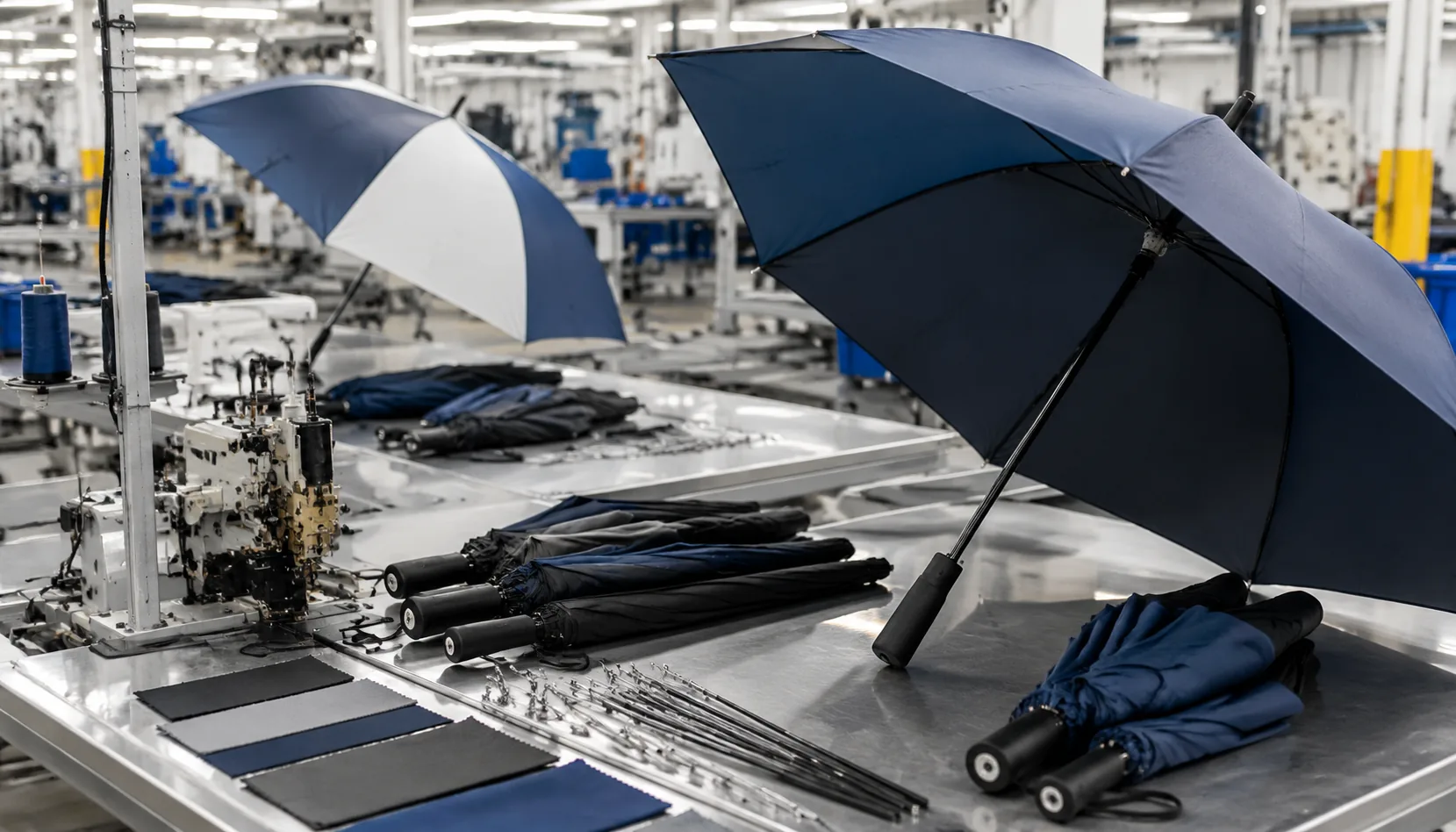
When adjusters and restoration crews are working claims in heavy rain, a weak umbrella becomes a safety issue, a branding miss, and another replacement cost. For branded insurance adjuster umbrellas, the real planning starts on the factory floor: frame strength, rib material, canopy coating, print position, packing method, and QC checks all decide whether the order holds up in the field and ships on time.
Match Umbrella Specs to Storm-Site Conditions
For roof, siding, and exterior envelope inspections, I would not spec a compact 21" folding umbrella. Two people need coverage while one holds a tablet, moisture meter, chalk, or camera, so a 58–62 inch arc golf umbrella or a 27"/30" large straight umbrella is the practical range. A 58" arc usually gives enough shoulder-to-shoulder coverage without becoming hard to control near ladders, gutters, and parked vehicles. A 62" arc is better for open lots, catastrophe response staging, and commercial roof access points where wind is less funneled. For branded insurance adjuster umbrellas, the sweet spot is often a 60" arc, 8K or 10K frame, 190T or 210T pongee canopy with a water-repellent coating, and a straight handle that can be gripped with gloves.
Fiberglass ribs and shafts cost more than steel, but they make sense for storm-site use because they flex instead of permanently bending when gusts hit. A steel rib frame can feel rigid in a showroom, then kink after one bad side gust at 35–45 mph, especially on wide canopies. Fiberglass also cuts weight, which matters when adjusters carry ladders, sample bags, and claim paperwork across wet grass or debris. Corrosion is the other issue: steel ribs need good plating and dry storage, while fiberglass does not rust after repeated rain exposure. For windproof work umbrellas and restoration crew umbrellas, I prefer fiberglass ribs with either a fiberglass or reinforced metal shaft, plus a vented double-canopy design if the buyer expects coastal storms or open parking-lot inspections.
The canopy and mechanism should match field behavior, not just logo size. Manual-open frames are durable and easier to rinse clean after mud or grit exposure, while auto-open is convenient when crews step out of trucks with both hands occupied. Auto-open-close folding umbrellas are useful for office commuters, but they are not my first choice for restoration crew umbrellas because the shorter segmented shaft is weaker under torque. For storm response promotional gear, use a dark 210T pongee canopy with reflective edge piping if night work is possible, and reserve a clean logo panel for screen print or heat transfer. Bulk branded umbrellas should be sampled and inspected under AQL 2.5 for rib alignment, runner lock strength, tip sewing, print adhesion, and open-close cycling before shipment.
Choose Fabrics and Visibility Features for Field Work
For branded insurance adjuster umbrellas, I would not go below 190T pongee, and 210T pongee is the safer spec when crews are opening and closing the umbrella 20 times a day between roof slopes, driveways, and vehicle inspections. 190T pongee keeps cost and packed weight down for bulk branded umbrellas, but 210T has a tighter hand feel, better print surface, and less panel sag after repeated wet-dry cycles. Ask for a durable water-repellent finish, not just a soft “waterproof” claim; in production we check beading before sewing and again after canopy assembly because needle holes and heat-transfer logos can change runoff behavior. For storm response promotional gear, black looks professional but disappears in rain, so I prefer navy, safety orange, lime, or white contrast panels with a dark logo field. A 23" or 27" auto-open umbrella with 8K fiberglass ribs is usually practical; steel ribs are cheaper but less forgiving when gusts roll through an open loss site.
Visibility features matter more than most buyers specify. Reflective piping along the canopy edge is worth the small upcharge because roadside hail inspections, dusk tarp checks, and parking-lot claim meetings put adjusters close to moving vehicles. If budget allows, add reflective print on one panel rather than relying only on the logo; screen printing reflective ink is more demanding than standard white ink, but it gives better side visibility when headlights hit the canopy. High-contrast panel layouts also help team identification: for example, alternating charcoal and fluorescent yellow panels are easier to spot across a subdivision than a tone-on-tone corporate design. For restoration crew umbrellas, avoid thin PVC promotional canopies unless the event is purely handout use; POE is clear and useful for site visibility, but pongee feels more professional, folds cleaner, and handles full-color branding better. Our standard practice at ZheBrella is to test reflective trim adhesion after wet flexing, not only on a dry sample.
UPF 50+ fabric matters when the umbrella is used as a mobile shade tool, not just rain cover. Roof inspections after hurricanes, driveway moisture readings, roadside photo documentation, and ladder-standby work can leave adjusters exposed for 30 to 90 minutes at a time, especially in southern U.S. markets where UV is high even after storms clear. A silver UV coating or qualified UPF 50+ treatment on 210T pongee blocks more sun than a standard dyed canopy, but buyers should confirm whether the coating affects logo placement; heat-transfer marks can show more clearly on coated fabric, while screen printing may need adjusted curing. For windproof work umbrellas, pair the fabric choice with a double-canopy vented structure, fiberglass shaft or ribs, and a realistic wind claim such as surviving 50+ mph controlled gust testing. The best branded insurance adjuster umbrellas are not the cheapest giveaway; they are field equipment that keeps the crew visible, dry, shaded, and identifiable.
Branding That Looks Professional in Claims Documentation
For claims documentation, the logo should identify the company without stealing attention from roof damage, water intrusion, or interior tear-out details. On branded insurance adjuster umbrellas, I usually recommend one or two printed panels on a 23" or 27" stick umbrella, not all eight panels. A 190T or 210T pongee canopy with a single-color screen print gives cleaner edges than cheap polyester, and it photographs better under gray storm light. If the umbrella is used around ladders, gutters, and open claims sites, a fiberglass shaft and ribs are worth the small upgrade over painted steel because bent ribs make even a good insurer look sloppy in photos.
Sleeve printing is underrated for restoration crew umbrellas because the sleeve is often visible in truck cabs, job trailers, and reception areas before the umbrella is opened. A vertical logo, claim hotline, or QR code can be printed on the sleeve using heat transfer for small detail or screen printing for larger block artwork. Handle tags also work well when procurement wants traceability: a woven or rubber tag can carry the carrier name, franchise location, or storm response promotional gear campaign code without crowding the canopy. Our standard practice at ZheBrella is to keep sleeve artwork within the seam allowance tolerance, usually allowing 3–5 mm shift, so the logo does not look crooked after mass sewing.
Restrained colorways build trust better than loud promotional layouts in this category. Navy, charcoal, black, forest green, or deep burgundy with white or light gray branding looks professional beside clipboard photos, moisture meter readings, and loss-site images. For bulk branded umbrellas, I would avoid full-panel gradients, oversized slogans, or neon colors unless the use case is public event handout rather than field claims work. Windproof work umbrellas with a double-canopy vent, 8K or 10K fiberglass ribs, and a UPF 50+ or water-repellent coating can still look conservative; the engineering does not need to shout. The best branded insurance adjuster umbrellas make the adjuster easy to recognize while keeping the claim file visually clean.
Procurement Planning for Storm Season Peaks
Use FOB Ningbo or Shanghai when the umbrellas are planned inventory for national programs, annual insurance conferences, or pre-season storm response promotional gear. FOB gives the buyer’s forwarder control over consolidation, sailing schedule, insurance, and landed-cost modeling, which matters when 10,000 bulk branded umbrellas are only one line inside a bigger promotional-products container. Use DDP when a regional catastrophe team needs urgent replenishment after a hail outbreak, hurricane landfall, or major flood response and does not have time to manage customs, duties, and last-mile trucking. DDP costs more per unit, especially by air or courier for 300–800 pieces, but it gives a clean delivered price to a warehouse, branch office, or restoration franchise hub. My advice is to split the program: build the main branded insurance adjuster umbrellas under FOB 60–90 days before peak season, then reserve a smaller DDP reorder lane using approved artwork and stock frames so emergency replenishment can move in 7–15 days instead of restarting sampling.
Quality Controls That Reduce Field Failures
Field failures usually start in small parts, not in the printed logo. For branded insurance adjuster umbrellas, I would inspect every production lot first on the mechanism bench: auto-open buttons must fire cleanly without sticking, shafts must lock with a firm click, and auto-open-close samples should cycle at least 20 times before packing approval. On 23" and 27" work models, we check runner travel, spring force, and handle pull-out because adjusters are often opening the umbrella one-handed while carrying a clipboard, tablet, or moisture meter. Rib strength needs a separate pull and flex check: steel ribs should not twist at the joint, fiberglass ribs should rebound without whitening, and 8K or 10K frames should be matched to the canopy size rather than selected only by price. For storm response promotional gear, a cheap light frame is false economy when crews are standing beside damaged roofs, wet driveways, and open truck beds.
Tip attachment and fabric tension deserve more attention than many buyers give them. Each tip should be pull-tested, not just visually checked, because loose tips create sharp rib ends and fabric tears after a few windy job sites. On restoration crew umbrellas, I like to see even panel tension from crown to edge, no puckering at seam intersections, and no exposed thread tails around the vent or binding tape. Pongee 190T is acceptable for many promotional orders, but 210T with a water-repellent coating gives a tighter print surface and better rain shedding for repeated field use. If the buyer specifies windproof work umbrellas, the QC team should open samples in a fan or wind-tunnel setup and confirm the double-canopy vent works instead of ballooning. A practical target is survival above 50 mph for fiberglass 8K or 10K frames, while oversized 30" golf umbrellas need reinforced ribs and stronger stretchers.
Logo alignment is the last visible checkpoint, but it should not be treated as cosmetic only. Branch managers notice when bulk branded umbrellas arrive with crooked carrier logos, mismatched PMS colors, or heat-transfer marks drifting across panel seams. For multi-panel printing, we measure logo position from the rib line and lower hem, then compare first-article samples against the approved artwork sheet before mass printing continues. Our standard practice at ZheBrella is to use AQL 2.5 final inspection before shipment on multi-branch deployment orders, especially when cartons are split by office, region, or claim-response team. That inspection should include carton drop condition, barcode or branch label accuracy, open-close function, rib symmetry, tip security, fabric stains, logo registration, and packing count. For branded insurance adjuster umbrellas moving FOB Ningbo or DDP to multiple U.S. locations, this final gate prevents a small factory miss from becoming hundreds of complaints in the field.
Frequently Asked Questions
What umbrella frame is best for insurance adjusters working after storms?
A fiberglass shaft and rib system is usually preferred because it flexes better than steel in gusty conditions and resists corrosion. For larger coverage, specify 8K or 16K ribs with a double-canopy windproof design.
Can urgent storm-response umbrella orders be shipped directly to regional teams?
Yes, DDP shipping can deliver cartons directly to branch offices or job sites, though it costs more than FOB. For repeat programs, many buyers keep approved artwork and materials on file to shorten reorder lead times.
What umbrella construction works best for adjusters working in high winds?
Look for a fiberglass or reinforced metal frame with a vented canopy, 60-68 inch arc, and an automatic open mechanism for quick use in the field. For storm response teams, many buyers also request 8-rib or 10-rib support and water-repellent polyester or pongee canopy fabric.
Where should the logo be placed for maximum visibility on field umbrellas?
The most common placements are one or two canopy panels, the sleeve, or the handle wrap. For B2B orders, 1-color screen print is usually the most cost-effective, while multi-color print or heat transfer works better for complex brand artwork.
What MOQ and lead time should a buyer expect for branded work umbrellas?
Typical MOQ is often 300-500 pieces per color or design, depending on frame type and print method. Production commonly takes 25-40 days after artwork approval, with sample lead time around 5-10 days.
Looking to Launch Your Custom Umbrella Line?
ZheBrella is a Zhejiang-based OEM/ODM umbrella manufacturer with 17 years of export experience. Free design, low MOQ from 100 pieces, windproof construction, full-color print.
Get Free Quote Now »People Also Search For
Related Articles
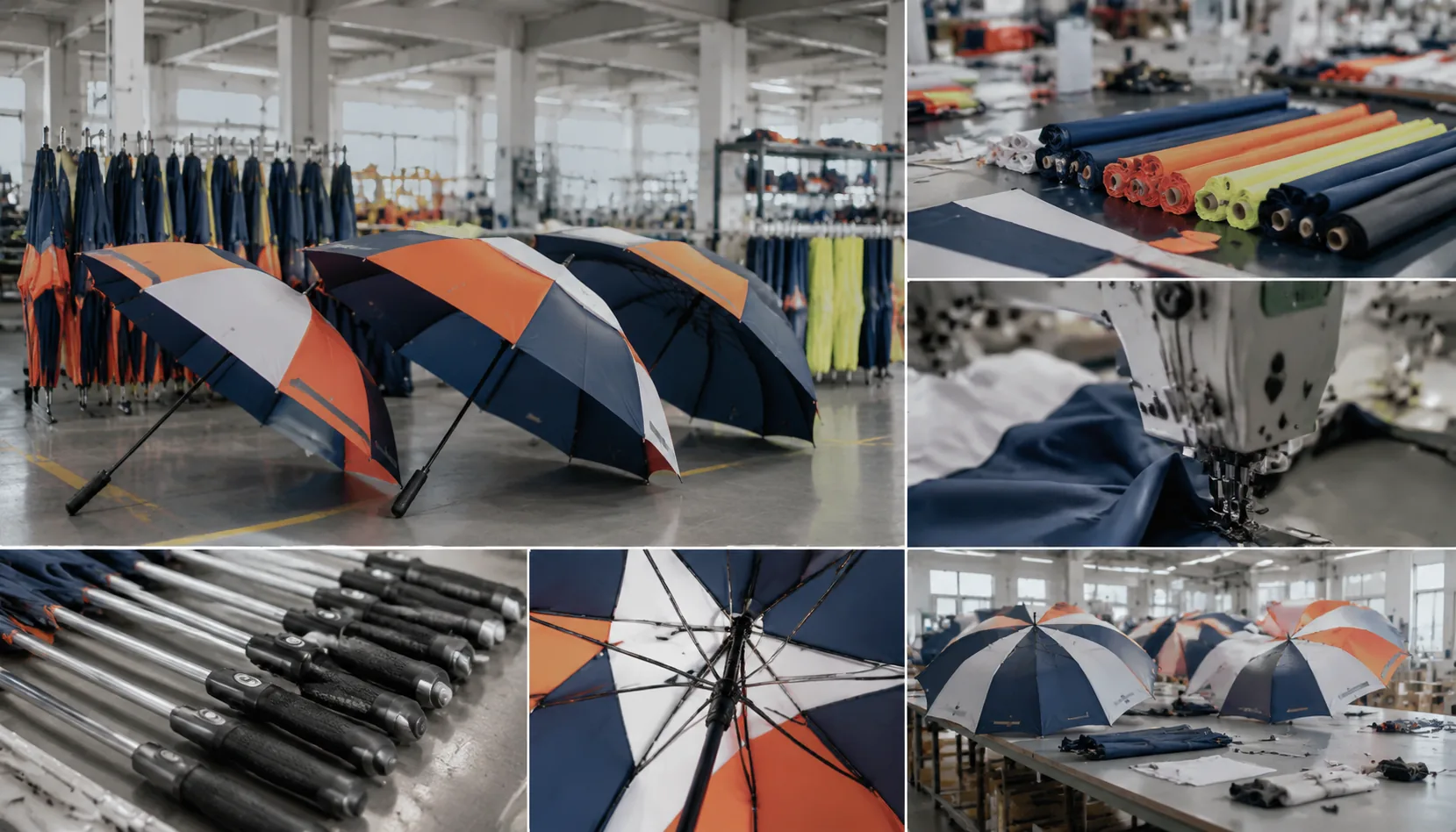
Branded Umbrellas for Insurance Claims and Roadside Teams
Plan umbrellas for insurance adjusters and roadside crews with windproof frames, fast reorders, compliant logos, and rea...
Read More »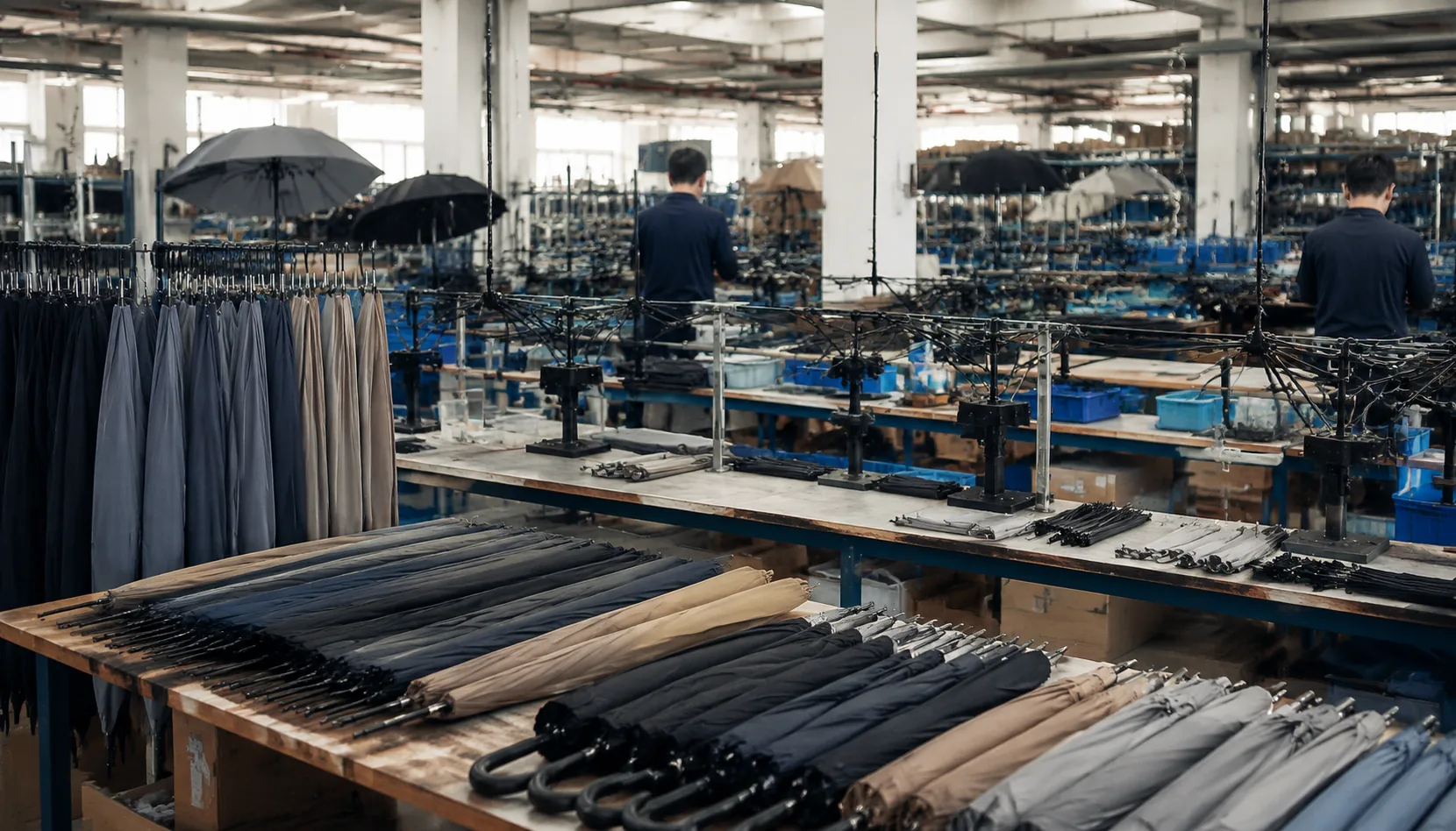
Custom Umbrellas for Insurance Agencies and Claims Teams
Source insurance-agency umbrellas for storm claims, branch giveaways, and adjuster kits with durable specs, AQL checks, ...
Read More »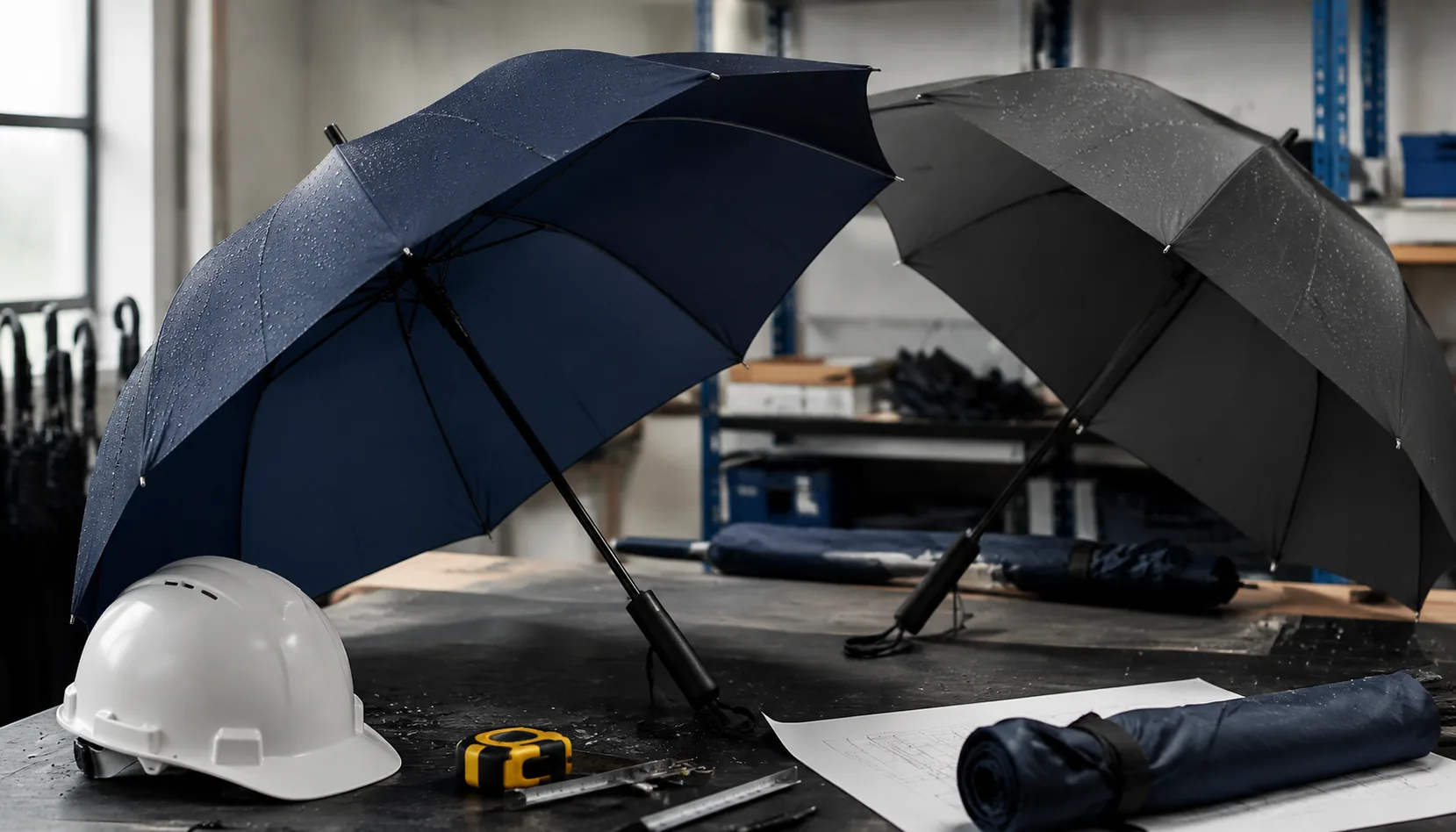
Branded Umbrellas for Insurance Claims Field Teams
Specify umbrellas for insurance adjusters with durable frames, fast deployment, professional branding, QC standards, and...
Read More »