Branded Umbrellas for Insurance Claims Field Teams
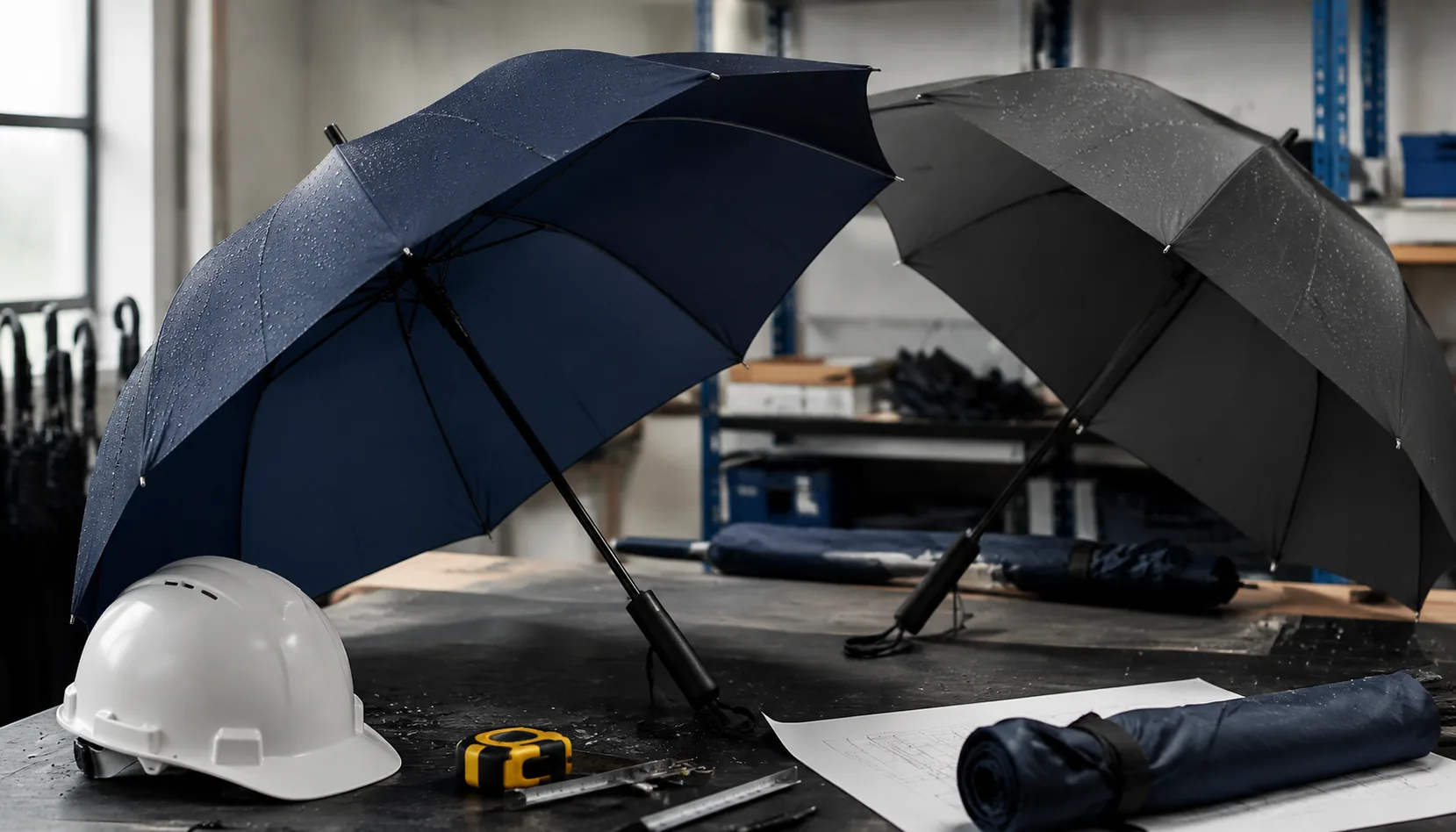
When adjusters step out at a loss site, a weak umbrella becomes more than an inconvenience—it slows inspection notes, exposes electronics, and makes the carrier look unprepared. For insurance claims team umbrellas, we specify fast-opening mechanisms, reinforced ribs, clean logo placement, and fabric that survives repeated wet packing in vehicle trunks. On our Songxia factory floor, the difference shows up in frame torque checks, canopy tension, print adhesion, and reorder records that keep field teams supplied.
Why Claims Teams Need Purpose-Built Umbrellas
Storm claims are not handled from a clean desk; adjusters are standing in driveways after hail, walking fence lines in steady rain, and looking up at damaged shingles while a homeowner waits for an answer. Standard giveaway umbrellas usually fail in that setting because the shaft twists, the canopy flips, or the handle is too small to manage while holding a phone, ladder tag, moisture meter, or clipboard. Insurance claims team umbrellas should be specified like field equipment, not event swag: 23" or 27" arc for one-person inspections, 30" or golf-size coverage when an adjuster needs to shield a policyholder or open a claim folder outdoors, and a straight shaft that can be controlled with gloves or wet hands.
Roof and exterior assessments expose umbrellas to gusts around corners, open subdivisions, and commercial parking lots, so frame selection matters more than buyers often assume. For branded field adjuster umbrellas, I would avoid light promotional steel frames unless the budget is the only priority; fiberglass ribs with an 8K or 10K layout handle repeated flexing better, and a double-canopy vented design is the safer choice in 35–50 mph storm-front wind. A 190T or 210T pongee canopy with water-repellent coating dries faster than cheap polyester and keeps branding sharper after repeated use. If the umbrella is going into vehicle kits, auto-open is practical; auto-open-close is better for compact 21" models used during quick client visits.
Wet paperwork is a real operational problem: signed forms, roof diagrams, photo logs, and temporary repair notes can become unreadable in a few minutes of rain. Claims inspection rain gear should include windproof logo umbrellas with darker exterior panels to hide dirt, high-contrast logos for homeowner recognition, and optional reflective piping for roadside or evening inspections. For bulk umbrellas for insurers, our standard practice at ZheBrella is to confirm print placement, rib count, canopy fabric, and AQL 2.5 inspection criteria before production, because one failed batch can affect hundreds of field kits. Typical programs use MOQs from 300–1,000 pieces per style, with 25–35 day production after artwork approval and FOB Ningbo or DDP delivery depending on the insurer’s distribution model.
Frame Choices for Storm-Damage Field Work
For storm-damage routes, fiberglass ribs are usually the better frame choice because they recover after inversion instead of taking a permanent bend. A steel 8K frame can feel solid in the hand, but after a 35–45 mph gust catches the canopy between houses, the rib may deform at the joint or pull the stretcher rivet loose. Fiberglass ribs with a steel shaft or aluminum/fiberglass hybrid shaft keep weight down and tolerate repeated flexing; on a 23" stick umbrella, the difference is often 80–140 g compared with all-steel construction. For insurance claims team umbrellas, I would specify fiberglass ribs, reinforced tips, and a vented double canopy before spending money on a fancy handle. The frame should survive at least 50+ mph wind-tunnel testing, but the real test is whether an adjuster can open it ten times in one wet afternoon without fighting a twisted runner.
Steel still has a place, especially for budget bulk umbrellas for insurers used at CAT response centers, customer handouts, or short inspections where loss rate matters more than long service life. A 21" or 23" compact auto-open with 8K steel ribs packs easily in a door pocket, claims bag, or glove box, and it is cheaper to replenish when teams leave them in rental cars or at policyholder sites. The tradeoff is weight and fatigue: a wet 190T pongee canopy on a steel compact can feel nose-heavy while the adjuster photographs shingles, siding dents, or water intrusion. If the umbrella is part of claims inspection rain gear rather than a giveaway, I prefer 8K fiberglass or 8K fiberglass-and-steel mixed ribs, 210T pongee with Teflon water repellency, and a manual or auto-open mechanism with a stronger spring and thicker runner collar.
Canopy size should follow workflow, not a catalog default. An 8K compact umbrella is right when the adjuster is climbing in and out of a truck, carrying a tablet, and walking tight fence lines where a 30" golf umbrella becomes a liability. For roof-edge observation, ladder staging, or two-person documentation, 16K larger canopies make more sense: a 27" or 30" double-canopy vented model gives steadier coverage over the adjuster, clipboard, and camera, and the higher rib count distributes wind load more evenly across the fabric. These branded field adjuster umbrellas should use windproof logo umbrellas construction: fiberglass ribs, strong stretchers, 190T/210T pongee, secure canopy stitching at each rib, and a logo placement that does not crack when the panel flexes. Our standard practice at ZheBrella is to test frame opening, rib symmetry, seam tension, and logo adhesion under AQL 2.5 before packing for FOB or DDP shipments.
Mechanisms, Handles, and Safety Features
For insurance claims team umbrellas, the mechanism matters more than most buyers think because adjusters rarely have two free hands on a loss site. My recommendation is a 23" or 27" auto-open stick umbrella for daily field inspection, or a 21" auto-open-close folding model when the team works from vehicles and needs compact storage. Auto-open is mechanically simpler and usually survives more cycles because the spring load only pushes the shaft up; auto-open-close adds convenience but needs tighter QC on the runner, spring, and locking button. For bulk umbrellas for insurers, we normally cycle-test mechanisms 500 to 1,000 times before shipment and reject loose buttons, slow deployment, or shaft wobble. A metal shaft with fiberglass ribs is a good balance: steel ribs feel cheaper and deform after gusts, while all-fiberglass frames cost more but handle twist better on open parking lots, roofs, and roadside inspections.
Handles should be specified like tools, not souvenirs. A straight EVA foam handle or rubberized ABS crook handle gives better wet-grip performance than glossy plastic, especially when an adjuster is holding a phone, tablet, clipboard, or moisture meter. For branded field adjuster umbrellas, I prefer a larger push button that can be operated with gloves and a wrist strap long enough to loop over a hand without cutting circulation. Reflective piping around the canopy edge is worth the small extra cost because claims visits often happen near driveways, loading docks, storm-damaged streets, and low-light commercial properties. If the canopy is black, navy, or dark gray 190T/210T pongee, use silver reflective tape or reflective seam binding; tonal logos may look premium in an office, but they disappear in rain.
Gust control should be built into the frame, not promised only in the sales copy. A vented double-canopy design lets pressure escape when wind rolls across an open lot or a damaged roofline, reducing inversion compared with a single-layer canopy. For windproof logo umbrellas, I would choose 8K or 10K fiberglass ribs for standard field teams, and 16K only when the brief prioritizes a premium retail feel over weight. A practical spec is 190T pongee with water-repellent coating, fiberglass ribs, reinforced tips, and a wind-tunnel target of 50+ mph without permanent rib deformation. Reflective piping plus a vented canopy makes the umbrella slightly more complex to sew, so AQL 2.5 inspection should include seam alignment, vent overlap, rib-tip pull strength, and print registration. That is the difference between claims inspection rain gear that works on site and a giveaway that fails in the first storm.
Branding That Looks Professional on Claims Visits
A claims visit is not a trade-show booth; the umbrella should identify the carrier without looking loud in front of a damaged roof, flooded driveway, or upset homeowner. For insurance claims team umbrellas, I usually recommend navy, black, or charcoal gray 190T pongee as the baseline because those colors hide road dust better than white and photograph cleanly in inspection documentation. Logo placement should stay controlled: one-panel screen print at 6–8 inches wide for daily field use, or two opposite panels if supervisors need visibility in parking lots and catastrophe response zones. On 23-inch and 27-inch straight umbrellas, the cleanest position is centered 5–7 inches up from the canopy edge, not pushed too high where the crown curve distorts the artwork.
Fabric choice affects both appearance and print life. A 190T pongee canopy is cost-efficient for bulk umbrellas for insurers, but 210T pongee has a tighter hand feel and holds a sharper edge on small text, especially when printing claim hotline numbers or QR codes. For dark navy and black canopies, white, silver, or light gray ink gives the best contrast; for heat-transfer logos, we test adhesion after wet folding because cheap transfers crack at rib contact points. Our standard practice at ZheBrella is to run rub testing, water exposure, and open-close cycling before mass production, then inspect logo alignment under AQL 2.5 so the branded field adjuster umbrellas do not arrive with tilted panels or ink bleed.
Matching sleeves matter more than buyers expect because adjusters store umbrellas in vehicles, branch offices, and mobile claim kits where loose wet fabric gets dirty fast. A sleeve in the same 190T or 210T pongee, printed with a small logo or department label, keeps claims inspection rain gear organized without turning the product into a giveaway item. For higher-wind regions, pair the branding package with windproof logo umbrellas using fiberglass ribs, an 8K or 10K frame, and a vented double canopy rated around 50+ mph in factory wind testing. That specification looks professional on site and reduces the chance of a broken frame becoming the most visible part of the carrier’s visit.
Bulk Ordering, QC, and Replenishment
Replenishment timing should follow storm season, not fiscal-year convenience. If claims inspection rain gear is needed for spring hail season in the Midwest or hurricane response along the Gulf and Atlantic coasts, purchase orders should be placed 60–90 days before expected deployment. Standard bulk umbrellas for insurers normally need 25–35 days for production after artwork approval, plus 25–40 days ocean transit to a U.S. distribution center; air freight can rescue a shortage, but it destroys the unit economics on a heavy 27" or 30" golf umbrella. I recommend keeping a rolling safety stock equal to one regional surge event, especially for darker canopy colors with exact brand matching. For insurance claims team umbrellas, reorder triggers should be based on field issuance data: adjusters, independent appraiser pools, CAT teams, and vehicle kits all consume stock differently. A practical program reviews inventory every quarter, then locks pre-season replenishment before factories are crowded with retail summer orders and promotional back-to-school campaigns.
Frequently Asked Questions
Should claims adjusters use folding or stick umbrellas?
Folding auto-open umbrellas are easier to keep in vehicles and field bags. Stick umbrellas offer stronger coverage for longer exterior inspections but take more storage space.
What quality tests matter for insurance field umbrellas?
Buyers should check auto-open reliability, rib strength, canopy leakage, seam stitching, and logo adhesion. AQL 2.5 final inspection is common for bulk branded programs.
What umbrella size is practical for property claims inspections?
Most field adjuster teams use 46 to 54 inch arc umbrellas for one-person inspections, while 58 to 62 inch golf umbrellas are better when an adjuster needs to cover a clipboard, tablet, or camera equipment.
Can umbrellas be packed by branch office or claims region?
Yes. For insurer rollouts, cartons can be labeled by branch, region, or claim team, with mixed quantities per carton if confirmed before mass packing. A typical master carton holds about 24 to 36 umbrellas depending on size and frame type.
What quality checks matter most for field adjuster umbrellas?
Key QC points include auto-open function testing, rib and shaft strength, canopy waterproofing, logo print adhesion, seam inspection, and carton drop testing. For storm-related field use, buyers often request AQL inspection before shipment.
Looking to Launch Your Custom Umbrella Line?
ZheBrella is a Zhejiang-based OEM/ODM umbrella manufacturer with 17 years of export experience. Free design, low MOQ from 100 pieces, windproof construction, full-color print.
Get Free Quote Now »People Also Search For
Related Articles
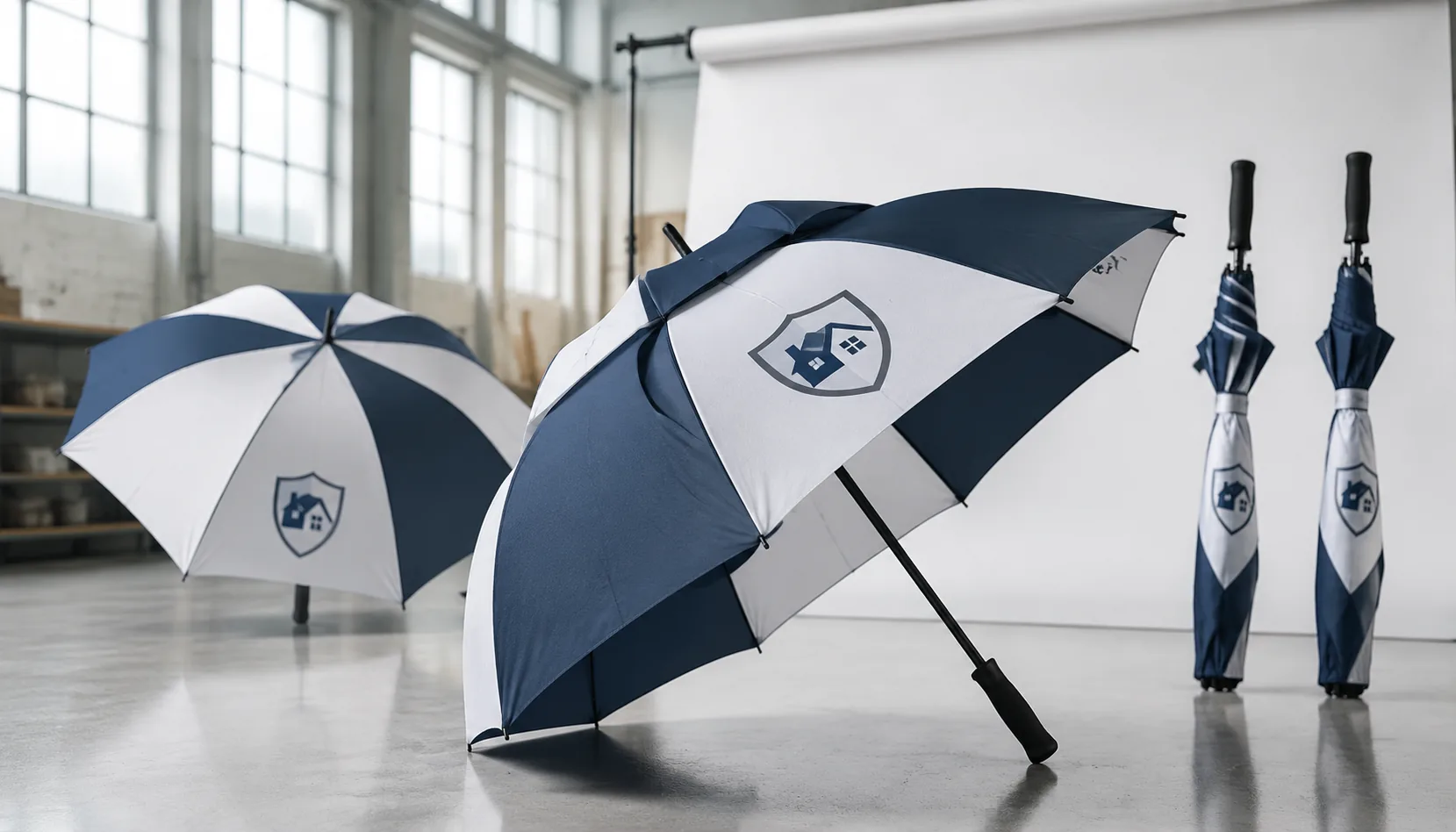
Custom Umbrellas for Insurance Claims and Adjuster Teams
Plan durable branded umbrellas for insurance adjusters, with windproof frames, fast deployment, logo visibility, MOQ, le...
Read More »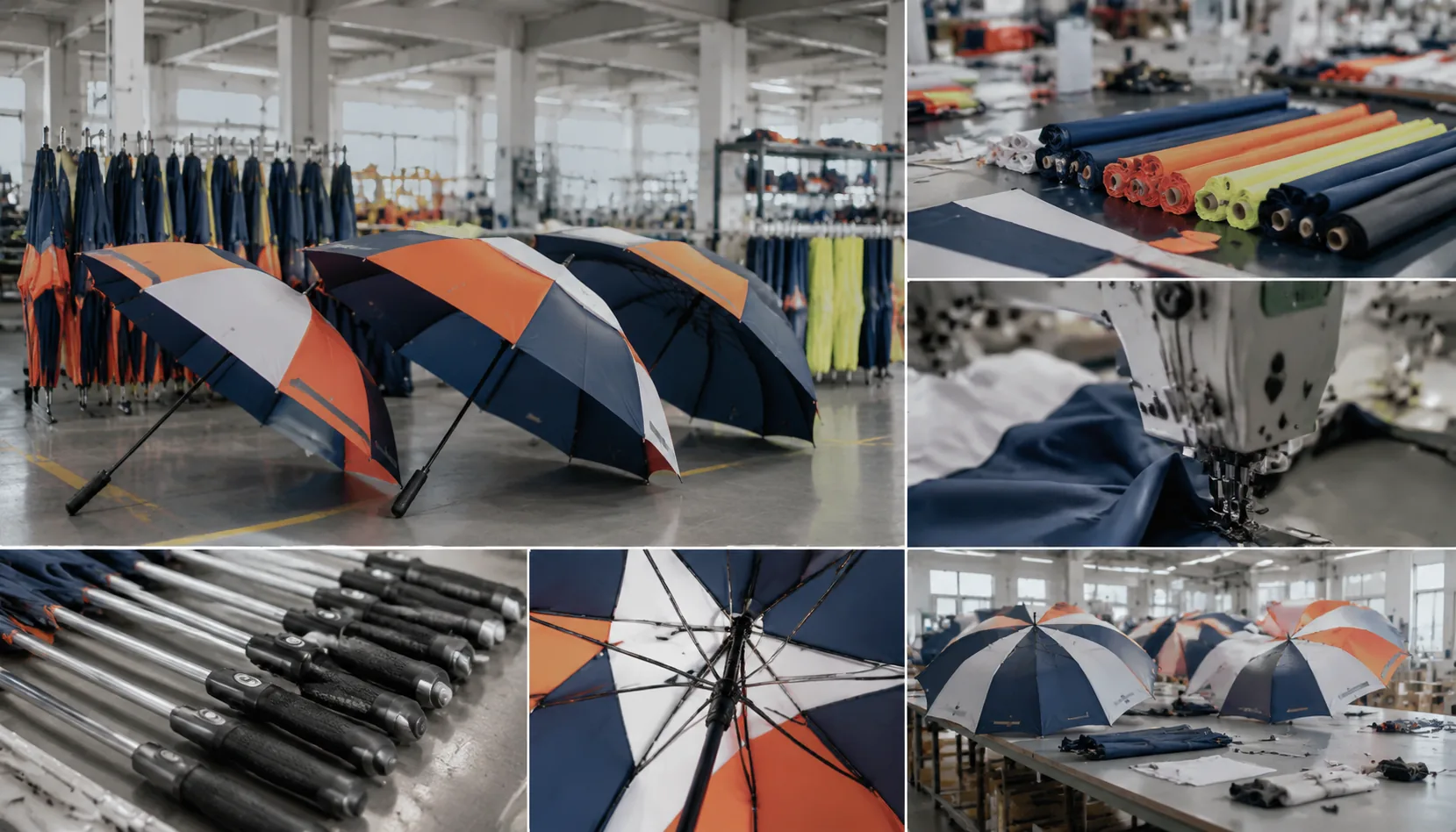
Branded Umbrellas for Insurance Claims and Roadside Teams
Plan umbrellas for insurance adjusters and roadside crews with windproof frames, fast reorders, compliant logos, and rea...
Read More »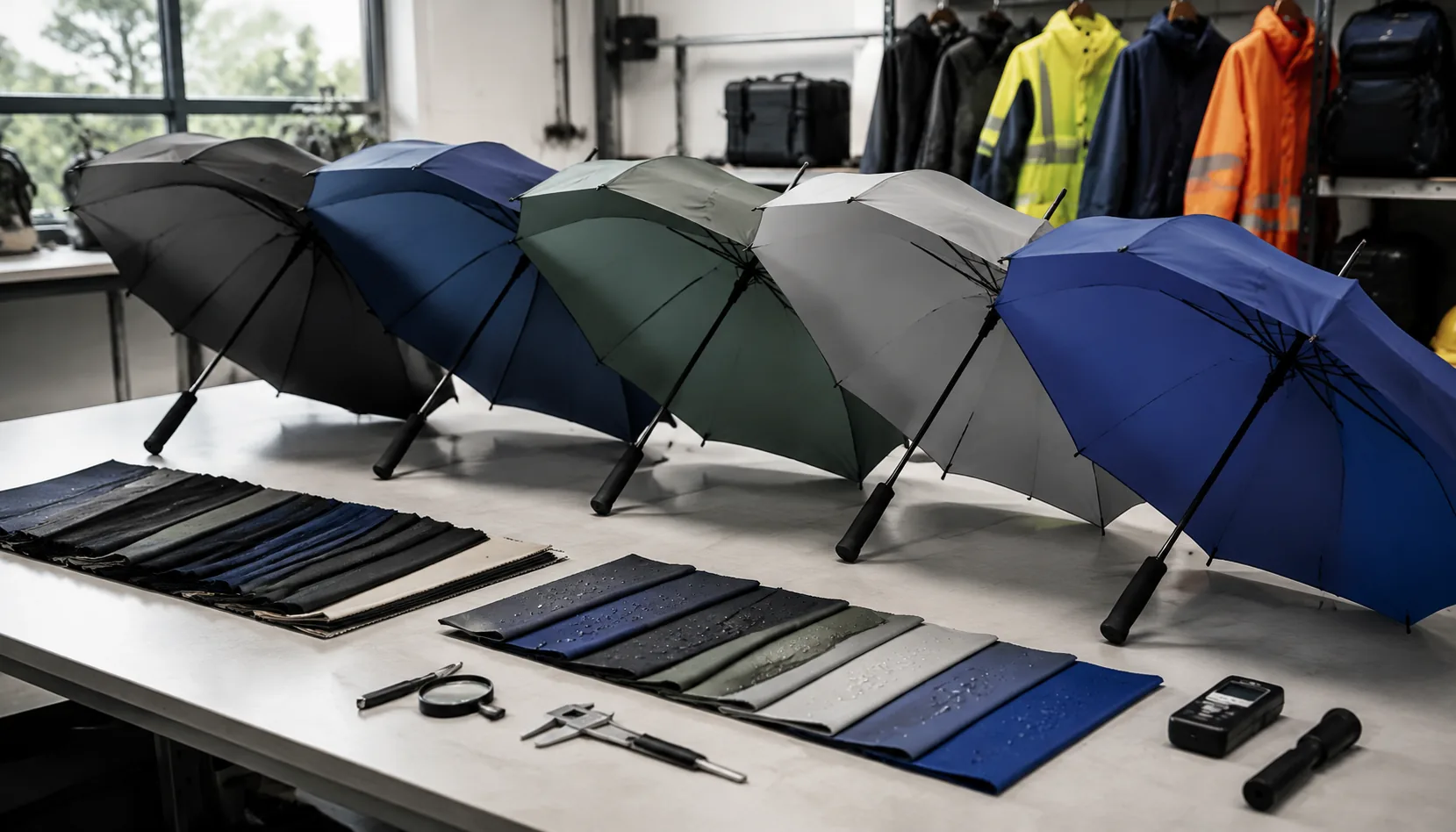
Branded Umbrellas for Insurance Adjusters and Claims Teams
Plan branded umbrellas for claims adjusters with windproof frames, safety colors, AQL 2.5 checks, MOQ guidance, and FOB/...
Read More »