Branded Umbrellas for Insurance Adjusters and Claims Teams
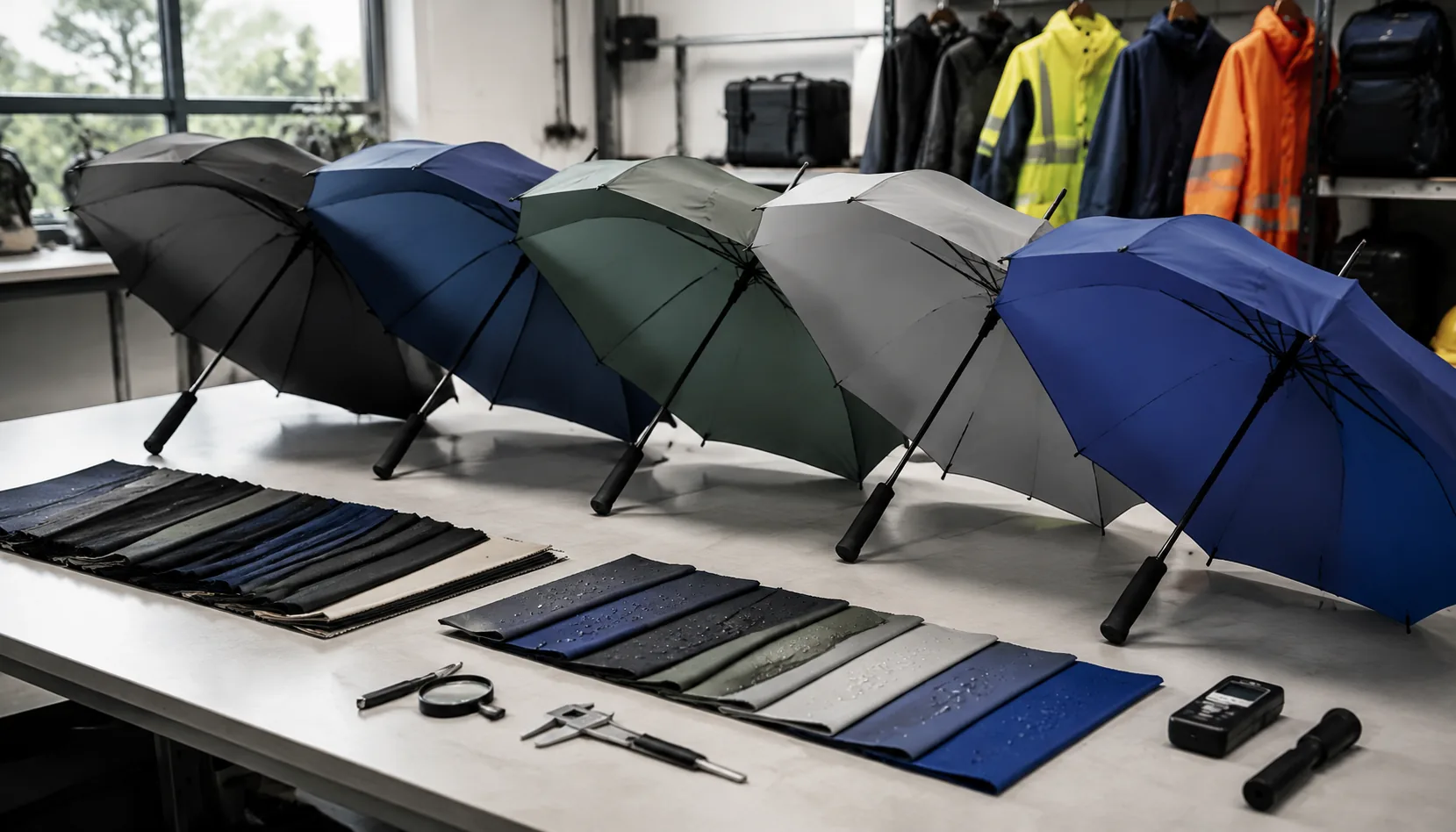
Claims teams work in parking lots, rooflines, and storm-damaged neighborhoods where a flimsy promo umbrella becomes a safety and brand problem fast. When we build insurance adjuster umbrellas on the factory floor in Songxia, we look first at frame strength, high-visibility fabric, logo placement that still reads in rain, and AQL 2.5 checks before cartons leave the line. The right plan also has to match MOQ, lead time, and whether FOB or DDP delivery fits your rollout.
Why Claims Teams Need a Dedicated Umbrella Spec
Claims work is not a sidewalk commute; it is storm inspection, roof walkaround, ladder setup, driveway conversation, and photo documentation while the weather is still moving. That is why insurance adjuster umbrellas should be specified like field gear, not picked from a generic promotional catalog. A 23" or 27" auto-open stick umbrella gives better shoulder and clipboard coverage than a compact 21" folding model, especially when the adjuster is carrying a tablet, moisture meter, chalk, claim folder, or camera. For catastrophe-response teams moving house to house after hail, wind, or flood events, one-hand operation matters because the other hand is usually on a gate latch, ladder rail, phone, or policyholder documents. I would avoid light 8K steel frames for this use; they look fine in a sample room but twist fast in gusts. A fiberglass shaft with 8K or 10K fiberglass ribs, or a vented double-canopy build, is the safer baseline for field inspection umbrellas that need to survive repeated wet openings and side wind.
Visible branding is not decoration in claims work; it reduces friction at the door. Policyholders are often stressed, suspicious, or dealing with property damage, so a clean carrier logo on a 190T or 210T pongee canopy makes the adjuster easier to identify from the driveway. Branded claims team umbrellas should use high-contrast panels, not tiny logos near the hem where they disappear when the canopy tilts forward in rain. For screen printing, I prefer one or two solid logo colors on navy, black, gray, or safety yellow panels; heat transfer works when the logo needs tighter detail, but it should be tested for adhesion after wet folding. If the team works around traffic, roofs, or commercial sites, reflective piping or a contrasting outer panel is more useful than a luxury handle. A straight EVA or rubberized grip also beats a glossy plastic hook when gloves, rainwater, and paperwork are involved.
Dependable coverage comes from matching the spec to the weather profile, then controlling production instead of accepting whatever the catalog photo shows. Windproof logo umbrellas for claims teams should be tested for rib recovery, runner lock strength, seam tension, and water repellency; a Teflon-coated pongee canopy with a vented structure is a practical target for umbrellas expected to handle 50+ mph gust exposure in short bursts. For coastal or storm-season deployments, fiberglass ribs resist corrosion better than painted steel, and the extra cost is easier to justify than replacing broken umbrellas during a CAT event. As an OEM umbrella factory practice, ZheBrella would normally confirm rib count, canopy diameter, logo placement, and handle type before sampling, then inspect bulk goods under AQL 2.5 with checks for print alignment, opening force, frame symmetry, and packed-carton moisture. Typical branded production runs start around 500–1,000 pieces, with sampling in 7–10 days and bulk lead time around 25–35 days depending on printing method and season.
Frame, Rib, and Canopy Choices for Field Work
For field inspection umbrellas, I would not start the spec with color or handle shape; I would start with ribs. Steel ribs are cheaper and stiff, but after six months in wet trunks, coastal claims routes, and winter road salt, uncoated steel can show rust at rivets and runner joints. Fiberglass ribs cost more, but they flex instead of taking a permanent bend when wind hits a parking lot or open roof site. For insurance adjuster umbrellas, fiberglass ribs with a steel shaft are the practical middle ground: enough rigidity for daily use, better corrosion resistance at the rib tips, and fewer returns from ribs snapping after a gust. Full fiberglass shafts are lighter and safer in lightning-prone regions, but they raise cost and can feel less solid in a 30-inch golf model.
Rib count should match coverage area, not just a catalog photo. An 8K frame is enough for a 23-inch stick umbrella or compact auto-open used for quick vehicle photos, ladder setup, or walking between insured properties. Once the canopy reaches 27 or 30 inches, especially for two-person coverage over a tablet, clipboard, moisture meter, or camera, I prefer 10K or 16K construction. A 16K frame spreads load better around the canopy edge and makes branded claims team umbrellas look more premium, but it adds weight and slows assembly. For larger golf-style windproof logo umbrellas, a double-canopy vented build matters more than rib count alone; the upper vent lets pressure escape, helping the frame survive 50+ mph gust testing when paired with fiberglass ribs and reinforced rib pockets.
Canopy fabric is where many promotional orders get under-specified. 190T pongee is acceptable for budget programs and one-season event use, but 210T pongee has a tighter hand, better print surface, and improved water beading when treated with Teflon or a comparable hydrophobic coating. For adjusters working storm claims, I would avoid thin polyester that sags when wet; it looks poor in photos and stresses the seams. Auto-open is the right mechanism for most field teams because one-hand operation matters when carrying files or phone equipment, while auto-open-close is better for compact umbrellas kept inside vehicles. As an OEM umbrella factory, our standard practice is to test open-close cycles, runner lock strength, seam tension, and canopy leakage before AQL 2.5 inspection, because insurance adjuster umbrellas fail in the field at hardware joints long before the logo print wears out.
Branding, Visibility, and Safety Considerations
For insurance adjuster umbrellas, visibility matters as much as rain coverage because the umbrella often appears in claim photos, driveway inspections, and roadside loss scenes. I recommend bright safety colors such as fluorescent yellow, safety orange, royal blue, or white panels with a dark logo, rather than low-contrast black-on-navy designs that disappear on wet pavement. A 23" or 27" straight umbrella gives enough canopy area for a readable mark without becoming awkward around vehicles, ladders, or property fences. On 8K or 10K frames, place the main logo on two opposite panels so it reads from both traffic-facing and homeowner-facing angles. For photo documentation, avoid wrapping text across rib seams; keep the logo inside one panel with at least 25 mm clearance from stitching and the edge binding.
Reflective piping is not decoration for claims teams working after storms; it is a safety feature. A 5–10 mm reflective strip on canopy edges, combined with fiberglass ribs and a vented double canopy, improves visibility in rain and helps the umbrella survive gusty parking lots or open subdivisions. For windproof logo umbrellas, I would choose 190T or 210T pongee with a Teflon water-repellent finish, fiberglass ribs, and a manual or auto-open shaft depending on the field kit. Steel ribs cost less, but they bend after repeated car-door impacts and wind snaps. If the team works CAT response, a 27" or 30" golf umbrella with 8K or 16K construction is more practical than compact folding models, especially when one hand is holding a tablet or clipboard.
Screen printing is still the cleanest option for one- or two-color branded claims team umbrellas, especially on 190T pongee panels where large logos need sharp edges and economical repeatability. Heat transfer is better for gradients, small text, or full-color carrier logos, but buyers should approve a strike-off because heavy transfer films can feel stiff on folding umbrellas. Woven labels on sleeves are a smart secondary branding point: the umbrella may be closed during building entry, vehicle storage, or trade events, and the sleeve label keeps the brand visible. At an OEM umbrella factory, the right production file should include Pantone colors, logo size in millimeters, panel position, reflective trim spec, sleeve label artwork, and AQL 2.5 inspection criteria for print alignment, adhesion, and color consistency.
Procurement Specs, MOQ, and Lead-Time Planning
For claims work, I would not quote a fashion umbrella first; I would spec a 27" to 30" arc stick umbrella with 8K or 10K fiberglass ribs, a steel or fiberglass shaft depending on budget, and an EVA straight handle that can be gripped with wet gloves. The canopy should be 190T pongee for cost-sensitive programs or 210T pongee when the buyer wants a tighter hand feel and better print surface. For insurance adjuster umbrellas, a double-canopy vented windproof build is worth the small upcharge because roof inspections, driveway estimates, and CAT-response sites often mean gusts over 35 mph. A properly tensioned fiberglass frame can be tested to survive 50+ mph in a wind tunnel, but only if the runner, tips, and rib joints are matched; mixing cheap steel stretchers with flexible ribs is where failures start.
A practical branded claims team umbrellas spec stack is: 30" arc, 8K fiberglass ribs, manual-open runner, 210T pongee with Teflon water-repellent coating, one-panel screen print or heat-transfer logo, matching sleeve, and 24 pieces per export carton. For field inspection umbrellas issued to adjusters, I usually avoid auto-open-close mechanisms because they add failure points and cost; a smooth manual or auto-open stick frame is easier to service and less likely to jam after mud, sand, or roof grit gets into the runner. Standard carton packing is individual polybag plus sleeve, then master carton with 5-ply corrugate; if the program ships DDP to multiple branch offices, inner cartons of 6 or 12 pieces make downstream distribution cleaner.
Typical custom MOQ from an OEM umbrella factory is 300 to 500 pieces for a single logo on stock fabric, 1,000 pieces if the buyer wants PMS-dyed canopy fabric, custom handle color, or retail-grade hangtags. Pre-production samples usually take 5 to 7 days after artwork approval, or 10 to 14 days if sublimation panels or a custom molded EVA handle are involved. Bulk production for windproof logo umbrellas normally runs 25 to 35 days after sample approval and deposit, longer during March to June when promotional and retail orders collide. FOB Ningbo or Shanghai is the clean choice when the buyer has a forwarder and can consolidate with other goods; DDP is better for insurance carriers and claims administrators that want landed cost, duty, customs clearance, and delivery to regional warehouses handled in one number.
Quality Control for Field-Reliable Programs
Quality control for insurance adjuster umbrellas starts before assembly, because field failures usually trace back to cheap incoming materials, not final packing mistakes. For a claims team program, we check 190T or 210T pongee weight, color consistency under D65 light, water repellency after coating, and whether black, navy, or safety-yellow panels match the approved lab dip. Frames are inspected by material and rib count: steel shafts can be acceptable for budget 23" manual models, but fiberglass ribs and stretchers are better for 27" and 30" field inspection umbrellas that sit in truck beds and get used around roofs, fences, and roadside losses. We also verify runner smoothness, spring tension, tip attachment, ferrule alignment, and handle pull strength before the first canopy is sewn. Clear defect definitions matter: a bent rib that changes canopy shape is major, a loose tip that exposes a rib end is major, and mismatched panel shade is major if visible at arm’s length.
Finished umbrellas need mechanical testing that reflects actual claims work, not just a quick open on the packing table. Our standard practice at ZheBrella is to cycle manual, auto-open, and auto-open-close samples repeatedly from each production lot, checking for runner jams, weak springs, shaft wobble, and handle separation. Windproof logo umbrellas should get a separate frame review: double-canopy venting, fiberglass rib recovery, rivet tightness, and whether the umbrella inverts and returns without permanent deformation. For larger 27" and 30" golf-style models, I like to see wind-tunnel or controlled fan testing against a stated target, such as survival above 50 mph for a double-canopy fiberglass frame. Branded claims team umbrellas are often used with one hand while holding a tablet, ladder, or clipboard, so balance and closing force are not cosmetic details; if the mechanism pinches, sticks, or needs two hands to reset, it will fail in the field.
Logo durability should be inspected as seriously as frame strength, especially when the buyer is a carrier, TPA, roofing network, or catastrophe response team protecting brand visibility. Screen print, heat-transfer, and sublimation each need adhesion checks: cross-hatch tape testing, rub testing on dark pongee, logo placement tolerance, and wet handling review after the canopy is opened and closed. Misprinted logos are major defects when the artwork is off-center, wrong Pantone, reversed, cracked, blurred, or outside the approved size tolerance. Final inspection should use AQL 2.5 for major defects, with minor defects separated so procurement can make a commercial decision instead of arguing case by case. Carton drop checks are also necessary for OEM umbrella factory shipments: export cartons should survive corner, edge, and face drops without crushed handles, cracked tips, or deformed ribs. For FOB or DDP programs, I also check inner polybag labeling, carton marks, barcode scans, and moisture control before release.
Frequently Asked Questions
What umbrella size works best for insurance adjusters in the field?
A 27–30 inch arc umbrella gives enough coverage for a clipboard, tablet, or camera without becoming too bulky in vehicles. For catastrophe teams, a 30 inch double-canopy golf umbrella is often preferred.
Should claims teams choose fiberglass or steel ribs?
Fiberglass ribs are usually better for field teams because they flex in gusts and resist rust better than steel. Steel can reduce unit cost, but it is less suitable for repeated storm-site use.
What umbrella size works best for claims adjusters inspecting properties?
Most claims teams choose 58-62 inch golf umbrellas because they cover the adjuster, clipboard or tablet, and inspection tools. For tighter urban routes, a 46-50 inch folding model is easier to keep in a vehicle.
Can safety colors and reflective details be added to branded adjuster umbrellas?
Yes. Common options include yellow, orange, or lime panels, reflective piping, and large logo printing on 1-4 panels for visibility during roadside or storm-damage inspections.
What quality checks should importers request for field inspection umbrellas?
For insurance field use, buyers should request AQL 2.5 inspection covering frame opening, windproof rib strength, fabric coating, print adhesion, handle pull force, and carton drop testing before shipment.
Looking to Launch Your Custom Umbrella Line?
ZheBrella is a Zhejiang-based OEM/ODM umbrella manufacturer with 17 years of export experience. Free design, low MOQ from 100 pieces, windproof construction, full-color print.
Get Free Quote Now »People Also Search For
Related Articles
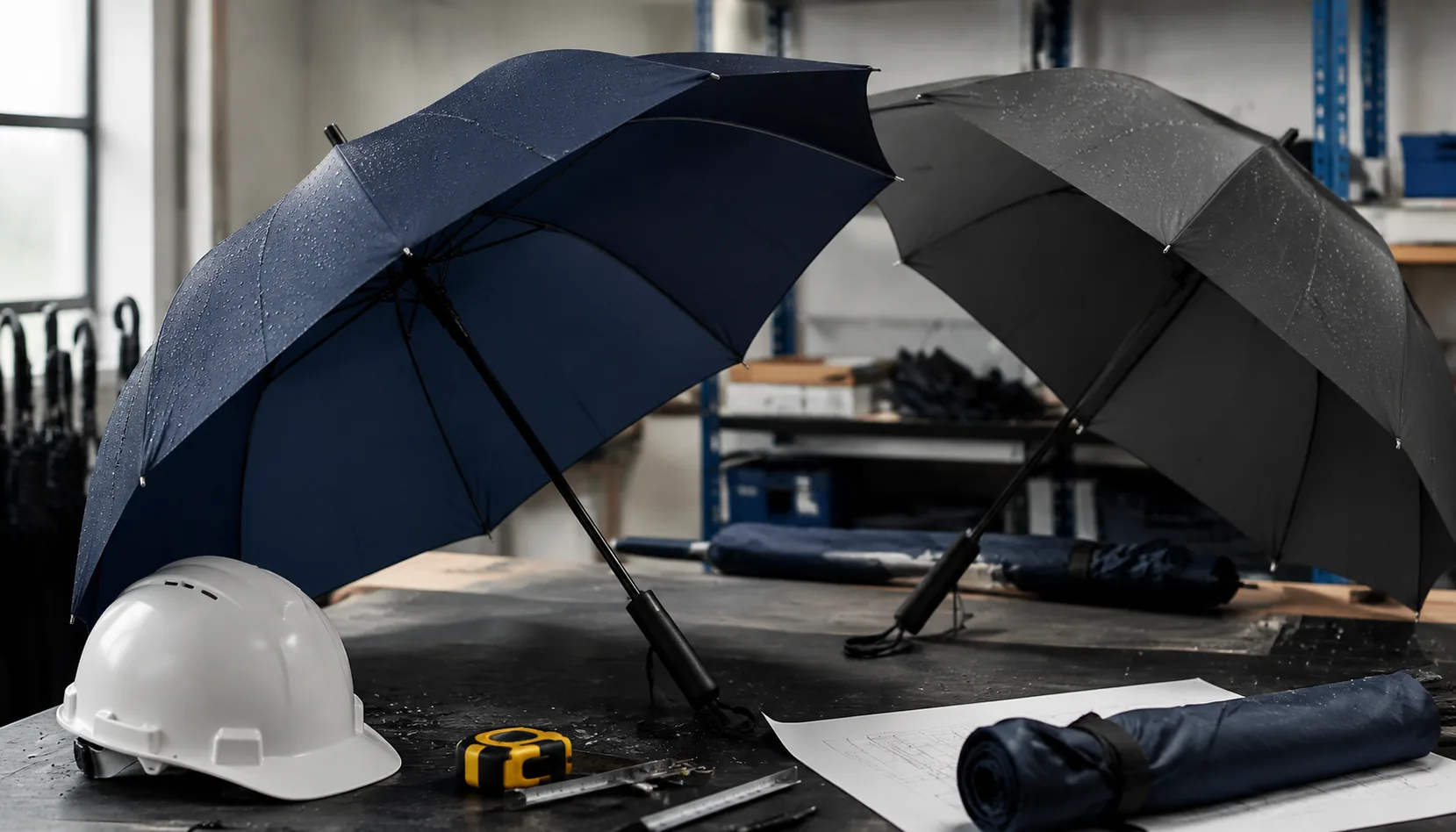
Branded Umbrellas for Insurance Claims Field Teams
Specify umbrellas for insurance adjusters with durable frames, fast deployment, professional branding, QC standards, and...
Read More »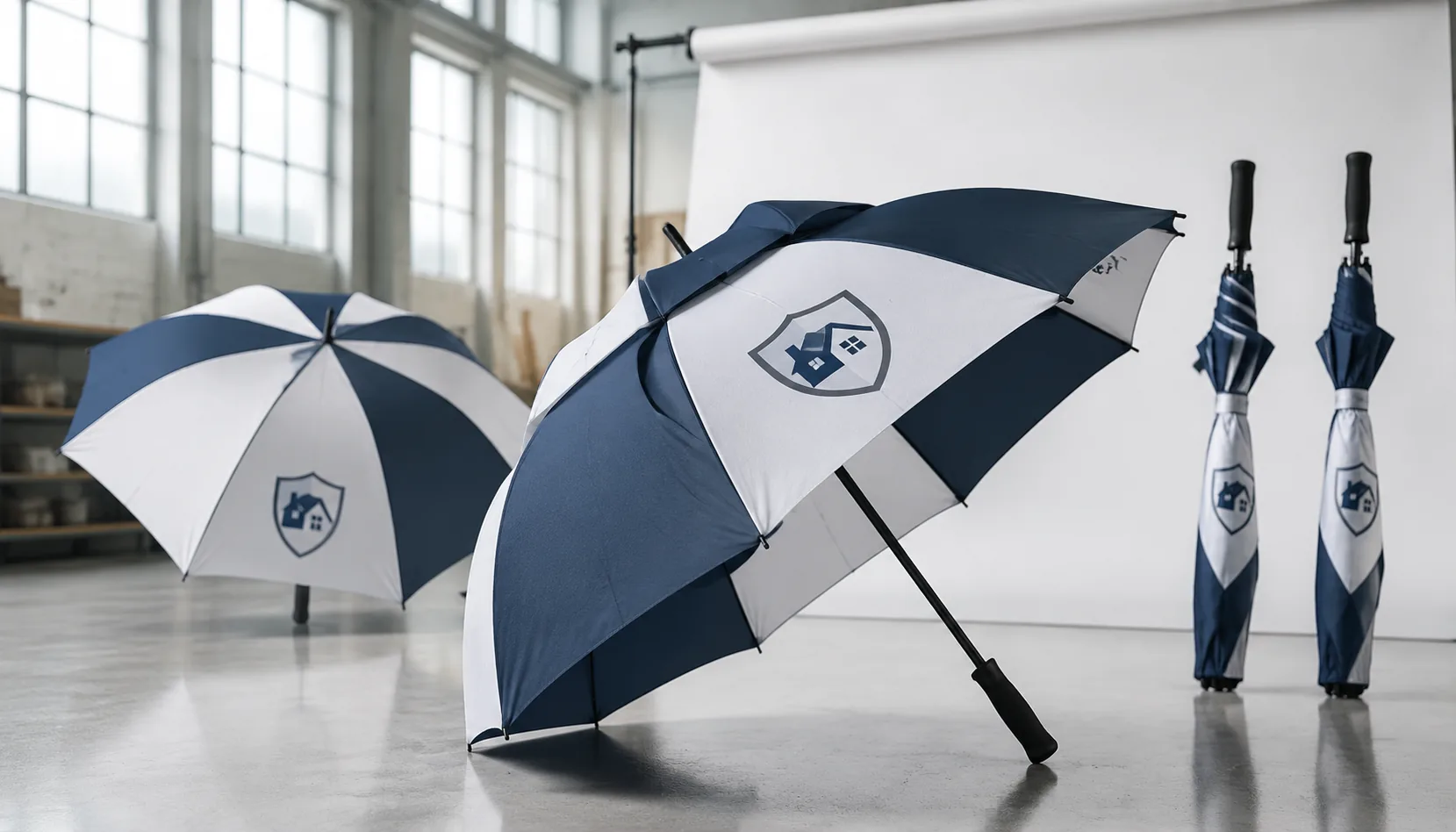
Custom Umbrellas for Insurance Claims and Adjuster Teams
Plan durable branded umbrellas for insurance adjusters, with windproof frames, fast deployment, logo visibility, MOQ, le...
Read More »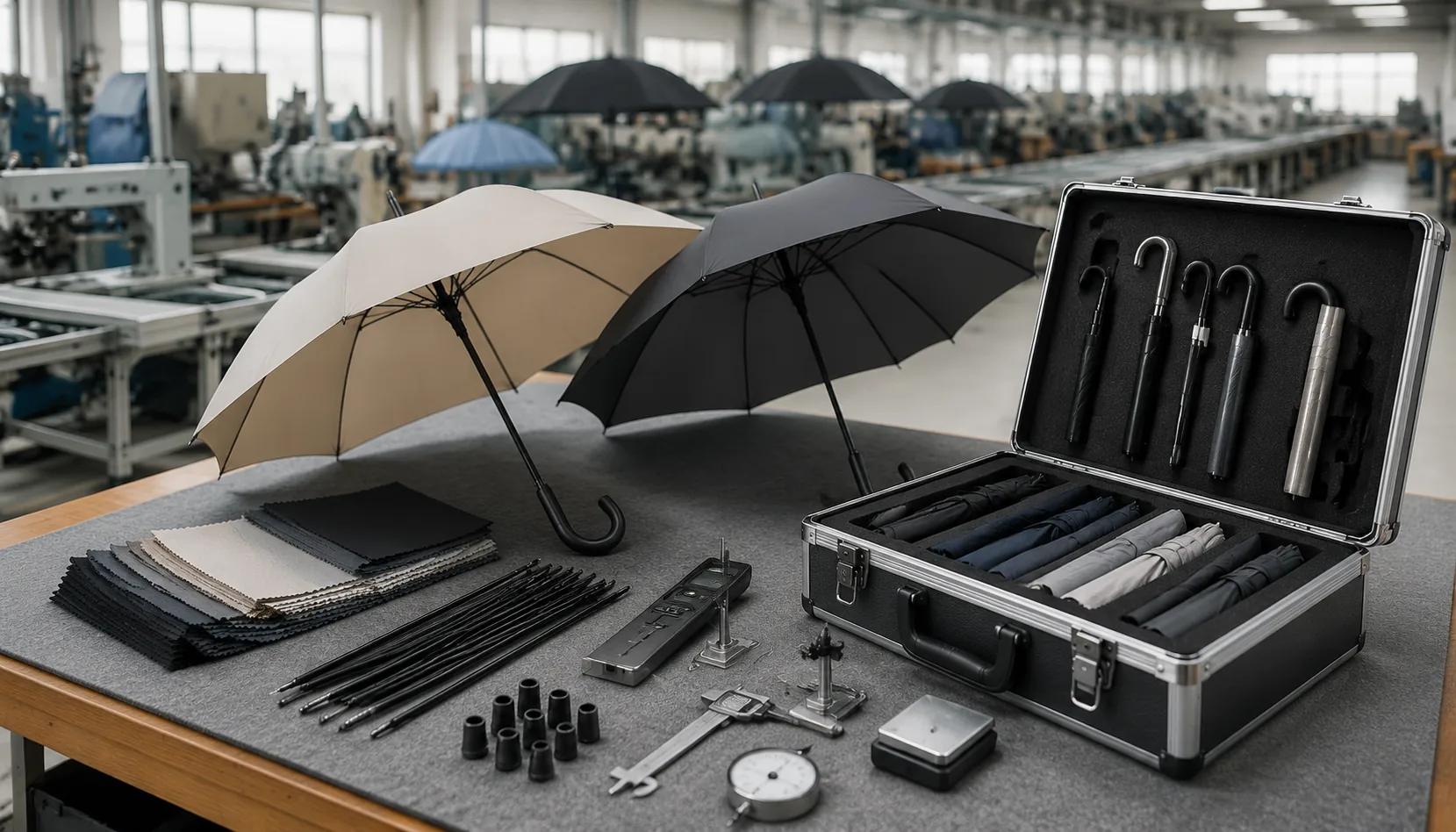
Branded Umbrellas for Insurance Claims and Adjuster Teams
Plan durable umbrellas for adjusters: 8K fiberglass frames, 190T pongee, auto-open shafts, AQL checks, and FOB/DDP order...
Read More »