Branded Umbrellas for Transportation and Delivery Operations
Transportation and delivery teams need gear that works at curbside speed: easy to issue, durable in harsh weather, and consistent across depots, routes, and service points. Branded umbrellas for delivery fleets solve a practical problem beyond visibility, giving staff and passengers dependable rain protection while keeping procurement simple for operations managers who have to standardize buying across multiple sites.
Where umbrellas fit in transit and delivery workflows
Umbrellas in transportation and delivery work are not decoration; they are a tool for keeping the handoff moving when the weather turns bad. At curbside loading, a driver or dispatcher needs one hand free for a scanner, clipboard, parcel, or phone, so the right choice is usually an auto-open umbrella with a straight shaft, quick deployment, and enough coverage to protect the package and the person at the same time. In station assistance and platform work, crews use umbrellas to stand with passengers longer, help with luggage, and keep tickets or mobile devices dry without slowing the line. For branded umbrellas for delivery fleets, the real value is operational: fewer soaked labels, less paper damage, and less time lost waiting out rain.
Crew-use and customer-facing umbrellas should not be specified the same way. For transit staff and delivery associates, durability comes first: fiberglass ribs, reinforced joints, and a canopy that can survive repeated opening in wind and tight spaces. Branding matters, but it should be secondary to function because those units see daily abuse and need to hold up through a long season. Customer-facing umbrellas are different; they are often handed out at the counter, used during passenger support, or given to VIP riders, so the logo placement, print clarity, and color matching matter more than extreme abuse resistance. That is why rain gear sourcing should separate fleet issue items from giveaway items instead of forcing one spec to cover both use cases.
A good custom umbrella supplier will ask where the umbrella actually lives: in a van, at a gate, in a station office, or in a retail counter drawer. That question changes the spec immediately. For fleet and staff use, I would favor a windproof frame, automatic open, and a compact size that fits a vehicle door pocket or seat-back organizer; for passenger handoff, a lighter canopy and cleaner branding can make more sense. In practice, branded umbrellas for transit staff work best when they are issued like PPE, tracked by department, and matched to role, while customer-facing pieces are treated more like promotional assets with higher attention to print quality and presentation.
Safety and handling specs for fast-moving operations
For branded umbrellas for delivery fleets, the mechanism matters more than the print. A one-hand auto-open umbrella is the practical default for drivers stepping out of vans, scooters, or ride-share vehicles because it opens fast without forcing them to set down parcels or phones. The handle should be thick enough for gloved use, with a matte or rubberized grip that does not slip when wet. In rain gear sourcing, I look first at the shaft and runner fit: if those parts wobble, the umbrella will fail in daily use long before the canopy wears out. A custom umbrella supplier should also check button travel and spring tension, because a stiff release becomes annoying and a weak one triggers accidental opens in crowded loading areas.
Lightweight carry and wind resistance pull in opposite directions, so the right spec depends on the route. For branded umbrellas for transit staff who walk platforms or stand curbside all day, fiberglass ribs are usually the better choice because they flex under gusts and rebound instead of bending permanently. Steel ribs are stiffer and can feel more solid in hand, but they add weight and transfer shock into the frame when the wind catches the canopy. On a 21-inch or 23-inch auto-open umbrella, fiberglass usually gives the best balance for frequent in-and-out use; on larger commuter models, steel or a steel-fiberglass hybrid makes more sense when the buyer wants a firmer frame and less canopy flutter.
The shaft spec should match the abuse pattern, not the catalog photo. For courier work, a reinforced steel shaft with a decent wall thickness is worth the extra grams if the umbrella is tossed into vehicle doors, clipped to bags, or opened dozens of times a shift. If the job is mostly short trips between depot and customer, a lighter aluminum or fiberglass shaft may be enough, but only if the rib set and stretcher geometry are strong enough to keep the canopy aligned in crosswinds. In practice, the best field failures come from undersized shafts, not bad logos. That is why a custom umbrella supplier should test handle torque, shaft flex, and opening reliability together instead of treating them as separate specs when building branded umbrellas for delivery fleets.
Weather performance standards for curbside duty
For curbside work, double-canopy windproof construction matters more than most buyers admit, especially for branded umbrellas for delivery fleets that spend time in open-air loading zones and at terminal entrances. A vented double layer lets gusts bleed through instead of flipping the frame, which is why I specify it for routes that see frequent vehicle crossings, dock doors, and sudden pressure changes. In practice, a 23" or 27" umbrella with fiberglass ribs and a reinforced shaft handles this abuse better than a light city-walking model, and an auto-open umbrella helps drivers get coverage fast without fumbling with packages, scanners, or keys.
Canopy fabric choice is not cosmetic; pongee 190T is the baseline, while 210T gives a denser hand feel, slightly better water shedding, and better print stability when the logo coverage is heavy. For branded umbrellas for transit staff working around exposed platforms or sun-baked yards, I would pay for UPF 50+ coating if the climate is hot and reflective concrete adds heat from below. ZheBrella’s standard practice is to match canopy weight to duty cycle: 190T is usually fine for lower-cost rain gear sourcing, but 210T makes sense when the umbrella is expected to live in a vehicle cab and be used hard, daily, and in mixed rain-plus-sun conditions.
The key mistake is treating every outdoor job as the same. City walking routes create repeated side-loads from passing traffic and narrow sidewalks, while open loading zones hit the frame with stronger vertical gusts and longer exposure, so the failure points are different. A custom umbrella supplier should test for rib fatigue, runner alignment, and seam tension under both conditions, not just quote fabric and decoration options. If you are sourcing for transit staff, I would ask for windproof venting, UPF 50+, and a clear lead-time plan in days, because the umbrella has to survive the weather and still look acceptable after a few months in service.
Procurement controls for fleet-wide standardization
The fastest way to keep branded umbrellas for delivery fleets from turning into a mixed-bag mess is to lock the SKU list before purchase orders go out. I would approve no more than three core builds: a 21" or 23" auto-open umbrella for drivers, a 23" or 27" vented windproof model for outdoor loading teams, and one compact spare for branch issue. Standardize canopy fabric first — usually 190T or 210T pongee with a PFC-free water-repellent finish — then freeze frame material, rib count, and mechanism so every reorder matches the same hand feel and opening force. For branded umbrellas for transit staff, the same rule applies: one SKU per use case, not per branch, or procurement loses control of color drift and replacement parts.
Color rules need to be written as a spec, not a mood board. If the fleet uses Pantone-matched corporate blue, define the acceptable delta, the ink system, and whether black or silver lining is allowed on the inside; otherwise, the factory will interpret “close enough” differently on every order. Logo placement should also be fixed: one position on the same panel, with a defined print width, stitch-safe margin from the seam, and a no-print zone near the ferrule and tie strap. A custom umbrella supplier should submit pre-production samples for canopy color, logo proof, handle style, and packaging insert, then ship golden samples only after signoff. For rain gear sourcing, that sample approval step is where most downstream problems are prevented, because a tiny shift in panel layout can make a batch look inconsistent across branches.
For acceptance control, set AQL 2.5 at the lot level and inspect open/close function, rib symmetry, canopy tension, print registration, and packaging count, not just visual appearance. Spare stock planning should be based on field loss rate and breakage history; a common starting point is 3% to 5% of annual volume held as branch reserve, plus a separate buffer for peak weather months. MOQ planning has to account for both decorated and undecorated units, because many factories price a low MOQ for blanks but a higher threshold for full-color print or individual packing. Branch distribution should require polybag or sleeve protection, barcode labeling by SKU and color, and carton marks that identify destination branch, quantity, and carton sequence so receiving teams do not spend time sorting mixed pallets.
Buying terms and rollout timing for multi-site programs
For branded umbrellas for delivery fleets, the buying term matters as much as the canopy spec. FOB works best when a centralized import team already has a freight forwarder, customs broker, and one receiving point; you control the ocean booking, inland move, and duty treatment, which usually keeps unit cost tighter on larger runs. DDP makes more sense when operations want delivered pricing to each depot or service center, because the vendor handles export paperwork, ocean freight, import clearance, and last-mile delivery. That is the cleaner route for branded umbrellas for transit staff spread across multiple cities, especially when procurement needs a single landed cost instead of piecing together factory price, freight, brokerage, and local distribution.
Production timing is usually the first hard constraint: simple auto-open umbrella programs in standard pongee 190T with printed logos can move in about 25 to 35 days after sample approval, while custom rib structures, UV coatings, or special handle molds push that longer. Ocean freight is the part buyers underestimate; a China-to-US West Coast booking may look like 18 to 25 days on the water, but port congestion, transload, and domestic delivery can add another 7 to 15 days. For rain gear sourcing, I tell buyers to build at least one full month of buffer beyond the factory lead time if the umbrellas must arrive at regional depots before a launch or seasonal push.
The practical rollout is to stagger deliveries backward from the first rainy month, not forward from the purchase order. Lock artwork and carton labels first, approve preproduction samples, then split the order into waves by depot priority so high-risk locations land first and inland sites follow two to four weeks later. That avoids the common failure mode where every branch gets the same ship date and half the network misses the weather window. A good custom umbrella supplier should map the schedule by destination, recommend FOB only when your logistics team can absorb the complexity, and use DDP when the business needs predictable depot-by-depot arrival dates more than it needs shipping control.
Frequently Asked Questions
Should delivery teams use auto-open umbrellas or manual models?
Auto-open is usually better when staff need to exit vehicles quickly or manage parcels with one free hand. Manual models can be cheaper, but they slow response time during curbside operations.
How do transit buyers compare fiberglass and steel frames?
Fiberglass offers better flex and wind recovery, which helps in exposed or high-traffic environments. Steel is usually stronger in straight-line rigidity but can be heavier and less forgiving in gusts.
What umbrella specifications work best for delivery fleets that need one-handed use?
Most delivery operators choose auto-open canopies in the 23 to 27 inch range so drivers can open them while carrying parcels or scanning devices. A fiberglass shaft or ribs, straight handle, and canopy with reflective piping are common specs because they balance durability, visibility, and easy vehicle storage.
How do transit agencies handle umbrella sourcing when multiple depots need the same branding and packaging?
Buyers usually lock one approved artwork file, Pantone color target, and carton standard, then split shipments by depot or route hub. For OEM orders, many suppliers can support depot-level carton marks and mixed delivery schedules, with typical MOQs starting around 500 to 1,000 units per design.
What lead times should procurement teams expect for custom umbrellas before a rainy season rollout?
For a repeat design, production often runs about 25 to 35 days after sample approval and deposit. New OEM developments with custom handles, sleeves, or reflective details can take 35 to 50 days, so buyers usually place orders 8 to 12 weeks ahead of seasonal demand.
Looking to Launch Your Custom Umbrella Line?
ZheBrella is a Zhejiang-based OEM/ODM umbrella manufacturer with 17 years of export experience. Free design, low MOQ from 100 pieces, windproof construction, full-color print.
Get Free Quote Now »People Also Search For
Related Articles

Custom Umbrellas for Food Delivery Fleets and Couriers
Learn how to spec branded umbrellas for delivery fleets, including windproof frames, auto-open options, MOQ, and lead ti...
Read More »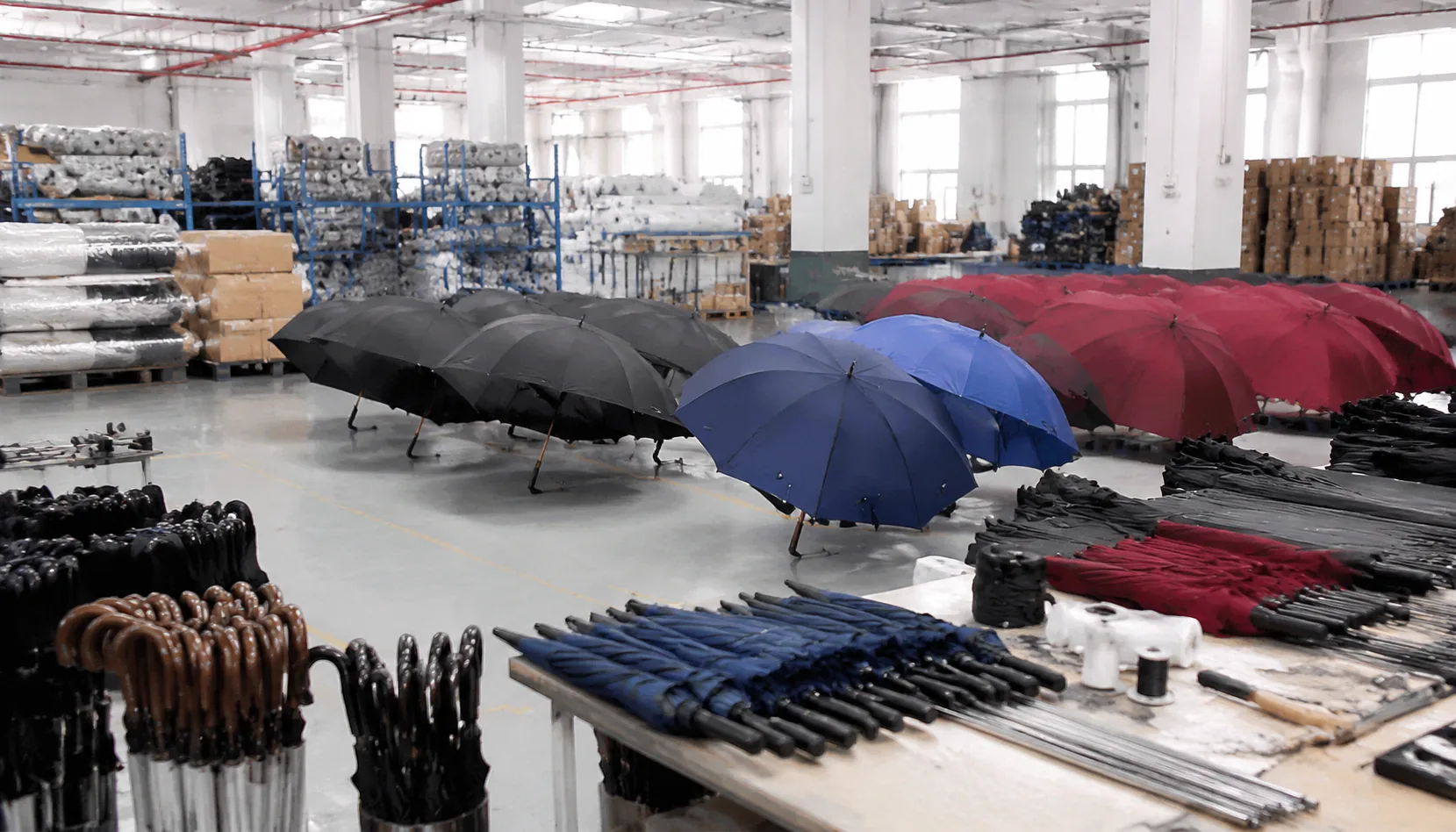
Umbrella Programs for Logistics Yards and Warehouses
Source umbrella programs for logistics yards, warehouses, and dock teams with windproof specs, safety colors, QA checks,...
Read More »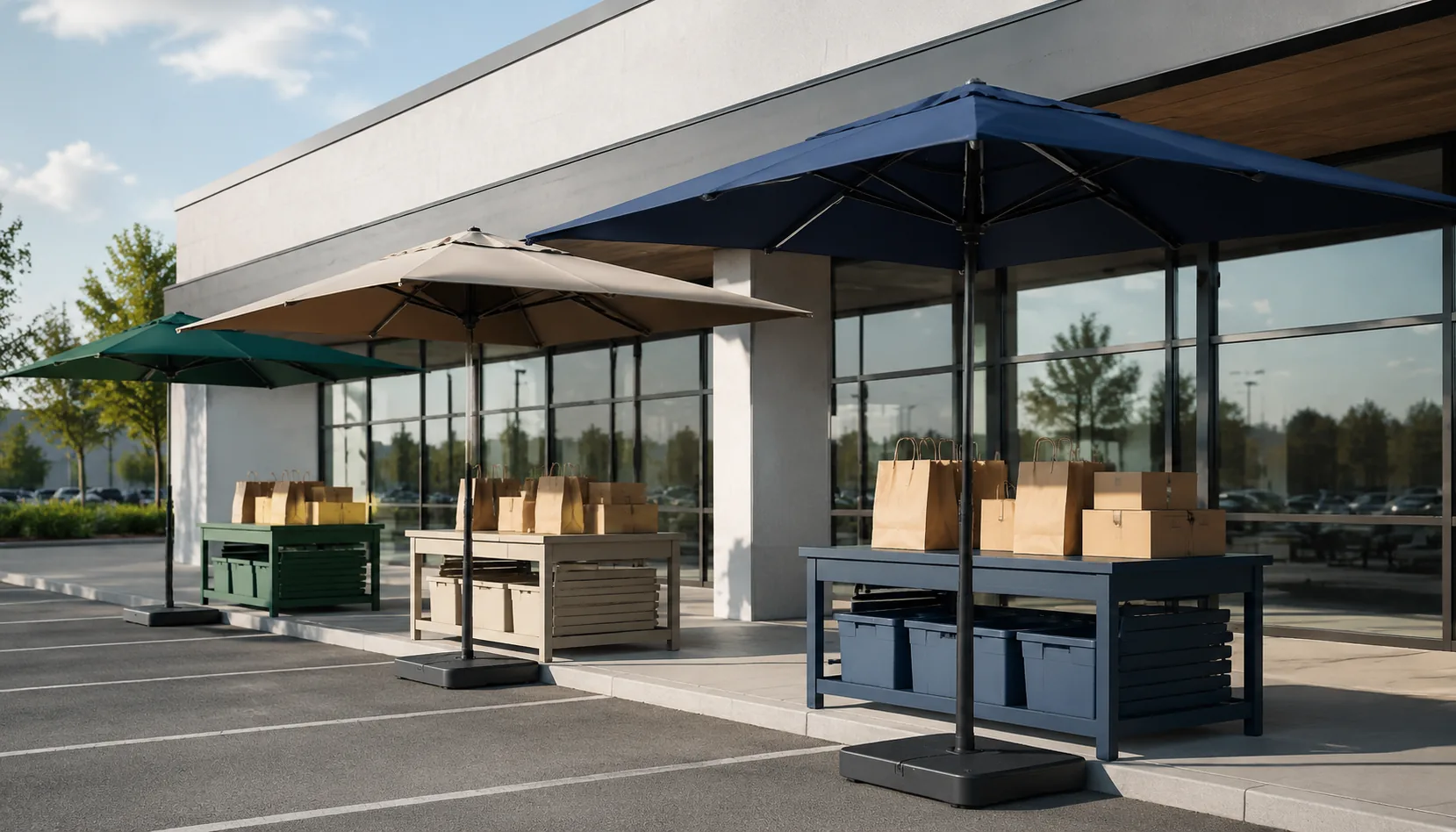
Branded Umbrellas for Outdoor Retail and Curbside Pickup
Specify staff and customer umbrellas for curbside pickup, garden centers, and outdoor retail teams with durable frames, ...
Read More »