Choosing One-Color or Multi-Color Branding for Umbrella Orders
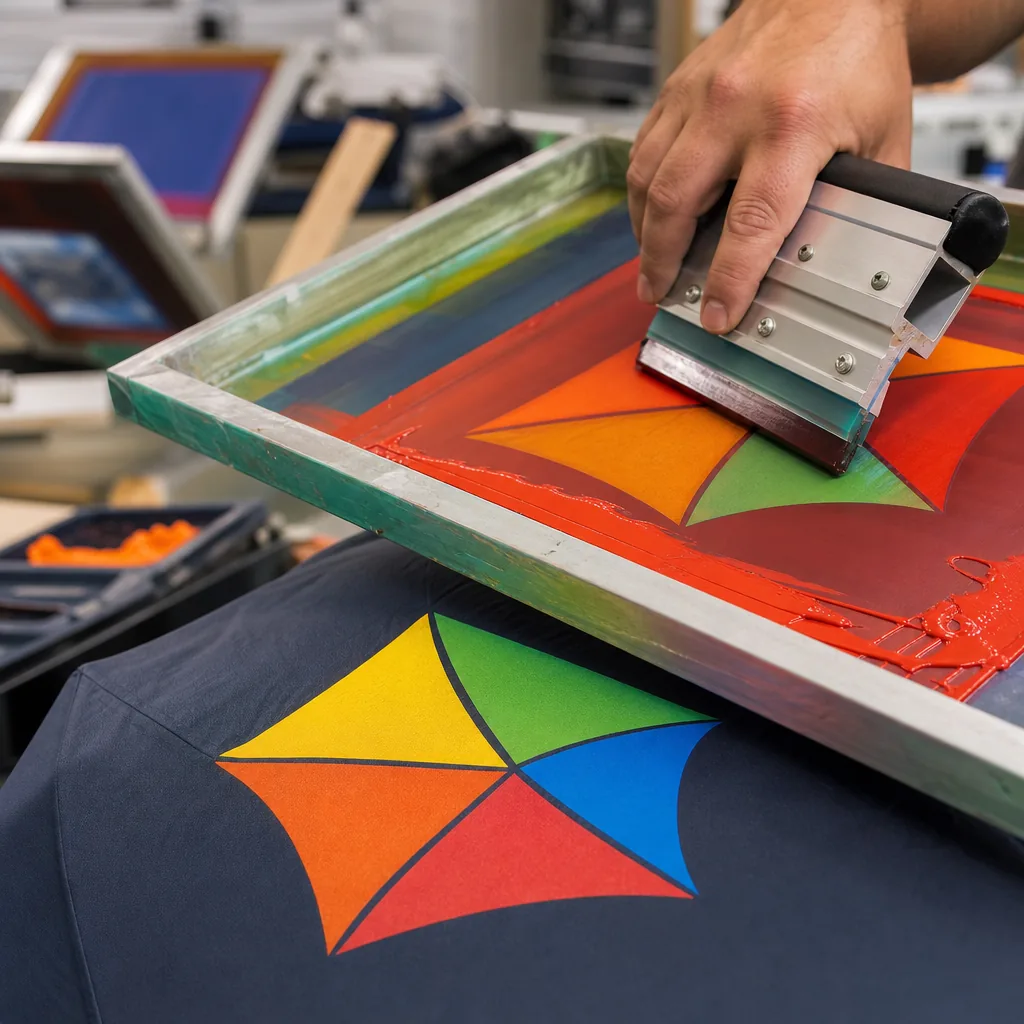
Choosing between one-color and multi-color branding on umbrellas is usually a tradeoff between budget, legibility, and how the logo behaves on curved, wet fabric. From the factory floor, the key question is not just appearance but whether the artwork can print cleanly, stay consistent across panels, and hold up to production speed without delays. For many programs, one-color umbrella logos deliver the most reliable balance of cost and readability.
When a one-color logo is the smarter buying decision
A single-color mark is the smarter buy when the logo has to read from across a parking lot, a trade-show aisle, or a rainy sidewalk. On umbrellas, high-contrast one-color umbrella logos usually beat multi-color umbrella branding because the canopy is already moving, curved, and partially folded at the edge. A clean solid mark prints faster, holds registration better on 190T or 210T pongee, and is less likely to blur into the fabric texture. For promo campaigns, that matters more than decoration: if the goal is reach, not display art, one strong Pantone hit on a 21" or 23" auto-open stick umbrella gives better legibility and lower print cost umbrellas than a layered graphic with gradients, tiny type, or fine shading.
From a production standpoint, umbrella logo complexity drives setup time, proof cycles, and rejection risk. Every extra color adds screens, alignment checks, and color-matching approvals, especially on curved panels or vented double-canopy styles where the print area is split by seams. Our standard practice at ZheBrella is to push buyers toward one-color umbrella logos when the artwork is going on a large run of branded umbrella orders, because that keeps AQL 2.5 inspection cleaner and reduces the chance that one off-register color ruins a batch. If the logo has thin lines or small text, a single ink layer is also more forgiving on POE, PVC, and EVA canopies, where surface behavior changes how sharply the print lands.
The same logic applies to retail basics and repeat replenishment orders. If a retailer wants a dependable rain umbrella or golf umbrella that can be reprinted every quarter, a one-color mark keeps inventory simple and reduces the chance that a discontinued ink formula or art revision blocks reorder speed. Multi-color umbrella branding makes sense for launch pieces, premium gifting, or campaigns where the artwork itself is the product, but it is usually a poor use of budget on high-volume commodity programs. For standard replenishment, a straightforward single-color screen print is easier to quote, easier to approve, and easier to repeat at the same standard in FOB or DDP shipments without reworking the art file each time.
What changes when a logo adds more colors
The first thing that changes with umbrella logo complexity is not the artwork, it is the production setup. A clean one-color umbrella logo usually means one screen, one strike, and a short proof cycle. Once you move into multi-color umbrella branding, every extra color adds another screen, another registration step, and another chance for the print to drift when the canopy stretches on curved panels. On branded umbrella orders, that matters more than people expect because panels are cut and sewn before printing, so the fabric is never as stable as a flat T-shirt. In practice, one-color umbrella logos are the cheapest and fastest to run, while two-color work already needs tighter alignment and more inspection before we release it to bulk production.
Two-color art is usually the point where print cost umbrellas start to move noticeably. On a standard 23-inch POE or 190T pongee umbrella, a second color can add a modest unit bump, but the bigger cost is the extra handling and proof approval. Three colors typically require a longer pre-production sample round because we have to check registration against the panel seams, the shaft position, and the curvature near the tip. Four-color logos are where umbrella logo complexity becomes a real manufacturing issue, especially on dark canopies that need underbase printing or stronger ink deposits. At that point, many factories will quote a higher minimum and add several days to lead time, because each color pass increases the chance of mismatch, pinholes, or blurred edges during transfer or screen printing.
The scrap risk rises with every added color because a small registration error can make the whole panel unusable, not just one layer of ink. For simple one-color umbrella logos, the defect rate is easy to control and AQL 2.5 checks mostly focus on placement and ink coverage. With three- or four-color branded umbrella orders, inspectors have to watch color alignment, opacity, and whether the logo stays legible after the canopy is opened and tensioned. In practical terms, a two-color logo might add a small premium and 3 to 5 extra production days, a three-color logo can push that to 5 to 7 days, and a four-color design often needs both a higher print charge and a longer schedule for proofing and rework allowance. If the artwork is not essential, simplifying the logo usually saves more than trying to force a complex print through a low-cost program.
Readability rules for small and large umbrella logos
For umbrella branding, line weight matters more than people expect. At arm’s length, a logo that looks crisp on a flat proof can break apart on a curved 21-inch or 23-inch panel if the strokes are too fine. As a rule, keep the thinnest positive line at least 1.2 to 1.5 mm for screen print and a little heavier for heat transfer, because canopy fabric moves, stretches, and sits over seams. Negative space needs the same discipline: if the gaps inside letters or icons are too tight, they fill in with ink spread or disappear once the panel is stitched and tensioned. That is why one-color umbrella logos are usually the safest choice for small marks, especially on compact promotional umbrellas where the viewer is standing several meters away at an event.
Multi-color umbrella branding can work well, but only when the artwork has enough separation between colors and a strong outer silhouette. On curved panels, detailed marks with fine gradients, hairline borders, or tiny type lose clarity because each panel prints slightly differently and the eye reads the umbrella as a moving object, not a poster. This is where umbrella logo complexity becomes a production issue, not just a design issue: the more colors and registration points you add, the higher the risk of misalignment, slower setup, and higher print cost umbrellas carry on short runs. For branded umbrella orders, I usually recommend a hard contrast between logo and canopy, such as dark ink on white pongee 190T or white ink on navy polyester, and a simplified version of the mark for panels that wrap across seams. ZheBrella’s standard practice is to proof the logo at actual panel size, not just on a flat artboard, because that is where weak details show up first.
How color count affects pricing, MOQ, and reorders
The biggest price swing is not the umbrella body, it is the decoration workflow. A single-screen, one-color umbrella logo on a 1-panel or 2-panel print is fast to set up, easy to register, and usually the cheapest path on print cost umbrellas because ink mixing, plate changes, and make-ready time stay low. Once a buyer moves into multi-color umbrella branding, every extra color adds alignment risk, extra screens or transfer layers, and more labor at sampling and mass production. That is why umbrella logo complexity should be planned together with canopy material, because 190T pongee, 210T pongee, and POE all behave differently under screen print, heat transfer, and sublimation. On FOB terms, the decoration choice can move unit price enough to matter across a 3,000- to 10,000-piece order; on DDP, the same choice also changes carton packing, labor, and defect allowance assumptions, especially if the design has fine text or gradients.
For branded umbrella orders, MOQ planning is usually where buyers lose time. A simple logo can often be approved from a digital proof plus one pre-production sample, but a complex, full-color mark usually needs strike-off, color matching against Pantone references, and a second round if the edge registration is off by even 1 to 2 mm. That pushes lead time and ties up fabric, frame, and print capacity, so factories will often set a higher MOQ for multi-color umbrella branding or charge a setup fee that gets absorbed only after larger volume. ZheBrella’s standard practice is to separate decoration cost from the base umbrella quote, because buyers then see clearly whether the premium is coming from the frame, the canopy, or the artwork. For one-color umbrella logos, reorders are efficient: once the screen or transfer file is locked, the second and third runs are faster, with fewer approval steps and less scrap.
The pricing impact gets bigger when a brand needs multiple SKUs or regional color versions. If one market wants black canopy with white print, another wants navy with silver print, and a third needs high-visibility red, you are not buying one design anymore; you are buying three artwork setups, three inventory positions, and usually three different carton labels or inner pack marks. That fragmentation raises FOB through setup duplication and raises DDP through customs line-item complexity, especially if the buyer wants mixed cartons shipped to different countries. The cleanest way to control cost is to keep the frame spec fixed, then vary only the canopy color or logo color where possible, because changing 8K or 10K fiberglass ribs, auto-open mechanisms, or vented double-canopy construction at the same time makes comparison harder and reorders slower. In practice, simpler print specs shorten sampling, reduce dispute on color tolerance, and make repeat production more predictable when the next PO comes in 60 to 90 days later.
How to brief the factory before artwork is submitted
Before artwork is submitted, the factory needs a complete production brief, not just a logo file. For branded umbrella orders, that means Pantone references for every ink or transfer color, the preferred print method, the target fabric, the exact logo dimensions, and the inspection standard you expect at the end. If you want one-color umbrella logos, say so clearly and define the acceptable Pantone match, because a simple one-color print on 190T pongee behaves differently from a multi-color umbrella branding job on 210T fabric or a PVC canopy. The more precise the brief, the faster the factory can tell you whether the artwork is printable, whether the canopy panel width supports the logo size, and whether the request fits the intended umbrella style, from 21" folding units to 30" golf umbrellas.
The print method should be specified before the art team starts drawing production files, because the method changes both cost and visual outcome. Screen print is usually the cleanest option for one-color umbrella logos and keeps print cost umbrellas under control when the logo is large and the run count is stable. Heat transfer or sublimation makes more sense when you have gradients, small text, or full-wrap layouts, but those methods need enough flat print area and the right fabric, typically 190T or 210T pongee, rather than a coated POE panel. If the logo has thin strokes, halftones, or tight registration between colors, the factory should know that immediately so it can flag umbrella logo complexity before samples are cut.
Logo dimensions and inspection requirements are where many revisions are avoided or created. Give the artwork size in millimeters, state the placement on one panel or multiple panels, and note whether the logo must stay inside seam allowances, ribs, or vented sections on a double-canopy build. For quality control, specify the standard up front, such as AQL 2.5 for appearance and function, plus any extra checks for color deviation, ink cracking, or misalignment. That lets the factory confirm lead time before production instead of guessing after sample comments come back. A clean brief usually cuts at least one revision loop, and on large branded umbrella orders that can save several days before mass production starts.
Frequently Asked Questions
Does more logo color always mean a better-looking umbrella?
No. On umbrellas, contrast and legibility matter more than color count. A clean one-color logo can outperform a multi-color version if the brand needs visibility from a distance or faster production.
Can a factory reduce the number of colors in a logo without changing the design?
Sometimes, but only if the artwork can be simplified without hurting brand recognition. Buyers should ask for a vector review and a print proof before approving any color reduction.
How much does a one-color logo usually save compared with a multi-color print on umbrellas?
For bulk orders, a one-color print often saves about 10% to 25% versus a 3-color design because it uses fewer screens and less setup time. The exact difference depends on print size, panel count, and whether the artwork needs color registration.
Does multi-color umbrella branding usually add to production time?
Yes. A simple one-color logo can often be added during the normal decoration schedule, while multi-color prints may add 3 to 7 working days for screen preparation and extra quality checks. If the order is urgent, a single-color logo is usually easier to schedule.
What logo details are most likely to fail on a small umbrella print area?
Thin lines, gradients, and small text are the biggest risks, especially on compact folding umbrellas. A good rule is to keep the smallest text at least 3 to 4 mm high and avoid details that would require more than 2 to 3 print colors on a small panel.
Looking to Launch Your Custom Umbrella Line?
ZheBrella is a Zhejiang-based OEM/ODM umbrella manufacturer with 17 years of export experience. Free design, low MOQ from 100 pieces, windproof construction, full-color print.
Get Free Quote Now »People Also Search For
Related Articles
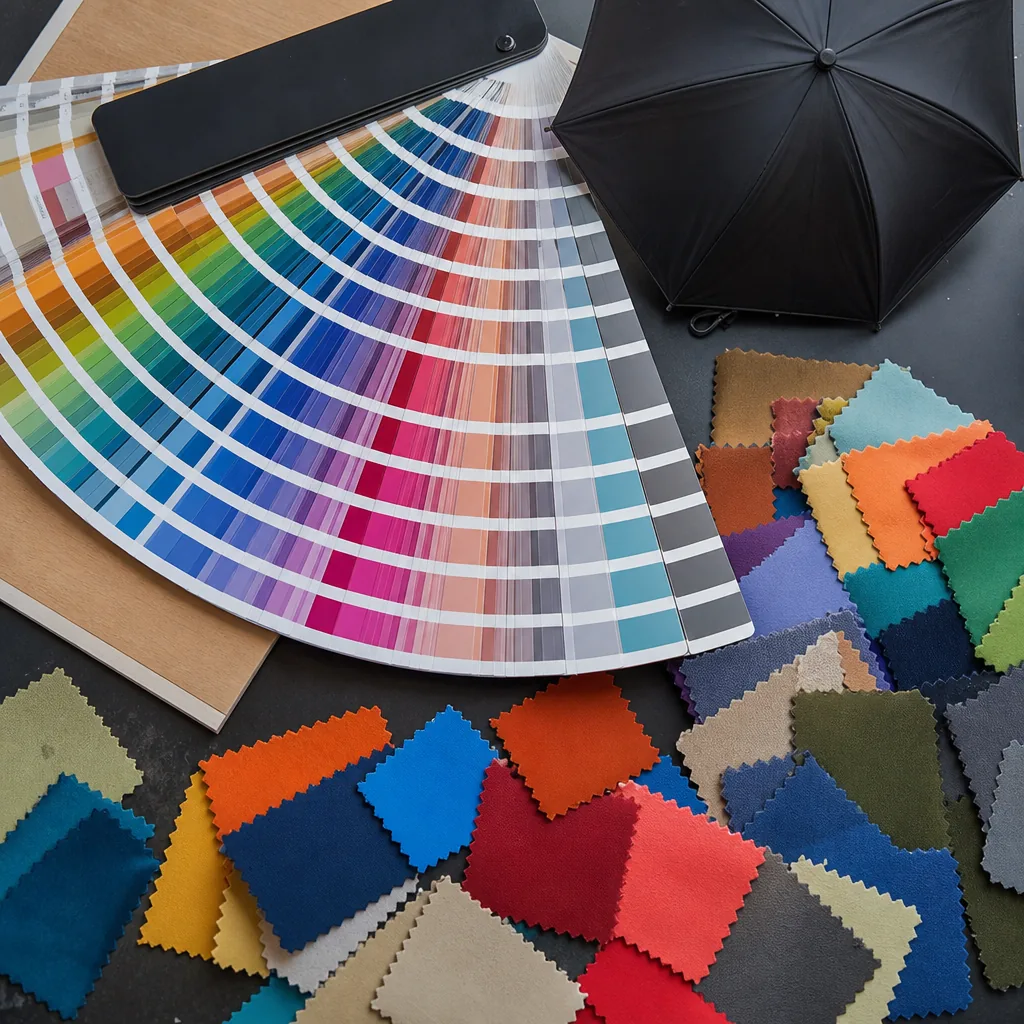
Multi-Color Logo Setup for Umbrella Brand Programs
Plan multi-color umbrella logos with clean registration, strong contrast, and realistic production limits to protect bra...
Read More »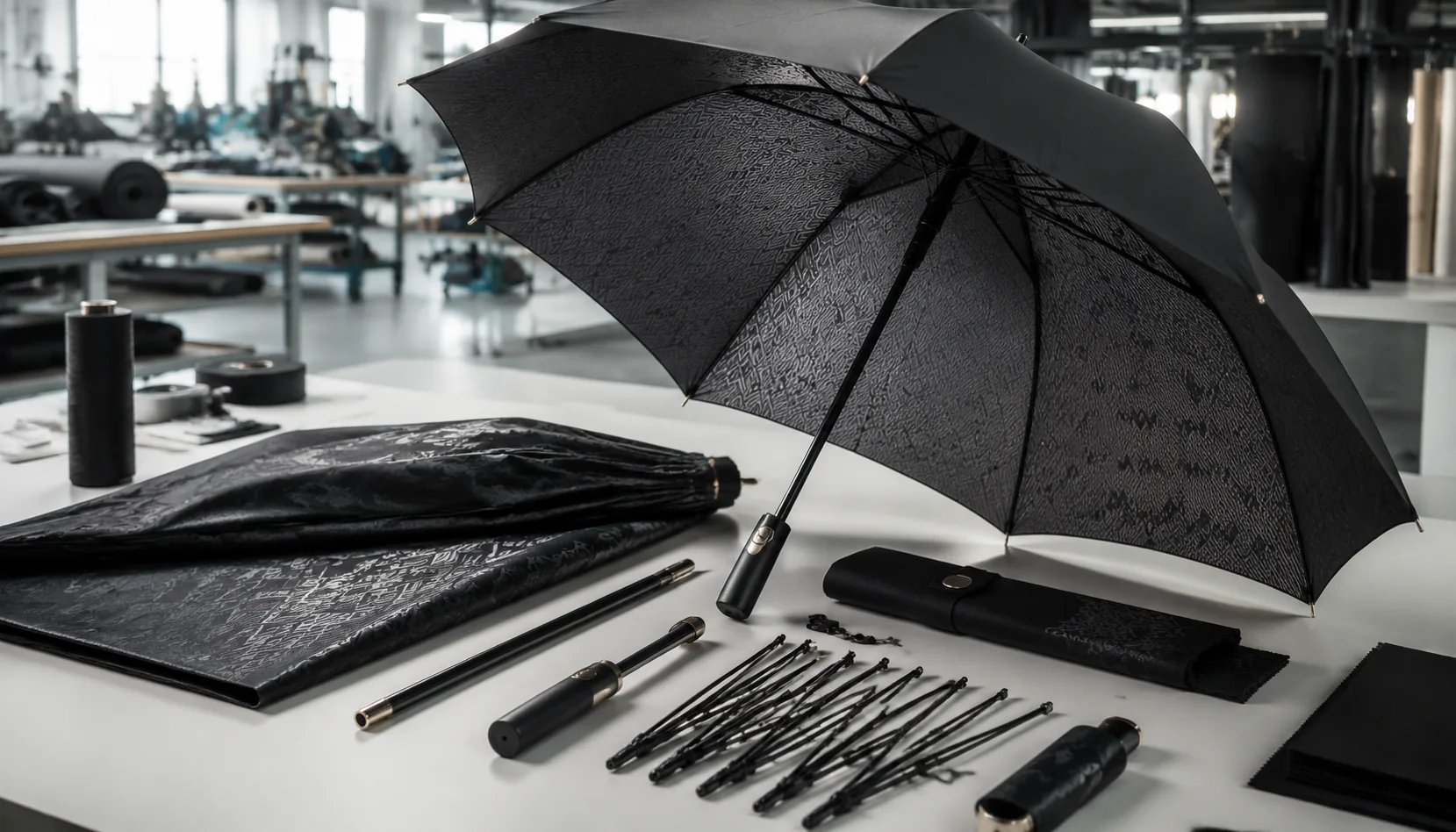
Choosing Print Areas Beyond the Canopy for Branded Umbrellas
Extend umbrella branding beyond the canopy with practical guidance on straps, sleeves, ferrules, and tips that improve v...
Read More »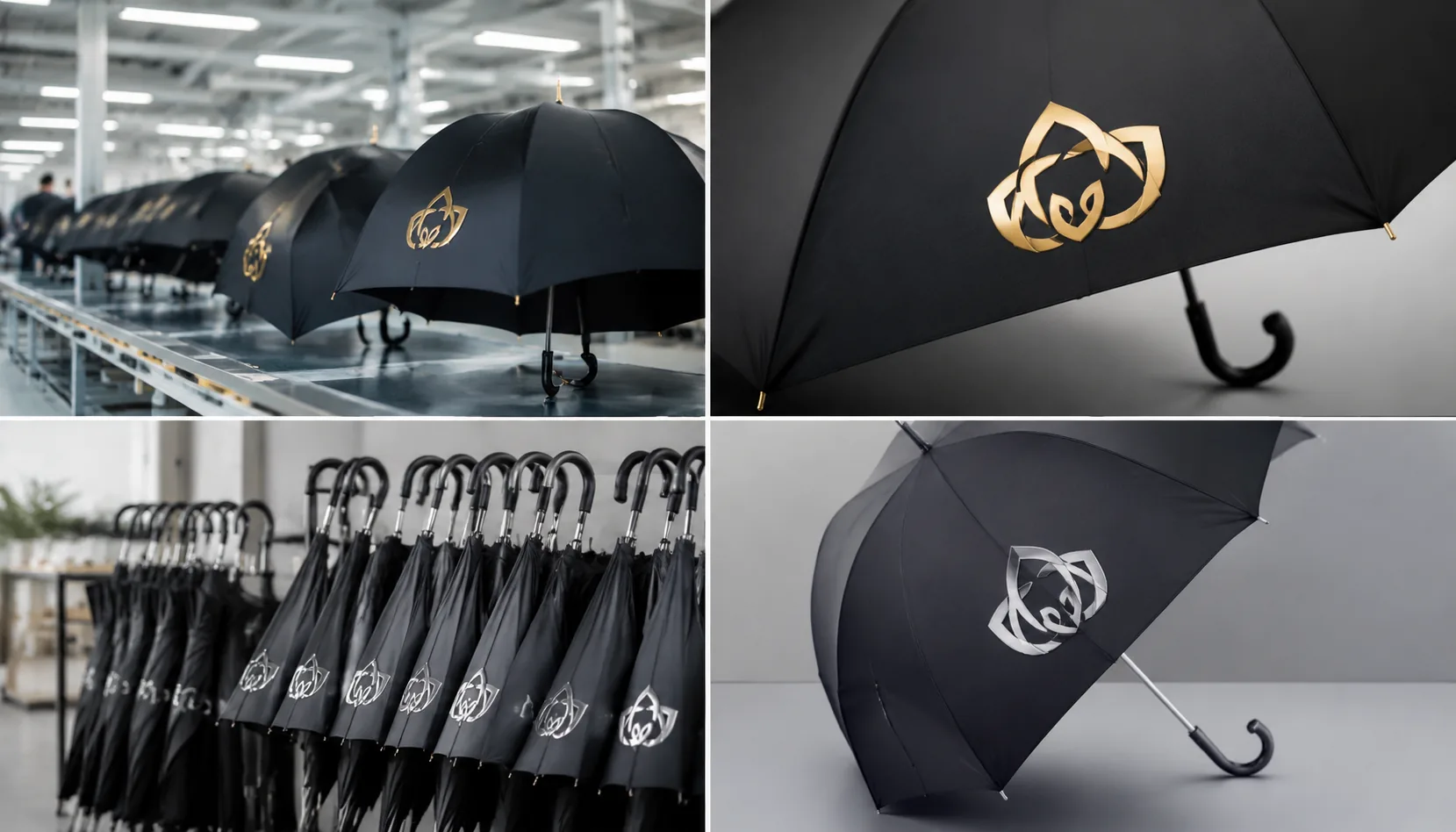
Metallic Gold and Silver Logos on Branded Umbrellas
Specify metallic gold or silver umbrella logos with realistic shine, fabric limits, sample checks, MOQ, cost factors, an...
Read More »