Embroidery vs Print for Umbrella Branding: What Buyers Should Choose
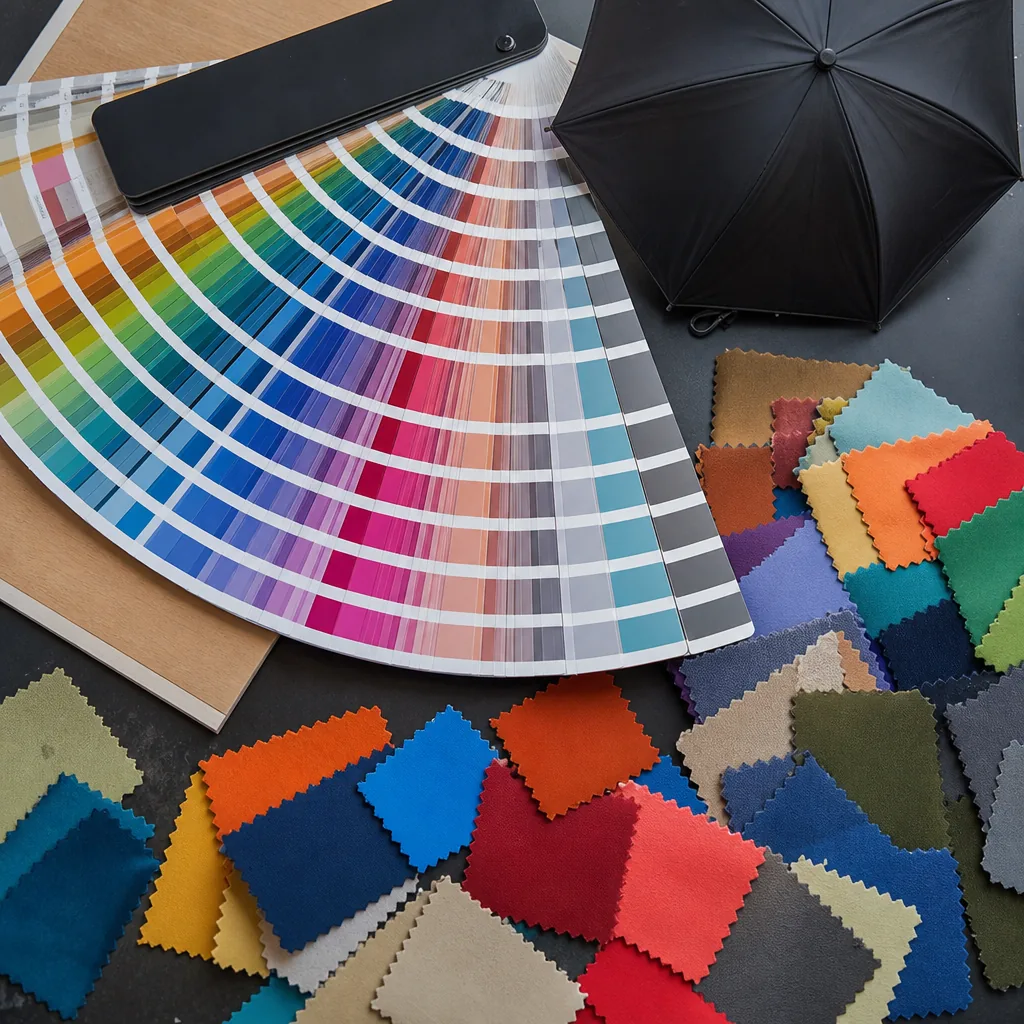
When OEM buyers choose between embroidery and print for umbrella branding, the real question is not style but how the logo has to survive production, transit, and repeated use. On the factory floor, we look at panel fabric, seam structure, canopy curvature, and the size of the mark before we talk cost or lead time, because those details decide whether a logo stays crisp, distorts, or wears out early. The right method depends on the order’s budget, MOQ, and how much visibility the brand needs from the finished umbrella.
Embroidery vs print: what each method actually delivers
Embroidery has a clear place in umbrella branding, but it is usually on the small, stable parts: straps, sleeve cuffs, tie bands, and carry sleeves. On those accessories, umbrella embroidery branding gives a raised, durable mark that holds up to handling and abrasion without fighting the shape of the product. It works best when the fabric has body and the logo can be kept simple. A clean stitched mark cannot carry tiny type, hairline strokes, or gradients, so buyers should expect a limited detail range compared with print. That is why embroidery is a trim-level finish, not the first choice for canopy decoration, especially when the goal is broad brand visibility across a retail or promotional program.
On 190T or 210T pongee canopies, embroidery is rarely the right method. Those canopy panels are thin, curved, and tensioned, so every needle penetration weakens the weave and raises the risk of puckering, panel distortion, and water seepage at the stitch line. Most OEM umbrella factory programs avoid that risk by using printed umbrella logos on the canopy instead. Screen print, heat transfer, and sublimation reproduce text, logos, and solid color blocks more cleanly on 21-inch, 23-inch, 27-inch, and 30-inch umbrellas, where the artwork must stay legible at arm’s length. For promotional umbrella decoration, print also gives tighter cost control and more consistent output from run to run.
The practical choice is simple: use print where the canopy carries the message, and use embroidery where the accessory is meant to feel premium. Print is the better fit when you need sharp artwork, lower reject rates, and predictable mass production. Embroidery makes more sense on sleeves or straps when texture matters and the logo can be kept compact. That split approach protects the canopy, keeps production simpler, and reduces quality risk without sacrificing presentation. In sourcing terms, it usually gives buyers the best balance of cost, durability, and brand visibility across standard umbrella sizes.
Cost, setup, and minimum order differences for buyers
Embroidery carries the heavier setup burden because an OEM umbrella factory has to digitize the logo into a stitch file, match thread colors, and run a stitch-out on the actual canopy fabric, usually 190T or 210T pongee. For umbrella embroidery branding, buyers should expect separate charges for digitizing, sampling, and the extra labor to hoop, stitch, trim, and inspect each panel. That makes small runs expensive: a 100-piece order can absorb nearly the same preproduction work as a 1,000-piece order, so the setup fee lands hard on unit pricing. MOQ is often higher than print because the factory needs enough volume to keep one decoration method on the line, and approval timelines stretch if thread matching needs a second sample or a stitch-density revision. If the canopy uses a Teflon or UV coating, the factory should also check needle penetration, seam integrity, and water resistance before release.
Printed umbrella logos usually win on launch cost and speed. Screen print and heat-transfer decoration have lower preproduction fees, shorter sampling cycles, and less operator time, so they are easier to approve on low-MOQ orders and short-run promotional umbrella decoration jobs. Print becomes more economical than embroidery once the order reaches the few-hundred-piece range, especially when the artwork uses multiple colors or covers a larger panel area for brand visibility. Each added print color can require another screen, tighter registration, and another proof, but the per-unit cost usually stays below embroidery because labor per piece is lower. Extra embroidery colors add thread changes and stitch complexity instead, which increases machine time and inspection time without reducing setup cost.
The buying rule is simple: choose print when the priority is a low upfront commitment, fast sample approval, and tighter control of first-order budget; choose embroidery when the umbrella is a higher-value retail item, such as a 23-inch or 27-inch automatic model, and the raised finish justifies the added setup cost. For giveaways, event programs, and mixed-color artwork, print usually reduces risk before the buyer commits to full production. Embroidery makes more sense once the order is large enough to absorb the digitizing fee and sample cost, and when the buyer values texture and durability over maximum logo flexibility. A practical quote from ZheBrella should compare both methods on the same artwork, with setup cost, MOQ, sampling time, and unit price shown side by side so the buyer can judge cost, lead time, and approval risk before placing the order.
Durability and wash resistance under real use conditions
Under real use, stitched branding survives abrasion, rain, and repeated opening cycles better than ink, but it is not automatically the right choice for every canopy. Umbrella embroidery branding locks thread into the fabric, so it keeps its shape on thicker panels, crown patches, and reinforced zones, especially on 8K or 16K frames with 21-inch to 27-inch canopies. The tradeoff is mechanical stress: every needle hole is a permanent opening, and on light 190T pongee, 210T pongee, or PVC-coated cloth, hard folding can enlarge those holes over time. Printed umbrella logos stay flatter and lighter, which suits compact travel umbrellas, but durability depends on the ink system, cure quality, and whether the OEM umbrella factory is using screen print, heat transfer, or sublimation. A properly cured screen print on 190T/210T pongee can hold up reasonably well; a low-cost transfer on a slick canopy is more likely to crack, peel, or dull after frequent wet storage and repeated compression.
Coating and placement drive long-term brand visibility as much as the decoration method itself. A Teflon or similar water-repellent finish reduces water retention, which lowers rubbing damage when the canopy folds against ribs and adjacent panels; without that protection, trapped moisture accelerates abrasion at stitched edges and printed edges alike. UV exposure usually fades low-cost inks faster than embroidery thread, but the surrounding fabric can still chalk or discolor, so the logo looks tired even when the thread is intact. Seam stress matters too: both embroidery and print fail sooner when they sit across high-flex areas near seams, vents, or panel joins. Keep the mark on flatter mid-panel zones whenever possible, and avoid placing detail too close to stitch lines. For buyers comparing promotional umbrella decoration options, the practical rule is simple: use stitched branding for simple artwork on heavier fabric where abrasion is the main risk, and use printed umbrella logos when you need finer detail, lower weight, or a cleaner result on smaller panels.
Choosing the right method by umbrella type and market
For high-volume promo umbrellas, printed umbrella logos are usually the better choice because they keep unit cost low, shorten production time, and maximize brand visibility at distance. A 21" or 23" auto-open straight umbrella with a 190T pongee canopy, steel shaft, and fiberglass ribs is typically bought for one-job branding, not long wear, so screen print or heat transfer on one or two panels is the practical route. For event giveaways and distributor programs, promotional umbrella decoration has to work within tight pricing: MOQ often starts around 500 to 1,000 pieces, lead time is commonly 25 to 35 days after artwork approval, and buyers usually expect PMS color matching to stay consistent across cartons. Embroidery adds thread bulk, needle perforation, and smaller artwork limits, so it is rarely the right answer for budget rain umbrellas unless the mark is small and placed near the panel edge or on a sleeve.
Retail umbrellas need a different standard because the decoration has to support the customer’s first impression, not just visibility in the field. On 23" auto-open-close folding umbrellas, 210T pongee with a Teflon coating and fiberglass ribs already signals a better tier than PVC or thin 170T polyester; in that setting, a clean one-panel print often looks sharper than a dense stitched logo. Umbrella embroidery branding works when the logo is compact, the canopy fabric is stable, and the positioning is restrained. Tone-on-tone thread on navy, black, or dark green can support premium positioning without making the product look promotional. An OEM umbrella factory should test embroidery on finished canopy panels before bulk cutting, because thread tension that looks acceptable on flat fabric can pucker after stitching, especially on 8K or 10K rib layouts.
Golf umbrellas and executive gift programs are where the decoration choice becomes strategic. A 27", 30", or 32" double-canopy vented windproof umbrella gives enough surface for printed umbrella logos to deliver strong brand visibility at tournaments, resorts, and outdoor sales events; sublimation can cover full panels, while screen print keeps corporate marks crisp and economical. For premium gifts, umbrella embroidery branding is better used selectively on the carry sleeve, closure strap, or lower panel, paired with a rubberized handle, fiberglass shaft, and a wind-rated frame built to handle 50+ mph gusts. Buyers should avoid heavy embroidery across vented double-canopy seams because it can distort airflow and slow inspection. For FOB or DDP orders, decoration method also affects AQL 2.5 checks: print is judged by color, registration, and adhesion, while embroidery must also pass thread security, backing clean-up, and puckering control.
Artwork rules that prevent expensive rework
For umbrella embroidery branding, the factory should receive a clean vector package: AI, EPS, or vector PDF with all fonts outlined and no linked JPG or PNG artwork hiding inside. That is the only reliable starting point for a sewn mark on a curved canopy panel. Keep the design to one color whenever possible, because every extra thread color adds registration risk, machine time, and the chance of shift near a seam or panel edge. Small type is a known failure point: text below about 4 to 5 mm in height usually loses legibility after digitizing, so buyers should simplify it before approval rather than discover the problem during sampling. In practice, bold shapes and short words hold up better than fine lines, tight spacing, or detailed icons.
Stitch settings also need to be fixed before production. A tight density can cause puckering on 190T or 210T pongee, while a loose pattern can leave the logo thin and uneven, so the OEM umbrella factory should confirm the stitch count and underlay during sampling, not after bulk cutting begins. The same rule applies to printed umbrella logos and other promotional umbrella decoration: gradients, hairline strokes, and multi-color art belong in print, not embroidery, when brand visibility matters on a small panel. Buyers should request a physical approval sample or strike-off on the actual canopy fabric, because a screen proof does not show how the logo behaves once the panel is sewn, tensioned, and mounted on the frame.
To avoid delays, lock the Pantone target, placement, logo size, rotation, and acceptable tolerance before the factory starts sampling or panel cutting. If those points stay vague, the shop will still proceed on its own assumption, and that usually becomes rework, color disputes, or a missed ship date. On 21-inch or 23-inch umbrellas, a few millimeters can change visibility enough to matter, so the buyer should sign off on the sample, the thread chart or print proof, and the final revision number before bulk release. That paperwork gives both sides one reference for umbrella embroidery branding and reduces the risk of an entire order being made to the wrong color, position, or scale.
Frequently Asked Questions
Can embroidery be used directly on an umbrella canopy?
Usually not recommended. Canopy fabric is thin and waterproof-coated, so stitching can weaken the panel and cause puckering. Embroidery is better for straps, covers, or fabric accessories.
Which is better for a premium branded umbrella order: embroidery or printing?
For most premium canopy branding, printing is better because it handles sharper logos and larger graphics on pongee 190T or 210T fabric. Embroidery is better when the brand wants a tactile detail on a secondary part of the product.
Which branding method is better for a small logo on a compact umbrella?
Printing is usually better when the logo needs fine detail or a small footprint. Embroidery can work on some panels or straps, but most factories will recommend print for logos under about 3-4 inches wide because stitch density starts to affect legibility.
Does embroidery increase MOQ compared with printed umbrellas?
Usually yes. Embroidery often needs digitizing, setup, and more manual labor, so factories may ask for a higher MOQ or a higher unit price than standard print. For OEM orders, printed logos are often easier to approve for lower-volume runs.
What should importers check before approving umbrella branding artwork?
Confirm the maximum decoration area, the number of colors, and whether the artwork will sit on a curved canopy panel or a straight strap tag. For OEM production, ask for a pre-production sample or digital mockup and verify lead time, because embroidery and print often require different setup windows.
Looking to Launch Your Custom Umbrella Line?
ZheBrella is a Zhejiang-based OEM/ODM umbrella manufacturer with 17 years of export experience. Free design, low MOQ from 100 pieces, windproof construction, full-color print.
Get Free Quote Now »People Also Search For
Related Articles
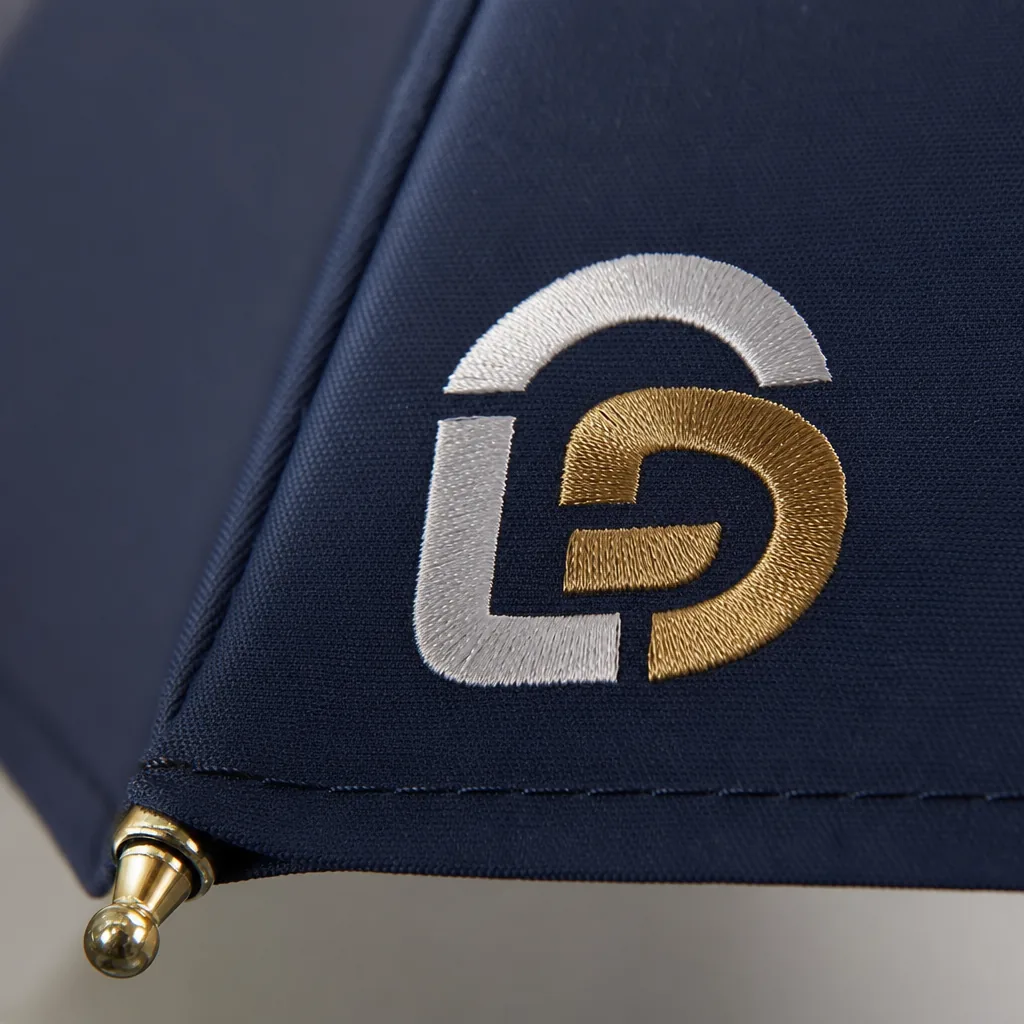
Embroidery or Print on Umbrellas: Brand Visibility Tradeoffs
Compare embroidery and print for umbrellas, including durability, setup costs, visibility, and MOQ so buyers choose the ...
Read More »
Debossed vs Printed Logos on Umbrella Components
Compare debossed, printed, and molded branding on umbrella parts, with durability, MOQ, and artwork setup guidance for b...
Read More »Multi-Color Logo Setup for Umbrella Brand Programs
Plan multi-color umbrella logos with clean registration, strong contrast, and realistic production limits to protect bra...
Read More »