Embroidery or Print on Umbrellas: Brand Visibility Tradeoffs
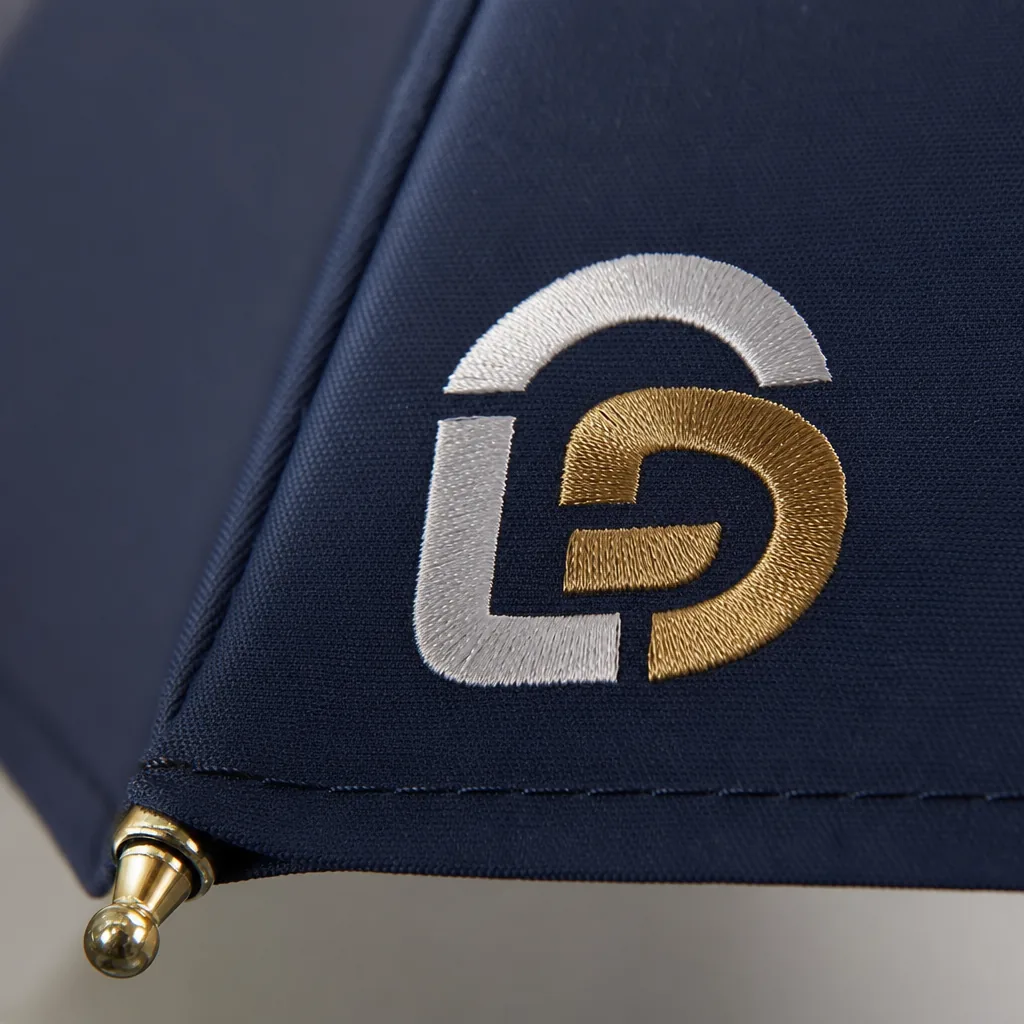
For buyers choosing umbrella logo decoration, the tradeoff is usually not aesthetic alone but how the branding holds up in rain, wind, and repeated use. In production, embroidery adds texture and long-term durability, while print offers sharper detail, lower setup cost, and faster scaling, but each method changes visibility, minimum order quantity, and the risk of wear in real-world use.
Brand Goals and Use Case Fit
Embroidery makes sense when the umbrella is a premium corporate gift or a client-facing executive item, because the decoration itself signals labor and cost. On a 21" or 23" automatic umbrella with a solid pongee 190T canopy, embroidery on umbrellas usually reads as tactile and durable, especially for a small chest-logo placement near a panel seam or a subtle mark on the tie strap. For umbrella logo decoration in this lane, buyers are paying for perceived value as much as brand visibility, so the stitch count, thread color match, and clean back-side finishing matter more than getting the largest possible graphic.
Printed umbrella logos are the better answer for promotion products, trade-show giveaways, sports events, and large retail programs where unit cost and fast throughput matter more than texture. Screen print, heat transfer, and sublimation all give stronger coverage for bigger artwork and full-panel custom canopy branding, and they hold up better when the logo needs to be seen from 10 to 20 feet away in a crowd. If the goal is broad brand visibility across hundreds or thousands of pieces, print wins because it scales cleanly across panels and keeps the decoration flat and easy to reproduce on POE, PVC, or EVA canopies.
The MOQ gap is where the decision usually gets made: embroidery often starts at a lower quantity for simple logos, but the setup is slower and the unit cost rises sharply if the design is detailed or multi-color. Printed umbrella logos typically need a higher MOQ to justify screens, transfer setup, or color management, but once the run is underway the cost per piece drops faster and the decoration is more practical for mass distribution. Our standard practice is to match umbrella logo decoration to the use case first, then choose the method that preserves brand visibility without paying premium-gift economics on a promotion-products order.
Fabric and Construction Limits
Pongee 190T is the safer baseline for umbrella logo decoration when the buyer wants a clean, repeatable result. It has enough body to hold printed umbrella logos without excessive ink bleed, and it takes a moderate embroidery on umbrellas better than very thin fabrics. Pongee 210T gives you a little more fabric stability, so small lettering and tighter line work stay sharper, especially on a standard 21" or 23" canopy. Once you move to lightweight POE or very soft polyester, the fabric starts behaving like a membrane instead of a panel; that is where both stitch definition and print edge quality start to suffer.
The seam layout matters more than most buyers expect. A good canopy has panel tension that stays even after sewing, and the panel shape has to be consistent from section to section or the artwork will “walk” across the ribs. On a curved umbrella panel, embroidery near a seam can pucker because the needle load is concentrated right where the fabric is already under stress. Printed umbrella logos are less sensitive to that physical pull, but if the seam allowance is sloppy or the panel is cut off-grain, the print can look slightly distorted once the umbrella opens and the canopy takes its final dome shape.
Dense embroidery on umbrellas is where lightweight canopies get exposed. A large filled logo, heavy text, or thick thread stack adds weight and stiffness, and a thin 190T panel can sag, ripple, or show needle holes more clearly after repeated opening and closing. That is why I usually treat embroidery as a smaller-area branding choice and reserve larger custom canopy branding for print, especially when brand visibility matters more than texture. For promotion products, the practical rule is simple: use embroidery when you want tactile detail on a stable panel, and use print when the logo area is big, the colors are flat, and the canopy fabric must stay visually smooth.
Durability, Washability, and Wear
For umbrella logo decoration, embroidery on umbrellas usually survives hard handling better than ink-based decoration, but only if the placement is sensible. Thread holds up well against surface scuffing on the canopy, yet dense stitching can fuzz at the edges after repeated rubbing in bags, car trunks, or crowded commuter use. Printed umbrella logos, especially screen print on smooth pongee, stay visually cleaner at first, but they are more exposed to crack lines, micro-crazing, and edge lift once the canopy is flexed thousands of times through open-close cycles. If the buyer cares about brand visibility over a short campaign, print is fine; if the umbrella is expected to live in rotation for months, embroidery keeps its shape longer, provided the logo is not oversized or placed where the canopy folds sharply.
Color retention is the other split point. Embroidery thread usually keeps its base color better outdoors because the pigment is locked into the yarn, but UV exposure still fades bright reds, blues, and blacks over time, especially on canopies that sit in sun or salt air. Printed umbrella logos can look sharper in the beginning, but low-grade inks lose saturation faster and white backgrounds discolor from dirt and hand oils. For promotion products and custom canopy branding, I treat this as a use-case question: if the umbrella is a giveaway with limited life, print gives more brand visibility per dollar; if it is a retail item or an executive gift, embroidery on umbrellas can age better visually, even though it adds weight and a slightly stiffer hand feel.
Frame choice changes the wear picture more than many buyers expect. Steel frames keep tension stable, but the extra rigidity can concentrate folding stress at the logo zone, so printed areas near panel seams may crack sooner if the umbrella is snapped shut aggressively. Fiberglass frames flex more, which is easier on both embroidery and print during gusty use, because the canopy moves instead of fighting the decoration layer; that said, poor fiberglass quality can still create uneven panel motion and rub points that chew up threads at the seams. For long-term branding wear, I would favor fiberglass ribs with a good resin finish, a clean panel layout, and a moderate logo size. That combination usually gives better brand visibility after real-world use than simply choosing the most expensive decoration method.
Cost, Lead Time, and Sampling
Digitizing is the first real cost driver for umbrella logo decoration, and embroidery on umbrellas is never just “send the file and stitch it.” A clean vector logo still needs stitch mapping, density control, underlay decisions, and sometimes a thread-path redraw if the artwork has thin letters or gradients. On my side of the factory floor, that setup usually adds a sample charge before mass production, because the machine program has to be tested on the exact canopy fabric, whether that is 190T pongee, 210T pongee, or a PVC/POE panel. Printed umbrella logos are faster to set up, but they still need screen prep, transfer alignment, or sublimation file adjustment, especially when the buyer wants tight brand visibility on a curved panel. For promotion products, this setup step is where many buyers underestimate both time and cost.
Color matching changes the schedule more than most buyers expect. For custom canopy branding, we always check Pantone targets against the actual substrate, because black pongee, white POE, and translucent EVA do not carry ink or thread the same way. Embroidery on umbrellas also needs thread confirmation: a red on file may read too dark under low light, while printed umbrella logos can shift if the ink sits too heavy on a coated surface. A first sample normally goes through layout review, stitch or print test, and buyer approval before bulk booking. In practice, that means sampling can take 5-10 days for a simple logo and longer if the artwork needs correction, with more time added when the buyer wants multiple canopy positions or matching on both outer and inner panels.
Production planning is where AQL 2.5 actually matters. After first-sample approval, we lock the decoration method, canopy panel count, and packaging spec, then schedule frame assembly, printing or embroidery, and final inspection in one run to avoid rework. For standard umbrella logo decoration on a straightforward order, bulk lead time is often 20-30 days after approval, but complicated multi-color art, tight color matching, or mixed sizes will push it out. We inspect decoration placement, thread tension or ink adhesion, then sample per AQL 2.5 before carton close. If the buyer delays sample sign-off, the whole PO slips, so the real lead time is not just factory capacity; it is how fast the artwork, color standard, and first sample are approved and frozen.
Choosing the Right Decoration Method
For umbrella logo decoration, the first filter is order size and unit cost. Screen print is usually the cheapest route on larger runs because the setup is spread over volume, especially on flat panels of 190T or 210T pongee where the artwork is simple and one to two colors. If the target price is tight and the order is going through promotion products channels, printed umbrella logos usually beat embroidery on cost and speed. ZheBrella’s standard practice is to reserve embroidery on umbrellas for cases where the logo sits on the sleeve, strap, or a small patch rather than directly on the canopy, because stitching on curved fabric adds labor and can distort fine text.
If the buyer is selling retail, not giveaways, the decision shifts toward brand visibility and perceived quality. Custom canopy branding with a clean screen print or heat-transfer graphic works best when the logo needs to read from 10 to 20 feet away, such as on 23" or 27" golf umbrellas. Transfer printing is the better fit when the artwork has gradients, tight registration, or more than four colors, because it holds detail better than traditional screen print without forcing the cost of embroidery. That matters on mid-tier retail programs where the umbrella itself is part of the brand message, not just a cheap handout.
Embroidery makes sense when the brand position is premium and the logo is small, textured, and intentionally understated. It is slower and more expensive than screen print or transfer, so I would only use it when the umbrella is a higher-margin retail item or a corporate gift where tactile finish matters more than pure reach. In practice, the most economical choice is screen print for simple, high-volume work; transfer for detailed artwork or shorter runs; and embroidery for sleeves, tie bands, or premium presentation pieces where the buyer wants brand visibility without relying on a large canopy graphic.
Frequently Asked Questions
Is embroidery always more premium than print on umbrellas?
Not always. Embroidery feels premium on thicker components like sleeves or straps, but on a canopy it can be bulky and less readable than print, especially on thin pongee fabric.
Which method is better for short runs?
Print is usually easier for short runs because setup is simpler and faster. Embroidery only makes sense if the brand specifically wants a textured look and accepts higher setup time.
Which decoration method holds up better in heavy rain and daily use?
Embroidery usually lasts longer because the logo is stitched into the fabric and does not rely on ink adhesion. Printed logos can still perform well, but their lifespan depends on the print method, fabric coating, and how often the umbrella is folded and rubbed.
What MOQ differences should buyers expect between embroidery and print?
Printing usually works better for lower MOQs because setup is simpler and faster, especially for one-color or multi-color screen or digital prints. Embroidery often has a higher effective setup cost per design, so factories usually prefer it for larger repeat orders or premium programs.
How does logo placement affect visibility on umbrellas?
For maximum brand visibility, buyers usually place logos on one or more canopy panels where the artwork is readable when the umbrella is open. If the goal is premium gifting, a smaller embroidered mark on a sleeve or panel can look cleaner, while large printed logos create stronger distance visibility.
Looking to Launch Your Custom Umbrella Line?
ZheBrella is a Zhejiang-based OEM/ODM umbrella manufacturer with 17 years of export experience. Free design, low MOQ from 100 pieces, windproof construction, full-color print.
Get Free Quote Now »People Also Search For
Related Articles
Embroidery vs Print for Umbrella Branding: What Buyers Should Choose
Compare embroidery and print for umbrella branding, including cost, logo size limits, durability, MOQ, and lead times fo...
Read More »
Debossed vs Printed Logos on Umbrella Components
Compare debossed, printed, and molded branding on umbrella parts, with durability, MOQ, and artwork setup guidance for b...
Read More »
Choosing Print Areas Beyond the Canopy for Branded Umbrellas
Extend umbrella branding beyond the canopy with practical guidance on straps, sleeves, ferrules, and tips that improve v...
Read More »