Emergency Kit Umbrellas for Relief and Response Programs
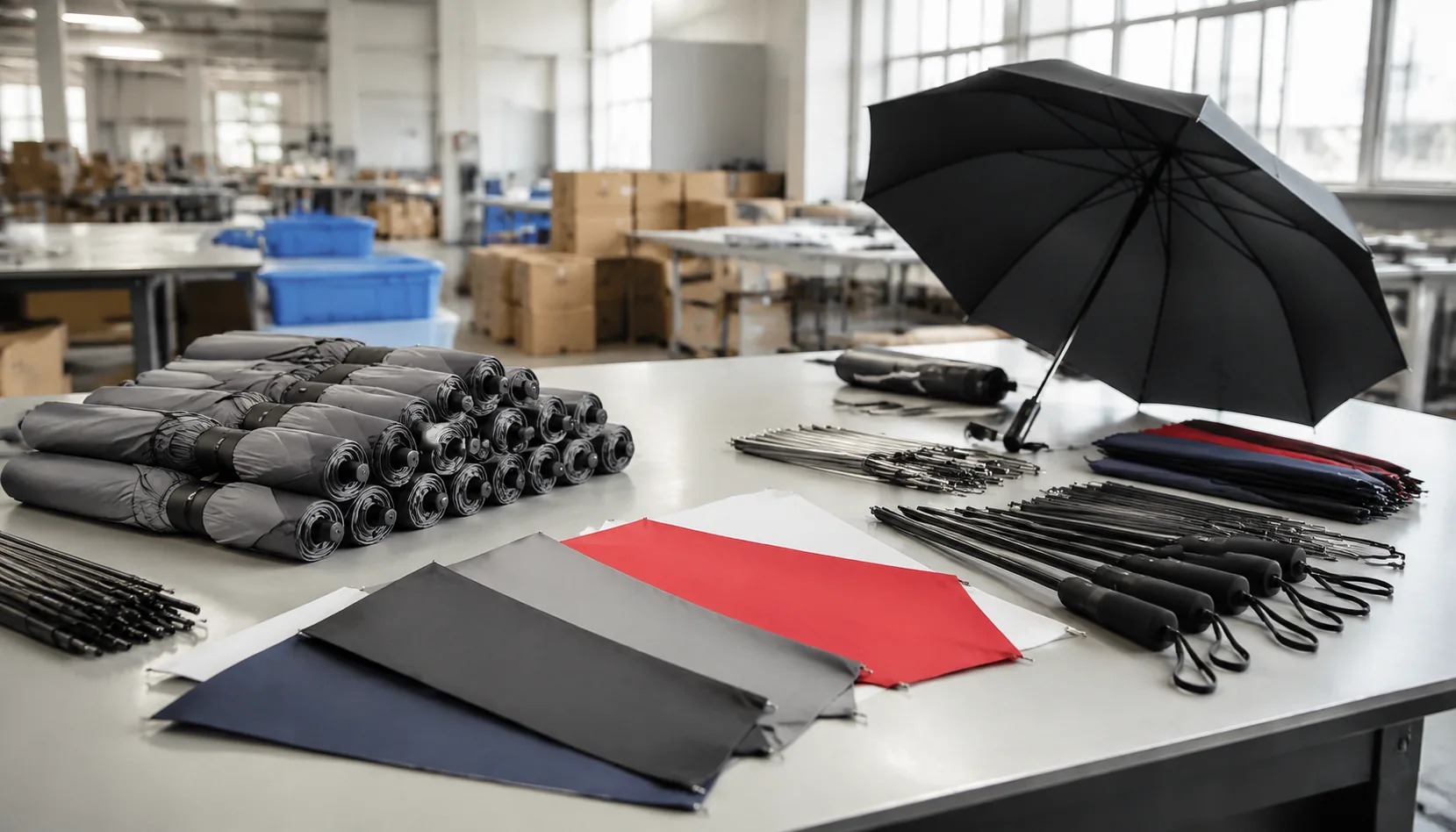
When relief teams build emergency kits, the umbrella is often treated like a simple add-on until weak ribs, leaking seams, or oversized cartons create problems in the field and at distribution. For emergency kit umbrellas bulk orders, we check the real constraints on the factory floor: frame strength, pongee coating, auto-open reliability, folded length, carton loading, and pre-shipment QC before the order leaves Songxia.
Define the Emergency Kit Environment
The emergency kit environment is not a retail shelf; it is a warehouse carton, a truck bay, a school gym distribution line, or the trunk of a roadside assistance vehicle. For emergency kit umbrellas bulk purchasing, the first question is packed volume, not decoration. A 21" compact 3-fold umbrella with a 190T pongee canopy usually fits better in relief packs than a 23" straight umbrella, while still giving enough coverage for one adult moving between shelters, buses, aid tents, or temporary housing. For family kits or municipal outage boxes, a 23" auto-open model can make sense because it deploys faster with one hand when someone is carrying water, documents, medicine, or a flashlight. I would avoid heavy wooden handles, chrome-plated fashion shafts, and oversized retail sleeves; they add cube, weight, and failure points without improving field usefulness.
Relief program umbrellas and disaster response umbrellas need to survive rough handling before they ever see rain. Cartons may be stacked five or six layers high, transferred from container to pallet to van, then opened by volunteers with box cutters. That is why we specify steel shafts for cost-sensitive kits, fiberglass ribs for wind-prone coastal programs, and simple manual or auto-open frames instead of complex auto-open-close mechanisms unless the budget supports stronger springs and sliders. For most NGO distributions, 8K ribs are adequate; 10K improves canopy tension and wind recovery, while 16K is usually unnecessary for emergency preparedness giveaways. A practical spec is 190T or 210T pongee with water-repellent coating, plastic tips, a matte handle, and a sleeve that can be removed quickly instead of a tight retail pouch that slows distribution.
Bulk rain umbrellas for kits should deploy fast, dry reasonably quickly, and tolerate repeated open-close cycles after being stored for months. Our standard practice at ZheBrella is to run open-close cycling, canopy pull checks, and AQL 2.5 inspection before shipment, because a stuck runner in a disaster line creates more complaints than a slightly imperfect logo. For municipal or roadside programs, reflective trim, high-visibility yellow or orange canopy panels, and UPF 50+ coating may be more useful than full-panel branding. Typical MOQs start around 1,000 pieces for stock colors and 3,000 pieces for custom canopy colors, with production lead times of 20–35 days after artwork or spec approval. FOB Ningbo or Shanghai works for experienced importers; DDP is often better for agencies that need cartons delivered directly to a warehouse, depot, or kit-packing contractor.
Select Frame and Canopy Specs for Reliability
For emergency kit umbrellas bulk, the frame decision should start with expected use, not catalog price. A basic 8K steel-rib umbrella is acceptable for low-cost shelter kits, transit giveaways, and one-day event staging where the goal is immediate rain cover at the lowest landed cost. Steel ribs are easy to tool, stable in assembly, and keep unit pricing tight, but they bend instead of recover when a gust catches the canopy. For relief program umbrellas packed into family hygiene kits or municipal stockpiles, I usually specify at least a steel shaft with fiberglass ribs, because fiberglass flexes back after inversion and reduces field complaints. A 23" manual-open 8K frame is often enough for compact kit cartons; a 27" auto-open straight umbrella gives better coverage for outdoor responders but takes more carton volume.
Fiberglass becomes worth the extra cost when umbrellas may be used repeatedly in exposed locations: flood cleanup zones, distribution lines, temporary shelters, parking control, or outdoor medical triage. An 8K fiberglass frame with reinforced stretchers can survive normal storm handling, while a double-canopy vented windproof build is the better choice if the buyer wants a stated wind-tunnel target such as 50+ mph. I do not recommend jumping to 16K unless the program is premium, donor-branded, or intended for agency staff rather than broad public distribution. A 16K frame looks sturdy and carries printing well, but it adds weight, cost, and packing size. For disaster response umbrellas, the smarter upgrade is often fiberglass ribs plus a reliable runner and spring, not simply more ribs.
For the canopy, 190T pongee with DWR coating is the practical baseline for bulk rain umbrellas for kits because it folds cleanly, dries faster than cheap polyester taffeta, and accepts screen or heat-transfer logos without heavy ink bleeding. 210T pongee gives a denser hand feel and better perceived quality, useful for emergency preparedness giveaways where the umbrella also represents a city, utility, NGO, or insurance brand. We normally test fabric water repellency after sewing because needle holes, seam tension, and cap fit matter as much as the fabric roll. If the kit may sit in storage for 12–24 months, avoid brittle PVC panels and over-thick coatings; a well-finished pongee canopy with DWR, rust-resistant tips, and AQL 2.5 inspection is more dependable than an overbuilt sample that cannot be repeated in mass production.
Decide Between Manual, Auto-Open, and Compact Formats
For relief program umbrellas, the mechanism decision should start with how the kit will be used in the first 30 seconds after opening the carton. Auto-open stick umbrellas are the better choice when people may be carrying water, documents, a child, or medical supplies; a 23" or 27" auto-open model with a straight steel or fiberglass shaft can be deployed one-handed with a push button, which is useful at registration tents, evacuation bus stops, and food-distribution lines. I prefer a J-handle or EVA foam straight handle over a tiny plastic grip for this use because wet hands need surface area, not decoration. Specify a button that can pass at least 1,500 open-close cycles, and check that the runner locks cleanly without requiring two hands. For disaster response umbrellas, shaft strength matters more than a fancy canopy: 8K steel ribs are economical, while fiberglass ribs or fiberglass tips reduce breakage when wind gusts hit 35–50 mph.
Manual compact umbrellas reduce both landed cost and packing volume, which is why they are common in emergency kit umbrellas bulk orders. A 21" three-fold manual umbrella usually closes to about 9–11 inches, compared with 32–36 inches for a full-size stick umbrella, so it fits better inside drawstring bags, hygiene kits, school emergency packs, and cartonized warehouse bundles. The tradeoff is slower deployment and less intuitive use for elderly recipients or people under stress. For bulk rain umbrellas for kits, ask for a slim sleeve that does not snag on the folded tips, but avoid overly tight sleeves because volunteers repacking cartons will lose time forcing umbrellas back inside. A 190T pongee canopy is the practical baseline; 210T feels better but adds cost. POE or EVA clear compact umbrellas look neat, but they crease more visibly and can stick together in hot container storage.
For warehouse-packed kits, the folded diameter and handle shape often create more trouble than the umbrella specification sheet admits. Bulky crook handles waste carton space, while flat EVA or matte PP handles stack more predictably in master cartons; for emergency preparedness giveaways, that can mean hundreds more units per pallet. Our standard practice at ZheBrella is to test packed-carton compression, sleeve pull-out, and random open-close checks before AQL 2.5 inspection, because a sample that works on a desk may fail after two months under carton pressure. If the program needs branding, keep printing to one or two canopy panels on manual compacts, or use a simple heat-transfer logo on the sleeve to control cost and lead time. For emergency kit umbrellas bulk procurement, I would choose manual compact for low-cost household kits, auto-open stick for field teams and public distribution points, and auto-open-close compact only when the budget allows a stronger shaft and better runner assembly.
Branding and Instructions for Public Programs
For public relief programs, the most useful branding is not a large beauty logo; it is information people can read in rain, stress, and poor light. On emergency kit umbrellas bulk orders, I recommend putting the agency or sponsor logo on one canopy panel facing outward when the umbrella is carried, then reserving a second panel for emergency hotline numbers, shelter addresses, or short public-health instructions. On a 23" or 27" stick umbrella, a one-panel print area of about 180–220 mm wide is usually clear without distorting over the panel seam. For folding umbrellas, especially 21" auto-open-close models, keep artwork smaller because the panel curvature is tighter and heavy ink can crack after repeated folding. High-contrast colors matter more than full-color artwork: black, navy, or red ink on yellow, white, or light-gray 190T pongee is easier to read than a complicated gradient on dark fabric.
QR codes are useful on relief program umbrellas, but only if they are printed large enough and tested after coating, drying, and canopy assembly. I do not like QR codes under 35 mm square on umbrellas; 45–55 mm is safer for disaster response umbrellas that may be scanned with wet hands or older phones. Put a short URL below the QR code because some users will not scan at all. Multilingual labels should be direct: “Emergency Hotline,” “Shelter Map,” “Open Carefully,” and “Dry Before Storage” in the local languages, not long legal text. If the canopy uses Teflon water-repellent coating or UPF 50+ UV coating, confirm ink adhesion before mass production, especially with heat-transfer logos. For bulk rain umbrellas for kits, we normally run a pre-production sample, wet-rub test, fold-cycle check, and barcode scan test before approving carton packing.
Low-ink, one-panel screen printing is the best cost-control choice for high-volume emergency preparedness giveaways. It reduces setup time, lowers ink consumption, and keeps production moving when the order is 5,000 to 50,000 pieces with tight delivery windows. A single-color screen print on one panel is faster and more durable than four-panel full-color heat transfer, and it avoids the stiff hand-feel that can make lightweight pongee fold poorly. Use simple care instructions on a sewn label or belly band: open away from face, do not force ribs in high wind, shake off water, leave open to dry, and keep away from flame. If the program requires traceability, print batch code, PO number, and hotline on the hangtag rather than crowding the canopy. For emergency kit umbrellas bulk shipments, that separation keeps the umbrella readable while still giving procurement teams the documentation they need for AQL 2.5 inspection and distribution control.
Procurement Controls: MOQ, AQL, and Shipping Terms
MOQ planning should start from the kit bill of materials, not from a random umbrella price list. For emergency kit umbrellas bulk, a practical factory MOQ is usually 1,000–3,000 pcs per color for a 21" or 23" manual-open straight umbrella, and 500–1,000 pcs if the frame and 190T pongee canopy fabric are already in stock. If you need agency logos, donor marks, or color-coded relief program umbrellas, separate the MOQ by print design because screen setup, ink matching, and carton sorting all become separate control points. I normally recommend a 2% spare ratio for standard manual models and 3% for auto-open or auto-open-close mechanisms because springs, runners, and tips take more abuse during mass packing and field distribution. For disaster response umbrellas, keep the specification boring: steel shaft, fiberglass ribs if wind exposure is expected, 8K frame, black plastic J-handle or EVA grip, and a water-repellent coating that dries fast in shelters and staging areas.
Pre-shipment inspection should be written into the PO, not negotiated after goods are packed. Our standard practice at ZheBrella is AQL 2.5 for major defects and AQL 4.0 for minor defects, with checks on canopy seam strength, rib alignment, runner locking, tip pullout, print adhesion, carton quantity, and random open-close cycling. For bulk rain umbrellas for kits, inspectors should also verify each umbrella is dry before sleeve packing, because moisture trapped inside a polybag can create odor and mildew during a 30–40 day ocean shipment. Carton labeling matters more than buyers expect: mark item code, PO number, color, logo version, quantity, gross/net weight, carton size, destination program, and pallet sequence if kits are being assembled in multiple warehouses. For humanitarian or municipal programs, I prefer neutral outer cartons with large scannable labels rather than retail-style graphics, since relief depots care about speed, traceability, and avoiding donation confusion.
Lead time depends on how much customization you add. Stock-color umbrellas with one-position printing can ship in 18–25 days after artwork approval and deposit; custom canopy colors, 10K or 16K frames, UV UPF 50+ coating, or special POE/PVC/EVA transparent canopies usually push production to 30–45 days. FOB Ningbo or Shanghai is best for experienced importers who already control freight, customs brokerage, insurance, and inland delivery; it keeps the unit cost clean and gives procurement teams more leverage on ocean rates. DDP is better for agencies that need landed-cost clarity before issuing emergency preparedness giveaways or pre-positioned shelter kits, especially when they do not have an importer of record. The tradeoff is simple: FOB gives control, DDP gives predictability. For emergency kit umbrellas bulk, I would lock carton dimensions, HS code assumptions, delivery address type, and inspection release rules before quoting either term.
Frequently Asked Questions
What umbrella size works best for emergency preparedness kits?
A 3-fold compact umbrella is usually best because it balances coverage and packing size. For responder kits, a straight auto-open umbrella can be easier to deploy but takes more storage space.
Should emergency kit umbrellas use fiberglass or steel ribs?
Steel ribs lower unit cost for large relief distributions, while fiberglass ribs improve flex and reduce breakage in wind. For municipal or branded preparedness programs, fiberglass 8K is often the safer mid-range choice.
What canopy size works best for emergency kit umbrellas in bulk orders?
For most relief and preparedness kits, a 42 to 48 inch canopy is a practical balance of coverage and packed size. If the kit has very limited space, buyers often choose a 38 to 42 inch compact folding model.
Which frame material is usually preferred for disaster response umbrellas?
A steel or fiberglass-reinforced frame is common when the priority is durability and wind resistance. Fiberglass ribs reduce breakage, while steel parts can lower cost if weight is less critical.
What QC checks should a buyer require before shipment?
Ask for opening/closing cycle tests, canopy stitch inspection, water repellency checks, and carton drop testing. For bulk umbrella programs, many buyers also specify AQL inspection and random pre-shipment sampling.
Looking to Launch Your Custom Umbrella Line?
ZheBrella is a Zhejiang-based OEM/ODM umbrella manufacturer with 17 years of export experience. Free design, low MOQ from 100 pieces, windproof construction, full-color print.
Get Free Quote Now »People Also Search For
Related Articles
Reflective Safety Umbrellas for Corporate and Campus Programs
Specify reflective safety umbrellas with strip placement, canopy fabric, rib materials, print methods, and inspection ch...
Read More »
Reflective Safety Umbrellas for Corporate and Event Programs
Specify reflective umbrellas for safety campaigns with the right fabric, rib strength, print areas, visibility details, ...
Read More »
Event Giveaway Umbrellas: Buyer Specs for Bulk Orders
Learn how to source event giveaway umbrellas with the right size, print method, frame, MOQ, packaging, and lead time for...
Read More »