Factory Packaging Design for Umbrella Export Damage Control
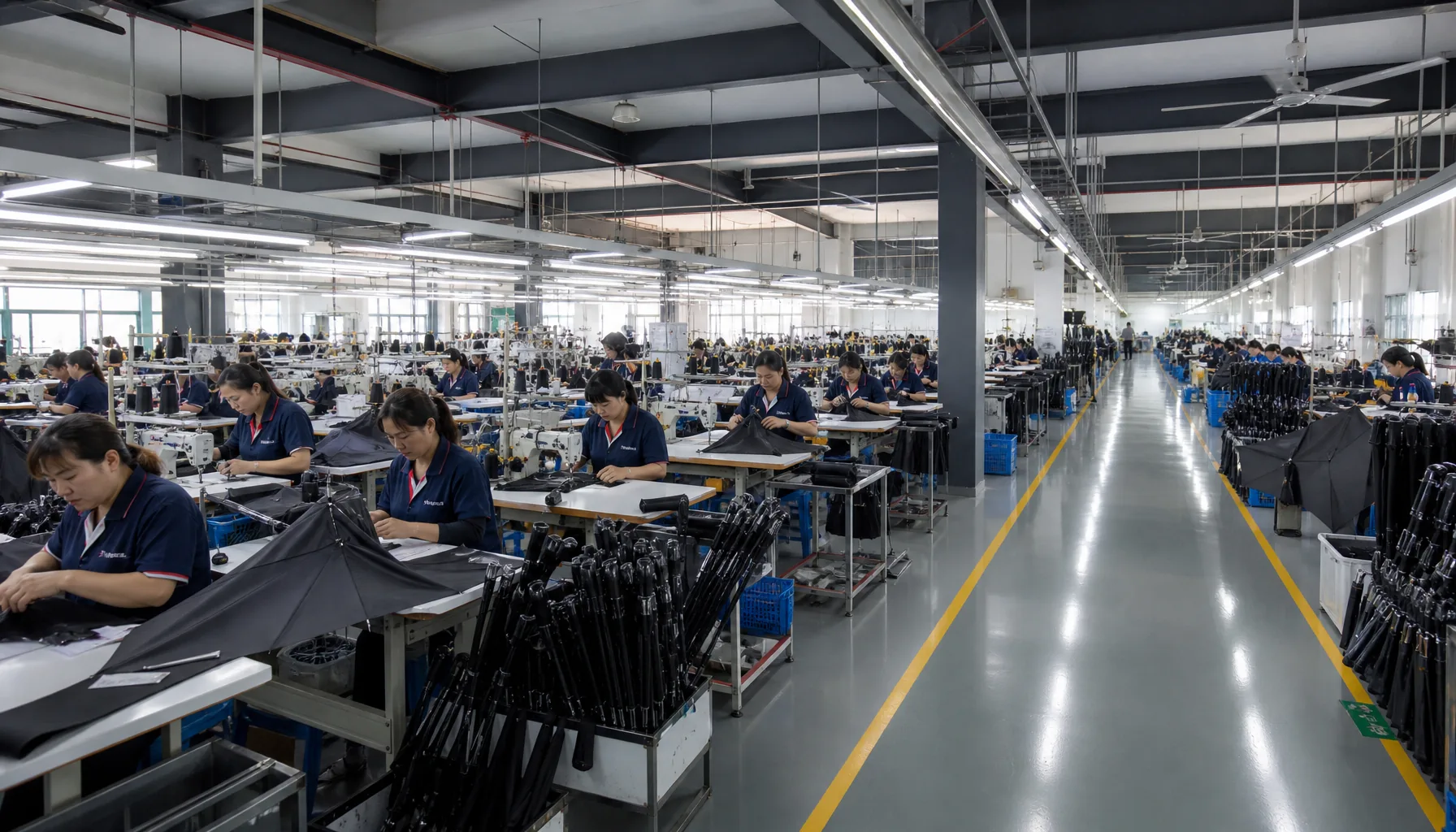
When umbrella shipments fail in transit, the loss usually starts long before the cartons leave the dock: loose pack-out, weak corner support, oversized voids, and specs that do not match the route. At ZheBrella in Songxia, Shangyu, we see how umbrella packaging design has to balance retail presentation, pallet efficiency, and export abuse testing so OEM buyers receive fewer crushed ribs, bent shafts, and moisture-related claims.
Why Packaging Affects Factory Yield and Transit Loss
Bad umbrella packaging design shows up first on the factory floor, not in the warehouse. If the retail box spec is too loose, the ferrule shifts and bends the tip; if the insert is too weak, the shaft tube gets dented; if the carton wall is underbuilt, corners crush in pallet stacking or container vibration. I’ve seen otherwise good umbrellas fail export carton testing because the pack-out left too much empty space, so the canopy banged against the frame and the handle wore through the sleeve. Once that happens, you are not just protecting product anymore — you are managing claims, markdowns, and a hit to the buyer’s confidence in umbrella factory packaging.
The real cost is hidden in labor and rework. Every damaged unit needs inspection, repacking, and often a fresh carton, which means extra man-hours at the packing line and slower throughput on the next PO. A carton that fails during FOB handling can trigger a chargeback before it even leaves the port; under DDP, the same damage can become a landed-cost problem because replacement freight, destination sorting, and local disposal all land back on the supplier. If the pack-out optimization is wrong by even a few millimeters, the factory loses efficiency twice: once in packing speed, and again in the time spent fixing avoidable damage.
The best umbrella packaging design is usually plain and stubborn: enough headspace control to stop tip movement, enough board strength to survive stacking, and a sleeve or tray that locks the handle and shaft without crushing the canopy. We standardize packaging around actual transit abuse, not showroom looks, so the retail box spec matches the carton size, inner protection, and pallet pattern from the start. That is where export carton testing earns its keep — drop, compression, and vibration results tell you whether the design will survive a wet season lane from Zhejiang to a DC in Europe or North America, or whether it will come back as a return claim with dents, broken ribs, and a lost margin line.
Primary Pack, Inner Pack, and Master Carton Specs
Umbrella packaging design starts with the primary pack, because the sleeve, polybag, and insert do most of the work before the carton ever gets handled. A plain OPP polybag is cheap and fast, but it gives almost no puncture protection; for pointed tips, metal ferrules, and auto-open buttons, I prefer a LDPE or PE bag with a cardboard header or molded insert so the canopy edge does not rub through during vibration. For retail programs, the retail box spec usually needs a tighter fit than a generic shipping sleeve, especially on a 21" or 23" umbrella where the runner and handle geometry decide whether the pack locks in place or rattles and scuffs the print.
Inner box choice is where cube efficiency either improves or gets wasted. A narrow folding sleeve reduces air, but a rigid tuck-end or window box protects better when the umbrella has a curved cane handle, EVA grip, or large J-handle that creates an uneven load. In umbrella factory packaging, the length of the shaft and the handle profile matter more than most buyers expect: a straight plastic handle packs flat, while a hook handle often forces a taller inner box or a diagonal layout that hurts pack-out optimization. If the goal is export damage control, I usually specify an insert that immobilizes the tip and handle separately, because one loose end is enough to dent the panel or split the carton seam in transit.
Master carton selection should be based on export carton testing, not guesswork. For most FOB shipments, a 5-ply corrugated carton with ECT or burst strength matched to the load is the baseline; when the umbrellas are long, heavy, or shipped in humid lanes, a stronger 7-ply or double-wall build is worth the extra cube because single-wall cartons crush at corners first. Carton grade and wall thickness have to match the drop height and stack time you expect at the destination, and I would not approve a packed carton without a real drop test on corners, edges, and flats. For mixed programs, the best practice is to standardize the inner pack count first, then adjust dividers, pad sheets, and master carton dimensions so the product fills the case tightly without over-compressing the canopy ribs or deforming the handle heads.
How to Match Packaging to Umbrella Type
Compact auto-open umbrellas are the easiest to pack, but only if the tray or sleeve keeps the runner, button, and handle from bouncing around. In umbrella packaging design, the real damage usually happens at the corners of the canopy and at the shaft tip, so a thin carton alone is not enough for export cartons that will get thrown onto pallets and re-handled at destination. For these models, I usually push for a simple retail box spec with a tight paper insert or molded pulp cradle, because that controls scuffing without inflating pack-out optimization or freight cost. If the customer is doing large-volume promotional orders, a basic inner sleeve plus master carton is often the most economical setup once export carton testing confirms the stack strength and drop performance.
Long-shaft golf umbrellas are a different problem because the umbrella is longer, heavier, and usually packed in fewer pieces per carton. A double-canopy vented frame or a steel shaft adds weight and bending stress, so the carton needs more crush resistance and better end protection at the ferrule and handle. This is where umbrella factory packaging should move beyond loose polybags; corner boards, end caps, and a stronger corrugated spec reduce transit damage, especially on sea freight routes with rough transshipment. For these models, export carton testing matters more than on compact umbrellas, because one split carton can turn into multiple bent shafts and canopy edge dents.
Premium gift sets need the highest level of control because buyers judge the packaging as part of the product, not just a shipping container. A rigid retail box spec with a printed outer sleeve, fitted insert, and separated components works well when the set includes an umbrella, cover, and maybe a small care card or branding insert. The catch is MOQ: custom die-cut inserts, EVA trays, or lined paperboard become economical only when the order is large enough to spread tooling and setup costs, and that is where many projects fail the math. For smaller programs, I would simplify the structure, keep the printed presentation strong, and spend the money on better umbrella factory packaging only where it actually prevents breakage and returns.
Export Testing for Compression, Drop, and Moisture
If you are serious about umbrella packaging design, start with export carton testing, not with graphics. A carton that looks clean on a sample table can still crush in a sea container or split at the corner after pallet stacking. For umbrella factory packaging, I usually want compression data tied to the actual pack-out: single-wall or double-wall board grade, flute type, bundle weight, and pallet height. Buyers should ask for a minimum stack-load target with less than 5% top-panel deformation after 24 hours, and they should insist on zero burst-through at the corner edges. If the retail box spec is part of the shipper pack, it should be tested as a system, not as a loose box that never sees real transit stress.
Drop and vibration testing catch the failures that compression misses. A sensible transit-drop plan should include at least 6 faces, 3 edges, and 3 corners, with the acceptance criterion set at no frame breakage, no canopy puncture, and no more than 1% visible carton scuffing on the print panel if the box is retail-facing. For pack-out optimization, the mistake I see most often is leaving empty headspace around the handle or ferrule; that creates impact travel and makes the umbrella bruise through the carton wall. Ask for vibration testing that matches road and container movement, with no zipper pull-off, no bent shaft, and no loosening of inner inserts after the run. If the shipper pack fails a 30–60 minute vibration cycle, the design is not ready for export.
Moisture exposure is where weak umbrella packaging design gets exposed fast, especially on ocean freight into humid lanes. In humidity testing, the carton should hold its shape after 48 hours at 90% RH and 40°C, with no label lift, no ink bleed, and no fiber delamination at the seams. For printed retail cartons, a practical print scuff limit is light surface whitening only, with no ink transfer to adjacent packs after rub testing; if the artwork shows visible rub-through on a 1-meter slide test, it will look tired by arrival. The right umbrella factory packaging spec should also define acceptable breakage rate clearly, usually 0% for structural parts and under 0.5% for cosmetic defects on the outer pack, because vague language only creates arguments after the shipment lands.
Spec Sheets, AQL Checks, and Shipment Readiness
A buyer spec sheet for umbrella packaging design should not be a vague note that says “standard export packing.” It needs the retail box spec, inner pack count, master carton dimensions, gross and net weight targets, carton print location, barcode placement, drop-test requirement, and whether the canopy is folded in a polybag, tissue wrap, or sleeve. For umbrella factory packaging, I also expect the file to state rib size, handle type, and whether the product ships with an insert card, hangtag, or silica gel, because those details change pack-out optimization and carton compression. If the buyer wants mixed SKUs in one master carton, that must be written clearly, with exact assortment ratios and label rules, or the loading team will guess and create claims later.
QC should not accept carton strength by eye. We use export carton testing against the actual shipping route, which means checking ECT or burst strength, corner crush behavior, tape adhesion, and whether the board survives humidity after storage, not just at the packing table. Count accuracy is just as important: AQL 2.5 works for visual defects, but for quantity control the line should verify every finished carton against the packing list, then do random open-box checks for piece count, accessory count, and folding condition. On repeat orders, the approved sample, signed carton artwork, and sealed golden sample become the control set; without that, the same umbrella packaging design can drift across shifts and suppliers even when the product itself stays unchanged.
Final pack-out has to match the shipping mode, because ocean freight, air freight, and e-commerce fulfillment punish different mistakes. For FCL ocean shipments, heavier double-wall cartons and tighter palletizing usually beat oversized retail packaging; for air shipments, volumetric weight matters more, so the best move is often a slimmer master carton and fewer voids. ZheBrella’s standard practice is to lock the pack plan only after sample approval, then confirm carton loading pattern, pallet height, and outer carton labels before mass production starts. For repeat orders, the factory should keep the same approved retail box spec, revise only the minimum needed changes, and recheck count accuracy at first-article, mid-run, and final inspection so the pack-out does not drift from the signed reference.
Frequently Asked Questions
How do packaging specs influence umbrella MOQ?
Custom printed cartons, inserts, or molded trays often raise the practical MOQ because factories need to source materials and set up print runs efficiently. Standard neutral packaging usually supports lower MOQ and faster lead time.
What should a buyer request to reduce shipping damage?
Ask for carton test results, pack-out photos, and a confirmed master carton configuration before production starts. For fragile or premium umbrellas, request compression and drop testing on the exact export pack rather than a generic sample.
What carton test level is usually suitable for umbrella export shipments?
For most distributor and retail export orders, factories use 5-ply or 7-ply master cartons and verify drop resistance with ISTA-style carton drop testing. If the shipment is heavy, mixed-size, or moving by sea in long transit cycles, buyers often request edge crush or burst-strength data before approval.
How should pack-out be set for long umbrellas versus compact umbrellas?
Long umbrellas are commonly packed in lower counts per master carton to avoid side-wall crush and handle pressure, while compact umbrellas can usually run higher pack counts if dividers or polybag separation are used. A factory will normally balance unit count, carton weight, and carton dimensions so each master carton stays safe to stack and practical to handle.
Can the same umbrella use different packaging for retail and wholesale channels?
Yes. A common OEM setup is one product with a retail presentation box for store shelves and a separate bulk master carton spec for distributor replenishment. This usually requires confirming MOQ by packaging type, because custom retail boxes, inserts, and barcode labels often start at a few thousand units per design.
Looking to Launch Your Custom Umbrella Line?
ZheBrella is a Zhejiang-based OEM/ODM umbrella manufacturer with 17 years of export experience. Free design, low MOQ from 100 pieces, windproof construction, full-color print.
Get Free Quote Now »People Also Search For
Related Articles
Umbrella Carton Engineering for Export: Pack-Out and Damage Control
See how carton size, pack-out count, inserts, and pallet design reduce transit damage and control freight cost on export...
Read More »
Umbrella Carton Compression Testing for Export Damage Prevention
See how carton compression, drop tests, and pack-out design reduce bent ribs, broken handles, and transit damage in expo...
Read More »
Umbrella Carton Packing: Reducing Damage in Ocean Freight
Reduce freight damage with stronger umbrella cartons, correct inner packing, moisture control, drop-test checks, and cle...
Read More »