Heavy-Duty Worksite Umbrellas for Industrial Buyers
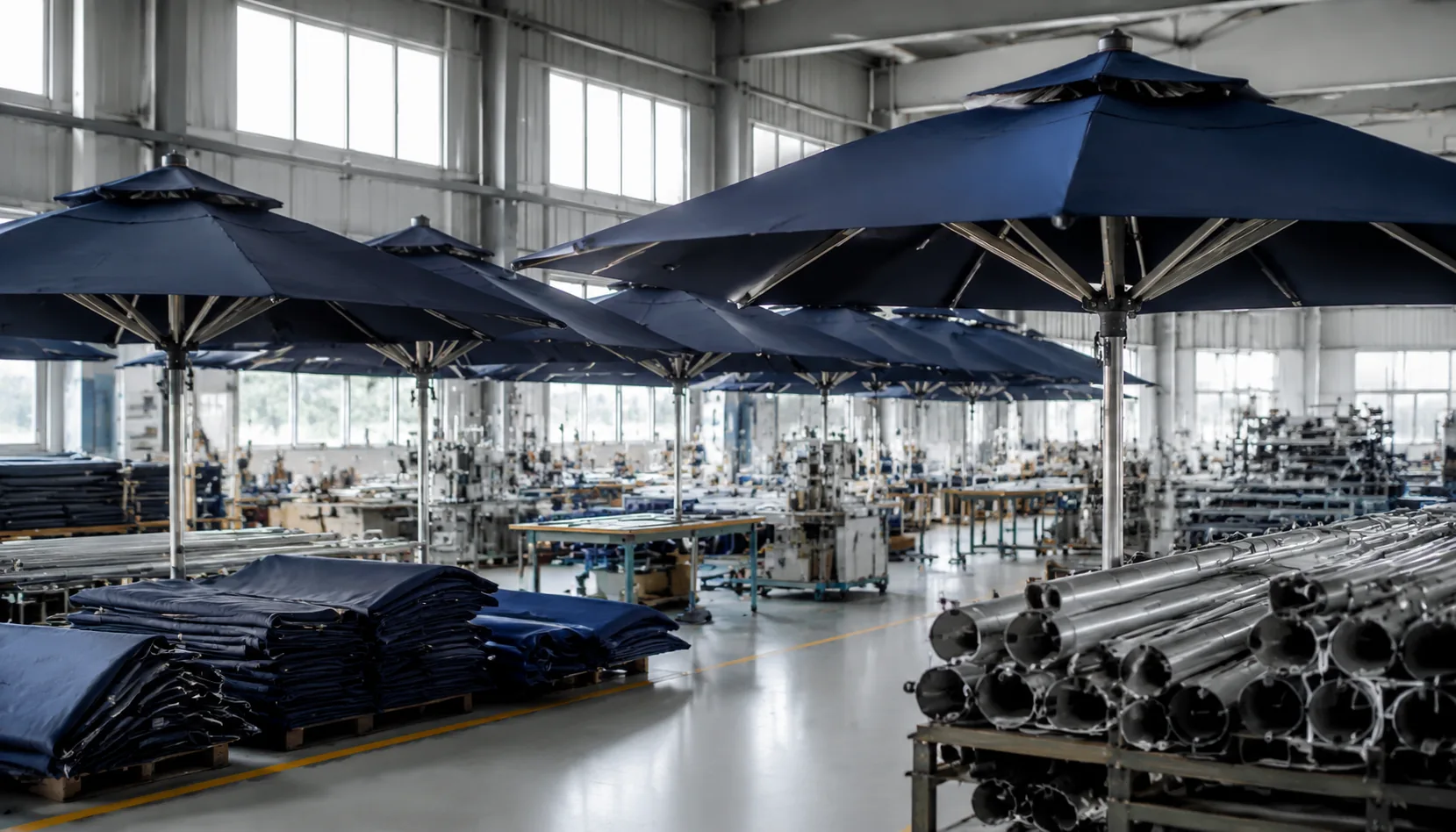
Industrial buyers usually do not have problems with the umbrella sample in the meeting room; they have problems after wind, dust, UV, and rough crew handling expose weak ribs, loose tips, and fading fabric. When we build heavy duty worksite umbrellas on the Songxia factory floor, we check frame gauge, rib riveting, canopy coating, safety-color matching, logo position, and packed-carton strength before quoting MOQ, FOB, or DDP delivery.
Define Worksite Conditions and User Groups
Worksite umbrellas should be specified by task first, not by diameter first. A construction supervisor walking slab edges in intermittent rain needs a different build than a utilities crew standing over an open cabinet for 40 minutes. For walking inspections, I normally start with a 27" or 30" straight umbrella, 8K or 10K fiberglass ribs, 190T or 210T pongee, and an EVA or rubberized handle that can be held with wet gloves. For stationary coverage at a trench, gatehouse, loading bay, or maintenance point, a larger golf-style double-canopy frame makes more sense because the user is not fighting the umbrella while moving. Heavy duty worksite umbrellas should be treated as field equipment: rib material, shaft wall thickness, runner strength, and grip shape matter more than a catalog photo.
Wind exposure is the condition buyers underestimate most. A logistics yard with container lanes and truck washdown zones can produce sharp gusts even when the weather report says only 20 mph. For open jobsites, I prefer fiberglass ribs over painted steel ribs because fiberglass bends and recovers instead of taking a permanent set; steel is acceptable for low-cost industrial rain umbrellas used around building entrances, but it is not my first choice for supervisors crossing exposed decks. A double-canopy vented construction umbrella with 10K fiberglass ribs can usually be engineered to survive 50+ mph wind-tunnel testing, but only if the tips, stretchers, and rivets are upgraded together. Mixing a strong canopy with weak stretchers is a common OEM mistake.
User group changes the mechanism choice. Supervisors and safety inspectors often want auto-open because one hand may be holding drawings, a radio, or a tablet; maintenance crews working around pumps, meters, or electrical panels often prefer manual-open because it is simpler, less likely to trigger accidentally, and easier to operate with thick gloves. For jobsite safety umbrellas, high-visibility panels, reflective piping, and clear POE viewing windows can be more useful than a larger logo. Custom work umbrellas for utilities or OEM construction umbrellas should also account for storage: wet umbrellas get thrown into pickups, gang boxes, tool rooms, and forklifts. Our standard practice at ZheBrella is to confirm walking, inspection, or stationary use before quoting size, frame, printing method, MOQ, and AQL 2.5 inspection scope.
Build a Stronger Frame Specification
For heavy duty worksite umbrellas, the frame specification should start with the shaft, not the canopy artwork. A 14 mm or 16 mm steel shaft gives better torsional rigidity than aluminum when the umbrella is opened repeatedly by crews wearing gloves or when it is clamped to a tool cart, scaffold rack, or temporary guard station. I do not like thin 10 mm shafts for industrial rain umbrellas; they bend at the runner after a few hard wind events. Powder-coated steel is usually enough for inland jobsites, while zinc plating or electrophoretic coating is worth the cost for coastal yards, ship repair zones, and chemical plants where salt and moisture sit on the metal overnight. For 27 inch and 30 inch umbrellas, specify a thicker lower tube, metal runner, and reinforced notch because the leverage load is much higher than on a 21 inch promo umbrella.
Ribs need a different logic: rigidity in the shaft, controlled flex in the canopy skeleton. Fiberglass ribs recover better than steel ribs after gust loading, especially on open yards where wind hits from changing directions between containers, cranes, and unfinished structures. A reinforced 8K frame is acceptable for compact custom work umbrellas used by supervisors or security staff, but 16K is the better choice when buyers want a rounder canopy, improved load distribution, and less panel flutter. The tradeoff is weight and cost; a 16K fiberglass system with steel shaft can feel 80–150 g heavier than a basic 8K steel frame, depending on size and handle. For OEM construction umbrellas, I normally ask whether the product is hand-carried, mounted, or issued as PPE-adjacent rain gear before locking the rib count, because comfort and durability are not the same requirement.
Open yards, bridge projects, ports, and coastal maintenance sites should use a double-canopy vented windproof design rather than simply adding thicker ribs. The vent lets pressure escape through the upper canopy, reducing inversion risk when gusts hit 35–50 mph across exposed concrete or steel decking. Our standard practice at ZheBrella is to pair that structure with 190T or 210T pongee, reinforced bartacks at rib tips, and AQL 2.5 inspection on opening force, rib alignment, runner lock, and seam tension. For jobsite safety umbrellas, high-visibility orange, yellow, or lime panels can be combined with reflective binding, but the frame still has to carry the load; reflective tape will not save a weak rib joint. If the buyer expects repeat use across multiple seasons, specify replaceable tips, rust-resistant springs, and a wind-test target instead of relying on vague words like “stormproof.”
Select Canopy Fabric, Coating, and Color
For heavy duty worksite umbrellas, I would not quote anything below 210T pongee unless the buyer is chasing a short-term giveaway price. 190T pongee is fine for commuter umbrellas, but on a construction entrance, mine gate, oil terminal, or outdoor loading dock, the canopy gets dragged against rebar, scaffolding, truck beds, wet concrete, and PPE buckles. 210T pongee gives a tighter weave, better tear resistance, and cleaner printing than basic polyester, while heavier 240T polyester or solution-dyed fabric makes sense for long outdoor deployment. For industrial rain umbrellas, the coating matters as much as the yarn: a proper water-repellent finish should bead water after repeated open-close cycles, and we normally test canopy leakage around top caps, rib tips, and panel seams before packing under AQL 2.5 inspection.
If the umbrella will be used for flagging crews, survey teams, road repair, or yard security, add UV coating rated UPF 50+ instead of treating sun protection as an afterthought. Dark navy can look professional for supervisors or security teams, but it absorbs heat; high-visibility yellow and safety orange are better for jobsite safety umbrellas because they are easier to spot around forklifts, cranes, and reversing trucks. Reflective trim can be sewn on panel edges, valances, or alternating ribs, but it must be specified early because reflective tape changes sewing tension and panel allowance. For larger 27 inch, 30 inch, or golf-style frames, I prefer reinforced top patches and double-stitched seams to stop coating cracks near the ferrule after wind loading.
Custom work umbrellas should match the actual site risk, not just a Pantone chart. For wet civil works and port crews, a Teflon-type water-repellent finish is worth the small upcharge because mud and rain rinse off more easily. For utility contractors or OEM construction umbrellas used near traffic, I would combine orange 210T pongee, silver reflective edging, fiberglass ribs, and a vented double canopy if the frame target is 50+ mph wind survival. Screen printing works for bold safety logos and department names, while heat transfer is cleaner for multi-color marks on darker navy fabric. At ZheBrella, our standard practice is to confirm fabric weight, coating, color fastness, and logo placement on a pre-production sample before bulk cutting, because correcting a wrong safety color after 3,000 panels are printed is expensive.
Specify Handles, Mechanisms, and Field Usability
For heavy duty worksite umbrellas, the opening system should be specified around how crews actually move: one hand may be holding a toolbox, radio, clipboard, or scaffold rail. A 23" or 27" auto-open stick umbrella with a reinforced runner lets a supervisor deploy cover in roughly one second, which matters during site walks, loading dock checks, or emergency access between buildings. I prefer a metal shaft with fiberglass ribs for this category because the ribs absorb gusts better than painted steel, while the shaft still gives the umbrella a solid industrial feel. For larger 30" golf-style industrial rain umbrellas, auto-open is still practical, but the spring and button must be tested hard; our standard practice is 500-cycle open/close testing before shipment, plus AQL 2.5 inspection on function, rib alignment, and locking strength.
Manual open is not outdated; it is often the safer choice for rough jobsite use where umbrellas get tossed into trucks, leaned against concrete, or stored with wet PPE. A manual runner has fewer failure points than an auto-open button, especially when grit, cement dust, or saltwater spray gets into the mechanism. For OEM construction umbrellas ordered in 1,000–5,000 pcs, I usually recommend manual open for tool-room issue, traffic-control crews, and long-term maintenance teams, while keeping auto-open for inspectors, project managers, and client-facing site staff. If the canopy is 190T or 210T pongee with PU or Teflon water-repellent coating, the mechanism should also match the frame weight; an under-specified spring on a 16K windproof frame will feel impressive in the sample room but fail early in the field.
Handles need as much attention as canopy fabric. A small straight plastic handle is cheap, but it is poor design for gloves; specify an oversized EVA foam, rubberized PP, or molded ABS grip with enough diameter for winter work gloves and wet hands. Wrist straps should be bar-tacked, not just looped through a weak plastic plug, because jobsite safety umbrellas are often carried while climbing stairs, crossing gravel, or entering temporary trailers. Rounded tips are also worth specifying: blunt plastic or resin caps reduce snagging on hi-vis vests, vehicle interiors, and temporary sheeting, while still protecting the rib ends. For custom work umbrellas, I would lock these details in the tech pack along with handle color, strap width, runner material, tip radius, and carton drop-test requirements before confirming MOQ, FOB Ningbo/Shanghai pricing, or DDP lead times of about 35–55 days.
Set Testing, MOQ, and Import Terms
Import planning is where many industrial buyers lose time. For heavy duty worksite umbrellas, mass production usually takes 25–35 days after sample approval and deposit, while peak rainy-season orders can stretch to 40–50 days if fiberglass ribs, 210T fabric, or reflective tape supply is tight. FOB Ningbo or Shanghai is the cleanest term for experienced importers who already control freight, insurance, and customs brokerage. DDP is better for distributors shipping to multiple warehouses or event contractors that need landed cost certainty, but carton dimensions must be confirmed early because oversized 30" golf-style umbrellas can push freight costs sharply above compact 21" or standard 23" models. A practical PO should lock carton pack method, barcode position, spare parts ratio, AQL level, inspection date, and required documents such as commercial invoice, packing list, certificate of origin, and any fabric coating test report before production starts.
Frequently Asked Questions
Are fiberglass ribs better for worksite umbrellas?
Fiberglass ribs are usually better where wind flex is important because they bend instead of deforming like some steel ribs. Many industrial buyers still use a steel shaft with fiberglass ribs for balanced strength and cost.
What branding works best on industrial umbrellas?
Large one-panel or two-panel logos are easiest to read on jobsites. Reflective trim, sleeve labels, and high-contrast printing improve visibility without making the canopy design too crowded.
What canopy materials are best for a worksite umbrella that will be used outdoors daily?
For daily outdoor use, buyers usually ask for 190T or 210D polyester with PU or silver coating for better water resistance and UV protection. For higher durability, ask for reinforced stitching, double canopy vents, and fiberglass or metal ribs with corrosion-resistant hardware.
Can you support custom safety colors and logo placement for industrial orders?
Yes. Most B2B programs support Pantone-matched canopy colors, reflective strips, and screen print or heat-transfer logo placement on one or more panels. Typical sampling takes 7-15 days, and production lead time is often 25-40 days after approval, depending on order size.
What MOQ should a buyer expect for OEM construction umbrellas?
MOQ is commonly 300-500 pieces per design for custom worksite umbrellas, but it can vary by canopy size, color count, and logo complexity. If you need mixed colors or multiple delivery destinations, the MOQ may be higher to keep unit pricing stable.
Looking to Launch Your Custom Umbrella Line?
ZheBrella is a Zhejiang-based OEM/ODM umbrella manufacturer with 17 years of export experience. Free design, low MOQ from 100 pieces, windproof construction, full-color print.
Get Free Quote Now »People Also Search For
Related Articles
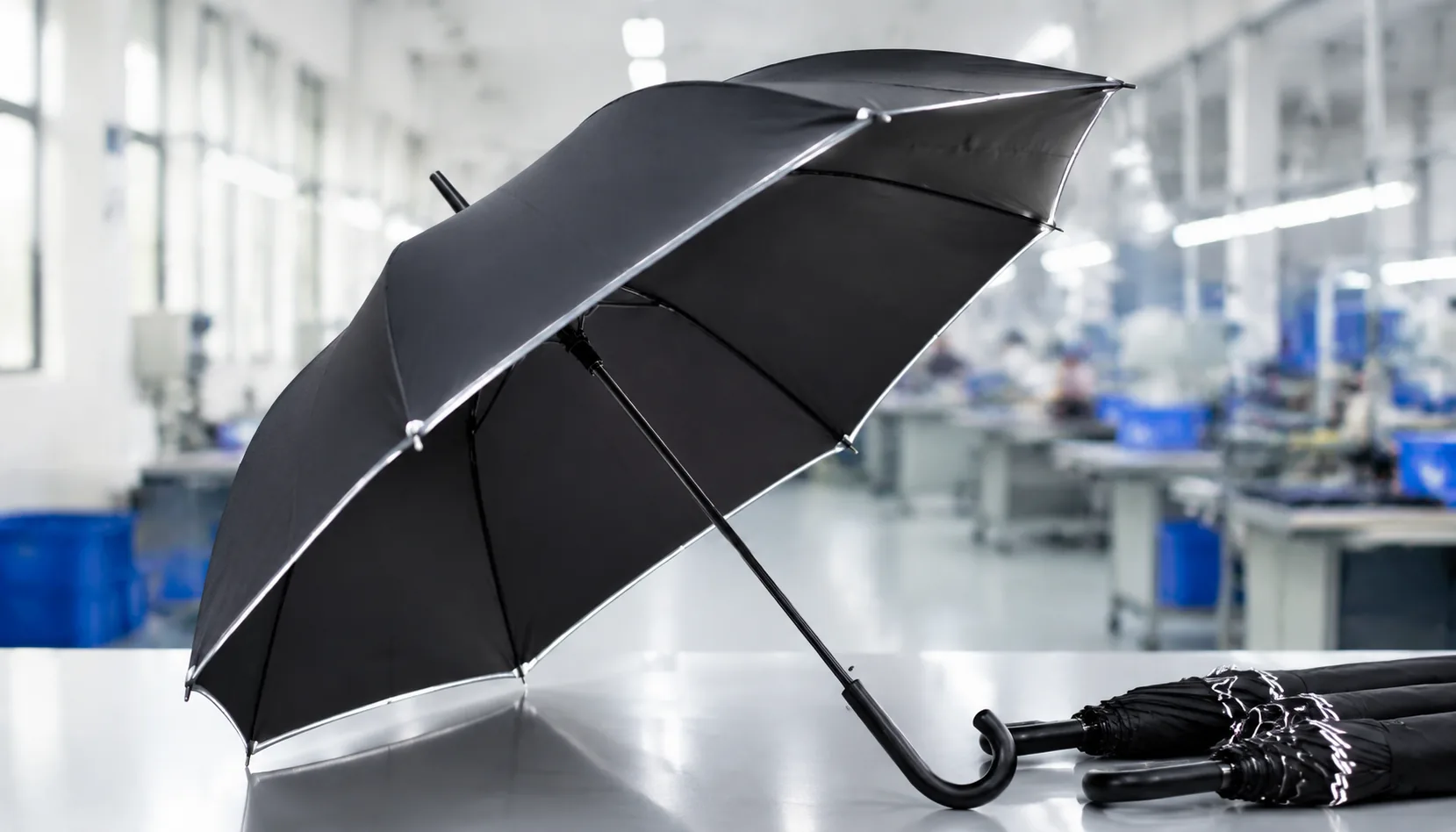
Reflective Trim Umbrellas: Safety Specs for OEM Buyers
Specify reflective umbrellas for commuter, campus, and event programs with trim placement, fabric, frame, MOQ, QC, and p...
Read More »
Reflective Safety Umbrellas for Promo Buyer Spec Guide
Specify reflective safety umbrellas with 190T/210T pongee, fiberglass ribs, reflective piping, QC checks, MOQ, and shipp...
Read More »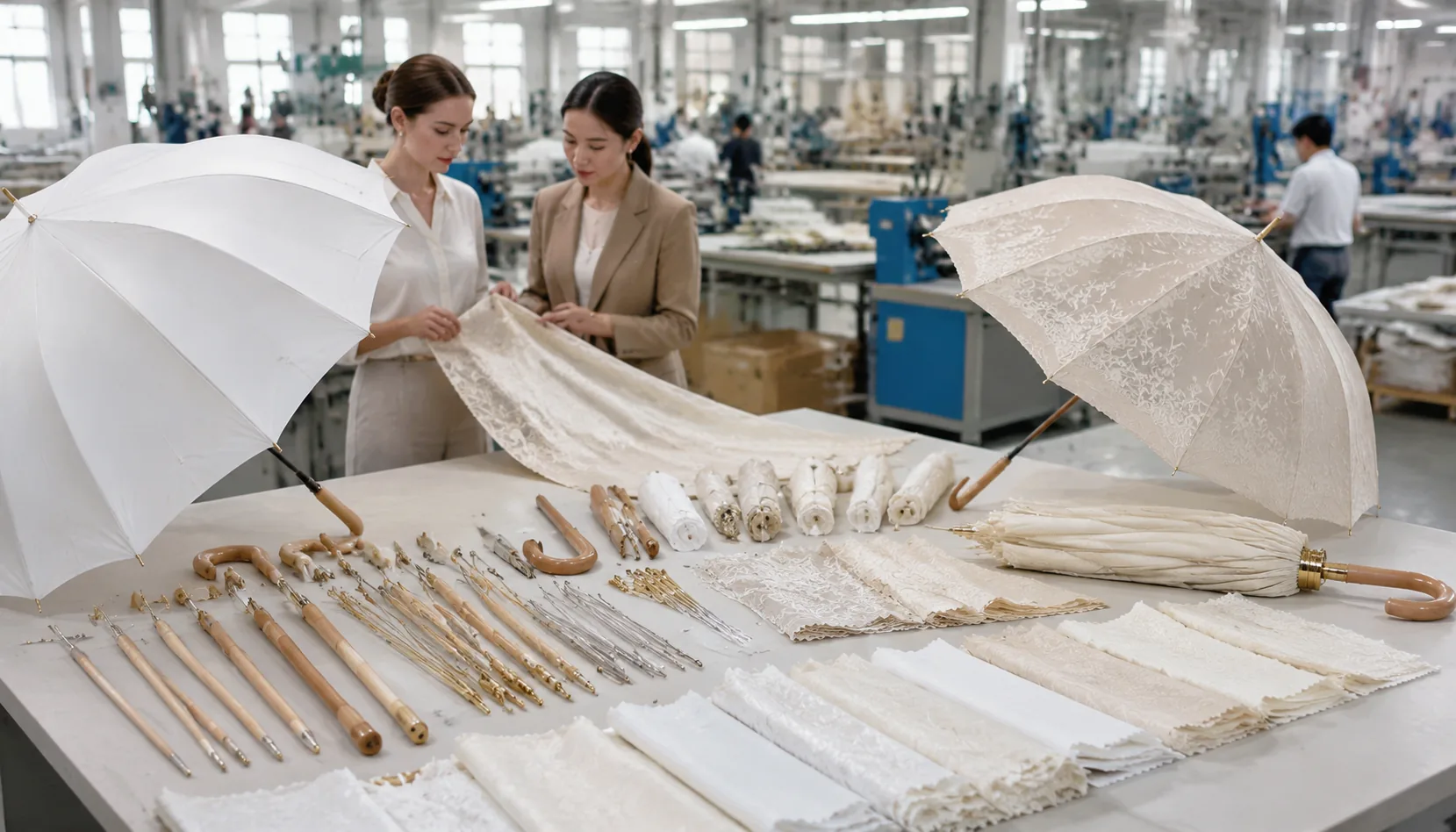
Wedding Umbrellas for Event Buyers: OEM Spec Guide
Source wedding umbrellas with the right canopy color, frame, handle, packaging, MOQ, and lead time for planners, venues,...
Read More »