Metallic and Foil Logo Printing on Promotional Umbrellas
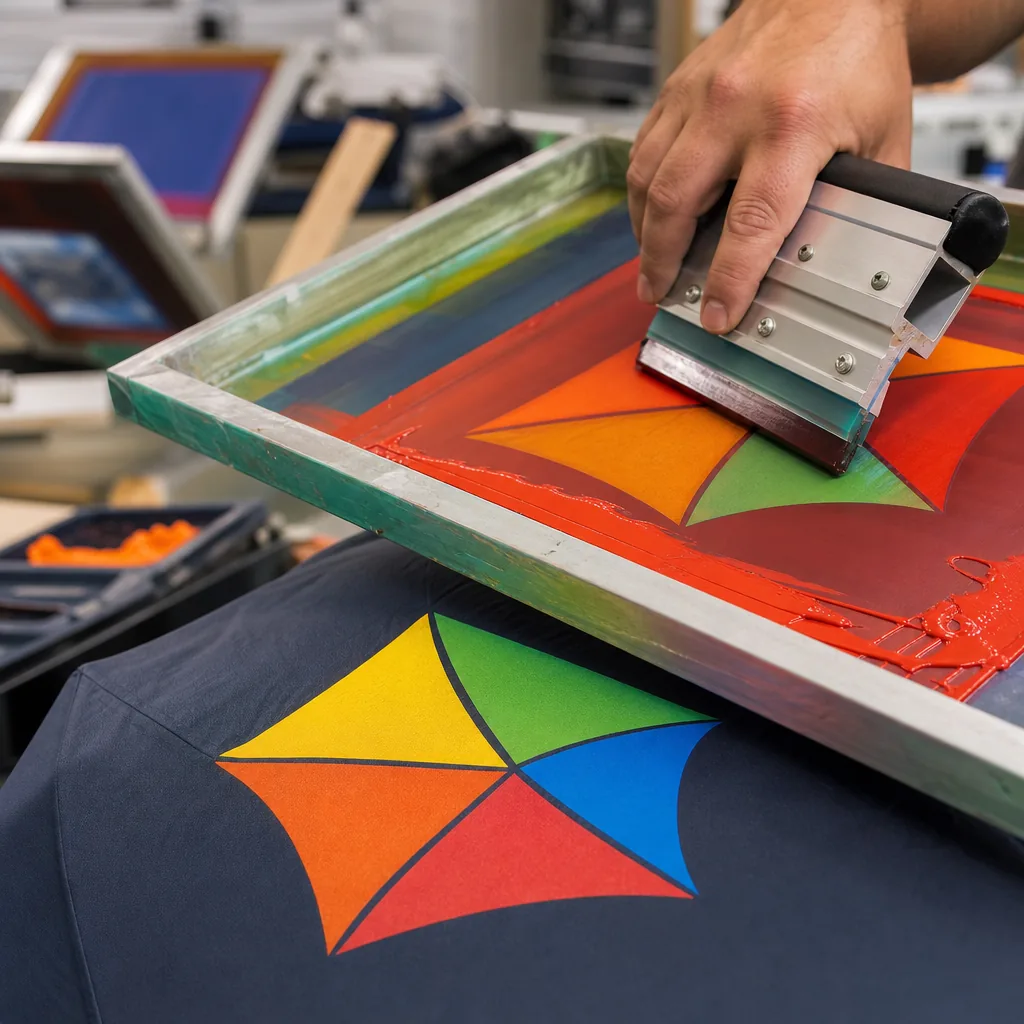
When a buyer asks for a metallic finish on a promotional umbrella, the real question is not whether it looks sharp on a mockup, but whether it will hold up through production, shipping, and daily use. At the factory floor in Songxia, we see the tradeoffs up close: substrate choice, ink adhesion, curing, and edge wear all determine whether a foil logo printing umbrella delivers premium value or turns into a costly approval problem.
When metallic branding fits an umbrella program
Metallic branding makes sense when the umbrella is part of a launch, not just a utility item. A foil logo printing umbrella works well for retail capsules, product drops, showroom giveaways, and event merch where the decorator wants the logo to catch light from a distance. The effect is strongest on dark pongee or matte-coated canopies because the contrast is doing half the work; on bright fabrics, the same finish can look washed out unless the artwork is large and the foil is dense. Buyers usually ask for this when they need the umbrella to read as a premium gift rather than a plain promo piece.
The usual buyers are brand teams, event agencies, retail buyers, and distributors handling higher-value gift programs. Metallic umbrella branding is common for fashion launches, beauty promotions, alcohol campaigns, and conference VIP sets, especially when the umbrella is packed with other premium items like notebooks or drinkware. A reflective print finish can also help for night events, outdoor festivals, or sponsorship programs where the logo has to hold up under stage lighting, flash photography, or street visibility. If the brief is just a low-cost mass handout, metallic decoration is usually the wrong spend because the finish adds setup cost and tighter registration control.
As a rule, custom logo decoration in foil or metallic ink works best when the artwork is simple: one mark, one color, and clean edges. Fine gradients, tiny text, and thin strokes tend to fail first because the foil laydown needs a stable surface and enough pressure to bond evenly. ZheBrella typically steers buyers toward this option only when the design intent supports it, because the result can look sharp on a 21-inch fashion umbrella or a 23-inch auto-open style, but it can also look cheap if the base fabric, panel size, and logo scale are mismatched. The best programs are the ones where the print finish is part of the product story, not an afterthought.
Print methods and surface compatibility
For a foil logo printing umbrella, screen print is the most reliable route when the artwork is simple and the canopy is flat enough to hold registration. On 190T and 210T pongee, the ink sits cleanly on the weave, but you only get a true metallic umbrella branding effect if the mesh count, squeegee pressure, and curing temperature are controlled tightly. Fine lines are the first thing to break down, especially on darker fabric where the reflective print finish depends on full opacity underneath the foil or metallic layer. Once you move onto heavily coated fabrics, screen print can look bold, but the surface slickness changes adhesion and you need a proper adhesion test before approving mass production.
Heat transfer is better when the promotional umbrella logo print has gradients, small text, or a mirror-like silver effect that screen print cannot hold consistently. Transfer film gives sharper edges on smooth 210T pongee than on rougher 190T, but the result still depends on panel tension and heat balance; too much heat can distort the coating, while too little leaves the metallic layer weak at the edges. Digital printing is useful for complex custom logo decoration, yet it is not my first choice for a high-gloss metallic look because most digital systems simulate metal rather than deliver a real reflective surface. On light-colored fabric, that can be acceptable; on dark canopies, the loss of brightness is obvious.
Canopy texture and panel curvature matter more than buyers expect. A flat proof can look perfect, then lose sharpness once it wraps around a curved panel seam, especially near the top where the cloth pulls and the logo stretches. Pongee 190T has more visible texture, so tiny metallic details may feather slightly, while 210T gives a cleaner face and is usually the safer base for a tighter foil logo printing umbrella specification. For coated fabrics, the smoother face helps the metallic effect, but the print area must be placed away from tight folds and stitched seams if you want the reflective print finish to stay crisp after repeated opening and closing.
Durability, wash resistance, and handling
A foil logo printing umbrella looks sharp on day one, but the weak point is the printed film, not the canopy fabric. Metallic umbrella branding can survive normal handling on 190T pongee or 210T pongee if the print is properly cured, but abrasion from folding, cart friction, and repeated contact with wet hands will eventually dull a reflective print finish. The failure mode I see most often is edge lift and micro-cracking at sharp corners of the artwork, especially on large logos with thin strokes or dense solid fills.
Repeated opening and closing matters because the canopy panel flexes at the same crease every cycle. On manual and auto-open-close frames, that repeated bending can stress a promotional umbrella logo print enough to split the foil layer if the ink film is too rigid or the cure is underdone. A better custom logo decoration uses a softer metallic system, controlled ink laydown, and enough dwell time in heat transfer or screen curing so the print can bend with the fabric instead of sitting like a brittle plate.
For production, I would not approve a mass run from artwork alone. Pull 10 to 20 sample units, then do a practical abuse check: 50 to 100 open-close cycles, a dry rub and wet rub test, and a light abrasion pass on the printed area and the panel fold line. If the foil logo printing umbrella shows edge whitening, flaking, or visible cracking after that, adjust the film thickness, curing profile, or artwork geometry before release. That saves a lot more money than discovering a weak reflective print finish after 1,000 pieces are packed for shipment.
Color strategy with metallic accents
Metallic gold and silver behave differently on fabric than people expect. On a black or navy canopy, a foil logo printing umbrella usually reads cleanest because the contrast comes from both color and sheen, not just ink density. Gold works best for warm brand palettes, silver for cooler corporate colors, and holographic effects only when the artwork is simple; once you cram in gradients, tiny text, or thin strokes, the reflective print finish turns into visual noise. For metallic umbrella branding, I normally keep the logo shape bold, flat, and centered on one panel rather than trying to stretch it across seam lines or near the hem where the canopy curves.
A dark canopy is the easiest base for custom logo decoration, but it also exposes every printing mistake. The foil layer needs a smooth surface, so 190T or 210T pongee gives more consistent transfer than rough polyester with heavy texture. On double-canopy vented umbrellas, the outer layer can take the metallic mark, but the inner vent should stay visually quiet; if both layers compete, the logo gets lost when the umbrella opens. For a promotional umbrella logo print, I prefer one dominant metallic accent and one supporting brand color, not three or four effects fighting for attention.
Readability at distance comes down to size, stroke weight, and placement. Thin lettering below about 5 mm often collapses once the umbrella is moving in wind, and holographic foil makes that worse because the highlight breaks across the curves. Keep the main icon large enough to be recognized from 10 to 15 meters, use high-contrast outlines when the brand color and canopy color are close, and avoid placing metallic artwork too close to seams, ribs, or vents. If the goal is retail visibility rather than premium gifting, a simple foil logo printing umbrella with one strong reflective mark usually outperforms a busy all-over design every time.
Quoting, MOQ, and inspection checkpoints
A foil logo printing umbrella usually costs more than a standard single-color screen job because the finish adds setup, alignment, and cure control. Metallic umbrella branding can be done with hot-foil transfer, metallic ink, or a hybrid reflective print finish, and each one changes the quote differently: foil needs accurate die-cut registration and usually more handling, while metallic ink is cheaper but less mirror-like and can lose effect on dark canopies. For FOB quotes, I price the print as a separate process with its own setup fee, plate or film cost, and per-piece labor; for DDP, I also fold in carton packing, inland trucking, export paperwork, and the destination duty estimate, which is why the same promotional umbrella logo print can land very differently depending on the delivery term.
MOQ is driven by waste, not just by demand. If the artwork has tight registration, multiple foil hits, or a large coverage area on 190T or 210T pongee, I will not quote a small run the same way as a simple one-position custom logo decoration on a white canopy. A practical MOQ for foil work is often higher than for plain screen printing because the setup losses are real, especially when matching logos across 21-inch and 23-inch frames or across auto-open-close styles where the panel shape changes the print path. Lead time also stretches by a few days when the finish requires secondary curing, edge cleanup, or rework allowance for transfer defects; in real production, that is usually the difference between a 15-day and a 20-day schedule.
Final inspection needs to catch the failures buyers actually complain about: registration drift, weak ink opacity, foil pull-up, and pinholes at the edges of letters. Our standard practice is to verify print position against the panel seam, check that the metallic layer reads consistently under overhead light, and reject any logo that looks washed out on dark fabric or shows banding after heat curing. For export orders, AQL 2.5 sampling is the right checkpoint for this work because a cosmetic print defect is not a minor issue on a promotional umbrella logo print; if the branding is off by even a few millimeters, the whole piece looks cheap. I also insist on a bend test after printing, because some reflective print finish systems crack when the rib set flexes and the canopy is opened twice in a row.
Frequently Asked Questions
Are metallic logos suitable for UV umbrellas with UPF 50+ fabric?
Yes, but the decoration method must be compatible with the coating and heat tolerance of the canopy. Buyers should confirm that the finish does not reduce fabric performance or cause cracking.
What is the biggest risk with foil-style umbrella branding?
Poor adhesion and loss of detail on curved panels are the main risks. A pre-production sample is the safest way to confirm sharpness and wear resistance.
What umbrella colors work best for foil or metallic logo printing?
Dark canopy colors like black, navy, and deep red usually give the strongest contrast for silver or gold foil effects. Light colors can still work, but the metallic finish may look less noticeable unless the design uses thicker lines or a larger print area.
What is the usual MOQ for metallic logo printing on promotional umbrellas?
For most factory programs, MOQ is typically 500 to 1,000 pieces per design and color, depending on the print method and umbrella model. If you need multiple logo colors or a more complex finish, the minimum may be higher because of setup and proofing costs.
How durable is foil logo printing on umbrellas in wet weather?
Foil and metallic effects can hold up well if applied with the right ink system and curing process, but they are usually less abrasion-resistant than standard screen printing. For frequent outdoor use, many buyers request a test sample first and confirm wash/rub resistance before production.
Looking to Launch Your Custom Umbrella Line?
ZheBrella is a Zhejiang-based OEM/ODM umbrella manufacturer with 17 years of export experience. Free design, low MOQ from 100 pieces, windproof construction, full-color print.
Get Free Quote Now »People Also Search For
Related Articles
Metallic Ink and Foil Logos for Premium Umbrella Branding
Compare metallic ink and foil logo options for premium umbrellas, including fabric limits, durability tests, MOQ, sampli...
Read More »
Metallic Ink and Foil Effects for Premium Umbrella Logos
Compare metallic ink, foil transfer, and subtle shine effects for premium umbrellas, including fabric limits, durability...
Read More »
Metallic Logo Effects on Premium Branded Umbrellas
Compare metallic ink, foil transfer, and subtle premium logo effects for umbrellas, including fabric limits, durability ...
Read More »