Metallic and Neon Umbrella Logo Printing for Brand Campaigns
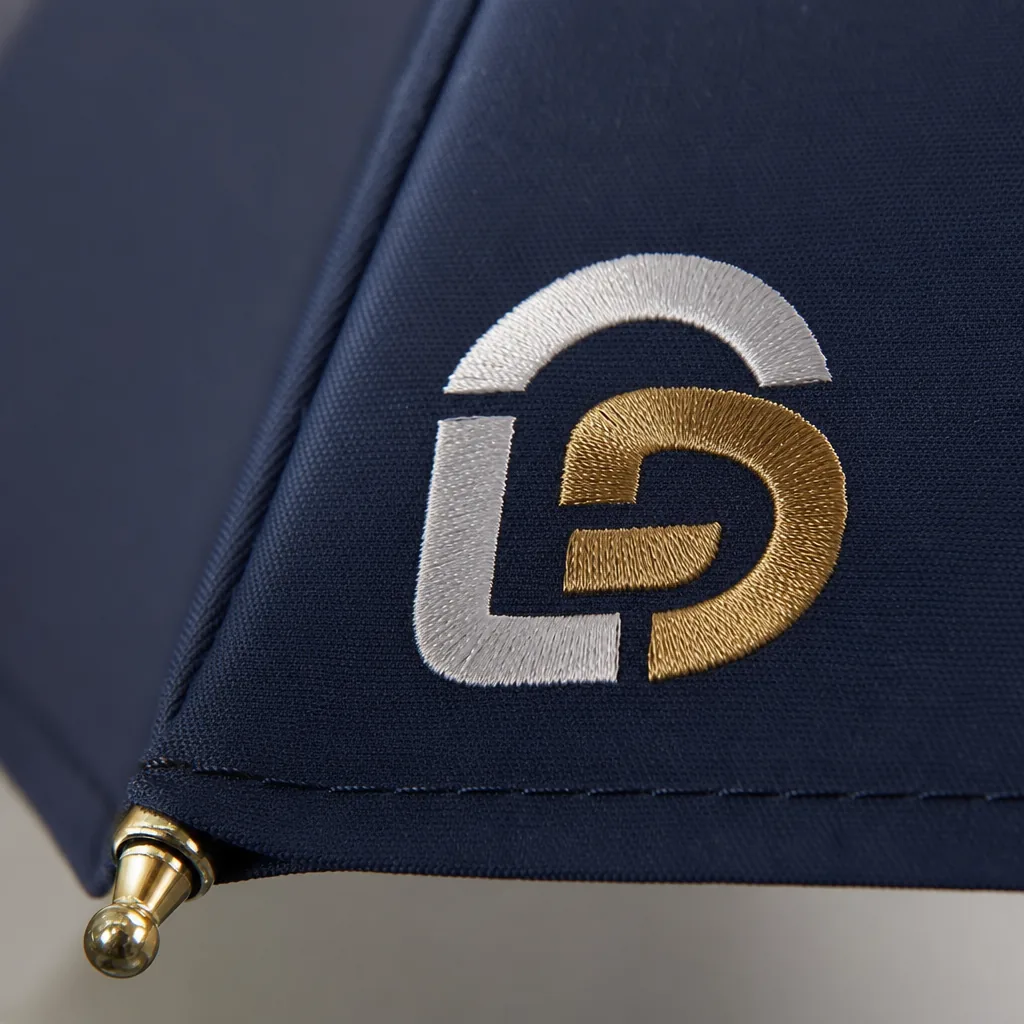
Bright campaign artwork can look very different once it hits woven pongee, polyester, or coated umbrella panels, especially when metallic shine or neon color is involved. With metallic umbrella logo printing, the buyer has to balance visual impact against ink coverage, rub resistance, folding stress, sampling time, MOQ, and delivery dates tied to events. On the factory floor, these choices start with fabric, ink system, curing control, and a realistic approval schedule.
When Special Inks Make Sense
Use special inks only when the umbrella is part of a time-bound campaign and the finish supports the message. For launches, sports events, music festivals, retail drops, and VIP gifting, metallic umbrella logo printing adds a premium accent that reads well under stadium lighting, storefront LEDs, and camera flash. Silver, gold, copper, and gunmetal typically show the cleanest contrast on dark 190T or 210T pongee because the ink sits visibly on the fabric surface. Keep metallic effects limited to logos, sponsor names, trim lines, badge graphics, or small panel details on 23-inch auto-open and 27-inch golf umbrellas. Full-panel metallic coverage increases drying time, folding transfer risk, and stiffness in the canopy hand feel, which can make a custom umbrella look cheaper rather than more premium.
Choose neon umbrella printing when long-range visibility matters more than subtlety: marathons, beach activations, campus events, nightlife promotions, and outdoor staff identification. Fluorescent pink, orange, green, and yellow can stand out on black, navy, white, or clear POE/PVC canopies, but neon pigments are generally less UV-stable than standard spot colors. For summer programs or retail use, approve light-exposure and wet-rub tests before mass production. On 21-inch auto-open-close folding umbrellas, do not run neon artwork across hard crease lines, where cracking shows up earlier. Across all special ink umbrella logos, legibility and durability should overrule novelty: the mark should read at 3-5 meters, hold registration on multi-color art, resist ink transfer after folding, and maintain adhesion after water exposure. For promotional umbrella branding and event umbrella printing, approve an ink drawdown on the actual canopy fabric, require a pre-production sample, and tie bulk approval to AQL 2.5 with a defined tolerance for metallic brightness or neon shade shift when FOB or DDP delivery is fixed to an event date.
Ink Behavior on Umbrella Fabrics
Fabric choice matters more than artwork complexity when planning metallic umbrella logo printing. On 190T pongee, the tighter weave and smoother face usually holds finer edges than basic polyester, so small type, thin strokes, and solid fills print with fewer visible pinholes and cleaner panel-to-panel consistency. 210T pongee is denser again, which helps special ink umbrella logos stay sharper, but it also keeps more ink on the fabric surface. That raises production risk: flash time and cure temperature need tighter control to prevent smearing, dulling, or cracking after folding. Metallic inks are the most process-sensitive of the three. Aluminum or pearl flakes need a flat, even ink film to reflect consistently across all 8 panels, so printers often move to lower mesh counts, slower print strokes, and stricter squeegee-pressure control than they would for standard promotional umbrella branding. Basic polyester is less forgiving because the surface is usually more open, which can reduce edge definition and make metallic coverage look less uniform.
Fluorescent inks are less opaque than standard spot colors, so canopy color has a direct effect on brightness. Neon umbrella printing performs best on white, silver, and light pastel 190T or 210T pongee because the fabric adds less color cast. On black, navy, forest green, or burgundy canopies, a white underbase is usually required to keep lime, hot pink, or safety orange visible at event distance. The same applies to metallic gold or silver on dark umbrellas: without an underbase, contrast drops and the logo can look muted, especially on polyester. On coated UPF 50+ canopies, the main issue shifts from color to adhesion. Silver, black, or clear UV coatings and water-repellent finishes can lower surface energy, so adhesion should be checked with a cross-hatch tape test before mass production. For coated fabrics, high-opacity spot colors often deliver better legibility than metallic or fluorescent inks, while transfer methods can produce more even brightness than direct screen printing for repeat event umbrella printing programs.
Logo Size, Placement, and Rib Interference
Print area is set by panel geometry, not the canopy diameter listed on a quote sheet. On a 21 in compact, shorter ribs, tighter canopy curvature, and deeper seam take-up usually reduce the safe print field to about 18-22 cm of clean width in the center third of one panel. A 23 in stick umbrella opens flatter, so ink laydown is more even and medium logos or short taglines reproduce with less distortion. A 27 in or 30 in golf umbrella gives the largest visual area for promotional umbrella branding and event umbrella printing, but the full panel is still not equally usable: artwork pushed into rib pockets, near the tip, or close to panel edges will stretch as canopy tension increases. For metallic umbrella logo printing, the best placement is the flattest central zone of a single panel, where substrate tension is most consistent and metallic flakes reflect evenly instead of breaking light across strokes.
Structural points change how printed art looks after the umbrella is opened. Seams create a small height step, ribs create tension lines, and canopy curvature shifts reflection angles, so metallic silver, gold, and other special ink umbrella logos that look smooth on a strike-off can read as fractured once they cross those points. Neon umbrella printing is less tolerant still: a 1-2 mm registration shift near a seam is obvious from several meters, especially on fluorescent colors. Panel count also changes what works. An 8K frame gives wider panels for larger marks, but the wider span shows more curvature across big printed blocks. A 16K frame looks cleaner, yet its narrow panels are a poor choice for detailed crests, long URLs, or fine metallic text because frequent seams and rib channels interrupt the art. Keep detailed metallic text at least 15-20 mm from seams on 190T or 210T pongee, and leave more clearance on POE or EVA canopies, which show stress marks and ink-edge irregularity faster. Use separate artwork sizes for compact, stick, and golf frames rather than forcing one file across all three.
Production Testing and Durability Checks
Pre-production approval is the highest-risk step in metallic umbrella logo printing, and paper swatches are not enough. Require strike-offs on the actual canopy material—190T or 210T pongee, or clear POE/EVA—because weave, surface energy, and water-repellent coatings change how metallic and neon inks sit, spread, and reflect. A metallic silver that looks bright on 190T pongee can dull on a heavily coated canopy; neon umbrella printing on transparent POE typically needs a white underbase to prevent washout under backlighting. Approve color on the finished substrate under both daylight and indoor lighting before release to bulk production. That side-by-side check catches the failures buyers actually pay for in campaign work: metallic flakes shifting under warm LEDs and neon shades reading stronger outdoors than in a store, office, or trade-show hall. For promotional umbrella branding, this step reduces rework, schedule slips, and the risk of approving a color that looks right in the lab but wrong at the event.
After strike-off approval, test the print the way umbrellas fail in use: rub, fold, cycle, and soak. Rub tests show whether special ink umbrella logos scuff when the folded canopy slides against ribs, stretchers, or the handle; weak curing usually fails here first. Fold tests matter most on 21-inch and 23-inch compact auto-open-close frames, where repeated creases can crack brittle metallic layers. Water resistance checks should follow printing because heavy ink laydown can affect the canopy finish or create pinholes along print edges. Final inspection should run to AQL 2.5, with specific checks for print defects, misregistration between color layers, incomplete coverage, ghosting at panel edges, uneven metallic density, and ink cracking at fold lines. On 8K, 10K, and 16K canopies, inspect logos across multiple panels because sewing tension can shift registration panel to panel. Recheck after 24 hours closed to catch blocking or fabric marking before shipment, especially when lead times are fixed at 35 to 45 days under FOB or DDP terms.
Cost, MOQ, and Shipping Considerations
With metallic umbrella logo printing, the extra cost is usually in setup and process control, not the ink itself. A basic 1-color screen print on 190T pongee uses one mesh count, one pass, and a short curing cycle. Metallic silver, gold, and pearl inks often need different mesh selection because the flake size changes flow, deposit thickness, and edge definition on curved umbrella panels. Neon umbrella printing has a different cost driver: on dark navy, black, or red canopies, fluorescent pigments often need a white underbase to keep the color from dulling. That adds one screen, one print pass, and another curing check. As a working budget range, setup charges typically run 15% to 35% above standard screen print, with the biggest unit-cost impact on short runs rather than 3,000-piece orders. Quotes should also stay provisional if the artwork includes gradients, fine serif type, or combined metallic and neon effects, because those details are more likely to trigger test-strike revisions before approval.
MOQ and schedule are usually less flexible for special ink umbrella logos than for standard promotional umbrella branding. A basic 1-color Pantone print may be workable at 300 to 500 pieces on a shared-frame program, while metallic umbrella logo printing or fluorescent effects more often start at 500 to 1,000 pieces per design. Minimums can increase again for custom-dyed canopies, multi-panel placement, or panel-to-panel registration because setup waste is higher during screen prep and startup. Sampling also takes longer: a normal pre-production sample may take 5 to 7 days, but metallic or neon samples are more realistically 7 to 12 days, especially if you want comparison strikes on 190T versus 210T pongee or outdoor approval photos. For event umbrella printing, build the timeline backward from the in-hand date: allow 7 to 12 days for sample approval, 18 to 30 days for production, then freight. FOB Ningbo sea freight to the U.S. commonly takes 25 to 40 days plus customs and final delivery; DDP air can land in about 7 to 12 days, but at a much higher landed cost. To reduce deadline risk, keep a 10 to 14 day buffer after sample approval and another 5 to 7 days beyond the quoted freight plan.
Frequently Asked Questions
Do metallic umbrella logos look like foil stamping?
No. Metallic ink gives a reflective sheen, but it is not the same as foil stamping on paper or packaging. The effect depends on ink type, fabric texture, logo size, and lighting.
Can neon ink be printed on black umbrella canopies?
Yes, but a white or light underbase is usually needed for strong brightness. Without it, neon colors can look dull on dark pongee or coated fabrics.
Do metallic and neon inks work the same on pongee, polyester, and recycled canopy fabrics?
No. Metallic inks usually show best on smooth pongee or standard polyester, while neon colors depend heavily on the base fabric color and can look muted on dark canopies. Recycled fabrics can print well, but we normally recommend a physical sample because yarn texture and coating can affect brightness and edge sharpness.
What MOQ should buyers expect if they want to compare metallic and neon versions of the same umbrella design?
For most OEM orders, factories will quote from around 500-1,000 pieces per colorway or print setup, depending on umbrella style and panel count. If you need both metallic and neon versions for evaluation, confirm whether the order is treated as one combined run or two separate print setups, because that affects cost and sampling.
How much extra time should be added for a campaign using special ink umbrella logos?
Add about 3-7 days for sample confirmation and ink testing, especially if the logo uses metallic shine, neon brightness, or tight Pantone tolerance. For event delivery, many buyers build in a 2-3 week buffer beyond standard production to cover revisions, drying time, and export booking.
Looking to Launch Your Custom Umbrella Line?
ZheBrella is a Zhejiang-based OEM/ODM umbrella manufacturer with 17 years of export experience. Free design, low MOQ from 100 pieces, windproof construction, full-color print.
Get Free Quote Now »People Also Search For
Related Articles
Reflective Umbrella Logos for Safety Brand Campaigns
Specify reflective logo films, panel locations, and AQL checks for promotional umbrellas used in night events, campuses,...
Read More »
Metallic Ink and Foil Logos for Premium Umbrella Branding
Compare metallic ink and foil logo options for premium umbrellas, including fabric limits, durability tests, MOQ, sampli...
Read More »
Metallic Ink and Foil Effects for Premium Umbrella Logos
Compare metallic ink, foil transfer, and subtle shine effects for premium umbrellas, including fabric limits, durability...
Read More »