Multi-Logo Layouts for Sponsor-Heavy Event Umbrellas

When an event umbrella needs to carry several sponsor marks, the hard part is not adding logos—it is keeping every logo legible, balanced, and manufacturable once the artwork meets panel seams, ribs, and trim constraints. On the factory floor in Songxia, we see how a multi logo umbrella layout can fail at proofing or production if spacing, contrast, and print method are not planned together from the start.
When multiple logos belong on one umbrella
A multi logo umbrella layout makes sense when the umbrella is doing event work, not retail shelf work. Sponsor umbrellas show up at stadium giveaways, charity runs, press backdrops, golf outings, and branded activations where several names need to live on one canopy without turning it into a visual fight. In practice, the best layouts are usually built around the event owner, the title sponsor, and a few supporting sponsors, with each logo sized according to paid placement and audience importance. For sponsor umbrella branding, the canopy panels are not just decoration; they are ad inventory, so you need to protect legibility at a normal viewing distance, not just in a mockup on a screen.
Equal-size placement looks fair on paper, but it usually wastes the umbrella when the sponsors are not actually equal. A hierarchy approach is better when one client owns the event, one brand funds most of it, and the rest are co-sponsors or media partners. That is where logo hierarchy on umbrellas matters: the primary mark stays on the strongest panel or the largest available print zone, while secondary logos are stepped down in size and kept in a consistent band or lower arc. For a co-sponsor print layout, I would rather give each logo clean breathing room than squeeze four marks into the same visual weight and make all of them look cheap.
Event umbrella decoration also changes depending on how the umbrella is used in the field. A stadium giveaway can tolerate simpler one- or two-logo treatment because the audience sees it from a distance and the item needs quick recognition; a charity event often needs donor names, campaign messaging, and the beneficiary brand; a branded activation may need the host logo plus one or two partner marks for photo coverage. The multi logo umbrella layout should always be built from the viewing angle first, then the panel count, then the print method, because screen print, heat transfer, and sublimation all behave differently on seams, vents, and curved canopy edges.
Building a clean logo hierarchy
The mistake I see most often in a multi logo umbrella layout is treating every mark like it deserves the same visual weight. It does not. On a 23" or 27" canopy, the primary sponsor should usually take 45-60% of the total print width, the secondary mark 25-35%, and each partner logo smaller still, with at least 1.25-2.0 inches of clear air between lockups so the panel seams do not cut the composition apart. For sponsor umbrella branding, the center panel or the strongest visible quadrant should carry the dominant mark, while the remaining logos step down in size in a predictable order; that is what makes the layout read cleanly from 10 feet away instead of turning into a wall of shapes.
Safe zones matter more than people think because umbrella panels taper and the fabric distorts after sewing and tensioning. Keep critical text and logo edges at least 0.5-0.75 inch inside any seam line, and leave 10-15% of the panel width empty at the outer arcs so the artwork does not get pinched near the edge. In event umbrella decoration, different aspect ratios need different treatment: a wide horizontal sponsor mark should be reduced in height and allowed to span across a single panel, while a tall vertical logo is usually better rotated to a side panel or paired with more whitespace above and below. If two marks compete at the same size, the layout looks accidental, so pick one primary and let the co-sponsor print layout support it instead of fighting it.
When the roster is long, simplify the hierarchy instead of shrinking everything until it becomes unreadable. A clean logo hierarchy on umbrellas usually works best with one primary mark, one secondary mark, and then a row of partner marks set at roughly 60-70% of the secondary size, all aligned to a common baseline or optical center. For a sponsor-heavy event umbrella, I prefer to test the artwork at full canopy diameter first, then reduce only if the names still separate clearly at arm’s length; that is faster than trying to rescue a crowded composition after print approval. On a physical sample, check how the logos land across the ribs and the vent, because what looks balanced on a flat mockup can drift once the panel is stitched and tensioned.
Choosing canopy colors that support every mark
For a `multi logo umbrella layout`, the safest canopy choice is usually a neutral base: black, navy, white, or heather gray. Those colors let sponsor marks hold their own without fighting the fabric, and they simplify `sponsor umbrella branding` when different logos need to coexist on one canopy. In production, I prefer matte 190T or 210T pongee over shiny coatings because glare makes small text disappear under event lights. On dark fabrics, white, silver, or Pantone-matched light inks stay legible; on light fabrics, you need darker art with enough stroke weight, otherwise thin tags and serif fonts wash out fast.
Brand-neutral canopy colors are a better fit when the umbrella is sold to multiple sponsors or reused across seasons. This is where `logo hierarchy on umbrellas` matters: the host mark should sit on the most visible panel, while secondary sponsors move to lower-contrast zones or smaller repeats. Seam placement is not cosmetic; every seam cuts into the reading area, so the artwork should avoid ribs, vent openings, and the edge fold where the panel distorts. With 8K or 10K panels, you get wider print zones per panel than on 16K layouts, but more panels can also create more seam interruptions, so the panel count has a real impact on `event umbrella decoration`.
Split-color canopies work when the brand mix is crowded and you need built-in separation for a `co-sponsor print layout`. A two-tone panel split can reserve one side for the main event identity and the opposite side for secondary logos, but only if the color break is aligned with ribs and not across the center of a logo. On light pongee, darker split panels improve contrast and make small sponsor marks easier to read from a distance; on dark pongee, the opposite is true, but you have to keep the art bold or add a white keyline. If the goal is readable sponsor placement, the best layout is usually the one that gives each logo one clean panel, minimal seam crossings, and enough blank space to avoid visual collisions.
Proofing, licensing, and pre-production review
For a sponsor-heavy umbrella order, every approval has to be tied to one named sponsor before we cut screens or prep transfer films. The practical part of a multi logo umbrella layout is not design taste; it is making sure each brand owner signs off on size, placement, clear space, and color tolerance on the same panel map. I ask for vector files only—AI, EPS, or PDF with outlined fonts—and I check stroke weight, overprint settings, and whether tiny text will survive on 190T or 210T pongee. If the buyer is mixing sponsor umbrella branding across multiple panels, we also verify that the logo hierarchy on umbrellas is intentional, because the largest mark is not always the sponsor who paid first; it is the sponsor who contractually owns the premium position.
Before any bulk run, we send a hard sample or photo sample that matches the final event umbrella decoration method: screen print, heat transfer, or sublimation. That sample round should be treated as a licensing checkpoint, not a courtesy review, because once one sponsor approves and another does not, you end up reworking print plates and delaying the whole order. For co-sponsor print layout jobs, I lock the approved art with exact measurements, panel count, pantone references, and an approval sheet that names the file version. ZheBrella’s standard practice is to freeze the final proof only after all sponsor sign-offs are in writing, because verbal approval on a crowded umbrella layout is how disputes start later.
Quality control should start at the sample stage, not after cartons are packed. We inspect the first pieces against the signed proof, then hold an AQL 2.5 checkpoint on print registration, color match, missing marks, and panel alignment before releasing the run. If the sponsor group wants changes after that point, the layout has to be reopened and re-approved, because even a 5 mm shift can break the logo hierarchy on umbrellas or push a mark into a seam. For bulk production, the final layout is locked by file name, dated proof, and buyer acknowledgment, and no extra sponsor can be added without a revised approval cycle. That is the only clean way to keep production moving and avoid a warehouse full of unsellable stock.
Cost, MOQ, and delivery planning for events
For a multi logo umbrella layout, every extra logo usually adds a real prepress step, not just another artwork file. If one sponsor gets a one-color mark on panel 1 and another gets a full-color mark on panel 4, the factory may need a separate screen, a separate color pass, and sometimes a separate heat-transfer or sublimation setup depending on canopy material. That is why sponsor umbrella branding gets expensive fast when clients insist on equal-size placement everywhere; the better answer is a clear logo hierarchy on umbrellas, with the top sponsor largest, co-sponsors scaled down, and a fixed print zone repeated across panels. On 8K or 10K umbrellas, a complicated event umbrella decoration plan can easily double the setup cost versus a single-logo run, even before ink or labor.
MOQ follows the same logic. A clean one-screen print on 23" or 27" pongee can often run at a lower minimum, but once you split the canopy into multiple placements, the line needs enough quantity to justify screen making, proofing, and registration checks. In practice, a co-sponsor print layout with three to five logos often pushes buyers toward a higher MOQ because each version burns time on the sewing and printing side, and mixed sizes or mixed handle colors make batching harder. If the job also uses double-canopy vented windproof frames or UV-coated fabric, add time for material procurement and first-article approval, because those details usually sit on the critical path rather than the artwork itself.
For fixed event dates, plan backward from ship date, not from artwork approval. FOB orders are usually safer when the buyer can control inland booking and forwarder timing, but you still need realistic factory lead time for sampling, printing approval, production, and AQL 2.5 inspection; for a sponsor-heavy order, that is commonly 25 to 40 days after final artwork, and longer if the canopy uses multiple print methods. DDP adds another layer because customs, duty, and last-mile delivery can absorb several more days, so I would not promise a tight event deadline unless the booked window includes buffer time at both origin and destination. ZheBrella’s standard practice is to lock the logo map first, then confirm whether the shipment is FOB or DDP before we release the production schedule, because reorders are rarely possible once a one-off event date is fixed.
Frequently Asked Questions
How many logos can fit on a standard umbrella without looking cluttered?
It depends on canopy size and panel count, but 2 to 4 marks is usually the cleanest range. More than that often requires a strict hierarchy and larger blank areas between sponsors.
Do multi-logo umbrellas cost more than single-logo versions?
Yes, because each color, placement, or logo version can add setup and decoration time. The final price also depends on whether the supplier needs extra proofing, separate screens, or unique packaging for different sponsors.
How many sponsor logos can fit on a standard event umbrella without looking crowded?
For a 58–62 inch golf umbrella, 4 to 8 sponsor logos usually remain readable if placed across alternating canopy panels. For sponsor-heavy events, smaller supporting logos can be grouped on valances or lower panel areas while the main sponsor keeps the largest panel position.
What artwork files are needed for a multi-logo umbrella layout?
Vector files such as AI, EPS, or PDF are preferred for every sponsor logo so line edges stay clean in screen printing, heat transfer, or digital printing. A production mockup should also show logo size, panel position, print colors, and Pantone references before sampling.
Can different sponsors have different logo sizes on the same umbrella?
Yes, logo hierarchy is common for event umbrellas. A title sponsor may use a full canopy panel or top position, while co-sponsors use smaller repeated placements, usually with minimum logo heights of about 40–60 mm depending on print method and viewing distance.
Looking to Launch Your Custom Umbrella Line?
ZheBrella is a Zhejiang-based OEM/ODM umbrella manufacturer with 17 years of export experience. Free design, low MOQ from 100 pieces, windproof construction, full-color print.
Get Free Quote Now »People Also Search For
Related Articles
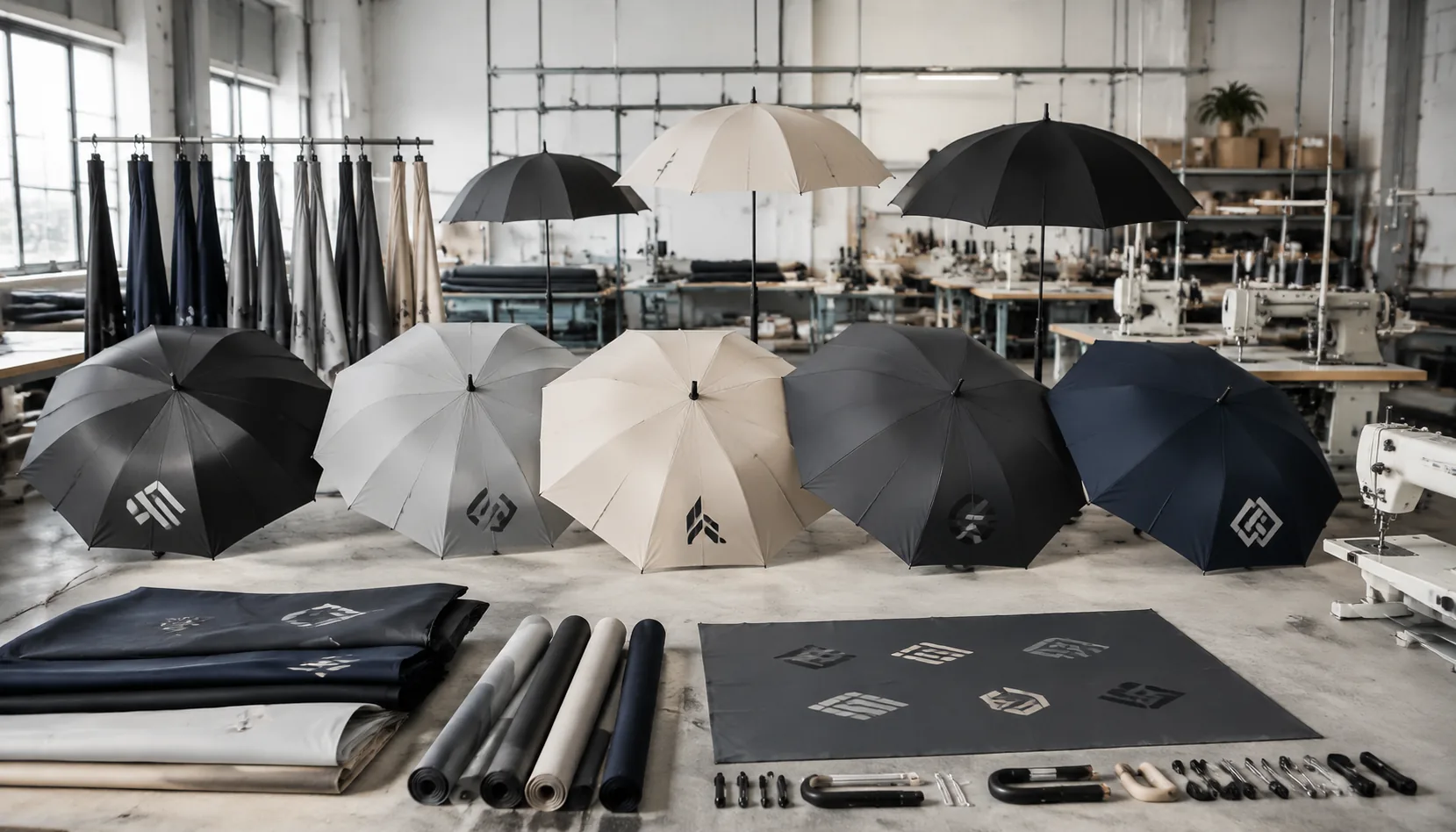
Multi-Logo Umbrella Layouts for Brand and Partner Programs
Plan multi-logo umbrella layouts that keep sponsor marks readable, balanced, and production-ready across panels, straps,...
Read More »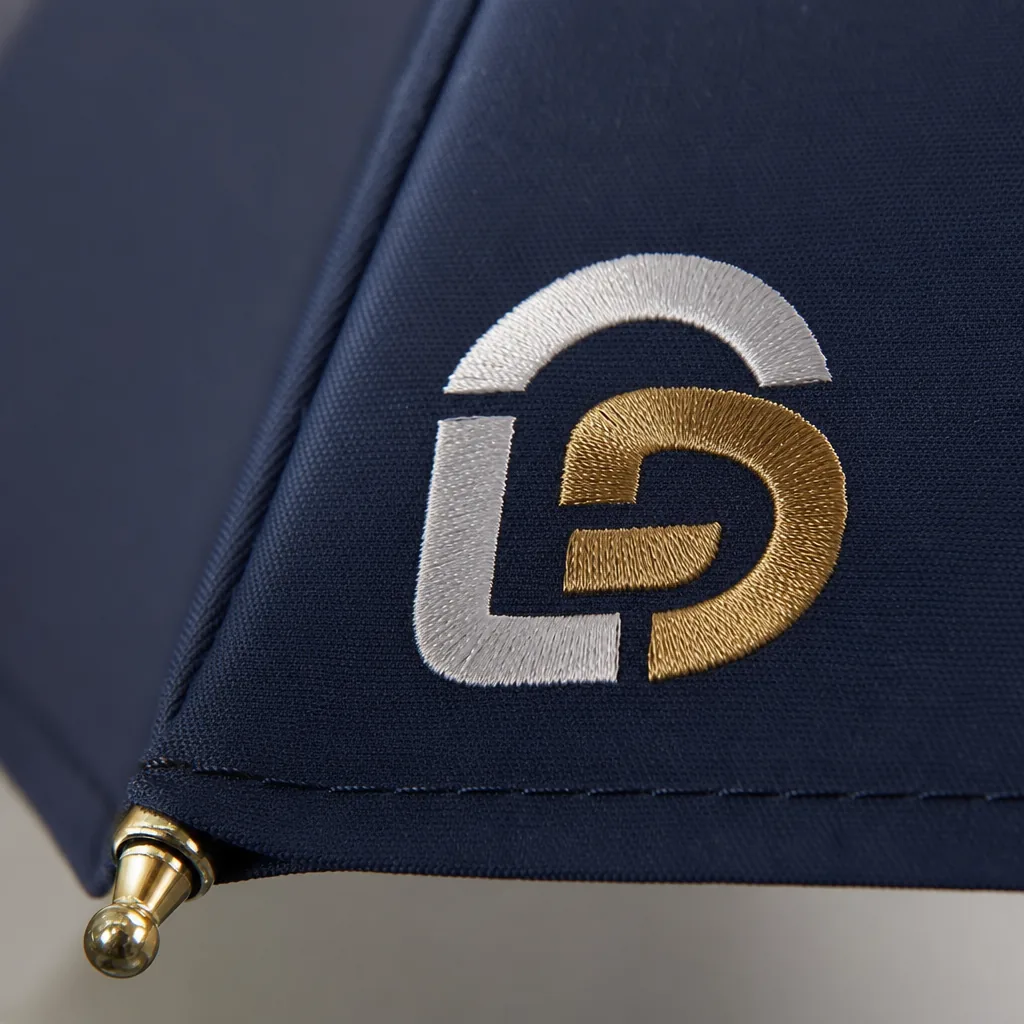
Multi-Logo Umbrella Branding for Corporate and Retail Programs
Plan multi-logo umbrella branding with clear hierarchy, spacing, and approval rules so corporate and retail programs sta...
Read More »Debossed vs Printed Logos on Umbrella Components
Compare debossed, printed, and molded branding on umbrella parts, with durability, MOQ, and artwork setup guidance for b...
Read More »