Multi-Logo Umbrella Branding for Corporate and Retail Programs
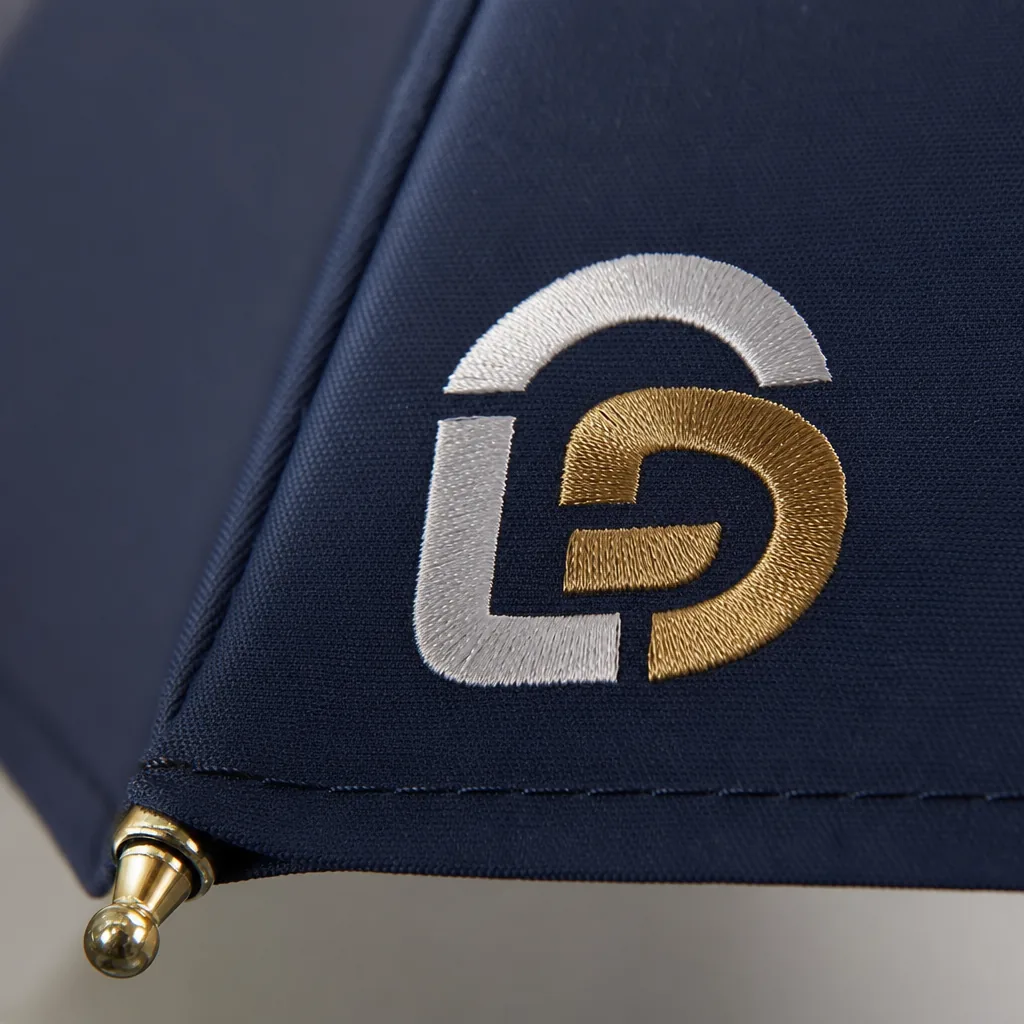
At the factory bench, the hardest part of multi-brand decoration is not adding more logos; it is keeping every mark readable, properly spaced, and consistent across panels, handles, and packaging. In multi logo umbrella branding, corporate buyers and retail program managers need a layout that protects brand hierarchy, survives production tolerances, and clears approvals without endless revisions.
When multiple logos are appropriate
Multiple logos make sense when the umbrella is doing more than one job: selling a retail brand, acknowledging a sponsor, and signaling who actually produced or licensed the item. In sponsor umbrellas for golf outings, festivals, charity runs, and stadium promotions, the main logo should usually be the organizer or event owner, because that is what the end user remembers. The sponsor mark can sit on a secondary panel, a lower arc, or a small repeat near the tip. That is the practical side of multi logo umbrella branding: the print hierarchy has to match the business hierarchy, or the canopy turns into clutter.
For retail brand umbrellas and private-label programs, the lead mark should almost always be the consumer-facing brand, with any factory, license, or program partner marks kept small and controlled. That is especially true on compact 21" and 23" folding umbrellas where panel space is tight and the artwork is viewed at arm’s length. Our standard practice is to build the umbrella artwork layout around the dominant mark first, then place secondary marks only where they do not compete with the primary logo or break symmetry across the panels.
Co-branding umbrellas for hotels, resorts, airlines, and corporate gifting are the cases where two marks can coexist cleanly if the relationship is obvious. A hotel logo paired with a destination partner, or a corporation paired with a conference sponsor, usually works best when one mark is visually dominant and the second is smaller, lighter, or moved to the trim area. In corporate umbrella branding, I would not force two equal-size logos unless both brands are contractually equal and the design can survive at distance; otherwise, the result looks indecisive and prints poorly on curved panels.
Layout rules for clean logo hierarchy
On an 8K canopy, two logos is usually the limit if you want both marks to stay readable from six to ten feet away; on 16K, you can often place three or four, but only if the artwork is simple and the panels are wide enough to preserve breathing room. For multi logo umbrella branding, I keep a minimum safe zone of 20 to 30 mm from every seam, vent edge, and canopy hem, because logos that drift into stitching always look cramped after sewing and heat pressing. The biggest mistake in corporate umbrella branding is scaling each logo to the same visual weight without checking panel width; a narrow sponsor mark needs less clearance than a long wordmark, and the umbrella artwork layout should be built around the largest, most fragile logo first.
Alignment matters more than people expect, especially on co-branding umbrellas where two companies want equal visibility. The cleanest approach is to center the primary logo on one panel and mirror the secondary logo directly opposite, keeping both at the same height from the ferrule line so the umbrella reads balanced when open. If the program calls for repeated positions, use alternating panels with identical top margins and do not push logos too close together; a repeated four-panel ring works better on retail brand umbrellas when the marks are small and the negative space stays consistent. On 16K layouts, repeated placements can work, but only if the art is simplified and the panel count supports enough blank space between hits.
For production, I prefer laying out the artwork in actual panel templates rather than guessing on a flat circle, because panel curvature changes how a logo stretches once the canopy is sewn and tensioned. That is why umbrella artwork layout should be approved with seam lines, rib centers, and print-safe boundaries marked clearly before sampling. In practice, one strong logo per major panel, or one primary plus one secondary on opposite panels, gives the best result; beyond that, the canopy starts to look busy unless the logos are extremely small. For retail brand umbrellas, restraint usually prints better than crowding, and that rule is even more important when combining spot colors, gradients, or multiple sponsor marks on the same canopy.
Balancing visibility with brand protection
The cleanest multi logo umbrella branding starts with one hard rule: every logo needs its own breathing room, or the artwork turns into noise. On a 23" or 27" frame, that usually means choosing one dominant mark and one secondary mark, then locking the rest into a fixed grid so the canopy panels do not fight each other. In corporate umbrella branding, I keep contrast high enough for legibility but avoid putting two saturated logos edge to edge unless the brands already share a palette. If one logo is fine detail and the other is bold text, the detailed mark usually loses unless it is enlarged or moved to a panel with more uninterrupted space.
Color clashes are where co-branding umbrellas go wrong fastest. A bright PMS red next to a deep blue can look acceptable in a proof and ugly on a sewn canopy because the curved panel distorts the visual weight. The safer approach is to standardize a primary print zone, usually the front panel or opposite panels, and then use restrained treatments such as tone-on-tone logos, gray-on-gray printing, or a single-color version for the partner brand. For retail brand umbrellas, I also watch seam placement and vent alignment, because a logo crossing a stitched seam or a double-canopy vent almost always looks cheaper than it should.
When outside space is tight, there are better options than shrinking every mark until it is unreadable. Reflective printing works well on black pongee and other dark canopies because it preserves visibility without adding a loud color clash, and inside-canopy marks are useful when the outer shell is already committed to one brand. That is often the best answer for umbrella artwork layout on auto-open-close styles with crowded panel geometry. Our standard practice is to mock up both exterior and interior placement before sampling, because a logo that looks balanced flat can shift badly once the ribs tension the canopy and the panel curves into final shape.
Approval workflow for buyers and partners
For multi logo umbrella branding, the first sign-off should come from the buyer’s brand owner or license holder, not from a sales rep or distributor guessing at approvals. In practice, I want one person responsible for each mark, one person responsible for the overall umbrella artwork layout, and one final approver who can accept the combined mockup; that keeps co-branding umbrellas from turning into a chain of conflicting comments. Our standard practice is to freeze the logo files in vector format, confirm Pantone references, and approve the canopy panel map before any sampling starts, because changing a logo after panel cutting usually means redoing film, screens, or transfer plates.
Treat revision rounds as controlled engineering changes, not open-ended design chat. Limit each round to one consolidated markup from the buyer, with all partners commenting on the same PDF or 3D render, then reissue a clean version with revision numbers and dated notes so nobody argues over an old file. For corporate umbrella branding, the critical lock points before sample approval are logo count, exact position on each panel or tie strap, print method, canopy color, and umbrella size, whether it is a 21-inch compact, 23-inch stick, or a 30-inch golf frame. If those are still moving, the sample is not a real approval sample; it is only a visual concept.
Before bulk production, we freeze the approved artwork, the panel-by-panel placement sheet, the decoration method, and the reference sample in the golden-sample file so retail brand umbrellas do not drift between early photos and the shipment. AQL 2.5 inspection should then check three things on every lot: the correct number of logos, the measured position against the approved spec, and consistency of artwork color, orientation, and finish across the batch. If one panel is shifted, one logo is missing, or one color is off against the approved master, that is a real defect, not a cosmetic debate, because repeatability is what buyers pay for in branded umbrella programs.
Pricing, MOQ, and timeline considerations
Extra logos are not just a design choice; they change the entire production rhythm. With multi logo umbrella branding, every added mark usually means another film, another screen or transfer file, another color match, and another approval round before cutting or printing starts. On corporate umbrella branding jobs, I typically see MOQ climb once the artwork needs separate placements on the canopy, strap, sleeve, and hangtag, because the factory has to justify the extra setup time and scrap risk. If the logos overlap panel seams or sit on curved canopy sections, expect slower sampling and a higher chance of pre-production revisions.
Pricing follows the same logic: simple retail brand umbrellas with one clean logo are easy to quote, but co-branding umbrellas with multiple owners often require separate artwork control, higher inspection effort, and more rework if one party changes a trademark line late in the process. The umbrella artwork layout matters as much as the logo count. A flat, repeatable placement on a 23" or 27" canopy is faster than wrapping graphics across multiple panels or mixing print methods like screen print plus heat transfer. More approval checkpoints also mean longer lead times, especially if your buyer, licensor, and distributor each want their own sign-off.
FOB is usually simpler when the buyer already has a freight forwarder and knows how to handle labeling, carton marks, and destination paperwork. DDP adds convenience, but it also demands tighter packaging control, carton dimensions, barcode accuracy, and compliance coordination for the destination market, because one packaging error can hold the whole shipment. For multi logo umbrella branding programs, that extra coordination matters: the factory has to lock the final artwork, pack method, and export docs earlier than usual. If you need split logos, special retail packaging, and DDP delivery in one order, build in more time and expect the commercial terms to be less forgiving than a standard FOB run.
Frequently Asked Questions
How many logos can a branded umbrella handle without looking cluttered?
Two to three logos is usually manageable if one is clearly primary and the others are smaller. More than that often requires a very deliberate panel plan or alternate placement such as the sleeve or strap.
Do co-branded umbrellas need a special approval process?
Yes, both brand owners should approve layout, color, and logo hierarchy before sampling. That reduces rework risk and avoids production delays once bulk printing begins.
How many logos can be printed on one umbrella without reducing readability?
For most 8-panel umbrellas, 2 to 4 logos is practical if each logo has enough clear space and is limited to one or two panels. More logos can be used for event or sponsor umbrellas, but the artwork should be reviewed at actual print size before sampling.
What artwork files are needed for multi-logo umbrella branding?
Vector files such as AI, EPS, or PDF are preferred for each logo, with Pantone color references included. If the umbrella uses full-panel digital printing, high-resolution raster files may also be accepted, usually at 300 dpi at final size.
Can retail brand umbrellas include both a main brand logo and a partner logo?
Yes, many retail programs use a primary logo on the canopy or sleeve and a smaller partner logo on one panel, the hangtag, or packaging. The approval sheet should define logo hierarchy, panel location, print size, and color limits before mass production.
Looking to Launch Your Custom Umbrella Line?
ZheBrella is a Zhejiang-based OEM/ODM umbrella manufacturer with 17 years of export experience. Free design, low MOQ from 100 pieces, windproof construction, full-color print.
Get Free Quote Now »People Also Search For
Related Articles
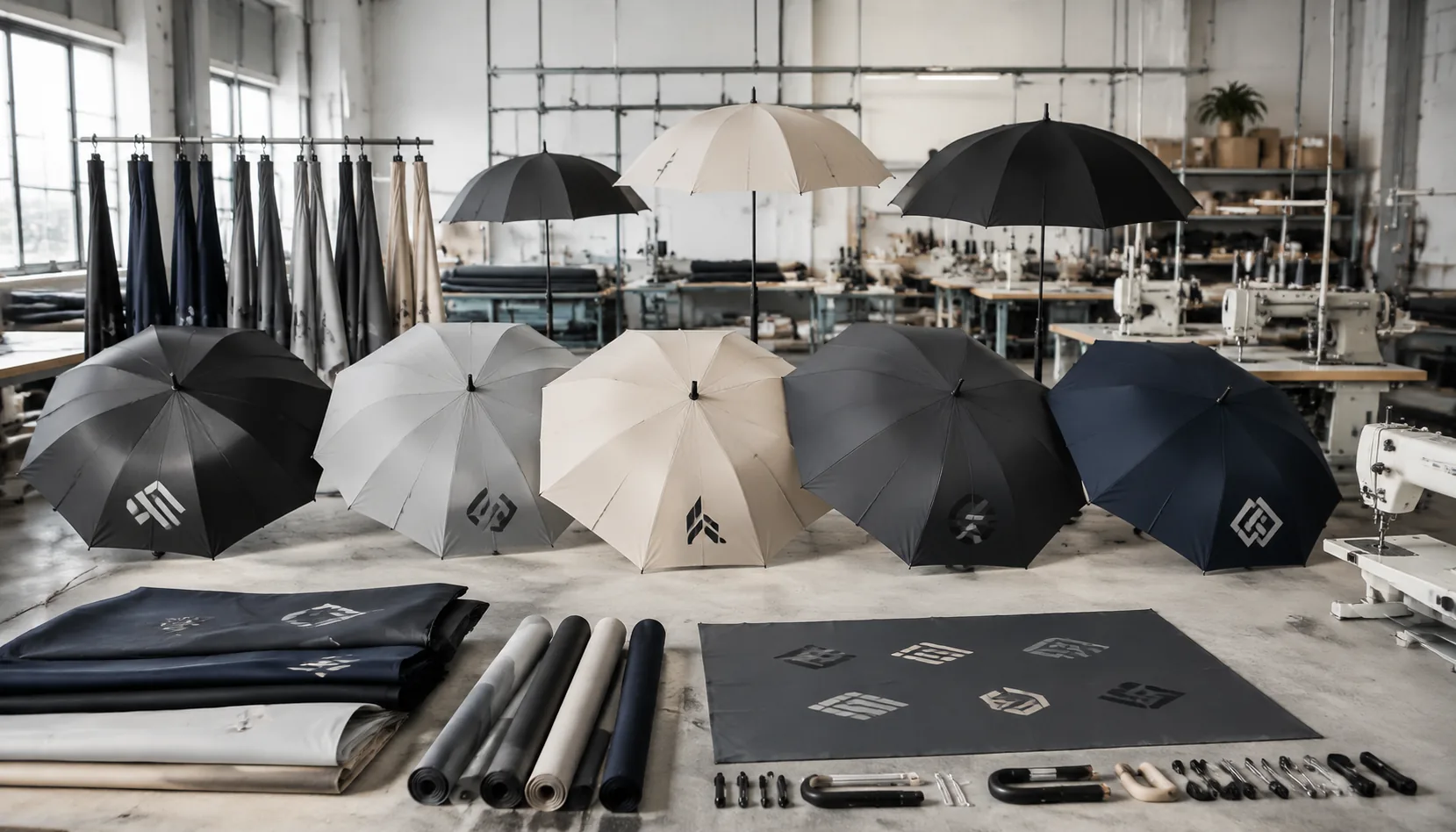
Multi-Logo Umbrella Layouts for Brand and Partner Programs
Plan multi-logo umbrella layouts that keep sponsor marks readable, balanced, and production-ready across panels, straps,...
Read More »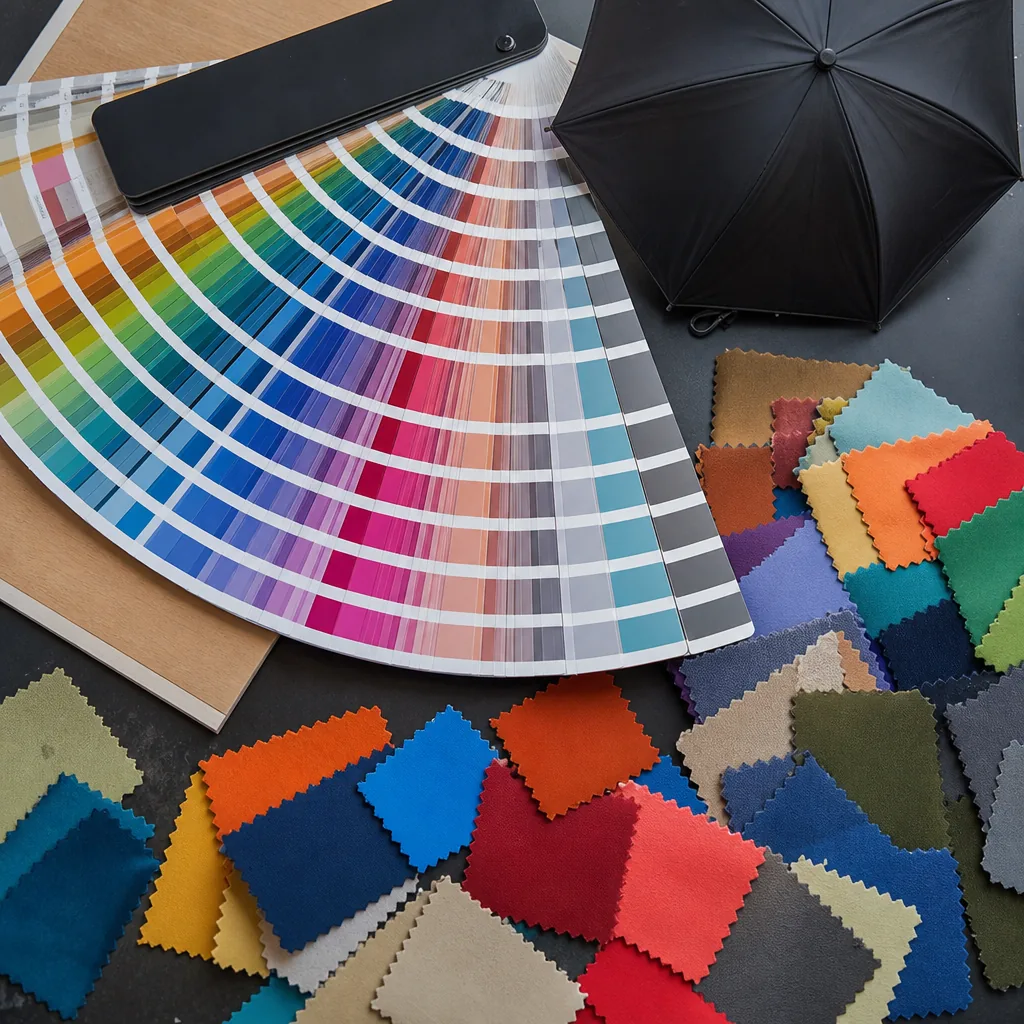
Multi-Color Logo Setup for Umbrella Brand Programs
Plan multi-color umbrella logos with clean registration, strong contrast, and realistic production limits to protect bra...
Read More »Custom Umbrella Handle Logo Options for Brand Programs
Compare print, engraving, and molded handle branding options by material, durability, MOQ, and lead time so buyers can s...
Read More »