Custom Umbrella Handle Logo Options for Brand Programs
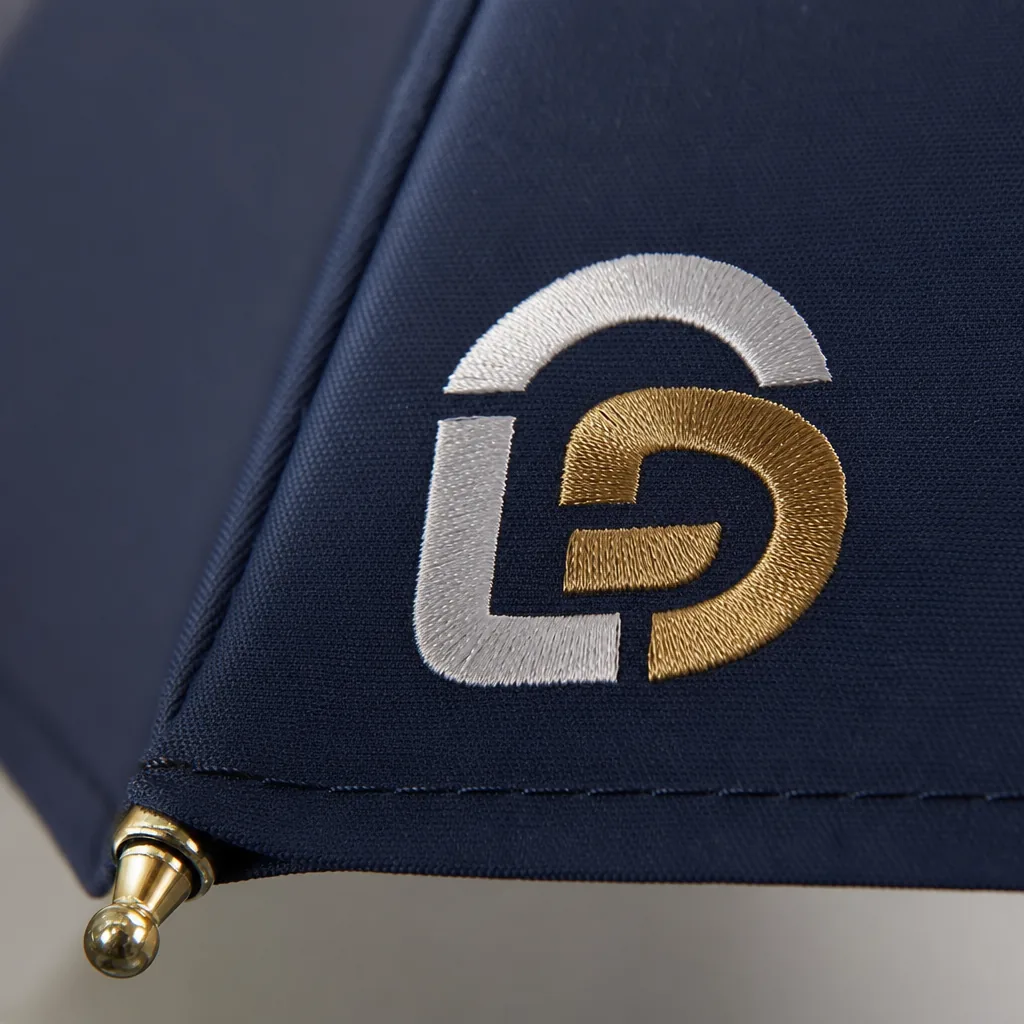
For brand programs, the handle logo is often where a clean umbrella spec gets complicated: the same artwork behaves very differently on EVA foam, ABS plastic, wood, rubberized coating, or plated metal. On our production floor in Songxia, we see buyers lose time when they choose a custom umbrella handle logo method before confirming handle material, expected wear, MOQ, and curing or tooling schedule. Print, engraving, and molded branding can all work, but each has a clear best-use case.
Choose the Handle as a Secondary Branding Zone
Use the handle as the close-range branding zone, not a repeat of the canopy. The canopy delivers distance visibility; the grip controls perceived value when the umbrella is closed, boxed, placed in a hotel lobby stand, or hung on a retail rack. Belly bands, sleeves, and hangtags often disappear after purchase, but a molded, engraved, domed, debossed, or pad-printed mark stays with the product. Handle branding is most justified on higher-spec builds: 190T or 210T pongee canopies, fiberglass ribs, 8K to 16K frames, auto-open systems, PU-coated J-handles, EVA golf grips, and rubberized straight handles. For retail umbrella customization, hotel loaner programs, and executive gifts, the custom umbrella handle logo should match the frame and fabric tier; a cheap-looking print on a premium fiberglass frame weakens the buyer’s value perception at handoff.
Compact umbrellas benefit first because the folded unit hides most canopy artwork. On 21-inch and 23-inch auto-open-close models packed in sleeves, use an end-cap badge, heat-stamped cap, dome label, or laser engraved umbrella handle so the brand remains visible in handbags, car door pockets, counter bins, and gift sets. Golf umbrellas need a different scale rule. A 27-inch, 30-inch, or 62-inch arc golf model already gives the canopy enough print area for tournament, insurance, or hospitality branding, so the handle mark should work at thumb distance. On EVA foam, ergonomic plastic, or rubberized golf grips, keep artwork compact enough to avoid distortion around the curve. Oversized handle graphics can make a fiberglass double-canopy golf umbrella look cheaper than its frame specification.
Stick and hotel umbrellas are the best candidates for premium umbrella handle branding methods because the grip stays exposed in reception stands, guest rooms, closets, and retail displays. Wood crook handles, leatherette wraps, ABS J-handles, soft-touch rubber grips, and metal-trim handles can support a metal plate, debossed mark, pad print, laser engraving, or molded logo umbrella handle, depending on artwork detail, MOQ, and target unit cost. Hotel programs usually need low-contrast, abrasion-resistant marks for repeated wet handling; executive gifts often look better with engraving on wood or metal trim than with a loud canopy repeat. At ZheBrella, we check handle artwork against rib count, frame type, and canopy fabric because a custom umbrella handle logo that fits an 8K compact may not align on a 16K stick or double-canopy golf model. Approve handle tooling before mass production; late changes can add 7–15 days and affect MOQ.
Match Branding Method to Handle Material
Quote the logo process only after confirming handle material, finish, and usable print area. ABS J-handles and straight plastic grips remain the safest pad-print choice for a custom umbrella handle logo, especially on 21" and 23" compact umbrellas where the flat or low-curve window is often only 35–55 mm wide. Specify 1–2 spot colors, positive strokes of at least 0.25 mm, and no reversed micro text; finer detail can fill at print or wear after 500–1,000 hand-contact cycles. Rubberized and soft-touch coatings require primer validation because ink may reject, crack, or lift. Approve bulk only after a strike-off and 3M tape test. Wood-look plastic can be pad printed, but faux grain lowers contrast; dark ink on light wood-look ABS reads better than metallic, white, or pale colors.
Use laser engraving on metal-accent handles instead of print. Aluminum, stainless steel caps, zinc-alloy end plates, and plated rings are better engraving substrates because the beam removes or marks the surface rather than adding ink that can rub off in retail handling. Black anodized aluminum gives the cleanest contrast, usually engraving to a silver mark; chrome looks subtler unless a darker layer sits below the plating. On 27" golf umbrellas with metal end caps, a laser engraved umbrella handle can usually hold 0.15–0.2 mm line detail, but curved caps distort the scan path. Avoid photos, gradients, dense crests, and small QR codes. Engraving costs more and runs slower than pad printing, but it reduces abrasion risk for executive gifts, club umbrellas, and premium retail umbrella customization.
Choose debossing for PU-wrapped handles. A heated die presses the artwork into the wrap; foil debossing can add silver, gold, or black contrast, but it is less forgiving near seams and may dull under heavy hand oils. Keep letters bold, increase spacing, and hold hairline scripts above about 0.4 mm. For high-volume programs, a molded logo umbrella handle gives the strongest durability because the mark becomes a raised or recessed feature in ABS, PP, or TPR overmolded injection parts. The tradeoff is tooling: a new handle mold typically adds 15–25 days and only makes sense at several thousand pieces per color. Among umbrella handle branding methods, molded logos fit long-running programs; pad print, laser, and debossing fit seasonal artwork or lower-MOQ rollouts.
Factor in Function, Frame, and User Wear
The opening system defines the real logo zone before artwork begins. A manual 23-inch straight umbrella can use an EVA foam, PP, rubberized, or wooden crook handle with a long, uninterrupted print, deboss, or engraving area. Auto-open models give up space to the push button, spring housing, internal plug, mold seam, and neck radius, so artwork must sit outside the button throw and high-pressure thumb zone. Auto-open-close compacts restrict the grip further because the return spring, button assembly, and sometimes the safety runner linkage sit inside the handle. For these builds, a custom umbrella handle logo usually holds up better as a small metal plate, domed epoxy label, debossed rubber mark, or laser engraved umbrella handle on aluminum trim than as a large pad print wrapped around curved, high-touch plastic.
Frame weight changes how hard users grip, which changes decoration life. Steel ribs and shafts add weight on 10K and 16K promotional umbrellas; users squeeze harder during rain, gusts, and repeated auto-open use. Fiberglass ribs reduce shock transfer by flexing, but heavier double-canopy vented windproof models rated around 50+ mph still drive torque into the grip when the canopy twists. Match umbrella handle branding methods to that load: pad printing is acceptable on lighter 21-inch and 23-inch compacts, while molded logo umbrella handle designs, debossed rubber, laser marking, and inset metal badges are safer for heavier auto-open, windproof, or executive builds. ZheBrella checks decorated handles with wet-rub and grip-abrasion tests before bulk approval, then inspects production under AQL 2.5.
Golf umbrellas create the highest handle-wear risk because 27-inch, 30-inch, and 32-inch canopies give wind more leverage than folding city umbrellas. A 190T or 210T pongee canopy with Teflon coating, UPF 50+ treatment, or double-layer windproof construction supports premium retail umbrella customization, but it also makes the product feel heavier in hand. Avoid fine logo text where the thumb rests, where the auto button is pressed, or where the palm twists during gusts. Rubberized straight handles suit molded, recessed, or debossed marks; wooden handles suit laser engraving or a small metal medallion. On POE, PVC, or EVA clear umbrellas, the canopy usually carries less printed branding, so the handle becomes the main brand surface and should be specified for abrasion resistance, not just a clean first sample.
Control Approval Standards for Fit and Finish
Approve handle fit and finish from a physical control drawing, not a PDF mockup. The drawing must show the rotation datum, logo centerline, approved logo orientation, and print-position tolerance before pre-production sampling. For straight stick umbrellas, the custom umbrella handle logo should face outward when the canopy strap is centered and the runner is parked. For 2-fold and 3-fold models, tie orientation to a fixed packing reference: sleeve seam, wrist-strap attachment, hangtag side, or retail display face. For pad print or heat transfer on plastic, PU, EVA, or rubberized grips, set bulk placement tolerance at ±1.5 mm. For a laser engraved umbrella handle on wood, aluminum, or coated ABS, ±1.0 mm is achievable only with a locked fixture and line-start verification. Curved crook handles need a marked datum on the signed drawing; without it, operators align by eye and rotation drift appears carton by carton.
Set durability checks before signing the pre-production sample. Printed handle marks should pass a 3M tape pull test after 24 hours of curing and, where the surface allows, a light cross-hatch adhesion check on flat coated areas. Scratch testing should match export handling: fingernail pressure, key-rub simulation, and carton-to-carton abrasion after vibration testing are more relevant than a clean lab result that ignores packing friction. A molded logo umbrella handle needs separate checks for sharp logo edges, insert-line flash, sink marks around the emblem, and raised edges that feel rough in hand. Painted wood handles need dry-cloth rub and alcohol-wipe checks because weak topcoat can fail during store handling. Apply these controls across umbrella handle branding methods, including pad printing, laser engraving, in-mold logos, metal badges, and debossed PU wraps.
Treat handle approval as its own AQL 2.5 checkpoint instead of burying it under canopy inspection. Inspect handle assembly tightness, shaft-joint wobble, glue overflow, mold parting-line burrs, loose end caps, and wrist-strap anchoring. For wrapped grips, add checkpoints for straight seam alignment, consistent overlap width, no lifting at the start or end, no exposed thread, and no adhesive bleed. During bulk inspection, compare production units with the signed pre-production sample under the same light source used for approval. Allow normal shade variation on natural wood, but reject logo size drift, crooked placement, inconsistent engraving depth, weak adhesion, badge movement, and seam inconsistency. Keep the approved custom umbrella handle logo sample at the production inspection table, not only in final QC, so operators can correct drift before cartons are sealed and retail umbrella customization defects become a shipment-level claim.
Estimate Tooling, MOQ, and Delivery Impact
Standard handles keep a custom umbrella handle logo program fast because the factory uses existing tooling: plastic J-handle, EVA foam grip, rubberized straight grip, or wood-effect crook handle. The mark is added after handle production by pad print, heat-transfer label, metal badge, or laser engraving when the substrate supports a clean edge. That avoids a mold charge and the typical 18–30 day tooling delay. On common builds such as a 23" auto-open stick umbrella or 21" folding umbrella with 190T or 210T pongee and a standard steel or fiberglass frame, MOQ usually stays at 500–1,000 pieces per color. This route suits event drops, distributor reorders, and retail tests where fast artwork approval, lower unit cost, and reduced sample risk matter more than permanent 3D branding.
A molded logo umbrella handle changes the cost model: the brand mark must be cut into an injection mold or insert mold for plastic, rubber, or EVA. Raised lettering, recessed lettering, a debossed panel, or a proprietary grip shape requires confirmation of logo depth, draft angle, surface texture, resin color, and trial shots before steel cutting. Tooling typically adds 15–35 days before mass production, and MOQ often rises to 3,000–5,000 pieces so the order can absorb mold setup, color matching, inspection fixtures, and higher reject risk. A molded logo umbrella handle fits a standing retail line or annual campaign; for a one-off promotion, the buyer usually pays through higher unit cost, longer sampling, and a slower approval path.
Decide FOB or DDP after the handle method, not before. FOB Ningbo or Shanghai works for buyers with their own forwarder, especially when consolidating umbrellas with other seasonal goods or shipping bulky 27" and 30" golf umbrellas. DDP is better for distributors that need one landed price, but heavier molded handles can increase chargeable weight and make duty, trucking, and warehousing costs more visible. ZheBrella should quote tooling fee, sample fee, unit price, and freight as separate lines, then compare two schedules: standard umbrella handle branding methods at about 25–40 days production, or custom tooling with sampling plus 45–65 days after final approval.
Frequently Asked Questions
When does a molded handle logo make sense instead of printing?
It usually makes sense when the order is large enough to justify tooling and the brand wants a permanent, integrated look. For lower volumes or short campaigns, pad printing or engraving is generally faster and less expensive.
Will handle branding hold up as well as canopy printing?
It depends on the method and material. Engraving and molded logos usually outlast surface printing because the handle sees constant hand contact, abrasion, and sunscreen or moisture exposure.
Which umbrella handle materials work best for laser engraving?
Laser engraving works best on wood, bamboo, and some coated metal handles. It is usually not recommended for standard PP or ABS plastic handles unless the material has been tested, because contrast and edge clarity can vary.
What MOQ is typical for molded logo umbrella handles?
Molded handle logos usually require a higher MOQ because a custom insert or mold is needed. Many factories start around 3,000 to 5,000 pieces, with tooling lead time of about 10 to 20 days depending on handle complexity.
Is handle logo printing suitable for retail umbrella programs?
Yes, pad printing or screen printing is suitable for retail programs when the logo is simple and the handle surface is smooth. Buyers should request abrasion or tape-test samples, especially for umbrellas sold through retail channels with frequent handling.
Looking to Launch Your Custom Umbrella Line?
ZheBrella is a Zhejiang-based OEM/ODM umbrella manufacturer with 17 years of export experience. Free design, low MOQ from 100 pieces, windproof construction, full-color print.
Get Free Quote Now »People Also Search For
Related Articles
Branded Umbrella Handle Logo Options for OEM Programs
Compare debossed, molded, and cap-logo handle branding for umbrellas, with MOQ, tooling, lead time, and durability facto...
Read More »Debossed and Laser Branding on Umbrella Handles and Parts
Compare debossing and laser marking for umbrella handles, ferrules, and straps, with guidance on durability, cost, and b...
Read More »
Debossed, Molded, or Printed Umbrella Handles for Brand IDs
Compare debossed, molded, and printed handle branding for umbrellas, with MOQ, tooling, lead time, and durability tradeo...
Read More »