Debossed, Molded, or Printed Umbrella Handles for Brand IDs
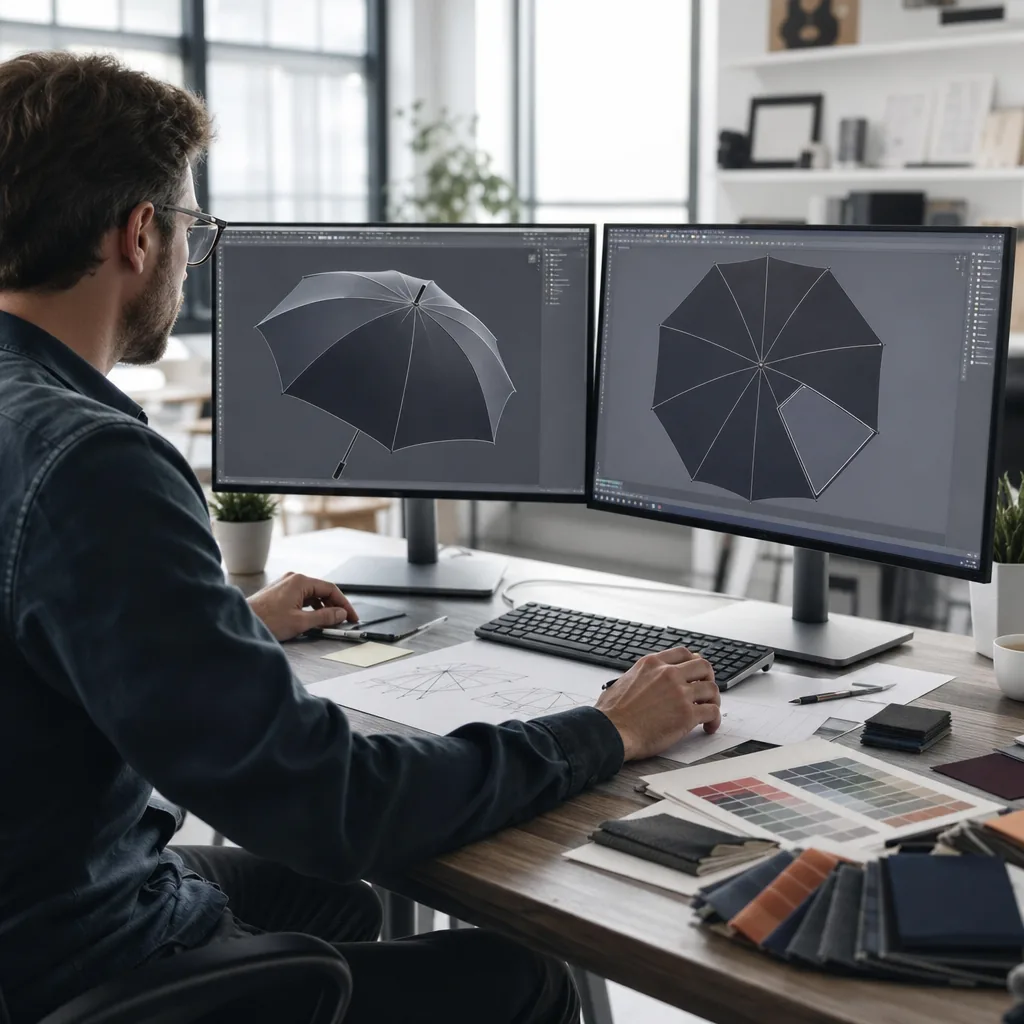
For buyers comparing handle branding options, the real risk is not the logo artwork but choosing a process that misses MOQ, tooling budget, or durability targets once production starts. On our Songxia lines, debossed, molded, and printed handles each behave differently at sampling, molding, pad-printing, and abrasion testing, so branded umbrella handle customization has to be matched to order volume, handle material, and the abuse the product will see in transit and daily use.
Why Handle Branding Matters in OEM Umbrella Programs
Move branding to the handle when service life, not logo size, drives the program. A canopy print on 190T or 210T pongee still makes sense for event giveaways, but it takes direct UV, rain, and fold-line abrasion every time the umbrella opens. Handle branding sits in a lower-exposure zone, so buyers typically see fewer complaints about fading ink or cracked graphics after about 5,000 to 8,000 open-close cycles. That makes branded umbrella handle customization a stronger choice for retail resale, hotel use, and corporate gifting than for one-season promotions. It also changes the product position: on a 21-inch or 23-inch compact auto-open-close umbrella, a large canopy print can read as promotional, while a small debossed handle logo keeps the canopy clean and supports a more premium look.
Match the branding method to handle material, cost target, and volume. A debossed handle logo works well on rubberized ABS, EVA overmold, and some wood handles when the buyer wants a low-profile mark without adding a separate print step. A molded logo umbrella handle is usually the best OEM route once volume is high enough to justify tooling, typically above a few thousand pieces per colorway, because the logo is built into the injection-molded part rather than applied later. A printed umbrella handle is the fastest, lowest-cost option for PP or ABS handles and short lead times, but it wears faster in daily commuter use. This format is common on 8K and 10K folding umbrellas, compact gift-channel styles, and business umbrellas with black, navy, or single-Pantone canopies. It also fits premium straight umbrellas with fiberglass ribs, double-canopy venting, and wind ratings above 50 mph, where OEM umbrella branding needs to feel like merchandise rather than ad space.
Debossed, Molded, and Printed Options Compared
For branded umbrella handle customization that needs to hold up to sweat, tabletop abrasion, and daily commuting, debossing is the most practical step up from surface print without committing to new mold tooling. The process is simple and controllable: after an EVA foam grip or a softer PP/TPE overmolded handle is formed, a heated brass die presses the debossed handle logo below the surface. That recessed mark will not chip like pad-printed ink, so durability is materially better on high-contact promo umbrellas. The limit is artwork resolution. On textured EVA in particular, thin strokes under about 0.3 mm, fine serif fonts, and small trademark text tend to close up or break, so logos need heavier lines and wider spacing. Color options are also narrow. A standard deboss is one-color-by-substrate; adding paint fill improves contrast, but it introduces a second operation, more variation in fill depth and edge cleanup, and a higher reject risk at inspection. For buyers weighing cost, abrasion resistance, and tooling exposure, debossing is usually the best fit when a printed umbrella handle will not last, but MOQ or budget does not justify a mold revision.
A molded logo umbrella handle gives the best repeatability once volume is high enough to absorb tooling cost. The logo is machined directly into the injection mold for ABS, PP, or PS parts, or built into the geometry of an overmolded handle, so every shot comes out branded with no secondary process. That removes print-plate wear and hot-stamp variation, and it usually delivers tighter lot-to-lot consistency in logo depth, edge definition, and placement than post-process branding. The tradeoff is flexibility. After T1 samples, logo changes normally require EDM rework, welding, or recutting, which is far costlier and slower than swapping a print plate. Molded logos also work best with bold shapes, not photographic detail, and visual contrast depends on the base resin unless you add two-shot molding or an insert. A printed umbrella handle sits at the other end of the range: pad printing works on curved ABS or PP, and screen printing suits flatter wood handles, giving better Pantone matching, multi-color graphics, gradients, and finer text. It is also the fastest to revise, often within a 25 to 35 day production window, but it is the first option to show wear from rings, fingernails, sunscreen, and alcohol wipes unless surface treatment and ink adhesion are tightly controlled. For OEM umbrella branding, printing wins on detail and speed; molding wins on repeatability; debossing wins on abrasion resistance without full tooling lock-in.
Material and Structure Choices That Affect Branding
Material choice decides the viable logo process before artwork is approved. Wood handles suit a debossed handle logo because the denser substrate holds a sharper pressed edge and wears better than surface ink on a high-touch grip. The risk is variation: if wood moisture content or lacquer build shifts between lots, deboss depth and edge definition will shift too. EVA gives a warmer, softer grip, but that softness reduces logo precision. Under heat and pressure, EVA compresses, so deep debossing looks rounded unless mold temperature and dwell time are controlled tightly; in practice, EVA is usually better for a molded logo umbrella handle or a recessed pad-print panel than for a crisp deboss. For OEM umbrella branding, ABS and PP cover most plastic programs but not the same product tier. ABS has a smoother, denser surface, so after flame or corona treatment a printed umbrella handle holds finer detail, and injected logo cavities release with cleaner edges. PP cuts unit cost and handles drops well, but its lower surface energy makes adhesion less forgiving; without pretreatment, logos fail tape testing sooner and show handling wear faster. In branded umbrella handle customization, PP fits entry-level promotions, while ABS supports higher gloss, tighter mold lines, and stronger perceived retail value.
Frame spec has to support the handle finish, because buyers read the umbrella as one product. A 21-inch or 23-inch 8K manual umbrella with steel ribs, steel stretchers, and a basic runner is typically a price-driven promo model, so a PP or ABS hook handle with simple printing or a shallow molded mark is usually enough. Move up to fiberglass ribs, a black electroplated shaft, or auto-open and auto-open-close mechanisms, and the handle spec needs to rise with it. Those mechanisms increase spring load around the button housing and joint, so factories often shift to better ABS grades or wood handles with metal ferrules on mid-tier and upper-tier builds. Rib count changes the balance point as much as the look. An 8K frame usually works with a standard grip diameter, but a 16K frame adds rib, tip, and runner mass; on 23-inch and 27-inch umbrellas, that often requires a larger handle diameter or added end-cap weight to avoid a top-heavy feel. The larger visual area on a 16K style also makes cheap print look undersized, so premium models more often use a debossed handle logo, wraparound molded detail, or plated trim. For mass programs, 8K remains easier to manage on MOQ, tooling cost, lead time, and final inspection.
MOQ, Tooling Cost, and Lead Time Benchmarks
Printed decoration is the lowest-risk entry point for branded umbrella handle customization because the MOQ usually tracks the umbrella order, not a separate handle run. On standard ABS straight or crook handles, a 1-color pad print or screen print typically starts at 300-500 pieces per logo. For 2-color artwork or tighter registration, most factories want at least 1,000 pieces to stabilize setup and reduce rejects. That matters on curved or textured grips: rubberized finishes, deep grain, and aggressive crook curves lower print yield, so suppliers often add a wastage allowance or raise MOQ to protect setup time and unit cost. Lead time is also the shortest in this category. Expect 3-5 days for artwork layout, 5-7 days for a pre-production sample after approval, and about 25-35 days for bulk production when the umbrella uses stock 21 inch, 23 inch, or 27 inch frames with standard canopy materials. For short runs, launch tests, or price-sensitive promotions, a printed umbrella handle is usually the fastest and lowest-commitment option in OEM umbrella branding.
A debossed handle logo sits in the middle on cost, MOQ, and permanence. If the factory can use an existing handle shape with a steel logo insert, debossing typically adds USD 80-200, with MOQs around 500-1,000 pieces. A molded logo umbrella handle is a separate tooling decision: a new PP, ABS, or EVA mold usually costs about USD 600-2,500 for a simple single-cavity tool, with higher charges for undercuts, overmolding, or matching caps. Development normally takes 7-10 days for 3D confirmation and sample machining, then another 12-20 days for mold cutting and first-off samples, so pre-production alone is usually 20-30 days before the standard mass-production window begins. New mold charges usually make financial sense once the same handle will run across 3,000-5,000 units in one season or be shared across multiple umbrella SKUs, such as 21 inch folding, 23 inch auto-open, and 27 inch golf styles. On FOB or DDP programs, buyers can often offset tooling by combining total umbrella volume across those SKUs instead of loading the cost onto one item, but they should still lock down mold ownership, spare-handle allowance, repeat-order sampling, and final inspection at AQL 2.5.
Approval and Quality Control Before Mass Production
The main claim-prevention step is not a PDF proof. It is artwork control plus a physical pre-production sample made with the exact handle process. A debossed handle logo, molded logo umbrella handle, and printed umbrella handle reproduce differently on curved ABS, PP, rubber-coated plastic, and wood; line weight, edge sharpness, and small text can all shift. For branded umbrella handle customization, lock three items before mass production: the vector artwork file, the logo position and size in millimeters, and a signed PPS made with the final handle material, surface finish, and assembly method. If the umbrella also includes canopy branding, state which color reference governs approval—Pantone solid color, woven label, or canopy print—because handle pigment will not visually match 190T or 210T pongee print color exactly without a named standard. Put the approved depth, placement, and color target in writing so the factory is not making mid-run adjustments that later turn into claims.
Do not approve color from factory photos. Sign off on a physical PPS showing the complete umbrella, including the actual handle, opening mechanism, and assembled frame, whether that is a 21-inch auto-open-close folding umbrella or a 27-inch straight umbrella with fiberglass ribs. Before approval, require basic process-specific checks: tape adhesion testing for a printed umbrella handle, rub or abrasion checks on coated or metallic finishes, and repeated hand-contact testing on soft-touch surfaces. On molded parts, inspect flash, sink marks, and incomplete fill around the logo cavity; on debossed parts, confirm even depth and no distortion after assembly pressure. Keep the signed sample as the golden sample on the line, and confirm final inspection to AQL 2.5 in writing before shipment. Buyers should also approve carton marks in advance—PO number, item code, color, destination, country of origin, carton dimensions, and retailer labels—and settle spare parts and replacement handling before dispatch. For auto-open or auto-open-close orders, define the spare-parts policy per 1,000 pieces and who covers replacement claims under FOB or DDP if hidden defects appear after arrival.
Frequently Asked Questions
When does a molded handle logo make more sense than a printed logo?
A molded logo makes sense when the order volume is high enough to absorb tooling and when the brand wants better abrasion resistance. It is usually more suitable for repeat programs than for small promotional runs.
Can handle branding be matched exactly to canopy branding colors?
It can often be matched closely, but exact results depend on handle material and decoration method. Printed plastic parts usually match more accurately than molded or debossed finishes, so a physical sample approval is important.
When does a molded logo handle make more sense than debossing or printing?
Molded branding usually makes sense when the handle shape itself is part of the brand identity or when annual volume can absorb tooling, often starting around 3,000 to 5,000 pieces per style. Expect a new mold or insert charge and a longer development cycle, typically 20 to 35 days before bulk production.
Which handle branding method works best on EVA foam or rubber-coated grips?
Debossing is usually the most reliable on EVA or rubberized grips because ink adhesion on textured soft surfaces can wear unevenly. Printed logos can still work, but buyers should ask for adhesion and rub testing standards before approving mass production.
Can I mix handle branding methods within one umbrella order?
Yes, but it depends on whether the factory is using the same handle base and only changing decoration. Buyers often split by colorway or market SKU, but each variation may have its own MOQ, setup charge, and separate packaging or carton labeling requirements.
Looking to Launch Your Custom Umbrella Line?
ZheBrella is a Zhejiang-based OEM/ODM umbrella manufacturer with 17 years of export experience. Free design, low MOQ from 100 pieces, windproof construction, full-color print.
Get Free Quote Now »People Also Search For
Related Articles
Debossed, Engraved, or Printed Handles for Umbrella Branding
Evaluate debossed, engraved, and printed handle branding by material, durability, MOQ, and cost to select a logo treatme...
Read More »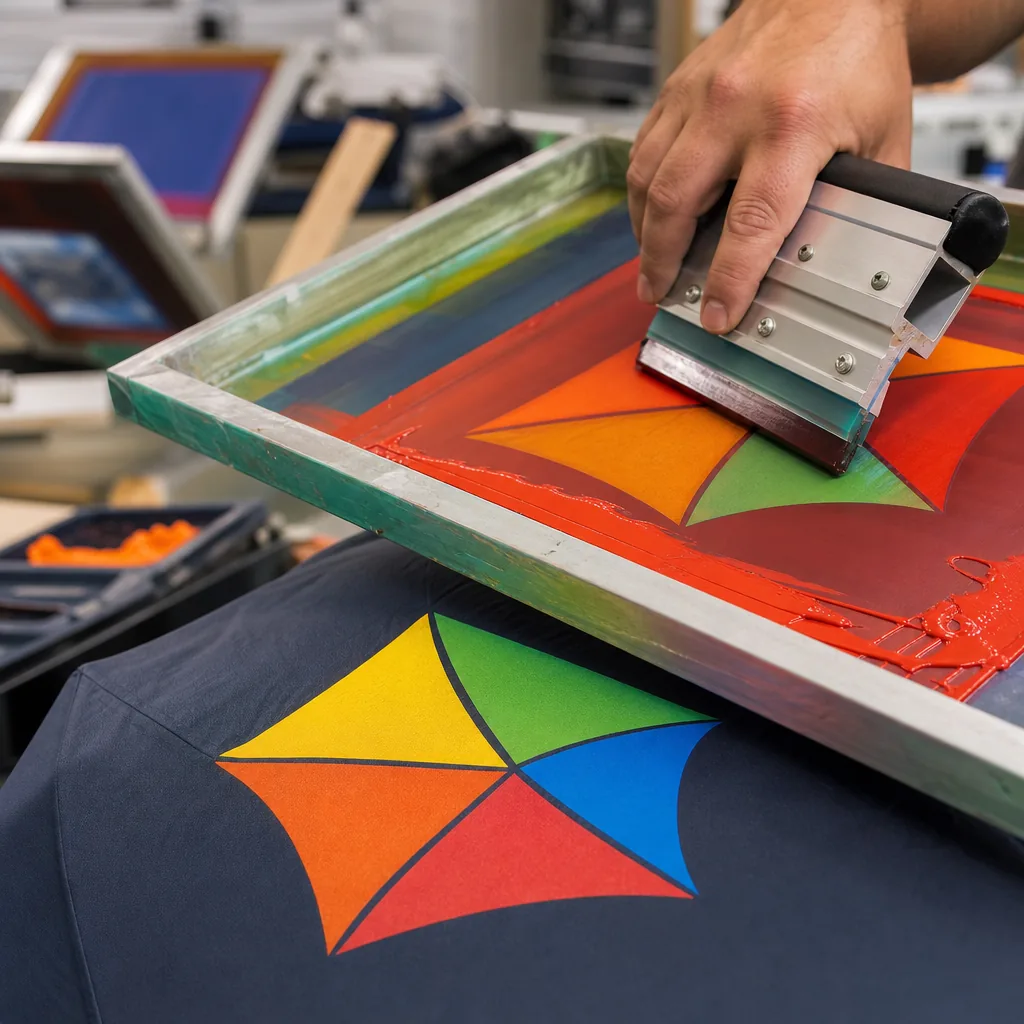
Debossed, Printed, or Molded Logos on Umbrella Handles
Evaluate handle logo options by material, tooling cost, MOQ, and durability to build branded umbrellas that look consist...
Read More »
Debossed, Engraved, or Printed: Branding Umbrella Handles
Compare debossed, engraved, and printed handle branding by material, MOQ, tooling, and lead time so buyers can match log...
Read More »