Debossed and Laser Branding on Umbrella Handles and Parts
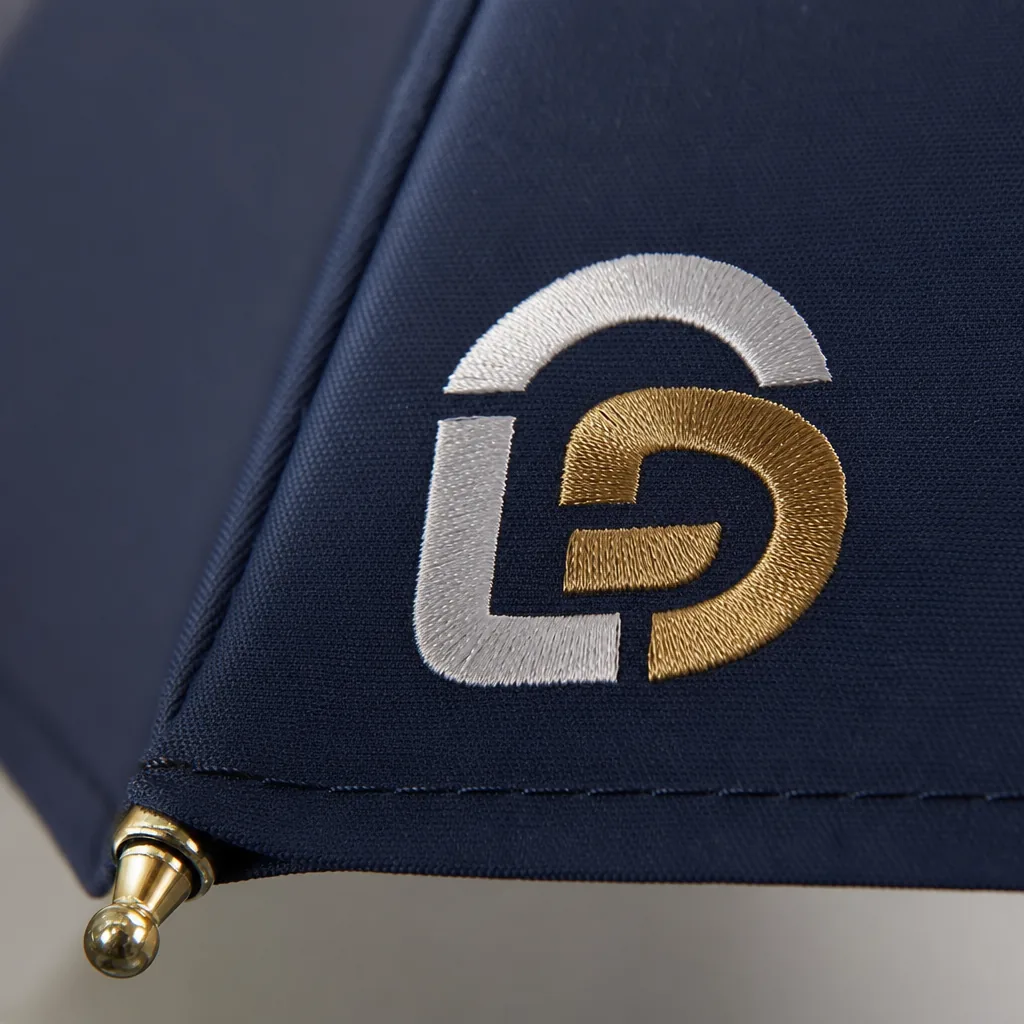
When buyers source branded umbrellas, the real challenge is not choosing a logo treatment in isolation but matching it to the handle, ferrule, or strap material, production volume, and approval standard. In our Songxia factory, we see where debossed umbrella branding holds up under daily hand contact and where laser marking delivers finer detail, lower tooling needs, and tighter consistency across mixed parts. The right choice depends on how the mark must look after shipping, retail handling, and end use.
Which umbrella parts can carry branded marks
The handle is usually the best place for debossed umbrella branding when the buyer wants a permanent mark that survives daily handling, retail returns, and transit abrasion. Wood takes deep debossing, laser etching, or hot stamping cleanly; EVA and TPR handles usually need molded branding or a shallow laser logo on umbrella handle surfaces; and smooth ABS or PP plastic handles are better for pad print or in-mold logo details. On metal handles or exposed metal collars, laser marking is the most reliable because ink adhesion is weak and debossing is not practical on thin-wall parts.
Beyond the grip, the ferrule, strap, tip cap, and shaft accessories can all carry promotional umbrella parts branding if the part geometry is stable enough. A strap tab can take a small woven label, heat-transfer mark, or pad print, while a ferrule or tip cap in plastic can accept a molded logo or laser mark if the surface is flat and the resin is compatible. The shaft itself is usually only suitable for laser engraving on exposed metal sections; I would not spec ink printing there unless the part is protected from repeated sliding or folding contact.
Handle marking options depend on both the finish and the production stage, which is where factory logo customization gets expensive fast if the art is changed late. On assembled umbrellas, laser is best for metal and some coated plastics, debossing is best on molded or wrapped handles, and pad print is the lowest-cost option for flat, light-use surfaces. The practical rule on the factory floor is simple: choose the marking method from the part material first, then check whether the location stays visible after folding, hanging, and retail display.
Debossing versus laser marking
Debossed umbrella branding gives you a pressed-in, low-relief mark that reads as part of the handle rather than an add-on. On ABS, PP, and some soft-touch TPR handles, the logo has a real tactile edge: you feel the depth with your thumb, which is why premium retail umbrellas often use it on straight handles, hook handles, and branded ferrules. A clean deboss works best when the handle wall is thick enough to hold the cavity without warping; if the material is too thin, the mark looks crushed instead of intentional. In factory practice, this is a mold or tooling decision, so it belongs in the early handle spec, not as an afterthought.
A laser logo on umbrella handle is sharper and faster to deploy, especially on small-run corporate gifts where you need flexibility across names, departments, or event versions. Laser marking leaves a contrast change or surface etch depending on the material, so it is usually better on metal, painted alloy, wood, and some coated plastics than on soft handles that rebound after engraving. The visual effect is cleaner and flatter than debossing, with less tactile depth, but it avoids tooling cost and makes handle marking options much broader when you are testing artwork or buying only a few hundred pieces. For promotional umbrella parts branding, laser is usually the safer choice when lead time is tight and the client wants variable personalization.
From a durability standpoint, debossing usually outlasts coating wear because the mark is physical geometry, not just a surface finish. Laser can hold up very well on bare metal or through-color plastics, but on painted or plated parts it depends on coating thickness and abrasion during use, so you need to check the actual handle substrate before promising longevity. ZheBrella’s standard rule is simple: use debossed umbrella branding when the buyer wants a premium, tactile retail presentation and has enough volume to justify the tooling; use laser when factory logo customization must be economical, fast, and adaptable across short runs or mixed SKUs.
Material behavior and finish quality
Wood, ABS, and rubberized handles do not behave the same under heat or pressure, so the branding method has to match the substrate instead of the artwork. With debossed umbrella branding, wood can look clean if the die pressure is controlled, but you can scorch the grain or crush soft fibers if the dwell time runs too hot. On molded plastic handles, a laser logo on umbrella handle parts can read sharply, but the surface can gloss over or melt at the edges if the beam is overdriven. On dark finishes, contrast is the real limitation: a mark may be technically there, but if the base color absorbs too much light or the sheen is too high, the logo disappears in normal retail viewing.
For handle marking options, the factory needs to check more than whether the logo exists. We inspect logo depth against the approved sample, edge crispness under side light, and whether the mark stays legible after a simple handling rub test. A shallow deboss looks fine in a photo and fails in the hand; a deep one can deform the contour or weaken thin plastic walls. For promotional umbrella parts branding, scratch resistance matters because handles get abraded in cartoning, transit, and customer use, especially on textured coatings and painted finishes. Factory logo customization only works well when the finish, material hardness, and marking process are matched from the start.
The practical rule is to test the exact handle batch, not a generic material name, because resin load, wood density, and coating thickness all change the result. On matte black plastic, laser marks often give the best read, while on light wood a restrained debossed umbrella branding approach is usually cleaner and more durable. On glossy or soft-touch surfaces, the logo can edge-fail first, so we reject parts where the mark feathers, lifts, or turns fuzzy after wiping. If the branding survives inspection under magnification, a cloth rub, and normal packing contact without losing contrast, it usually holds up in distribution better than artwork that only looks good right after production.
Production controls and quality inspection
Production starts with a signed pre-production sample, because debossed umbrella branding and any laser logo on umbrella handle have to be locked before mass work begins. We check character depth, logo position, orientation, and the distance from the handle cap or ferrule reference point, then compare the first-off parts against the approved sample under the same lighting and fixture. If the artwork is off-center by even a few millimeters, it reads as a defect on a molded handle or a painted ABS grip, so the factory needs a fixed jig, a go/no-go sample card, and a clear master file before the line starts cutting metal or setting laser parameters.
Handle marking options also have to be tied to the assembly sequence, not treated as a separate decoration step. If the handle is debossed too early, later insertion of the shaft, spring button, wrist strap, or end cap can distort the grip surface or hide part of the logo; if it is done too late, the heat or clamping from final assembly can scuff the mark. For promotional umbrella parts branding, we verify that the marked handle still mates correctly with the shaft, runner, and ferrule after canopy sewing and frame riveting, because a clean-looking imprint is useless if the final fit is loose or the logo ends up facing the wrong direction when the umbrella is opened.
Batch control is where factory logo customization either stays consistent or falls apart, so we inspect the first cartons, then sample the lot for repeatability in depth, contrast, and placement. Our standard practice is AQL 2.5 on appearance and fit, with extra attention to mixed lots where handle molds, laser power, or paint color changes can shift the result. The final check should always happen after canopy and frame work, because the full build can change handle orientation, add small twists in the shaft, and reveal whether the branding still aligns with the finished umbrella rather than just the loose part on the bench.
MOQ, lead time, and cost drivers
Handle work is slower and more expensive than canopy print because you are touching a molded part, not a flat piece of fabric. A laser logo on umbrella handle is usually the easiest route: if the handle material and coating cooperate, you can mark without hard tooling, so setup is mostly artwork prep, focus testing, and a few sample passes. Debossed umbrella branding is the opposite end of the scale: it needs a matched mold insert or a revised handle cavity, which means real tooling cost, longer lead time, and a higher MOQ to amortize the die or mold change. For standard OEM/ODM programs, the fastest combinations are laser on plastic or PU handles, then one-color pad print on the shaft cap or ferrule, because both fit into existing production without stopping the frame line.
Handle marking options change the whole schedule because the factory has to separate parts branding from canopy sewing and final assembly. If you want promotional umbrella parts branding on the handle, button, strap clip, or ferrule, expect extra sampling and a dedicated inspection step to check contrast, placement, and wear resistance; that is where factory logo customization often slips if the buyer approves art before confirming the actual handle substrate. On plain canopy printing, MOQ can stay relatively low because screen or heat-transfer work runs on finished panels; with handle branding, the MOQ usually rises when there is a custom mold, special coating, or a color-matched handle that must be ordered in bulk from the plastic supplier.
FOB versus DDP changes the comparison because handle branding adds cost in parts, labor, and rejects, while freight and duty can hide or magnify that delta depending on destination. Under FOB, you can compare factory prices cleanly: canopy print is cheapest, laser marking is mid-range, and debossing is highest once tooling is included; under DDP, the landed price may narrow if the branded handle increases carton count only slightly and the destination duty rate is favorable. In practice, I tell buyers to ask for both a tooling line and a per-piece line, plus a separate quote for sample lead time and mass-production lead time in days, because the lowest factory quote is not always the lowest landed cost once setup, extra inspection, and replacement handle scrap are counted.
Frequently Asked Questions
Is laser marking better than printing on umbrella handles?
Laser marking is usually better when the handle material supports a permanent, wear-resistant mark and the logo is simple. Printing is better when you need color, but it may wear sooner on high-touch parts.
Can handle branding be added to small orders?
Yes, but MOQ depends on the handle material and decoration method. Simple laser or one-color marks often work better for smaller quantities than molded or multi-step finishes.
Which umbrella parts can usually be debossed or laser marked in production?
Common parts include the handle, ferrule, runner, and strap hardware, depending on material. Laser marking works best on plastic, coated metal, or painted parts, while debossing is more common on molded plastic or rubberized handles.
What artwork details should a buyer approve before mass production?
Buyers should confirm the exact logo position, mark size in millimeters, depth or engraving style, and the part color that will affect contrast. A factory should usually provide a physical sample or digital proof before bulk production, especially for mixed-material parts.
Is laser marking or debossing better for long-term branding wear?
Laser marking is usually better for fine detail and cleaner contrast on hard parts, while debossing tends to be more resistant to surface abrasion because the logo is recessed. Final choice depends on the part material, expected handling, and target unit cost.
Looking to Launch Your Custom Umbrella Line?
ZheBrella is a Zhejiang-based OEM/ODM umbrella manufacturer with 17 years of export experience. Free design, low MOQ from 100 pieces, windproof construction, full-color print.
Get Free Quote Now »People Also Search For
Related Articles
Debossed and Embossed Branding for Premium Umbrella Handles
Compare debossed and embossed handle branding for premium umbrellas, including tooling, MOQ, tactile finish, and cost im...
Read More »Custom Umbrella Handle Logo Options for Brand Programs
Compare print, engraving, and molded handle branding options by material, durability, MOQ, and lead time so buyers can s...
Read More »Embossed Handle Logos on Umbrellas: OEM Options and Limits
Compare embossed, debossed, and molded handle logo options by material, MOQ, tooling, and lead time to choose a workable...
Read More »