Tonal Umbrella Branding for Premium Corporate Programs
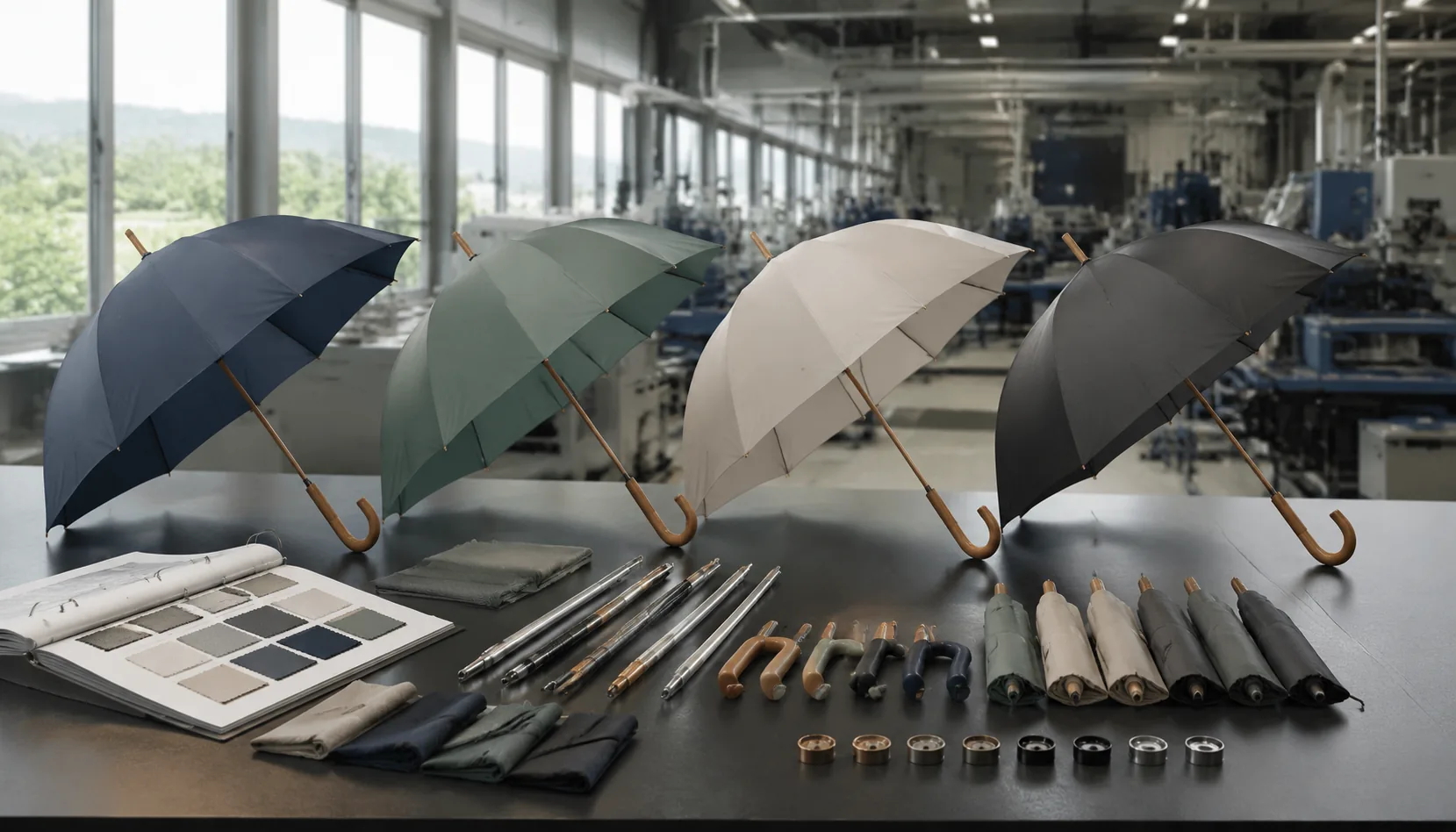
Premium corporate buyers often want umbrellas that look understated in a boardroom gift set but still carry the brand clearly after months of use. On our Songxia production floor, tonal branded umbrellas come down to controlled fabric-to-logo contrast, ink adhesion on coated panels, clean seam alignment, and repeatable QC under consistent light. If any one of those slips, tone-on-tone branding turns from refined to invisible or uneven.
Why Subtle Branding Works for Premium Buyers
Premium buyers usually do not want an umbrella that behaves like a walking billboard; they want an object that feels appropriate in a boardroom lobby, a five-star hotel entrance, or beside a black car at a property viewing. Tonal branded umbrellas work because the logo becomes part of the material language instead of sitting on top of it. A charcoal logo on black 210T pongee, a navy mark on deep navy, or a warm gray print on taupe canopy reads as controlled and expensive, especially on 23" auto-open executive styles or 27" golf umbrellas with fiberglass ribs. For finance, real estate, and luxury retail, that restraint matters. The recipient is more likely to carry the umbrella repeatedly, which gives the brand longer life than a loud one-event giveaway.
Low-contrast branding also protects the perceived value of the product. High-visibility promotional printing has its place for trade shows, field campaigns, and outdoor events where recognition from 30 feet away is the goal. Premium corporate umbrellas are different: the user is often a senior client, hotel guest, broker, investor, or VIP shopper who judges the item by finish, handle feel, frame stability, and fabric depth. Tone on tone umbrella logos pair well with matte rubberized handles, straight wooden shafts, black electroplated steel, or fiberglass frames rated to survive 50+ mph in a vented double-canopy build. The mark is still present, but it does not interrupt the silhouette or cheapen the gift.
The production detail is where subtle logo umbrellas succeed or fail. A tonal screen print needs tight ink control because one shade too light becomes ordinary contrast printing, while one shade too dark disappears under indoor light. Heat-transfer logos can look sharp on POE or coated pongee, but on luxury branded umbrellas I usually prefer carefully matched screen ink or woven label accents because they age more naturally through opening cycles and wet folding. For 190T and 210T pongee, we check the wet rub, fold abrasion, and panel-to-panel shade consistency during AQL 2.5 inspection, not just the first sample photo. That discipline is what keeps tonal branded umbrellas looking intentional rather than underprinted.
Selecting Fabric, Color, and Logo Contrast
Fabric choice decides whether tonal branded umbrellas look premium or just under-printed. For corporate programs, I normally separate 190T and 210T pongee by hand feel, opacity, and print tolerance. 190T pongee is lighter, folds cleaner on 21" and 23" compact auto-open-close umbrellas, and works well when the budget still needs a refined matte surface. 210T pongee has a denser yarn count, better drape on 27" and 30" golf umbrellas, and gives dark navy, charcoal, bottle green, and black panels a richer base for tone on tone umbrella logos. If the frame is a 10K or 16K fiberglass windproof model, I prefer 210T because the larger canopy area exposes cheap fabric quickly. Matte PU or Teflon-coated pongee reduces glare, sheds rain faster, and keeps the logo from flashing too hard under office-tower daylight. Glossy PVC-style effects can look loud; for premium corporate umbrellas, controlled low-sheen finishing is usually safer.
For subtle logo umbrellas, contrast should be designed, not guessed from a Pantone book. A dark-on-dark logo needs at least a small shift in light reflectance: black ink on charcoal pongee often disappears, while gloss black heat transfer on matte black fabric stays visible when the canopy curves and catches rain. Navy on navy works if one side moves warmer or cooler, such as Pantone 289C fabric with a slightly brighter 2965C print, but two colors that match under indoor light can flatten outdoors. Jacquard-look effects are another good option: we can simulate woven texture using low-build screen ink, deboss-style heat transfer, or sublimation shadowing on lighter gray and beige pongee. Real jacquard fabric is possible but raises MOQ and makes panel matching harder during cutting, especially across 8K or 10K layouts where every wedge must align cleanly.
Practical visibility testing should happen before bulk cutting, not after 3,000 canopies are sewn. Our standard practice at ZheBrella is to check logo panels dry, misted, and fully wet at roughly 1 meter and 3 meters, under daylight and warehouse LED, because rain darkens pongee and can reduce tonal contrast by 20–40% visually. For luxury branded umbrellas, I recommend placing the tonal mark on one or two panels at 80–120 mm wide for compact umbrellas and 140–180 mm for golf umbrellas; smaller marks need stronger gloss or texture contrast to survive real use. Avoid ultra-thin strokes below 0.4 mm in screen print and below 0.6 mm in heat transfer, because coating thickness and fabric weave swallow fine lines. Before approving bulk, request a strike-off with the final coating, final fabric lot, and AQL 2.5 inspection criteria for logo position, color shift, rubbing, and rain exposure.
Decoration Methods for Tone-on-Tone Results
Tonal screen print is still the cleanest answer when the buyer wants tone on tone umbrella logos at scale, but it only works if the ink is controlled tightly against the canopy lot. On 190T or 210T pongee, I usually spec one step darker or lighter than the fabric, then approve under daylight and warehouse LED because gray-on-navy can disappear after Teflon coating. It suits 23" and 27" auto-open models, steel frames, and fiberglass ribs because the decoration sits on the panels before final assembly and does not affect the frame. For double-canopy windproof umbrellas, print placement matters more: keep logos on the outer canopy, away from vent overlap seams, so the airflow gap still opens cleanly in 40–50+ mph wind tests. Screen print is best for premium corporate umbrellas when the logo is simple, under 2–3 colors, and the order is above typical MOQ, usually 300–500 pieces.
Silicone print gives a raised, rubbery matte mark that feels more expensive than normal ink, especially on black, charcoal, forest green, and navy canopies. It is a good method for tonal branded umbrellas because the logo catches light without shouting, but it adds weight and must be cured correctly or it can crack along folded ribs. I avoid heavy silicone over rib lines on compact 21" auto-open-close umbrellas because repeated folding creates pressure points. Heat transfer is sharper for fine lettering, gradients, and small corporate marks, but it can look too perfect and slightly plastic if the film gloss is wrong. On POE or PVC clear umbrellas, tonal heat transfer is difficult because transparency changes the logo color; on pongee it is more predictable. For luxury branded umbrellas, matte PU transfer or flock transfer can work, but every batch needs adhesion testing after wet rub, dry rub, and 24-hour folded storage.
Woven labels, engraved handle plates, and strap marks are the methods I trust when the brand wants subtle logo umbrellas that still pass executive gifting standards. A woven label sewn into the closing strap gives a tailored look and avoids disturbing canopy waterproofing, making it safe for steel shaft golf umbrellas, fiberglass 8K/10K frames, and double-canopy vented models. Engraved metal or ABS handle plates are strongest on straight EVA, rubberized, or wooden handles; they pair well with 27" and 30" golf umbrellas where the handle has enough surface area. Strap marks can be debossed, silicone patched, or tonal printed, and they are often the most visible branding when the umbrella is closed in an office lobby. Our standard practice at ZheBrella is to inspect these details under AQL 2.5, checking logo position, stitch tension, plate adhesion, and color consistency before FOB or DDP shipment, because tonal decoration fails quietly when alignment is off by even 2–3 mm.
Approval Standards for Low-Contrast Logos
Low-contrast branding must be approved under real lighting, not only under a bright sample-room LED. For tonal branded umbrellas, I require review under at least three sources: 6500K daylight lamp, 4000K office light, and indirect outdoor daylight. A tone-on-tone umbrella logo that looks refined on black 190T pongee can disappear on navy 210T pongee after Teflon coating, especially when the canopy is curved over 8K or 10K ribs. The approval sheet should state the fabric lot, coating, Pantone target, print method, and viewing distance, usually 1 meter for corporate gifting and 2 meters for retail shelf review. For premium corporate umbrellas, the decision is not “visible or invisible”; it is whether the logo reads cleanly without shouting. Our standard practice at ZheBrella is to keep one sealed production sample and one signed buyer sample so the sewing line, printing room, and final QC team are judging against the same reference.
Photo approval is useful for speed, but it cannot replace a physical sample for subtle logo umbrellas. Camera auto-exposure, phone HDR, and compression can exaggerate or flatten contrast, so buyers should treat photos as layout confirmation only: logo position, scale, panel orientation, strap placement, handle engraving location, and packaging marks. For shade tolerance, I normally allow a narrow visual range: the logo may shift slightly warmer or cooler than the canopy, but it must stay consistent panel to panel and batch to batch. If using screen print, opacity should be even with no pinholes, dry edges, or ink flooding; for heat transfer, the film edge must not shine like a sticker unless that finish was approved. On luxury branded umbrellas, even a 1 mm registration drift or a glossy patch on matte fabric can make the item look like a budget giveaway instead of an executive gift.
Final inspection should write low-contrast requirements into the AQL plan, not leave them as subjective comments. Under AQL 2.5, inspectors should check print opacity, edge sharpness, logo centering, handle engraving depth, strap alignment, and canopy defects such as skipped stitches, oil marks, puckering, loose threads, rib-tip mismatch, and coating scratches. On a 23 inch auto-open umbrella, I would check logo placement against rib seams and confirm that the strap closes without covering the mark; on a 27 inch golf umbrella with double-canopy venting, I would also inspect the upper canopy because shade differences become more obvious across larger panels. Tone on tone umbrella logos should be judged after opening and closing the umbrella several times, because creases can reveal uneven ink or transfer adhesion. The inspection report should separate critical, major, and minor defects so the buyer knows whether to accept, sort, rework, or hold shipment before FOB or DDP release.
Building a Repeatable Premium Order Spec
A premium corporate program should start with a written order spec, not a mood board. For tonal branded umbrellas, MOQ depends on how much of the umbrella is being customized: a stock 23" auto-open with tonal print may start around 500 pieces, while dyed-to-match 190T or 210T pongee, custom handle color, and private-label packing usually pushes the practical MOQ to 1,000–3,000 pieces. I recommend locking the size first—21" folding for travel gifts, 23" for general executive use, 27" or 30" for golf and outdoor events—then choosing frame construction. Fiberglass ribs cost more than steel, but for premium corporate umbrellas they reduce returns because they flex better in wind. An 8K frame is acceptable for compact gifting, 10K feels stronger in hand, and 16K is useful when the buyer wants a heavier luxury branded umbrella with a more architectural look.
Sampling should prove the repeatability of the understated branding, not just the overall appearance. A realistic sample lead time is 7–12 days after artwork, Pantone references, and mechanism choice are confirmed. Tone on tone umbrella logos can be done by low-contrast screen print, heat transfer, woven label, debossed handle plate, or embroidery on the sleeve, but each method behaves differently under showroom lighting and rain. Subtle logo umbrellas often fail when the logo is approved on a flat digital mockup but disappears on curved black or navy pongee. Ask for photos in daylight, indoor warm light, and after water spray, especially if using Teflon coating or UPF 50+ treatment, because coatings change surface sheen. Our standard practice at ZheBrella is to keep one signed master sample and one factory reference sample before cutting bulk fabric.
For bulk production, plan 30–45 days after deposit and sample approval, then add transport time based on FOB or DDP terms. FOB Ningbo or Shanghai gives the buyer more freight control, while DDP is cleaner for corporate gifting teams that need landed cost by event date and do not want to manage duty, customs clearance, or last-mile delivery. Reorder accuracy depends on documenting the fabric lot, rib count, shaft material, handle finish, logo method, logo position, sleeve construction, hangtag, carton mark, polybag choice, and inner/master carton quantity. I would also record AQL 2.5 inspection criteria, windproof requirements such as double-canopy venting or a 50+ mph wind-tunnel target, and the exact mechanism: manual, auto-open, or auto-open-close. That spec sheet is what keeps the second and third runs of tonal branded umbrellas from drifting in color, hand feel, and perceived value.
Frequently Asked Questions
Is tone-on-tone branding more expensive than standard logo printing?
It can be similar for screen print, but silicone print, engraved plates, or special handle finishes may add cost. The main added time is in sampling and contrast approval.
Which umbrella colors work best for tonal logos?
Navy, charcoal, black, forest green, and burgundy work well because small finish differences are visible without looking promotional. Very light colors need careful testing to avoid a washed-out logo.
What decoration methods work best for tone-on-tone umbrella branding?
For low-contrast branding, screen printing with matched or near-matched ink is the most common option. Heat transfer and woven label tags can also work when you want a cleaner premium look with less visual contrast.
How do you keep logo visibility consistent across large corporate orders?
Use a fixed color reference, approved strike-off sample, and a QC standard for contrast and placement. For repeat programs, many buyers lock the same panel position and ink formula to keep the logo appearance consistent across reorders.
What is a typical MOQ for premium branded umbrellas?
For OEM/ODM corporate programs, MOQ is often 300 to 1,000 pieces depending on the umbrella style, canopy material, and decoration method. Rush orders are possible on some models, but premium finishes and custom color matching usually need more lead time.
Looking to Launch Your Custom Umbrella Line?
ZheBrella is a Zhejiang-based OEM/ODM umbrella manufacturer with 17 years of export experience. Free design, low MOQ from 100 pieces, windproof construction, full-color print.
Get Free Quote Now »People Also Search For
Related Articles
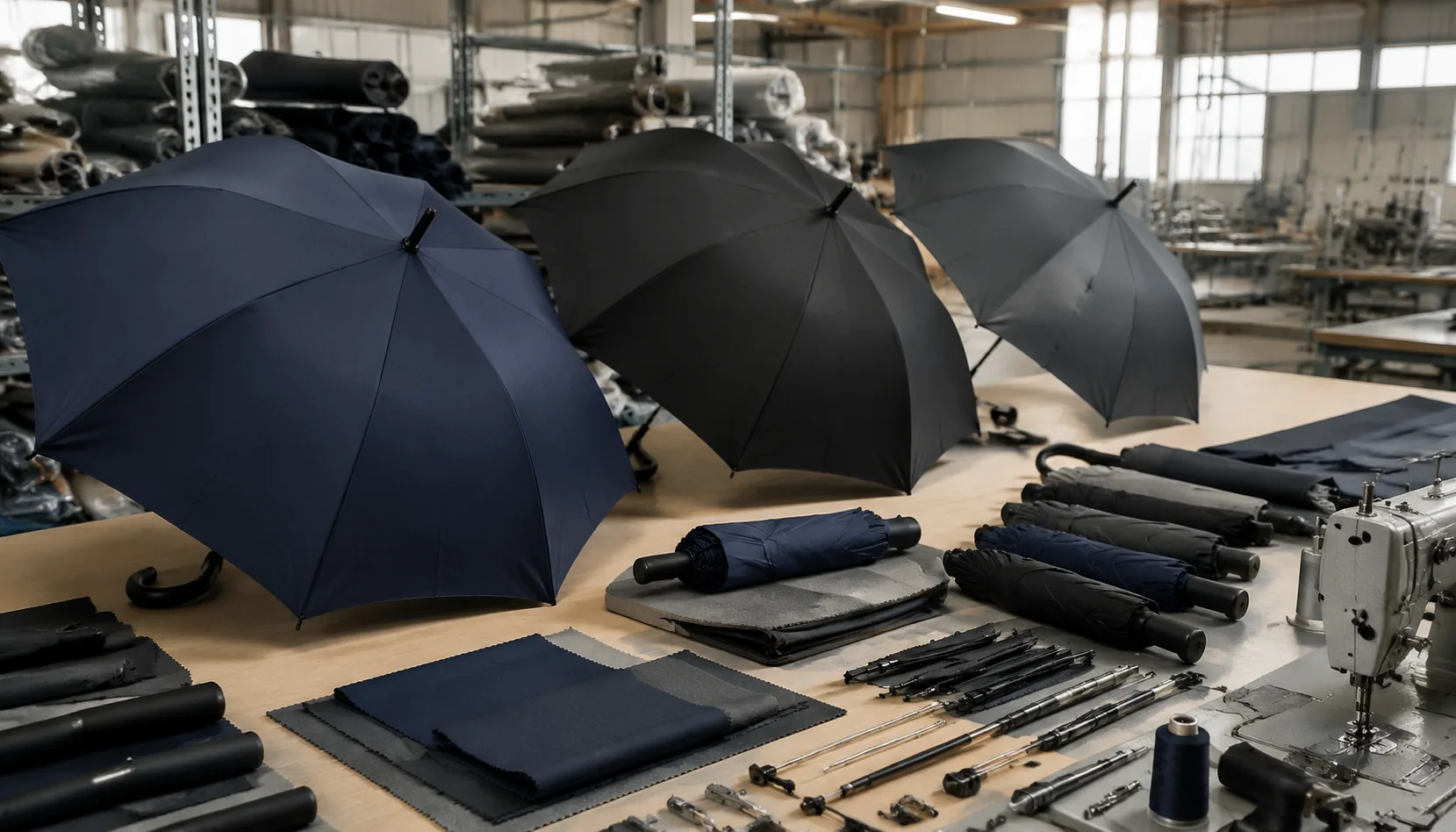
Tone-on-Tone Umbrella Branding for Premium Corporate Programs
Use tone-on-tone umbrella branding to create subtle premium gifts with controlled fabric sheen, logo contrast, frame spe...
Read More »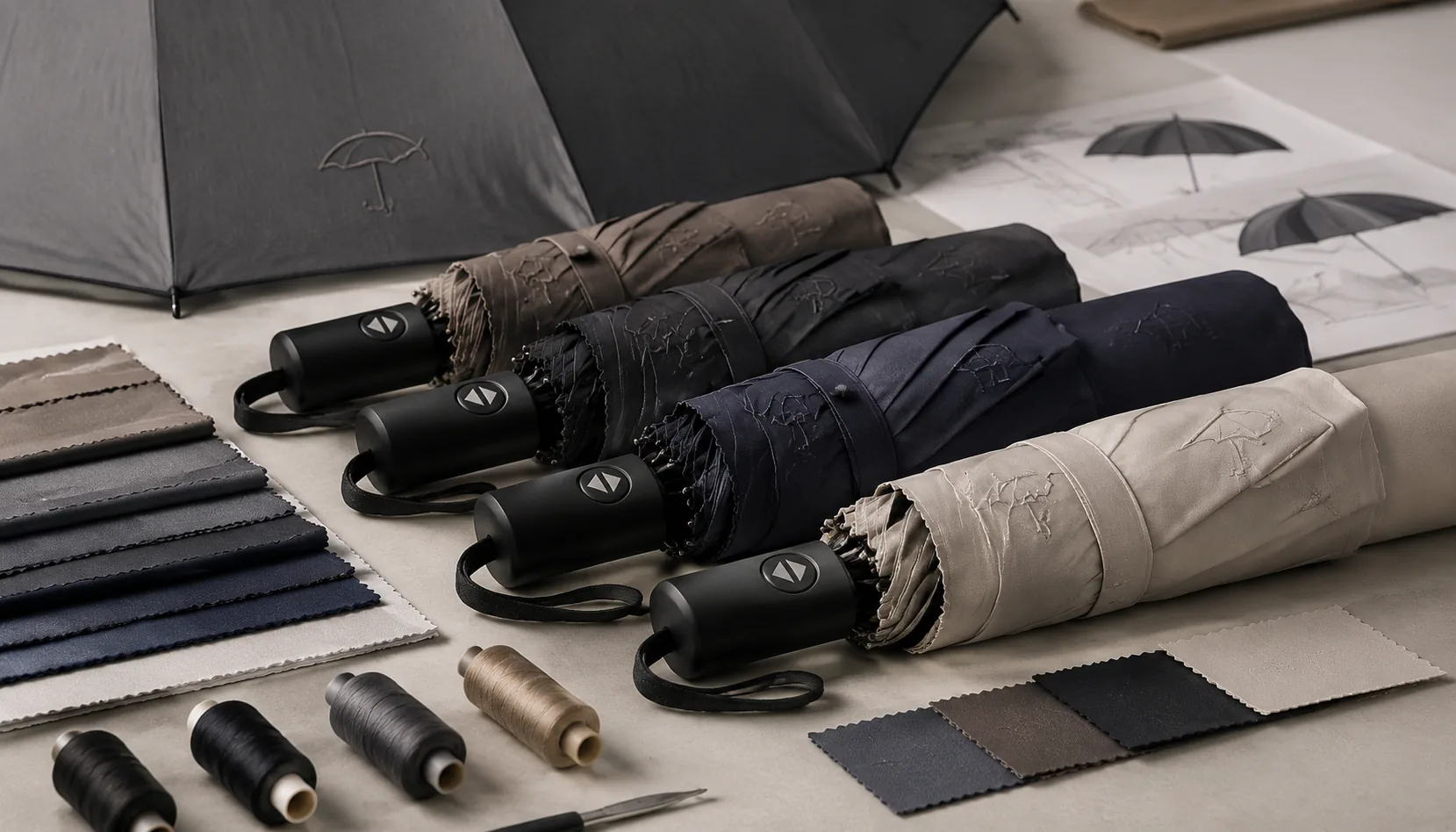
Tone-on-Tone Umbrella Logos for Premium Retail Branding
Use tonal logo printing to create premium umbrellas with controlled contrast, fabric choices, QC checks, and repeatable ...
Read More »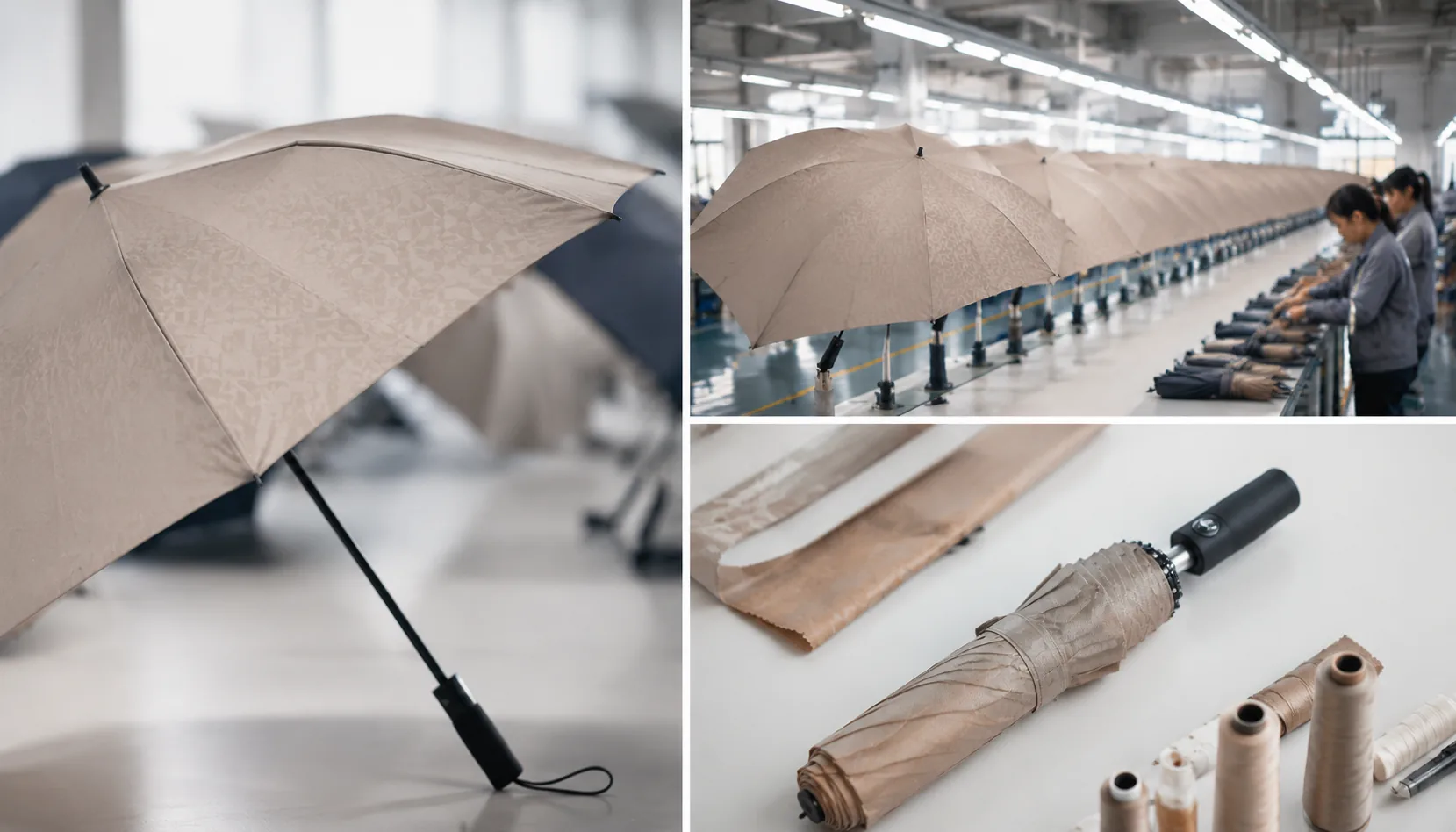
Tone-on-Tone Umbrella Branding for Subtle Retail Programs
Create understated umbrella branding with tone-on-tone logos, matched trims, and controlled contrast for premium retail ...
Read More »