Debossed and Embossed Branding for Premium Umbrella Handles
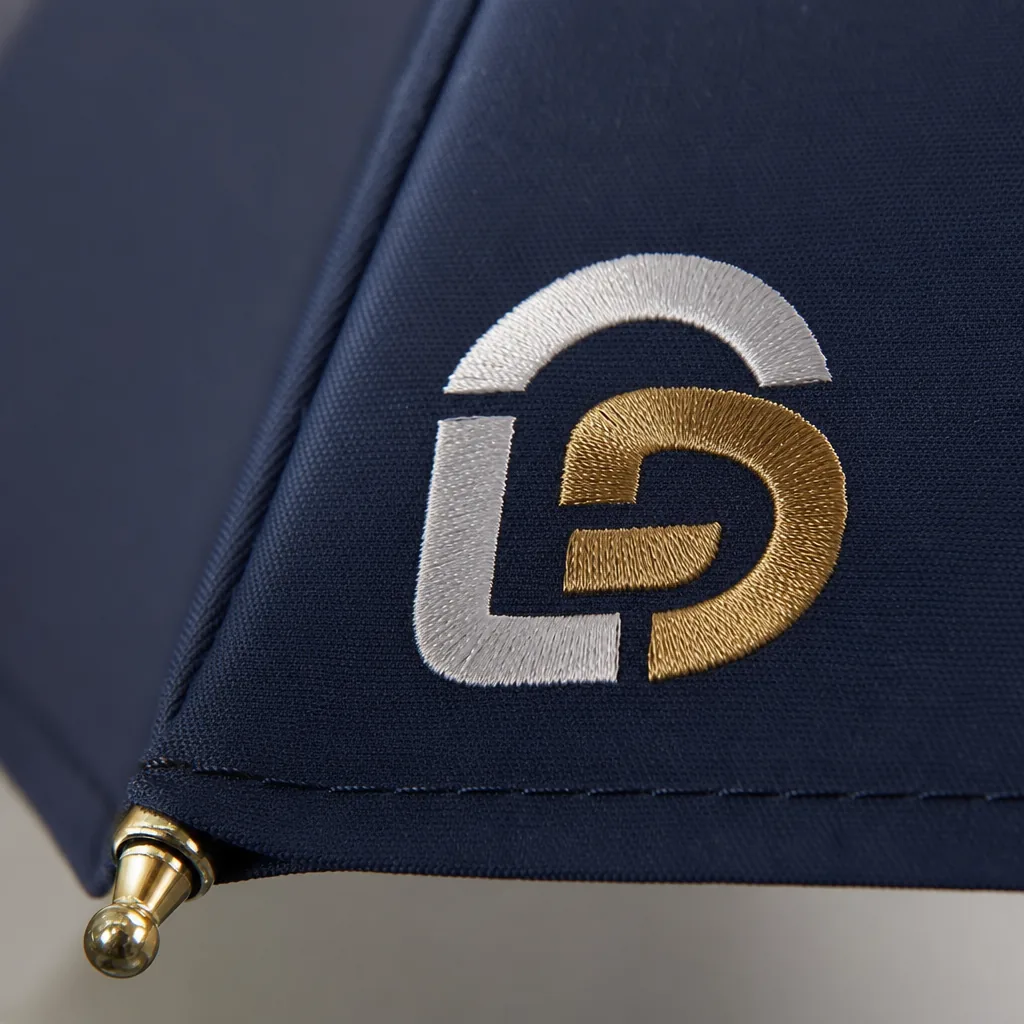
When buyers spec premium umbrella handles, the branding choice is rarely cosmetic; it affects tooling, minimum order quantity, feel in the hand, and the final unit cost. From the factory floor, the real question is whether the mark needs to read as subtle and durable or bold and raised, and how that choice performs through molding, finishing, and repeat production. For debossed umbrella branding, the tooling depth and resin flow have to be controlled tightly to keep logos clean across every batch.
Debossing vs embossing on umbrella handles
Debossed umbrella branding presses the artwork below the surface, so the mark reads cleaner and feels quieter in the hand; embossing pushes the logo up, which gives a stronger tactile cue and more shadow line. On umbrella handles, that difference matters because buyers judge the piece by both sight and grip. For premium umbrella customization, debossing usually looks more restrained on luxury gift sets and corporate programs, while embossed logo umbrella handles work better when the brand wants the mark to be obvious from across a meeting room or retail display.
Wood handles take carving and compression differently than synthetic parts, so the material choice drives the result. On solid wood, debossing can look sharp if the grain is tight, but open-pore woods need more finishing or the edges look rough; embossing on wood is usually done through tooling plus paint fill or a cap insert, not by raw pressing alone. EVA handles accept both effects better because the foam compresses predictably and holds shape after molding, while molded plastic handles need dedicated steel tooling and enough wall thickness to avoid sink marks, whitening, or distortion at the logo area.
The right call depends on the handle decoration options, the order quantity, and how much wear the customer expects. For OEM umbrella branding, debossing is usually the safer choice when the brief wants a subdued premium look and lower risk of flaking, especially on coated wood or matte EVA. Embossing is better when the brand wants a bolder hand-feel and stronger shelf impact, but it needs cleaner tooling and tighter QC because shallow relief disappears and over-deep relief looks cheap fast; on plastic, that means checking draft angles, gate position, and post-mold finishing before approving production.
Tooling, setup, and MOQ requirements
A debossed umbrella branding job on the handle is not just a file change; it is a tooling decision. For new raised or recessed marks, the handle usually needs a dedicated metal mold, embossing die, or laser jig depending on whether the base is ABS, EVA, TPR, wood, or a soft-touch grip. That tool charge is separate from the umbrella unit price and is often the real cost driver on first orders. In practice, the cleaner the logo edges and the deeper the relief, the more exact the mold work has to be, especially on curved handle sections where draft angle and shrink behavior can distort small text.
MOQ is tied to how the factory amortizes tooling, and premium umbrella customization almost always pushes the minimum up compared with plain stock handles. For OEM umbrella branding, buyers should expect a higher MOQ on custom handles than on canopy printing, because the handle line has to stop and change over for setup, test pulls, and sometimes manual trimming. Lead time also changes: if the handle uses an existing mold, production is usually only modestly slower; if it needs a new branding tool, add the mold-making window plus sample approval time before bulk starts. That is where handle decoration options become expensive if the order is small.
Before approving artwork, buyers should confirm the exact handle material, logo size, placement, depth, and whether the mark must read cleanly from one side or wrap around the grip. They should also lock down the file format, Pantone reference if color fill is involved, and the inspection standard for the first articles, because embossed logo umbrella handles can look correct on screen and still fail on the real part if the stroke weight is too thin. Our standard practice is to ask for a signed layout showing the actual handle profile, since that is the only way to prevent arguments later about alignment, mold marks, and whether the debossed umbrella branding matches the approved sample.
Durability, wear, and brand perception
On umbrella handles, the real durability question is not whether the logo looks good on day one; it is whether the mark stays readable after months of hand oils, bag abrasion, and carton-to-carton rubbing in transit. `debossed umbrella branding` usually survives better than a raised mark because the recess protects the artwork from direct wear, especially on high-touch plastic, TPR, and rubberized handles. Deep enough tooling matters, though: if the cavity is too shallow, the logo fills with dirt and loses contrast; if the edges are too soft, the impression looks cheap and washes out fast. For premium umbrella customization, I push clients toward crisp but not brittle geometry, because the sweet spot is a logo that remains legible after repeated daily handling without creating sharp ridges that chip or catch.
Surface hardness changes the outcome more than most buyers expect. On soft EVA or low-density rubber, embossed logo umbrella handles can look strong at first, but the raised areas flatten under pressure and the edges get fuzzy in shipping. Harder ABS, PP, and coated wood handles hold cleaner line work, while matte finishes hide minor scuffs better than glossy ones. ZheBrella’s standard practice is to match the decoration method to the handle material, because OEM umbrella branding fails when the tooling is good but the substrate is wrong. For retail programs, a subtle debossed mark or a low-profile embossed mark usually ages more gracefully than a high-relief effect, especially when the umbrella will be boxed, unboxed, and handled many times before sale.
For corporate gifting, brand perception is usually driven by restraint: buyers want the logo to feel integrated, not stuck on. That is where handle decoration options have to be chosen with the use case in mind. Debossed marks read as more technical and durable, which works well for executive gifts, hotel programs, and trade-show kits; embossed marks can feel more present and decorative, but only if the edges stay sharp and the handle finish is hard enough to preserve definition. In both cases, a cleaner, deeper impression on a dense handle stock tends to communicate higher quality than a shallow, shiny mark. If the program is retail-facing, I would favor finishes that resist gloss burnishing and scuff contrast; if it is a premium giveaway, a controlled, matte deboss generally holds perception longer than a flashy raised logo.
Matching handle branding to umbrella construction
Handle branding only looks premium when it survives the way the umbrella is actually built. A straight shaft gives you a forgiving axis for debossed umbrella branding, but once you move to a compact folding model, the release button, spring housing, and telescoping sections eat into the usable grip length. On a 21" or 23" auto-open frame, I want the logo layout fixed against the handle flat or the side with the least finger wear; on a curved crook handle, the crown and hook transition can distort the deboss depth if the mold line is sloppy. For premium umbrella customization, the handle geometry is not cosmetic detail — it determines whether the mark reads cleanly from 1 meter away or looks crooked after the first inspection cycle.
Production consistency depends more on the handle tooling than people expect. Embossed logo umbrella handles need a stable mold, consistent cooling, and tight control of TPU, ABS, EVA, or wood-grain coatings; otherwise the edges blur, especially on matte finishes. Auto-open and auto-open-close mechanisms add internal load at the top of the shaft, so if the handle insertion depth is off by even 2 to 3 mm, the logo orientation drifts from unit to unit. That is why OEM umbrella branding often succeeds or fails at the handle station, not the canopy print line: the same pantone match can look sharper on a clean molded grip than on a busy 190T pongee panel.
A stronger fiberglass frame matters less when the buyer is paying for brand feel than for raw wind performance. Once the umbrella already has a decent steel or fiberglass rib package and passes normal opening-cycle checks, the handle becomes the part customers touch, photograph, and remember. In that case, the right handle decoration options — deep deboss, raised emboss, color-filled recess, or a soft-touch overmold with a laser mark — carry more perceived value than adding another layer of reinforcement that the end user never notices. We usually separate structural specs from branding specs in sampling, because a premium grip on a standard frame often sells better than a heavy-duty frame with a weak, shiny handle finish.
Proofing and quality checks for branded handles
For debossed umbrella branding on handles, I always tell buyers to approve the sample by looking at four things first: logo alignment, depth consistency, color match against the approved Pantone or physical master, and any surface defects around the grip line. On injected ABS, TPR, or EVA handles, a clean deboss should read evenly under side light without ragged edges, washout, or shiny burn marks from tooling pressure. If you are comparing embossed logo umbrella handles, check that the raised area does not distort the finger groove or create sharp edges that will wear through a sleeve or irritate the hand after repeated use.
A proper proofing round for premium umbrella customization should also include fit and function, not just graphics. Handle decoration options can change how the button, shaft cap, wrist strap, and ferrule seat behave, so request a fully assembled pre-production sample and confirm that the branding survives normal rubbing, alcohol wipe, and basic drop handling. Our standard practice is to reject parts that show sink marks, gate scars, bubbles, or off-center engraving before they reach final assembly, because those defects get worse after packing and are expensive to sort later.
In FOB or DDP quotations, ask for the handle material, decoration method, tooling or engraving charge, unit price by color, sample lead time, and packaging specification, plus whether the quote includes AQL 2.5 inspection on finished goods. For OEM umbrella branding, the quote should also state carton count, master carton dimensions, palletization if needed, and whether artwork changes trigger a new mold or only a new laser/etch file. If the supplier cannot spell out these details, the price is not real and the risk lands on the buyer, not the factory.
Frequently Asked Questions
Which handle materials work best for debossed or embossed logos?
Molded plastic and some EVA handles are most practical because they hold detail consistently. Wood can work for premium programs, but the depth and edge quality depend on grain and finish.
Do debossed handles increase lead time or MOQ?
Usually yes, because they require tooling and a dedicated setup step. Buyers should expect a longer sample cycle and a higher MOQ than standard printed branding.
What tooling is needed for debossed or embossed umbrella handle branding?
Both options usually require a custom mold insert or modified handle mold. For most OEM umbrella projects, tooling is a one-time cost and the final mold detail depends on handle material, logo complexity, and the size of the branding area.
What MOQ should I expect for custom branded umbrella handles?
MOQ is often tied to the handle style and mold setup, but many factories start around 500 to 1,000 pieces per design for custom handle branding. If the handle mold is already available, the MOQ can be lower than for a fully new mold.
How does debossed branding compare with embossed branding in cost and lead time?
Debossed and embossed handle branding usually have similar tooling costs, but final pricing can vary if the logo has fine detail or deep relief. Lead time is commonly 15 to 30 days after sample approval, depending on mold preparation and production volume.
Looking to Launch Your Custom Umbrella Line?
ZheBrella is a Zhejiang-based OEM/ODM umbrella manufacturer with 17 years of export experience. Free design, low MOQ from 100 pieces, windproof construction, full-color print.
Get Free Quote Now »People Also Search For
Related Articles
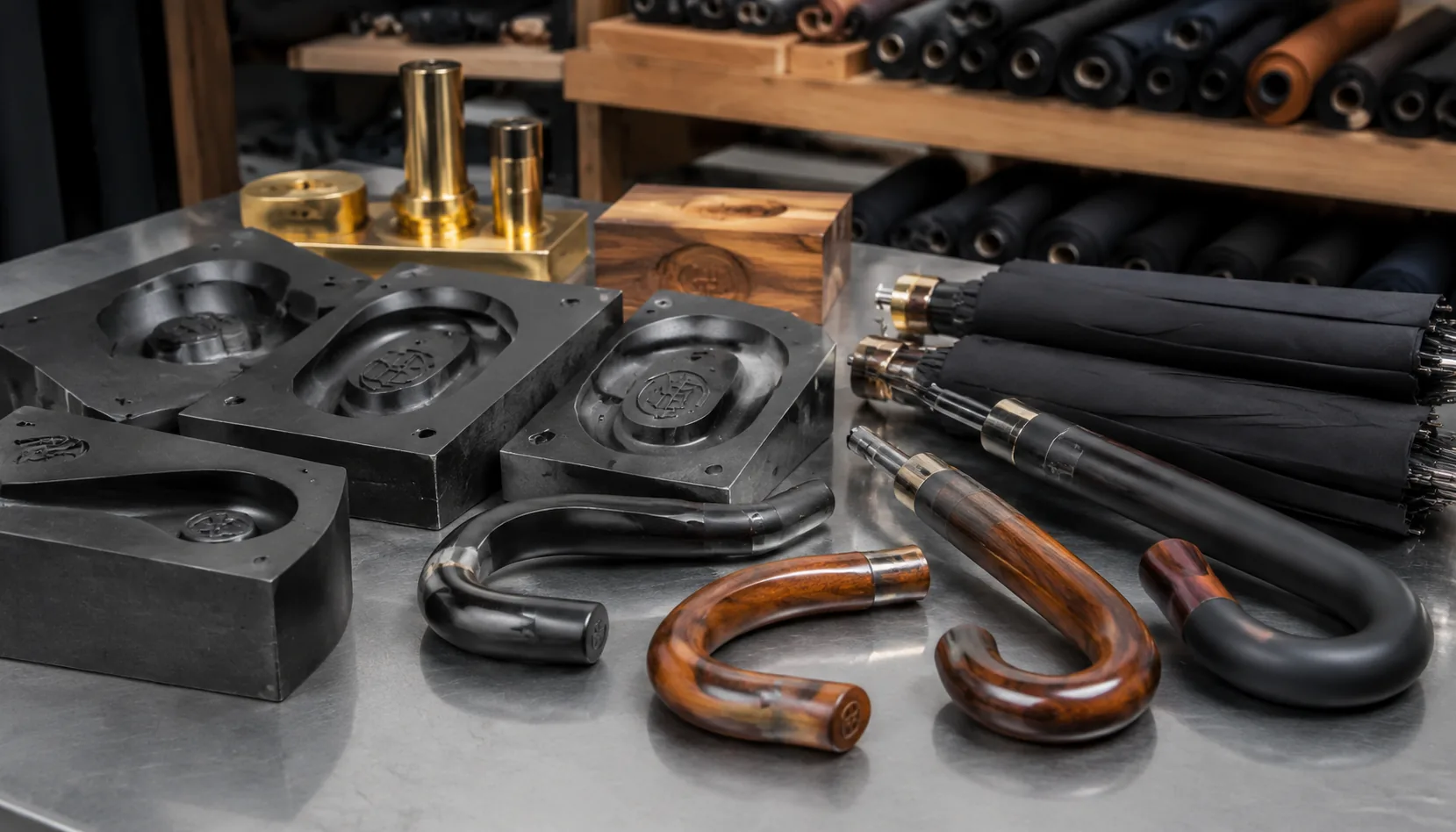
Debossed Logos on Umbrella Handles for Premium Branding
Use debossed or embossed handle branding to create a premium, durable identity on wood, EVA, or plastic umbrella handles...
Read More »Embossed Handle Logos on Umbrellas: OEM Options and Limits
Compare embossed, debossed, and molded handle logo options by material, MOQ, tooling, and lead time to choose a workable...
Read More »
Debossed, Engraved, or Printed Handles for Umbrella Branding
Evaluate debossed, engraved, and printed handle branding by material, durability, MOQ, and cost to select a logo treatme...
Read More »