Panel-by-Panel Color Blocking for Branded Umbrella Lines
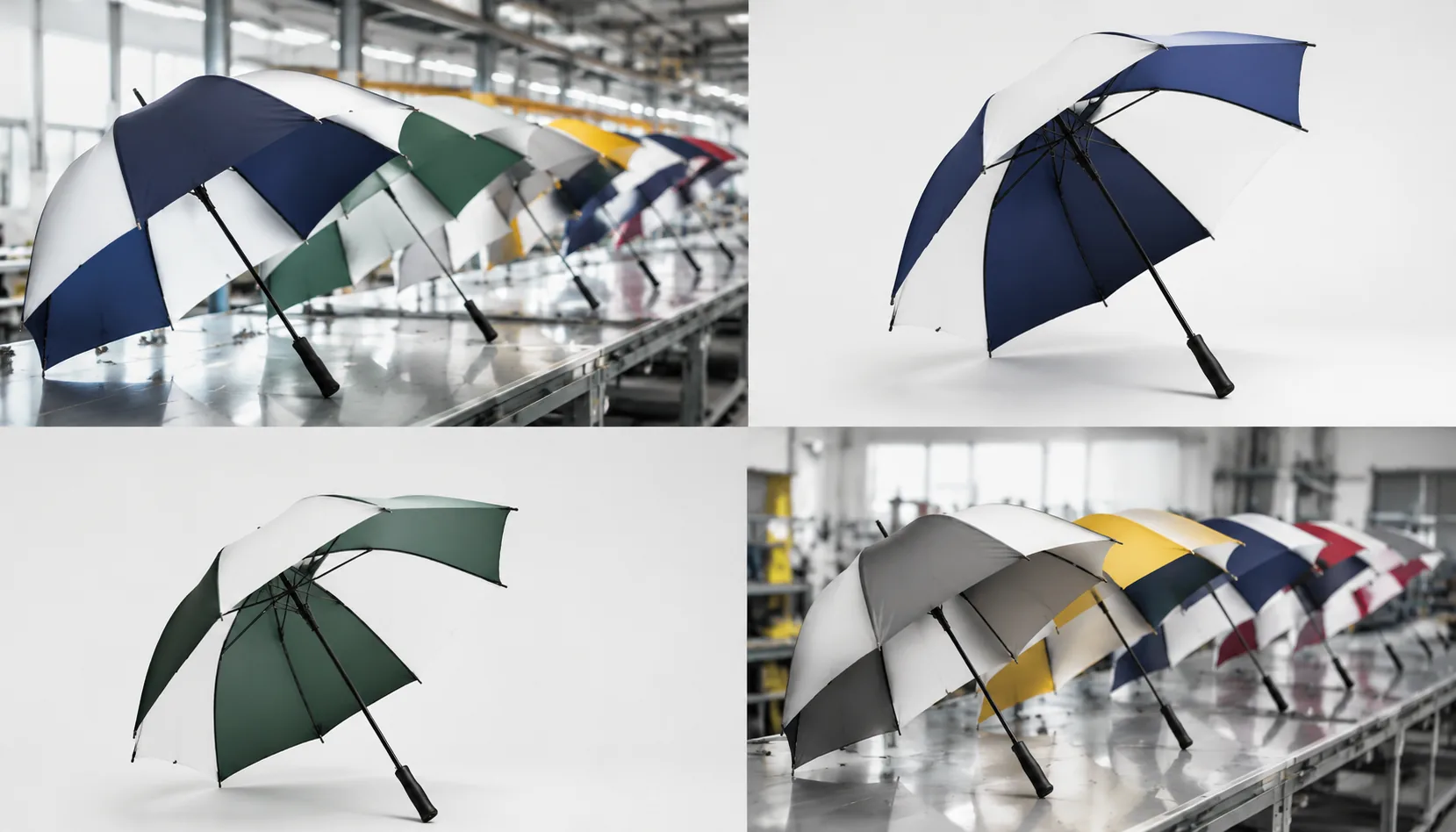
For branded umbrella programs, panel color choices look simple on a mockup but can create real production problems when fabric lots, rib count, logo placement, and sewing alignment are not specified together. A solid color block umbrella design starts with matching Pantone targets to available pongee or polyester stock, then confirming how each panel will land on the frame before cutting. On our Songxia floor, most rejects come from poor contrast, mixed dye lots, or panel sequences that QA cannot repeat at scale.
Building a Color Block Layout That Supports the Logo
The layout should be built around brand-color hierarchy first, not around making every panel busy. On an 8K or 10K canopy, alternating panels work well when the two colors have similar visual weight, such as navy and white or black and red. If one color is much stronger, I usually assign it to 2 or 3 accent panels instead of 4 or 5, because a heavy color can overpower the logo area from 10 meters away. For branded umbrella lines, the cleanest color block umbrella design often uses a dominant corporate color across 5 to 6 panels, a neutral support color across 2 panels, and one controlled accent panel facing the front presentation side. That keeps the umbrella recognizable without turning it into a fabric sample book. On 16K golf umbrellas, the same rule matters more because narrow ribs create more seams; too many alternating colors can make the canopy look fragmented after sewing tension is applied.
Split canopies need tighter control because the seam geometry can either frame the logo or cut the visual field in half. A left-right split on a 23 inch or 27 inch umbrella is useful for two-color brands, but the logo should sit on the calmer color field with enough contrast against 190T or 210T pongee. A top-bottom split is harder to execute cleanly on curved panels because the printed boundary may not read as a straight line after the canopy is stretched over steel or fiberglass ribs. For a panel color umbrella, I prefer radial splits that follow the rib lines; they are easier to cut, sew, and inspect under AQL 2.5 because color alignment can be judged at the seam. If the brand uses three colors, keep the tertiary shade as a narrow accent panel or piping detail, not a full repeated panel, unless the logo itself is extremely simple.
A good color block layout protects logo readability by managing contrast, empty space, and print method before artwork is approved. White logos on black, navy, royal blue, or dark green panels usually screen print cleanly, while small reversed text on red or orange can lose edge sharpness after heat-transfer pressing. For custom corporate umbrellas with UPF 50+ or Teflon-coated fabric, we test print opacity because coatings can change how ink sits on the canopy. Our standard practice at ZheBrella is to mock up the canopy by panel number, rib count, and viewing angle, then confirm whether the main logo still reads when the umbrella is open at waist height, not only in a flat AI file. Umbrella color customization should also account for handle, runner, tips, and sleeve color; a black EVA handle with matching sleeve can make a bold canopy feel intentional, while mismatched plastic parts make even good brand colors look cheap.
Choosing Stock Fabric Colors or Custom-Dyed Pongee
Stock 190T and 210T pongee is the faster, safer choice when a color block umbrella design can live within common factory shades: black, navy, royal blue, red, white, gray, yellow, orange, bottle green, and a few seasonal tones. In Songxia, most mills and canopy warehouses keep these colors ready in rolls wide enough for 21", 23", 27", and 30" cutting markers, so we can usually start panel cutting within 2-4 days after artwork approval. For promotional runs, that matters more than people think: an 8-panel umbrella with alternating navy and white panels uses two fabrics, but a 16K golf umbrella with four colors creates more roll changes, more shade-matching checks, and more leftover fabric. Stock pongee works well for custom corporate umbrellas where the logo print carries the brand identity and the canopy color only needs to be close, not legally exact.
Custom-dyed pongee is the correct route when the buyer has a strict brand system and the umbrella must match a Pantone reference under daylight, not just look acceptable in a PDF mockup. The normal process is Pantone TPX or TCX reference, mill lab dip, buyer approval, then bulk dyeing; one lab dip round usually takes 5-7 days, and bulk fabric adds roughly 10-15 days before cutting. A serious panel color umbrella program should approve fabric under D65 light, not office LEDs, because red, teal, purple, and fluorescent orange shift badly between light sources. Our standard practice at ZheBrella is to keep an approved swatch with the production file so incoming fabric, printed logo ink, binding tape, and sleeve material are checked against the same reference before sewing starts.
MOQ is the biggest difference between stock and custom fabric, and it should be decided before the design team falls in love with a six-color canopy. Stock 190T/210T pongee can support small branded umbrella lines from 300-500 pieces per style, depending on frame and print method. Custom-dyed pongee normally starts around 1,000-3,000 meters per color, which often means 1,500-3,000 umbrellas if the color appears on several panels, or a lot of unused cloth if it appears on only one accent panel. For umbrella color customization, I recommend stock colors for event giveaways and retail tests, custom dyeing for long-running brand programs, and a controlled hybrid for premium orders: stock black or navy on half the canopy, custom Pantone color on the hero panels, then AQL 2.5 inspection focused on shade variation, seam alignment, and panel symmetry.
How Rib Count Changes the Color Block Effect
Rib count decides the rhythm before the designer picks a Pantone number. An 8K umbrella gives you eight large triangular panels, so alternating colors read bold and clean from 10 to 20 feet away. A simple A/B/A/B layout works well for event giveaways, golf outings, and custom corporate umbrellas because each color has enough surface area to carry a logo without fighting the seams. On a 23" auto-open stick umbrella, each 190T or 210T pongee panel is wide enough for screen printing, heat transfer, or a small woven-label detail near the valance. The tradeoff is that every seam becomes more visible: eight seams create a slower visual rhythm, and any mismatch in cutting or sewing shows immediately at the tips. For a classic panel color umbrella, 8K is efficient, stable, and cost-controlled, especially when the frame uses steel ribs for budget lines or fiberglass ribs for better wind recovery.
A 16K layout changes the look completely because the canopy is divided into sixteen narrower wedges, doubling the seam count and tightening the visual beat around the crown. This is where a color block umbrella design starts to feel more premium, especially with narrow accent panels between wider brand-color groups. Instead of plain red/navy/red/navy, a buyer can specify twelve main-color panels plus four contrast panels, or use two accent panels opposite the logo to create directionality when the umbrella is open in a crowd. The factory challenge is sewing accuracy: with sixteen panels, small tolerance errors stack up around the top notch and runner, so cutting dies, seam allowance control, and rib spacing matter more. A 16K frame also adds labor and hardware cost, but it gives a rounder canopy profile and a smoother color transition, particularly on 27" and 30" golf umbrellas with double-canopy vented windproof construction.
For branded umbrella lines, I usually steer buyers toward 8K when the goal is strong retail visibility or simple umbrella color customization across multiple SKUs, and toward 16K when the umbrella itself needs to look engineered and high-end. An 8K canopy is better for large logo placement because fewer seams interrupt the print zone; a 16K canopy is better for pinstripe effects, radial gradients, and alternating narrow accents that would look clumsy on wider panels. Seam count also affects inspection: at AQL 2.5, we check panel alignment at the crown, seam puckering, rib-to-seam centering, and color placement sequence because one reversed panel ruins the whole pattern. Our standard practice is to approve a sewn pre-production sample, not just a flat artwork mockup, since tension over fiberglass ribs can shift the perceived width of each color block by 2–4 mm. That small change is invisible on a solid canopy but obvious on a premium color-block layout.
Pairing Color Blocks With Frame and Feature Specs
Frame choice should be locked before the artwork is approved, because a color block umbrella design that looks clean on paper can feel cheap if the ribs flex wrong or the shaft weight is mismatched. For retail branded umbrella lines, I usually push fiberglass ribs on 23" and 27" models, especially 8K or 10K layouts, because they recover better after gusts and reduce warranty complaints. Steel ribs still have a place on budget event giveaways where the target FOB cost matters more than long service life, but they bend permanently once overloaded. A 190T pongee canopy with steel 8K ribs is fine for a one-day launch or campus handout; a 210T pongee canopy with fiberglass ribs is a better baseline for custom corporate umbrellas expected to sit in a client’s car for two rainy seasons.
Mechanism cost also changes how panel color umbrella concepts should be specified. Manual open is cheapest and reliable, but it feels low-tier for executive gifts. Auto-open adds a small cost but makes a 23" stick umbrella feel retail-ready, while auto-open-close belongs mostly on 21" compact models where convenience drives the sale. If the design uses alternating dark and light panels, we check spring force carefully because uneven fabric tension after printing can make one panel pull harder at the seam. Our standard practice at ZheBrella is to test printed canopy samples through open-close cycles before bulk sewing, not after final assembly. For mid-budget corporate programs, I would rather spend money on a stable auto-open runner and fiberglass ribs than add decorative trims that do nothing in wind.
Double-canopy windproof construction is where umbrella color customization can become functional instead of only visual. A vented 27" golf umbrella with 8K or 16K fiberglass ribs can survive 50+ mph wind-tunnel tests when the upper and lower canopies are cut with proper air gap and seam allowance; if the vent is too tight, it just becomes extra fabric weight. For sun-rain programs, specify black UV coating or silver coating under 190T/210T pongee to reach UPF 50+, but remember that coating can slightly dull sublimation colors compared with untreated white fabric. Retail buyers usually accept the added cost because UPF labeling sells on shelf, while event planners often choose standard waterproof coating plus bold panel blocking to stay within budget. Corporate buyers sit in the middle: UPF 50+, auto-open, and fiberglass ribs make sense for board-level gifts, but not for a 5,000-piece trade-show MOQ where DDP landed cost controls the decision.
Approvals, Inspection, and Delivery Terms
Approvals should lock the canopy before the frame goes into bulk assembly, because panel sequence errors are expensive to correct after sewing. For a color block umbrella design, we first approve a digital panel map showing rib count, color position, logo orientation, and seam direction: 8K layouts are straightforward, while 10K or 16K umbrellas need clearer numbering because the visual repeat changes around the shaft. The sample canopy should be cut from actual bulk fabric, not a close substitute, especially when using 190T or 210T pongee with Teflon, UV UPF 50+, or silver coating. Pantone approval under D65 light is useful, but I also ask buyers to check indoor LED and outdoor daylight because navy, charcoal, and deep green can shift badly. For branded umbrella lines, the signed sample should include the printing method too, whether screen print, heat transfer, or sublimation, since ink thickness changes how adjacent panels read.
The pre-production sample is the production contract in physical form. It should confirm canopy diameter, rib material, shaft finish, handle, tips, closure strap, sleeve, carton marks, and mechanism: manual, auto-open, or auto-open-close. On a panel color umbrella, our standard practice at ZheBrella is to photograph the open canopy from top view and mark panel 1 at the strap position so sewing lines have a reference. During AQL 2.5 inspection, color mismatch and wrong panel order are not treated as cosmetic trivia; they are functional brand failures for custom corporate umbrellas. Inspectors should open samples fully, rotate them panel by panel, compare against the signed layout, and check seam tension because puckering between dark and light panels makes the umbrella look twisted. For double-canopy vented windproof models, both upper and lower canopy colors need inspection, as factories sometimes correct the visible outside and miss the vent layer.
Lead-time planning depends on how much umbrella color customization is involved. A normal solid-color stock fabric order can move in 25–35 days after deposit and artwork approval, but custom-dyed pongee, mixed panel cutting, or retail packaging usually pushes production to 40–55 days. Add 5–7 days for sample making, 2–4 days for buyer approval if comments are clear, and another 3–5 days for final inspection, rework, and carton booking. FOB Ningbo or Shanghai is cleaner when the buyer has a forwarder and wants control of ocean freight, insurance, and destination charges. DDP is better for overseas programs with multiple event locations or distributors who do not want to handle customs, duty, trucking, or last-mile delivery. The risk with DDP is schedule opacity, so buyers should ask for carton dimensions, gross weight, HS code, and dispatch milestones before bulk production starts.
Frequently Asked Questions
Is panel-by-panel color blocking cheaper than full-surface printing?
Often yes when stock fabric colors are used, because the color comes from sewn fabric panels rather than full-canopy ink coverage. Custom-dyed panels can increase MOQ and lead time.
Can each umbrella panel use a different Pantone color?
Technically yes, but every custom fabric color may require lab dips, dyeing MOQ, and separate QC checks. Buyers usually limit the palette to two to four colors for cost and consistency.
How many panel colors can be used on one custom umbrella order?
Most OEM umbrella orders use 2 to 4 fabric colors across 8 panels for clean production and consistent QC. More colors are possible, but they may increase material loss, sewing complexity, and MOQ.
What rib count is best for panel-by-panel color blocking?
An 8-rib umbrella is the most common choice because each panel is large enough for clear color separation and logo visibility. A 16-rib frame allows more detailed color patterns but usually requires tighter sewing tolerance and higher inspection standards.
Can the factory match brand colors exactly for umbrella panels?
Factories can match Pantone or provided fabric swatches, but exact color depends on polyester type, coating, and dye lot. For bulk orders, buyers should approve a pre-production fabric strike-off before mass production.
Looking to Launch Your Custom Umbrella Line?
ZheBrella is a Zhejiang-based OEM/ODM umbrella manufacturer with 17 years of export experience. Free design, low MOQ from 100 pieces, windproof construction, full-color print.
Get Free Quote Now »People Also Search For
Related Articles
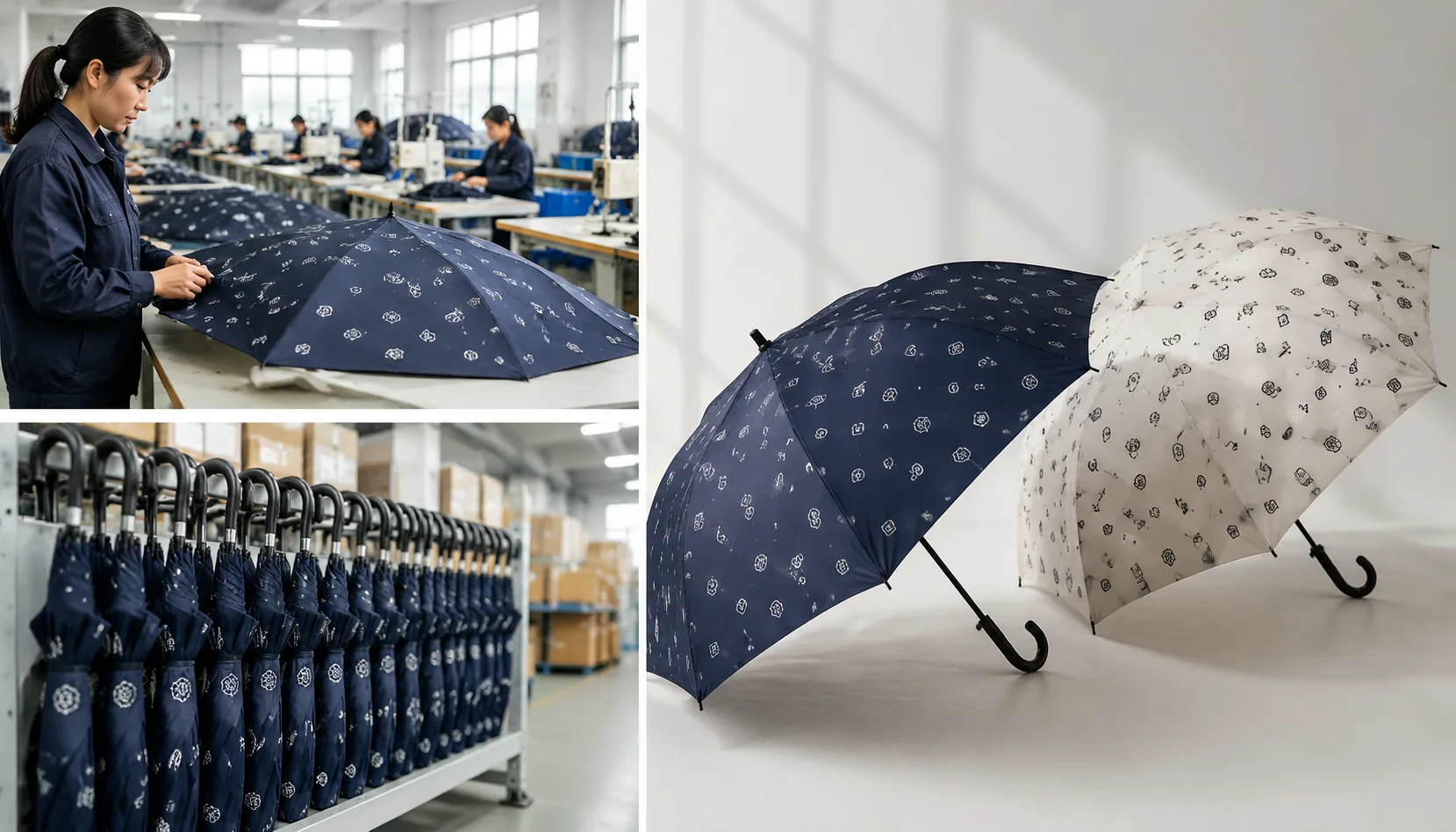
Repeat Logo Pattern Printing for Branded Umbrella Lines
Plan repeat logo umbrella prints with panel layout, fabric choice, sampling, and QC controls for retail, promo, and priv...
Read More »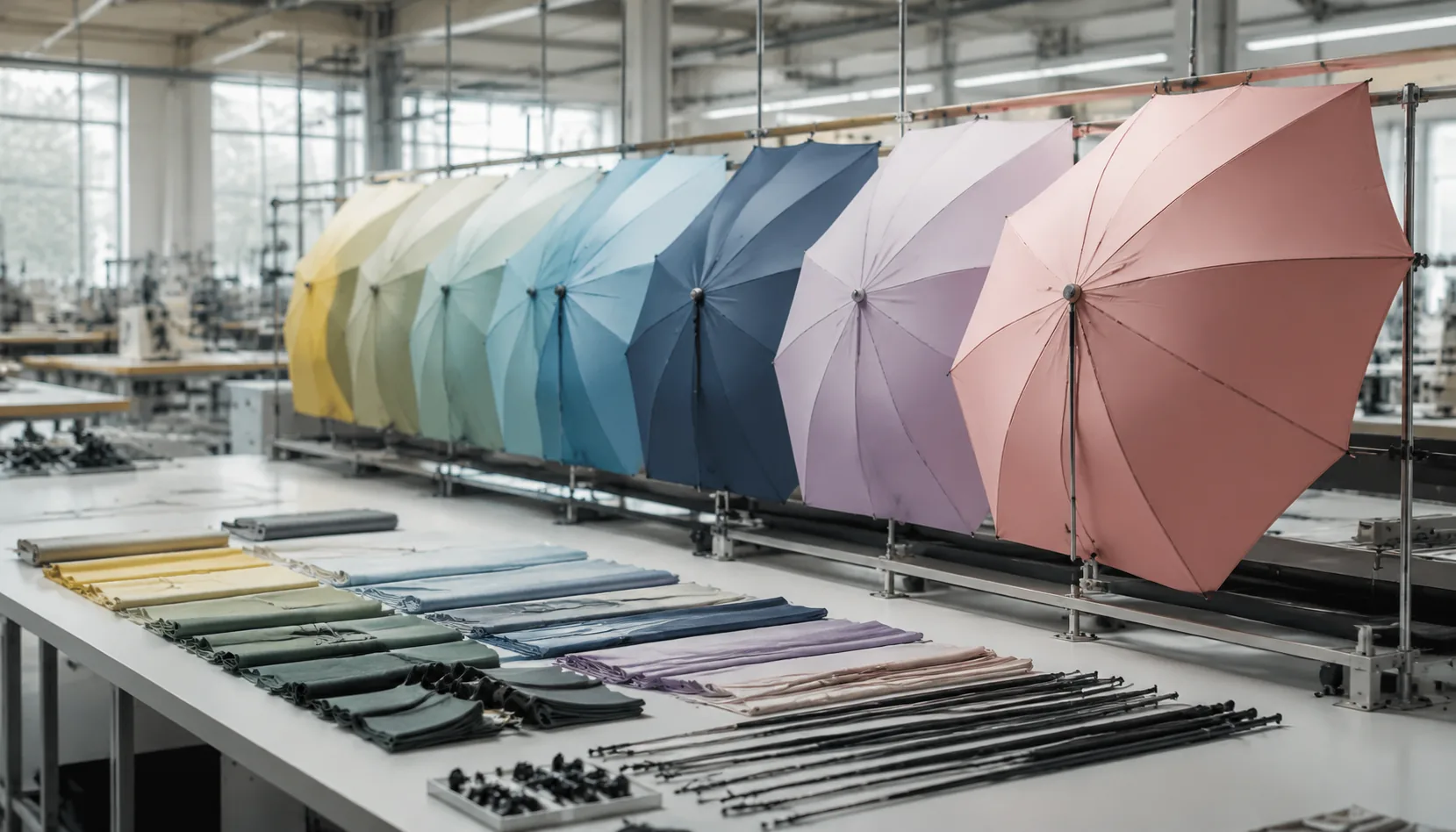
Gradient Color Umbrella Canopies for Retail Brand Lines
Build gradient umbrella designs with realistic color control, panel matching, fabric choices, and approval steps for ret...
Read More »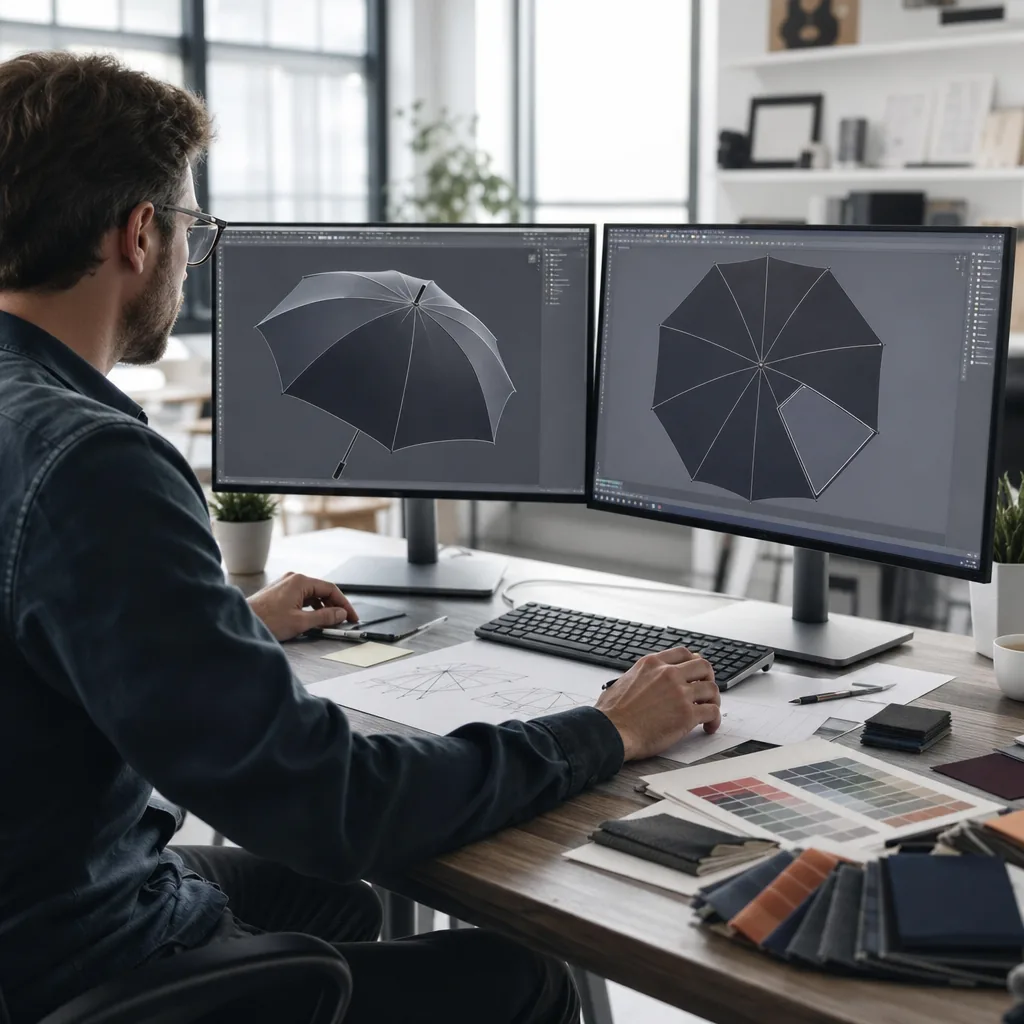
Using Contrast Panels and Trim Colors to Strengthen Umbrella Branding
Show buyers how contrast panels, trim colors, and accent details can make umbrella logos read faster while keeping premi...
Read More »