Private Label Umbrella Specs That Reduce Retail Returns
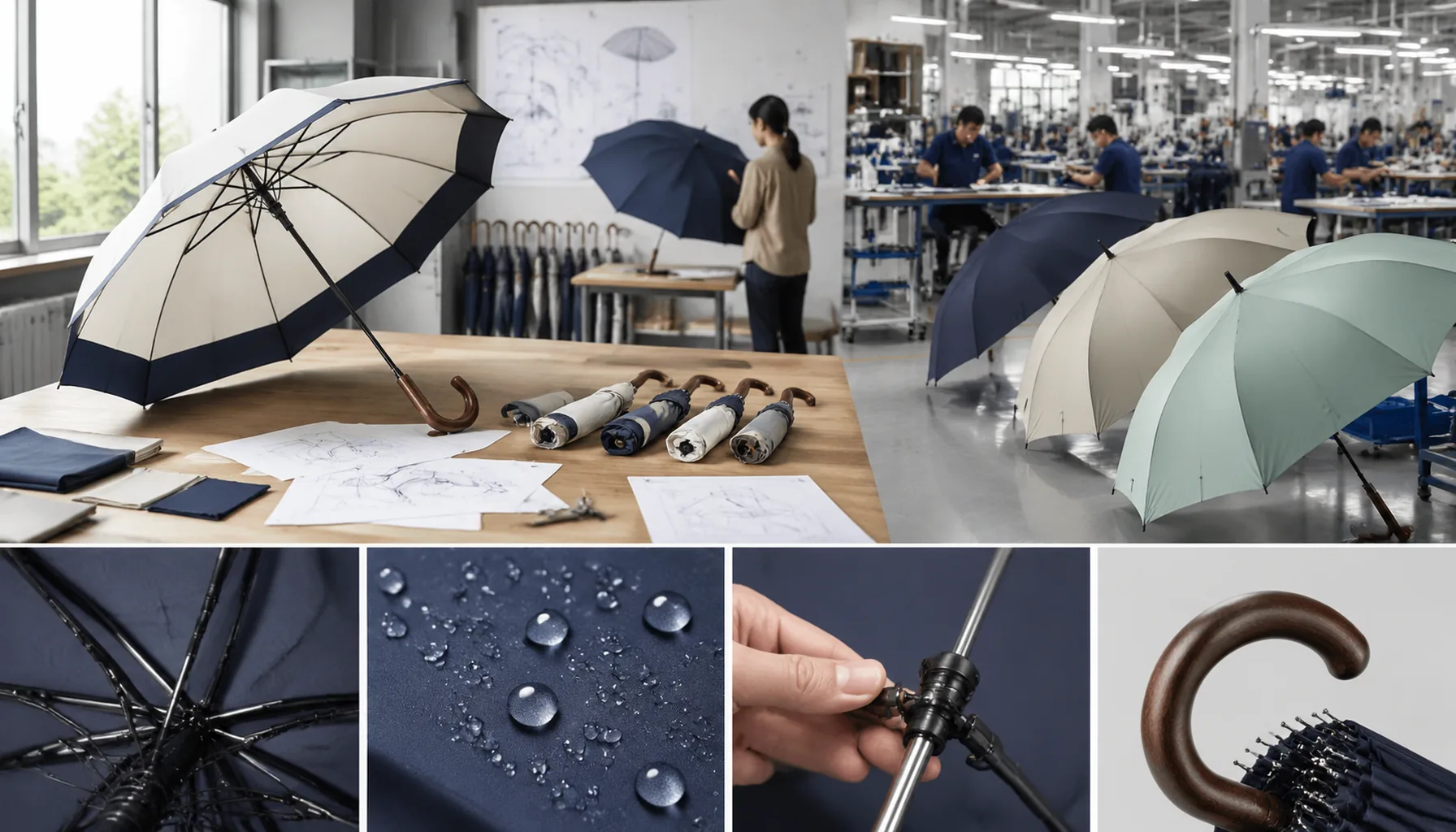
Retail returns usually start long before the umbrella reaches the shelf: a canopy that wets through, ribs that twist after the first gust, an auto-open button that feels weak, or a label that fails compliance review. On our Songxia factory floor, private label umbrella specs are treated as a control sheet for fabric coating, frame strength, cycle testing, packing, AQL inspection, and shipment terms—because every vague line in a PO becomes a risk at retail.
Match Umbrella Type to the Retail Shelf
The fastest way to cut returns is to stop forcing one umbrella type onto every shelf position. Straight umbrellas sell well as mid-price commuter items because a 23" or 27" canopy looks substantial on a hook, the shaft feels stable in the hand, and the mechanism is usually simple manual or auto-open. A steel shaft with fiberglass ribs is safer than all-steel ribs for windy-city programs, while a full fiberglass frame raises cost but reduces bent-rib complaints. A 190T pongee umbrella with Teflon coating, plastic crook handle, and 8K ribs usually fits a value-to-mid retail slot; 210T pongee, wood handle, 10K ribs, and UPF 50+ coating push perceived value higher. Return risk is moderate: straight umbrellas are less compact, but failures are easier to control because fewer moving joints mean fewer spring, runner, and telescopic shaft problems.
3-fold umbrellas belong where packed size matters more than canopy presence: convenience retail, travel sets, corporate gift walls, and checkout-adjacent displays. A 21" auto-open-close 3-fold can command a higher price than a manual mini, but it also carries the highest return risk if the spring, button, or telescopic shaft is under-specified. For private label umbrella specs, I prefer fiberglass middle ribs, zinc-alloy or reinforced plastic runners, and cycle testing beyond 500 open-close operations before mass production. Cheap 3-folds with thin steel ribs and loose shaft locks often pass a casual pre-shipment check but come back after two rainstorms. Packed length is the selling point, usually 10" to 12", yet the carton must protect handles and tips; crushed gift boxes create retail deductions even when the umbrella itself is fine.
Golf and reverse umbrellas should be treated as higher-ticket, lower-velocity items in retail umbrella sourcing. A 30" golf umbrella with 8K or 16K fiberglass ribs, EVA foam handle, and double-canopy vented windproof construction gives strong perceived value and can survive 50+ mph wind-tunnel claims if the frame is honestly built. Reverse umbrellas sell on convenience and novelty, especially for car users, but the double-layer canopy adds sewing complexity and weight; poor rib balance causes awkward closing, which shoppers read as a defect. Typical custom umbrella MOQ for private-label colorways is 600 to 1,200 pieces per model, while logo-only variations can start around 300 to 500 pieces if fabric is in stock. For umbrella AQL inspection, use AQL 2.5 for major defects and inspect mechanism function, seam leakage, print alignment, barcode labels, and packed size against the approved counter sample.
Specify Materials Buyers Can Verify
The fastest way to cut returns is to write private label umbrella specs around materials a buyer can verify before shipment, not vague words like “premium” or “windproof.” For fabric, 190T pongee is the normal retail workhorse: tight enough for good print definition, smooth hand feel, and reliable water beading when paired with a Teflon or equivalent water-repellent finish. A 190T pongee umbrella is usually the right cost-performance choice for promotional retail, grocery, and travel channels. 210T pongee has a denser weave and slightly heavier feel, so it drapes better on 23" and 27" models and looks cleaner on solid dark colors, but it adds cost and can expose weak sewing if the factory uses the same needle and stitch settings as 190T. On incoming checks, buyers should verify fabric by roll label, GSM range, colorfastness, coating uniformity, and a simple spray test after opening and closing the umbrella 20 times.
Frames drive most bad reviews because customers feel rib failure immediately. Steel ribs are cheap and rigid, but they bend permanently after inversion and add noticeable weight on 23" and 27" umbrellas. Fiberglass ribs flex back better, especially on 8K and 10K frames, and are the safer choice when the retail claim includes “wind resistant.” A full fiberglass 8K frame can survive common gusts if the canopy tension is balanced; a 16K frame looks stronger on a spec sheet but adds sewing points, weight, and more chances for inconsistent rib alignment unless the rib tips are set accurately. For retail umbrella sourcing, I would rather see a well-made 8K fiberglass frame tested to 40–50 mph than a heavy 16K steel frame with no wind-tunnel data. If using a double-canopy vented design, specify fiberglass ribs and reinforced runner joints, because the vent only helps if the frame can twist without cracking.
Shaft and handle choices should match the return risk you are trying to avoid. Steel shafts are stronger in low-cost stick umbrellas, but they rust if plating is thin or salt-spray testing is skipped; aluminum shafts reduce weight on compact auto-open-close models but can dent if wall thickness is under-specified. Wood handles look good for department-store programs, yet moisture movement can loosen screws unless the handle is dried and sealed properly. Rubberized ABS, EVA foam, and PP handles are more predictable for mass retail, but buyers should check odor, surface scratches, and pull strength. Our standard practice at ZheBrella is to tie private label umbrella specs to umbrella AQL inspection points: rib symmetry, shaft wobble, runner lock force, handle pull test, canopy leakage, and print rub resistance under AQL 2.5. Also define the custom umbrella MOQ by construction, because a 500-piece logo order and a 3,000-piece private label run should not use the same material control plan.
Set Mechanism and Durability Requirements
Mechanism failures create returns faster than fabric complaints, so private label umbrella specs should define cycle testing before color, handle shape, or carton artwork. For manual umbrellas, I would require 500 open-close cycles on 21" and 23" compact models and 300 cycles on larger 27" or 30" golf frames, with no runner sticking, loose rivets, bent stretchers, or canopy pull-out at the tips. Auto-open units need the same cycle check plus spring rebound testing: the shaft should lock cleanly at full extension, the runner should not bounce back, and the push button should stay flush after release. For auto-open-close, test both directions separately because closing springs often pass the first 50 cycles and start losing force around 200 cycles if the spring wire or plastic button housing is underbuilt.
Runner smoothness is not a cosmetic detail; it tells you whether the frame was assembled with correct hole alignment, rivet pressure, and notch tolerance. In retail umbrella sourcing, I reject samples where the runner scrapes the shaft coating, needs two thumbs to lock, or closes with a sharp snap that can pinch fingers. Common failure points are predictable: zinc alloy buttons cracking, plastic notches deforming, steel ribs rusting at drilled holes, fiberglass ribs delaminating after reverse flex, and 8K compact frames twisting when the canopy is too tight. A 190T pongee umbrella with good Teflon finish still comes back if the spring is weak or the top cap unscrews after vibration testing. Our standard practice at ZheBrella is to combine mechanism checks with umbrella AQL inspection, usually AQL 2.5 for major defects, because a pretty sample means little if bulk production has uneven spring tension.
Double-canopy windproof construction is worth the added cost when the buyer sells golf umbrellas, commuter umbrellas in coastal cities, or premium private label umbrella specs where return risk matters more than saving $0.40 to $0.90 per unit. A vented 8K or 10K fiberglass frame lets gusts bleed through the canopy instead of flipping the ribs, and a 27" or 30" model can survive 50+ mph wind-tunnel testing if rib thickness, stretcher length, and canopy tension are balanced. It is usually overkill for low-cost event giveaways with a tight custom umbrella MOQ, where a simple manual 23" steel-frame umbrella may be acceptable. For retail, specify the wind rating, rib material, rib count, shaft diameter, and cycle requirement in the purchase order so the factory cannot swap to a cheaper spring, thinner rib, or single-canopy construction after sample approval.
Build Compliance, Labeling, and Packaging Into the Spec
Retail returns often start with boring spec omissions, not broken umbrellas. For private label umbrella specs, I want every care label, hangtag, barcode, sleeve, inner carton, and master carton drawing approved before bulk fabric is cut. The care label should state canopy fabric, frame material if required by the retailer, basic use warnings, drying instructions, and country of origin in the exact language the sales channel needs. A 190T pongee umbrella with a Teflon finish should not carry the same care language as a POE clear dome or PVC kids umbrella, because heat, folding pressure, and solvent migration behave differently. Hangtags need SKU, color, size such as 21 inch compact or 23 inch stick, manual or auto-open mechanism, and any warranty wording matched to the purchase order. If the buyer wants UPF 50+ on the tag, carton, or online listing, we require a fabric and coating test report for that exact material lot, not a general supplier promise.
Barcode placement is a production detail, but it controls scan errors at receiving and checkout. For retail umbrella sourcing, we normally place UPC/EAN labels on the lower back of the retail sleeve or hangtag, away from seams, curved handle contact, and glossy folds that cause scanner reflection. Retail sleeves should be spec’d by material and thickness: OPP bag, printed paper sleeve, fabric self-sleeve, or hook-ready pouch, with suffocation warning if plastic bag rules apply. For auto-open-close compact umbrellas, the sleeve tolerance matters because a tight sleeve makes customers force the wet canopy back in, bending 8K steel ribs or stressing fiberglass tips. Inner cartons should separate colors or SKUs cleanly, usually 12 or 24 pieces, with carton labels showing PO number, SKU, color, quantity, gross/net weight, and carton number. Mixing black, navy, and charcoal in one unlabeled carton is how stores receive the wrong assortment and blame the umbrella, not the packing plan.
Master cartons need to survive export handling, not just look acceptable at the factory gate. I prefer 5-ply K=A or B=C cartons for heavy 27 inch golf umbrellas and reinforced corners when the carton exceeds 15 kg, especially for DDP shipments with multiple warehouse touches. Country-of-origin marking should appear on the product label and outer carton exactly as required, typically “Made in China,” and should not be hidden under a retail sticker. Umbrella AQL inspection should include packaging checks under the same sampling plan as product function, commonly AQL 2.5 for major defects, covering barcode scan rate, carton drop condition, sleeve fit, label adhesion, and master carton print accuracy. Custom umbrella MOQ also affects packaging cost: a printed sleeve may be practical at 1,000 pieces, while a molded insert or multi-color retail box may need 3,000 to 5,000 pieces to avoid expensive setup amortization. Good private label umbrella specs make compliance visible before shipment, not after the retailer rejects cartons at the DC.
Approve Production With AQL and Shipping Terms
Do not approve bulk production from a quotation sheet alone; approve it from a signed pre-production sample with every critical point tagged. For private label umbrella specs, that means canopy fabric such as 190T pongee umbrella cloth, rib material, shaft diameter, handle color, logo size, print position, sleeve, hangtag, barcode, carton mark, and opening mechanism all matched against the PO. I like to keep one sealed golden sample in the sewing line and one in QC, because “same as sample” is useless if the sample is sitting in a buyer’s office overseas. For retail umbrella sourcing, confirm the packed look too: polybag warning text, retail label orientation, master carton quantity, and whether the umbrella is packed dry after water testing. A good PO names the approved sample date and version, not just the item number.
Inline checks catch the expensive mistakes before they become 10,000 finished umbrellas. On the frame line, inspectors should pull units for rib symmetry, runner movement, spring lock strength, tip alignment, and shaft straightness; on sewing, they should check panel tension, stitch density, seam puckering, top notch reinforcement, and logo registration. For printing, screen print and heat-transfer color should be checked under consistent light, not guessed from a phone photo. Final umbrella AQL inspection should normally be AQL 2.5 for major defects and 4.0 for minor defects, with a tighter critical-defect rule for sharp edges, broken tips, mold, wrong barcode, or failed open-close function. Our standard practice at ZheBrella is also to run carton drop checks after packing, especially for 23-inch and 27-inch stick umbrellas where handle impact can crack weak cartons.
Shipping terms and timing belong inside the PO, not in a WeChat thread. State FOB Ningbo or Shanghai if your forwarder controls freight, or DDP if you want landed delivery with duty and last-mile cost included; the unit price, responsibility transfer point, carton dimensions, gross weight, and HS code assumptions should match the term. Lead time should be written as sample approval plus production days, for example 7–10 days for revised samples and 30–45 days for bulk after deposit and artwork approval, longer for custom molds or UPF 50+ coatings. Add a reorder buffer based on sell-through, not optimism: retail programs often need 15–25 extra days for vessel delays, customs exams, and DC appointment queues. For private label umbrella specs, list the custom umbrella MOQ, approved inspection standard, allowed shipment tolerance, and whether reorders can use the same trims and packaging without re-approval.
Frequently Asked Questions
What is a practical MOQ for private label retail umbrellas?
Many factories start around 500–1,000 pieces per style for standard fabrics and handles. Custom molded handles, exclusive Pantone fabric, or new frame tooling can raise the MOQ.
Should retailers choose 190T or 210T pongee?
190T pongee is a common balance of cost, printability, and water repellency. 210T feels denser and more premium, but buyers should confirm weight, coating, and colorfastness in the approved sample.
What umbrella specs most often reduce retail returns?
The highest-impact specs are 190T pongee or better canopy fabric, fiberglass or reinforced ribs, tested auto-open mechanisms, rust-resistant shafts, strong seam stitching, and secure tips. For retail programs, buyers should also define carton drop-test requirements, barcode placement, warning labels, and replacement limits before production.
What AQL level should importers use for private label umbrella inspections?
Many umbrella importers use General Inspection Level II with AQL 2.5 for major defects and AQL 4.0 for minor defects. Critical defects such as sharp exposed parts, broken mechanisms, or incorrect safety labels should usually be set at 0 tolerance.
How should MOQ and lead time be planned for a custom retail umbrella order?
A practical MOQ often starts around 500 to 1,200 pieces per style depending on fabric, frame, printing, and packaging. Production lead time is commonly 30 to 45 days after sample approval, with extra time needed for custom molds, retail packaging, or DDP delivery planning.
Looking to Launch Your Custom Umbrella Line?
ZheBrella is a Zhejiang-based OEM/ODM umbrella manufacturer with 17 years of export experience. Free design, low MOQ from 100 pieces, windproof construction, full-color print.
Get Free Quote Now »People Also Search For
Related Articles
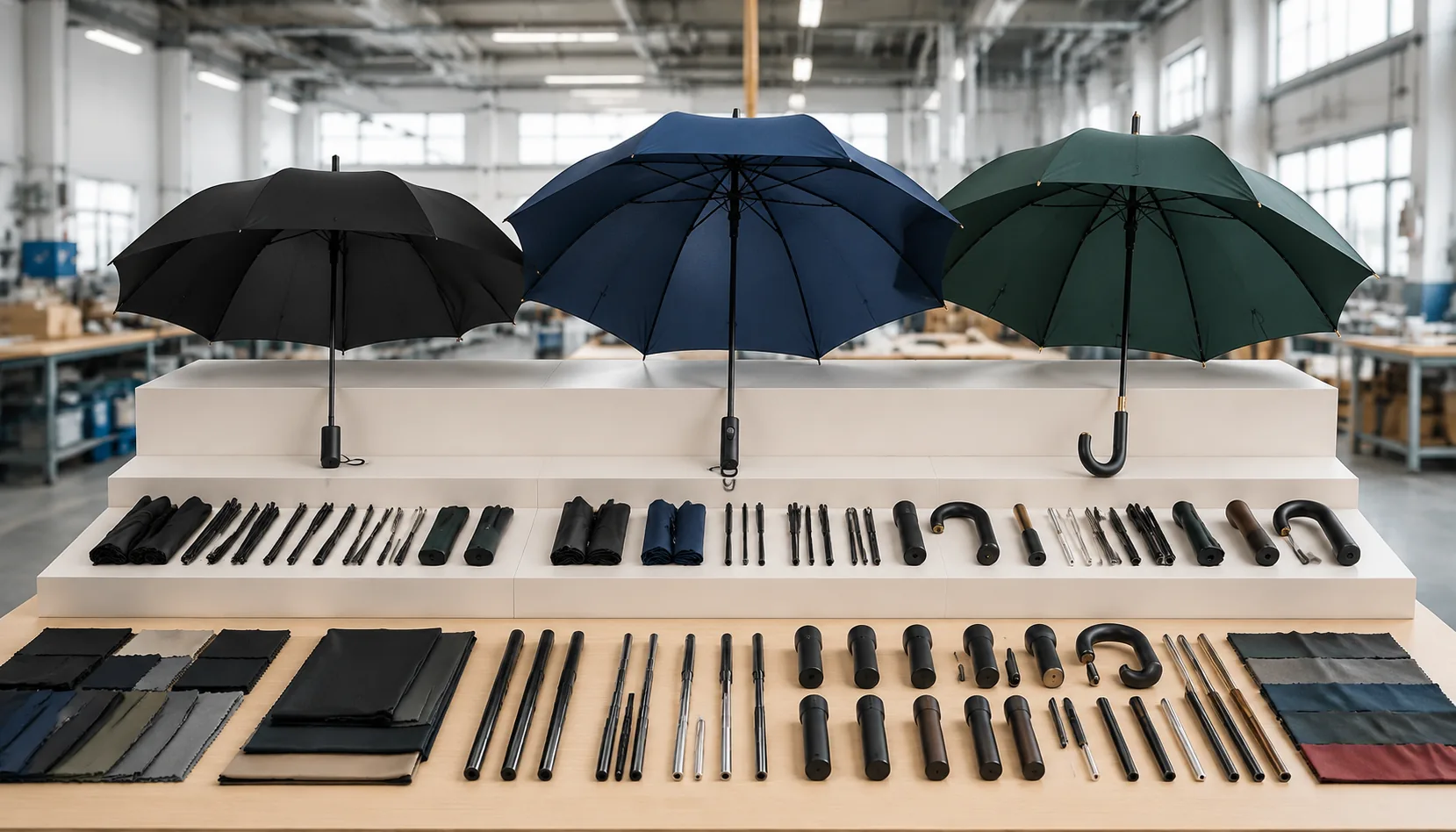
Private Label Rain Umbrellas: Good-Better-Best Specs
Build a good-better-best umbrella line with fabric, rib, mechanism, QC, MOQ, and packaging specs that fit retail price t...
Read More »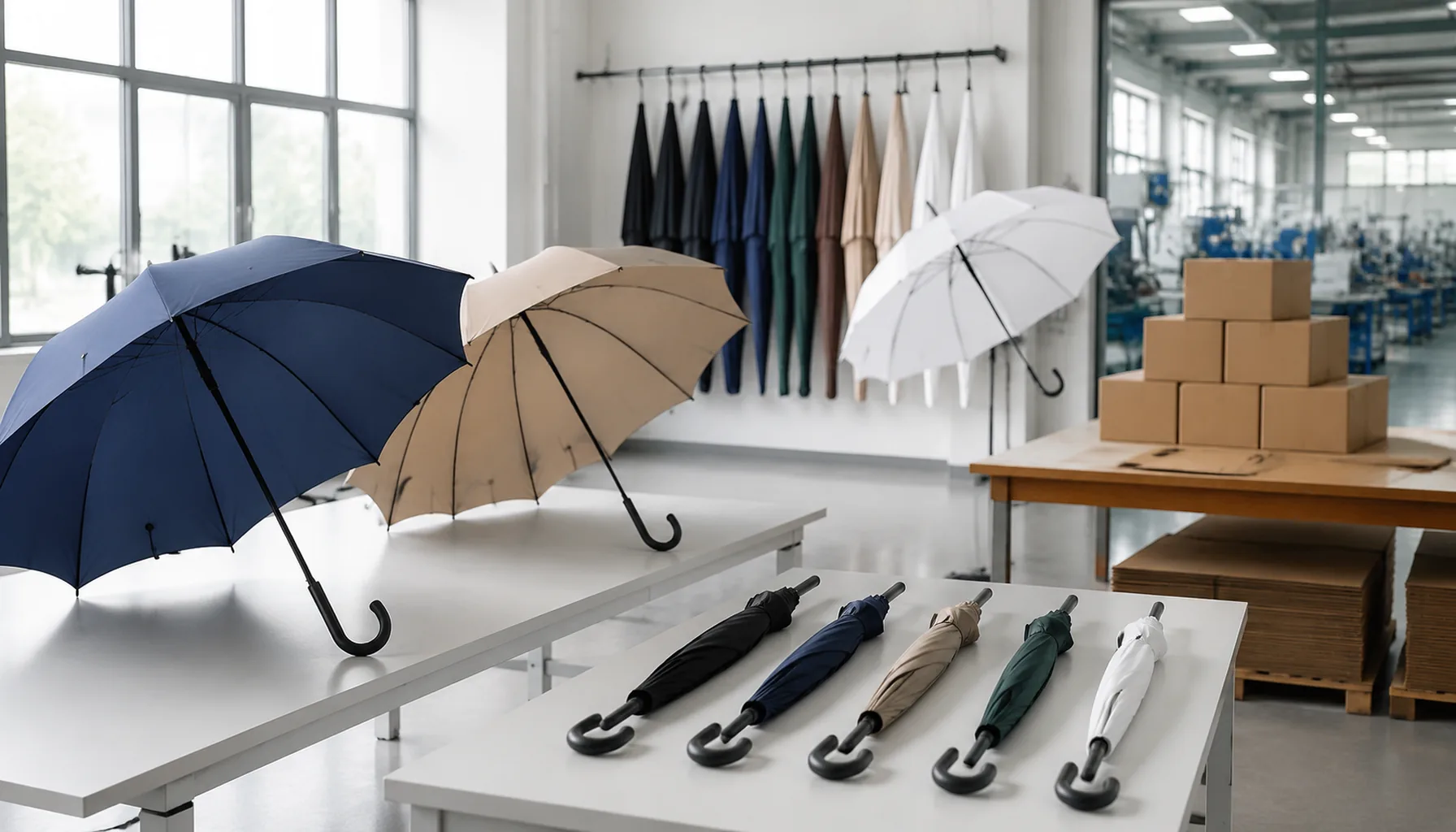
Private Label Rain Umbrellas: Retail Specs and Carton Planning
Plan retail-ready private label umbrellas with fabric, frame, packaging, barcode, carton, MOQ, and inspection specs buye...
Read More »
Luxury Wooden Handle Umbrellas for Retail Private Label
Build retail-ready wooden handle umbrellas with 16K frames, 210T pongee, branded details, packaging specs, FOB/DDP terms...
Read More »