Private Label Rain Umbrellas: Retail Specs and Carton Planning
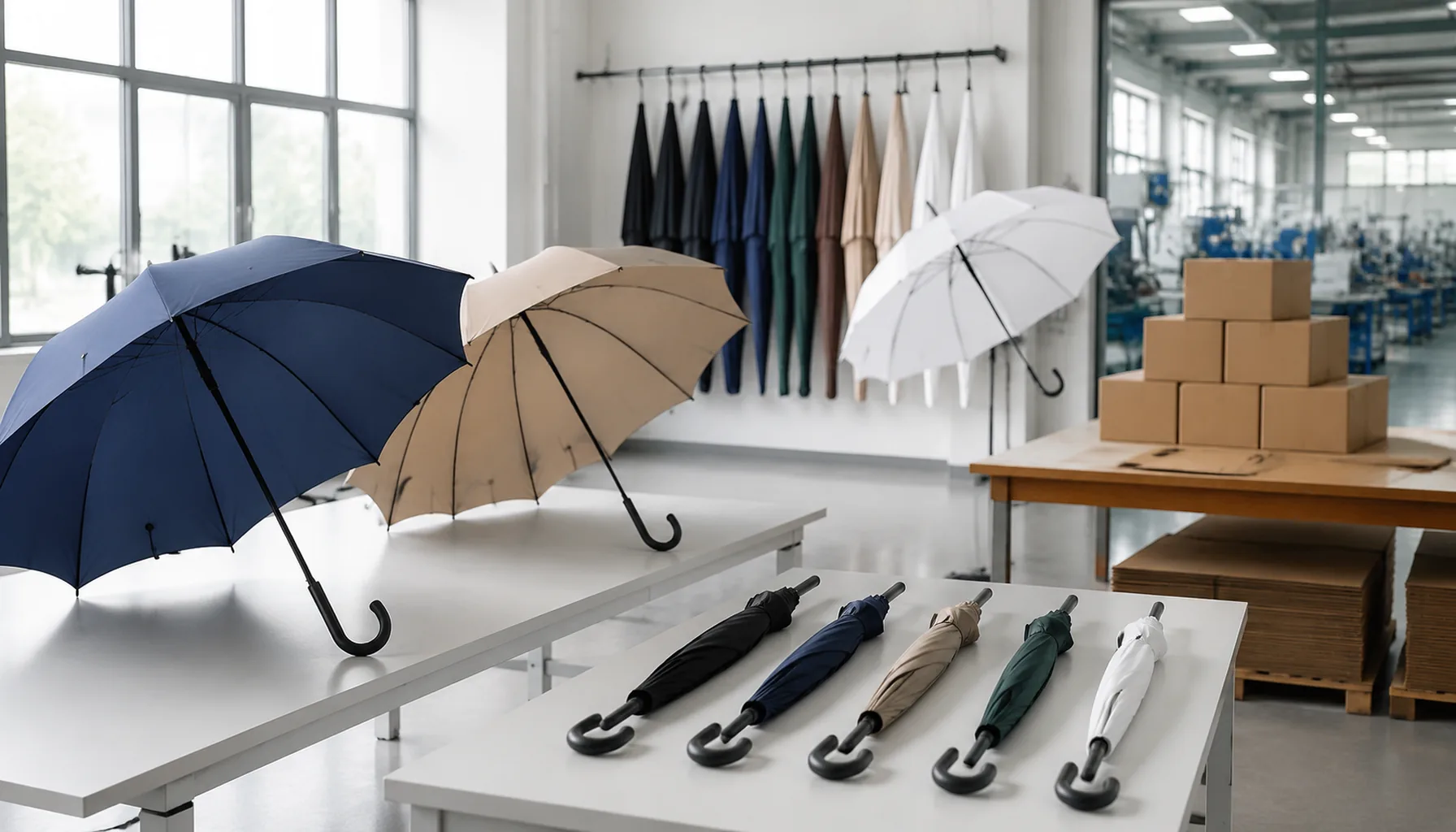
Retail-ready private label rain umbrellas fail most often in the gaps between the spec sheet and the packing line: a nice canopy fabric means little if the hangtag, barcode, sleeve, carton mark, and drop-test weight are not locked before bulk production. On our Songxia factory floor, we plan each order backward from shelf presentation, carton loading, and final AQL inspection so buyers can avoid rework, mixed SKUs, and shipment delays.
Define the Retail Umbrella Assortment
Start the assortment by assigning each umbrella to a real selling job, not by chasing the cheapest frame. For private label rain umbrellas, I usually map four core slots: a 21" compact 3-fold for handbags and commuter bags, a 23" straight stick for daily city use, a 27" or 30" golf umbrella for family and outdoor coverage, and a 17" to 19" kids’ umbrella with POE or pongee canopy and rounded plastic tips. The compact should finish around 38–42" arc diameter, the stick around 46–48", and the golf model around 54–62" depending on whether the buyer wants trunk storage or true course coverage. For retail umbrella sourcing, this use-case map prevents SKU overlap: a 23" stick and a 24" 3-fold often compete with each other unless the handle, fabric, and mechanism are clearly separated.
Rib count should follow price tier and wind claim. Entry compact umbrellas can use 8K steel ribs with 190T pongee umbrellas fabric, manual open, and a plastic straight handle; that is the good tier for supermarkets, events, and seasonal bins. The better tier moves to 8K fiberglass ribs or fiberglass mid-ribs, auto-open on 3-fold or stick models, 190T/210T pongee with water-repellent coating, and a rubberized or EVA handle. The best tier uses 10K or 16K fiberglass ribs, double-canopy vented construction on golf umbrellas, Teflon coating or UPF 50+ fabric where needed, and a smoother auto-open or auto-open-close mechanism. I do not recommend 16K ribs on every SKU; they add weight and cost, and they make more sense on premium stick and golf models than on a low-ticket pocket umbrella.
Carton planning starts at the assortment stage because frame length, handle shape, and retail packaging decide cube more than fabric does. A 21" 3-fold in sleeve can pack 48 or 60 pcs per export carton, while a 23" straight stick often drops to 24 pcs because the shaft length and J-handle create dead space. Golf umbrellas usually run 12 or 24 pcs per carton depending on 27" versus 30" size, and kids’ umbrellas often pack 36 or 48 pcs if the safety tips and hang tags are designed early. For umbrella carton packing, confirm inner polybag, retail sleeve, display box, hang tag, and umbrella barcode packaging before PP sample approval; changing barcode stickers to printed sleeves after production can delay shipment by 3–5 days. Our standard practice at ZheBrella is to lock carton dimensions, gross weight, barcode position, and AQL 2.5 inspection points in the spec sheet before cutting bulk fabric.
Specify Fabric, Frame, and Mechanism Details
Fabric choice is the first retail signal buyers notice, and it also drives complaint rates after launch. For private label rain umbrellas, 190T pongee is the practical baseline: tight enough for clean screen printing, smoother than polyester taffeta, and cost-efficient for promotional or mid-market retail programs. 210T pongee has a denser hand, better opacity on dark colors, and a more premium sound when rain hits the canopy, but it adds cost and slightly longer drying time if the DWR is weak. I would not specify “pongee” alone on a PO; write 190T or 210T, color fastness requirement, coating, and print method. 190T pongee umbrellas with a decent water-repellent finish often pass retail expectations, while 210T makes more sense for gift-boxed, department-store, or branded travel umbrella lines where touch and drape matter.
Frame language needs the same discipline because “windproof” is abused in retail umbrella sourcing. Steel ribs are cheaper and strong in a static pull test, but they bend permanently after gust loading, especially on 21 inch and 23 inch compact umbrellas with thin rib stock. Fiberglass ribs flex back better and are the right choice for 8K or 10K rain umbrellas sold with wind-resistance claims; for golf sizes like 27 inch or 30 inch, fiberglass ribs plus a fiberglass or steel shaft can survive 50+ mph wind-tunnel targets when the canopy tension is correct. Aluminum shafts reduce weight, which helps travel models, but they should be paired carefully with fiberglass ribs and a reliable runner so the umbrella does not feel loose after 500 open-close cycles.
Mechanism and finishing details decide whether the item belongs in value retail, outdoor lifestyle, or executive gift channels. Manual open is lowest risk and easiest to inspect under AQL 2.5, auto-open is common for stick umbrellas, and auto-open-close is expected on better compact private label rain umbrellas but needs stricter spring, button, and safety-lock testing. A double-canopy vented windproof design adds sewing labor and fabric consumption, yet it gives a real performance story for 10K or 16K frames. UPF 50+ coatings move the product from rain-only into sun-and-rain positioning, especially for summer travel assortments, but silver or black UV coatings affect interior appearance. Teflon or branded DWR finishes improve beading and shelf claims, while umbrella barcode packaging should clearly separate canopy fabric, coating, size, and mechanism so warehouse teams do not mix SKUs during umbrella carton packing.
Build Packaging for Shelf and E-Commerce
Master carton planning is where many retail umbrella sourcing projects lose money. Compact umbrellas usually ship 36–60 pcs per master carton depending on case thickness, handle diameter, and whether each unit has a sleeve, belly band, color box, or umbrella barcode packaging. A slim 21 inch manual 8K model in a fabric sleeve may fit 60 pcs, while a 23 inch auto-open-close with rubberized hook handle and color box may drop to 36 pcs to stay under practical carton weight. I like cartons around 12–18 kg gross weight because warehouse staff handle them faster and there is less rib deformation from stacking. Carton marks should show item number, color, quantity, PO number, carton number, gross/net weight, measurements, destination, and any retailer routing code. For FOB and DDP shipments, clean carton marks also reduce customs questions and make mixed-color allocation easier during final inspection.
Plan MOQ, Sampling, and Lead Times
MOQ should be planned by sellable SKU, not by the total purchase order. For private label rain umbrellas, a 23" auto-open 190T pongee model in black with one outside-panel logo is usually realistic at 500–1,000 pcs per SKU/color. If the same umbrella has navy, red, and gray canopies, treat those as three SKUs because fabric cutting, printing screens, barcode labels, and carton marks all change. For retail umbrella sourcing, I push buyers to lock the frame, handle, fabric, and logo position first, then build color depth around forecasted sell-through. A second logo on the sleeve, custom hangtag, printed insert card, or umbrella barcode packaging does not always raise MOQ, but it adds setup time and more approval points. Custom-molded handles, exclusive Pantone-dyed fabric, non-stock rib colors, or private tooling for tips and caps often move MOQ to 2,000–5,000 pcs because upstream suppliers will not run tiny batches efficiently.
Sampling is where many retail programs lose two weeks because buyers approve the look but not the packing. A normal pre-production sample takes 7–12 days after artwork, Pantone references, logo size, and packaging dielines are confirmed. Screen printing is faster for one-color logos; heat transfer or full-panel sublimation needs more checking because color shift on 190T pongee umbrellas is common under wet finishing and pressing. Our standard practice at ZheBrella is to sample the umbrella and the retail pack together: sleeve label, hangtag, UPC/EAN barcode, warning label, inner carton, and master carton shipping mark. If the buyer needs a custom carton drop test, retail fixture fit check, or AQL 2.5 inspection checklist signed off before bulk, add several days before the production clock starts. A good sample approval should include photos, actual measurements, canopy arc, closed length, weight, carton quantity, and barcode scan verification.
Bulk lead time should be counted after written sample approval and deposit, not after the first inquiry. Standard manual or auto-open stock-frame umbrellas normally run 25–35 days in bulk, assuming fabric and components are available in Songxia. More complex private label rain umbrellas with custom handles, double-canopy venting, UV coating, or multiple print positions are safer at 35–45 days, especially before spring retail resets or Q4 promotional peaks. Umbrella carton packing also affects the schedule: a 21" folding umbrella may pack 50 pcs per master carton, while a 23" straight umbrella is often 24–36 pcs depending on handle size and retail sleeve thickness. If the order ships DDP instead of FOB Ningbo or Shanghai, leave extra time for carton measurement confirmation, customs data, and label compliance. The cleanest production plan is sample approval by day 0, materials in-house by day 7–10, inline inspection around 30% completion, final AQL before packing closure, then booking once final carton dimensions are confirmed.
Set Inspection Criteria Before Shipment
Inspection criteria must be locked before production finishes, not argued over when cartons are already stacked by the loading door. For private label rain umbrellas, I recommend a pre-shipment inspection under ANSI/ASQ Z1.4 with AQL 2.5 for major defects and AQL 4.0 for minor cosmetic issues, unless the retailer has stricter terms. Major defects should include failed opening/closing, broken ribs, loose tips, sharp exposed metal, incorrect canopy color, wrong logo, unreadable barcode, and carton short-pack. For 190T pongee umbrellas, inspectors should open and close each sampled unit at least three cycles, checking manual, auto-open, or auto-open-close mechanisms for smooth travel and no shaft jamming. Opening force should be consistent across the lot; a button that needs excessive thumb pressure will become a return even if it technically opens.
The physical checks need numbers, photos, and pass/fail limits. Seam strength should be checked at stress points around the crown, rib pockets, and panel joins; weak stitching often shows up after the first wind gust, especially on 23 inch and 27 inch stick umbrellas. Print position must be measured from agreed reference points, not judged by eye: for retail umbrella sourcing, I usually allow ±3 mm for small logos and ±5 mm for larger panel artwork unless the design crosses panel seams. Heat-transfer prints need adhesion checks, while screen prints need rub testing after drying. Umbrella barcode packaging deserves the same attention as the frame: UPC/EAN labels must scan through the retail polybag, match the SKU, and stay readable after carton compression. A beautiful umbrella with a bad barcode can still fail receiving at a chain-store DC.
Carton planning should be verified during inspection because umbrella carton packing affects freight cost, warehouse receiving, and retail compliance. The inspector should confirm inner pack count, master carton quantity, assorted color ratio, hangtag language, warning labels, carton marks, gross weight, and dimensions against the purchase order. For example, a 21 inch compact umbrella may pack 48 or 60 pieces per carton, while a 30 inch golf umbrella may pack only 12 or 24 depending on handle and frame bulk. Our standard practice at ZheBrella is to photograph one full carton layout before sealing, then random-check sealed cartons for quantity and SKU mix. FOB Ningbo or FOB Shanghai gives the buyer more control over forwarder, consolidation, and landed-cost modeling; DDP is simpler for smaller retail programs, but inspection must happen before export because fixing barcode, carton, or quantity mistakes after customs clearance is slow and expensive.
Frequently Asked Questions
Can a retail buyer mix colors within one private label umbrella MOQ?
Usually yes if the frame, canopy size, and print method stay the same. Factories may allow 2–4 canopy colors within a 500–1,000 pc MOQ, but each color should still meet fabric dyeing and cutting minimums.
What specs should be locked before barcode packaging is printed?
Confirm model size, color, logo placement, country-of-origin text, warning labels, carton quantity, and UPC/EAN data. Packaging artwork should not be released until the pre-production sample is approved.
What retail specs should I confirm before ordering private label rain umbrellas?
Confirm canopy diameter, rib count, shaft material, fabric such as 190T pongee or polyester, handle type, logo placement, sleeve design, barcode format, hang tag, inner pack, master carton quantity, and inspection standard. These details should be listed on the PO or tech pack before sampling.
How are retail umbrellas usually packed for carton planning?
Folding umbrellas are commonly packed 1 piece per sleeve, 12 pieces per inner carton, and 48 or 60 pieces per master carton, depending on size and handle weight. Straight umbrellas are often packed 12 to 24 pieces per carton because their length increases carton volume.
Can factories apply UPC or EAN barcodes to umbrella packaging?
Yes, factories can print or apply UPC, EAN, FNSKU, or retailer-specific barcode labels on hang tags, sleeves, polybags, or carton marks. Buyers should provide barcode artwork, placement instructions, scan size, and any retailer compliance requirements before mass production.
Looking to Launch Your Custom Umbrella Line?
ZheBrella is a Zhejiang-based OEM/ODM umbrella manufacturer with 17 years of export experience. Free design, low MOQ from 100 pieces, windproof construction, full-color print.
Get Free Quote Now »People Also Search For
Related Articles
Retail Umbrella Assortment Planning: SKU Specs That Sell
Plan retail umbrella SKUs by size, rib count, fabric, packaging, and MOQ to balance shelf price, durability, and repleni...
Read More »
Private Label Umbrella Specs That Reduce Retail Returns
Define retail-ready umbrella specs that reduce returns: canopy fabric, ribs, auto-open cycles, labeling, AQL checks, MOQ...
Read More »
Private Label Rain Umbrellas: Good-Better-Best Specs
Build a good-better-best umbrella line with fabric, rib, mechanism, QC, MOQ, and packaging specs that fit retail price t...
Read More »