QR Code Packaging for Branded Umbrella Reorders and Care
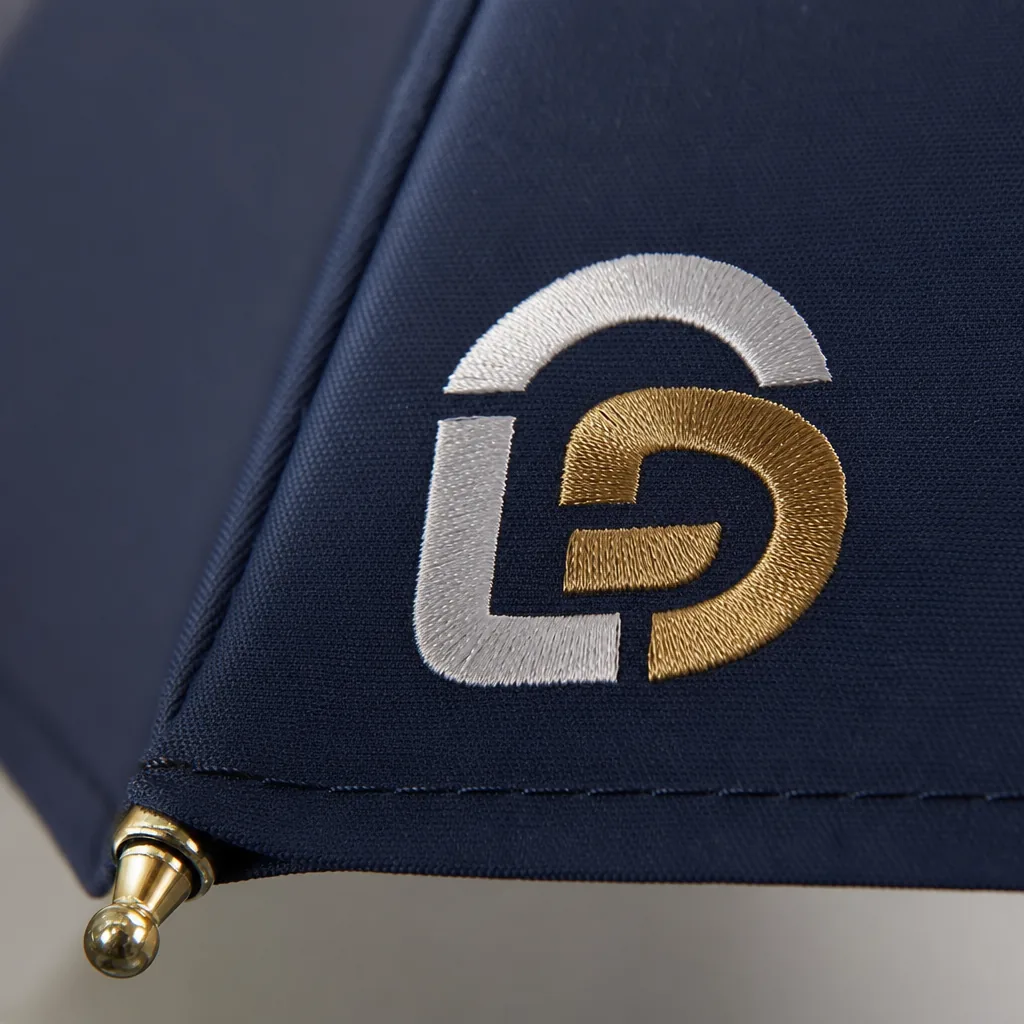
When a branded umbrella leaves the packing line, the sleeve and hangtag have only seconds to communicate care, warranty, and reorder paths before the buyer discards them or the end user loses context. We see this daily on custom PO runs: too much printed copy crowds the logo, while too little creates repeat service questions. QR code umbrella packaging gives distributors and brand teams a clean way to connect care instructions, reorder pages, and campaign tracking without changing the product presentation.
What QR Codes Add to Umbrella Packaging
A QR code turns a printed umbrella sleeve, hangtag, or retail box into a live service channel, which matters because umbrellas are often reordered months after the buyer has lost the original spec sheet. With QR code umbrella packaging, a distributor can connect the end user to a branded umbrella care guide showing how to dry a 190T pongee canopy before storage, rinse salt from fiberglass ribs after beach use, and avoid forcing an auto-open-close shaft when the runner is not fully collapsed. That kind of instruction reduces avoidable complaints, especially on compact 21" models with more moving parts and on golf umbrellas with 27" or 30" frames that get used in stronger wind. I prefer putting the QR code on the belly band or sewn-in care label, not only on the outer carton, because cartons are thrown away before the umbrella is actually used.
For procurement teams, the biggest value is the umbrella reorder QR code. A scan can open a locked reorder page with the exact SKU, canopy color, panel layout, rib count, handle type, print method, and previous PO quantity. This prevents the common mistake of reordering a 23" steel-frame auto-open umbrella when the original event order used 23" fiberglass ribs with a vented double canopy and Teflon coating. For promotional umbrella aftersales, the same page can route small replacement requests, warranty registration, and photo uploads for AQL review if a batch issue is reported. In factory practice, the QR destination should be managed by the brand or distributor, not hard-printed as a dead PDF link that cannot be edited after shipment. Campaigns change, but 5,000 printed sleeves do not.
Retail packaging QR codes also help explain product features that are hard to communicate on a small hangtag. A shopper can scan to see why a UPF 50+ black-coated canopy feels different from regular 210T pongee, how a vented windproof construction releases gust pressure, or what ‘survives 50+ mph wind tunnel testing’ actually means compared with a basic 8K steel promotional model. For events, QR code umbrella packaging can lead to a sponsor landing page, city map, coupon, or registration form, making the umbrella part of the campaign instead of just a giveaway item. The practical rule is simple: keep the printed code at least 15 mm square, test it on matte and glossy substrates, and avoid placing it across folds, seams, shrink-wrap distortion, or dark artwork with poor contrast.
Where to Place QR Codes Without Hurting Presentation
The safest place for QR code umbrella packaging is usually a flat, replaceable component: a belly band on a straight umbrella, an insert card inside a retail sleeve, or the back panel of an individual box. I avoid putting the code on the main beauty area of the canopy sleeve unless the buyer specifically wants it visible at shelf level. A 23-inch auto-open gift umbrella with a printed pongee sleeve has enough real estate for a 20–25 mm code plus text, but a 21-inch compact umbrella in a tight pouch does not. Belly bands work well for branded retail because they can carry the umbrella reorder QR code, SKU, color, rib count, and barcode without disturbing the fabric sleeve. Insert cards are better for a branded umbrella care guide because they stay clean, flat, and easy to update between production runs.
Hang cards are useful for promotional umbrella aftersales when the umbrella is sold or distributed from a rack, but the QR code should sit on the back or lower front corner, not near the die-cut hole where tearing and bending happen. Sleeve stickers are cheap and flexible for mixed-SKU orders, especially under MOQ pressure, but they must use strong adhesive and matte lamination; glossy stickers on PVC or EVA sleeves can reflect light and reduce scan reliability. For boxed umbrellas, the back panel is the most professional location because retail packaging QR codes can sit beside specifications: 190T pongee, fiberglass ribs, auto-open-close, UPF 50+ coating, or windproof double canopy. Our standard practice at ZheBrella is to keep factory batch codes separate from customer QR codes so reorder links are not confused with QC traceability labels.
Size and contrast matter more than buyers expect. For normal phone scanning, I recommend a minimum QR code size of 20 x 20 mm for close-range use and 25–30 mm if the package may be scanned on a shelf. The quiet zone should be at least four modules wide, with no logo, border pattern, stitching graphic, or dark artwork crowding the code. Black on white is still the most reliable; dark navy on kraft paper may look premium but often fails under warehouse lighting. Curved compact umbrella packaging needs physical scan testing because the pouch radius can distort the modules, especially on 5-fold mini umbrellas with narrow sleeves. Before mass production, we test scans on actual printed samples, not just PDF proofs, using iPhone and Android cameras at different angles and distances.
Content Strategy for Buyers and End Users
The first rule of QR code umbrella packaging is to split the journey: one QR code path for the buyer who needs a reorder, and a different path for the end user who needs care and use instructions. Procurement managers do not want to land on a consumer washing guide; they need SKU-level reorder data, artwork files, carton specs, MOQ, lead time, and whether the previous run used 190T pongee, 210T pongee, POE, PVC, or EVA canopy material. A good umbrella reorder QR code should open a short form prefilled with model number, rib count, canopy size, handle type, print method, and the last PO reference. For example: 23-inch 8K fiberglass golf umbrella, auto-open, double-canopy vented, navy 190T pongee, one-color screen print, packed 24 pcs/carton. That information cuts two or three email rounds from promotional umbrella aftersales, especially when a distributor is reordering for an annual event or retail chain replenishment.
Consumer-facing content should be written like a branded umbrella care guide, not a sales page. Keep it practical: explain that fiberglass ribs flex better than steel ribs in gusts and are less likely to permanently bend, but users should still close the umbrella during extreme wind. Show how to operate an auto-open mechanism correctly: point the canopy away from the face, release the strap first, press the button once, and never force the runner if the ribs are tangled. For UPF 50+ coated fabric, tell users to rinse with clean water, wipe with a soft cloth, air-dry fully open, and avoid bleach, high-alkaline detergent, or machine washing, because those can damage the UV coating or water-repellent finish. If the product uses a double-canopy windproof construction, explain that the vent lets air escape between layers; it is not a sewing defect or missing seam.
Retail packaging QR codes work best when the landing page detects the audience by placement. A QR printed beside the barcode or hangtag can lead to end-user care, warranty terms, spare sleeve information, and a 30-second folding video. A QR printed on the master carton, inner polybag label, or buyer specification sheet should lead to B2B assets: dielines, PMS color notes, print position tolerances, AQL 2.5 inspection criteria, FOB/DDP options, and reorder contact details. Our standard practice at ZheBrella is to lock the reorder content to the exact production spec, because small differences matter: a 27-inch 16K fiberglass frame with Teflon-coated 210T pongee is not interchangeable with a 23-inch 8K steel-frame promotional umbrella. The content strategy should prevent wrong reorders while reducing consumer misuse, returns, and unnecessary claims about normal wear, wind inversion, or coating damage.
Print and Quality Control Requirements
The QR file must be treated like production artwork, not an afterthought dropped into the carton layout on press day. For QR code umbrella packaging, we require vector artwork in AI, EPS, or PDF format, with the code built at final size and linked to the approved URL before plate making or digital proofing. Raster QR images pulled from a website often look fine on screen but break down after flexo printing, matte lamination, or small-size hangtag production. On retail boxes, we normally keep the printed QR at 18–25 mm minimum; for polybag stickers or compact sleeve labels, 15 mm is possible only if the substrate is smooth and the ink spread is controlled. CMYK contrast matters: a rich black QR on a white or very light background scans more reliably than brand-color experiments. Avoid reversing the code out of dark artwork unless pretested, and never place it over umbrella photography, gradient backgrounds, woven textures, or metallic ink.
Varnish and lamination cause more QR failures than bad code generation. Gloss UV varnish can create glare under store lighting, while heavy spot varnish may fill small modules and reduce edge definition. Soft-touch lamination is safer visually, but fingerprints and scuffing can still reduce scan reliability on black gift boxes. Our standard practice at ZheBrella is to print a pre-production sample of the full package panel, then scan it with at least three common phone models at 20 cm, 40 cm, and a shallow angle before mass production approval. This check should include the branded umbrella care guide page, the umbrella reorder QR code destination, and any promotional umbrella aftersales landing page. If the QR links to a language-specific instruction sheet, the destination must match the carton language version, not just the buyer’s master file. A Spanish retail sleeve with an English-only care page creates customer service problems after shipment, especially in supermarket and event-channel orders.
Packaging QC needs its own checklist under AQL 2.5, separate from umbrella functional inspection. Inspectors should verify QR scanability, print position, color contrast, carton barcode coexistence, and mixed-SKU accuracy during final random inspection. Retail packaging QR codes must not interfere with EAN, UPC, Amazon FNSKU, or logistics barcodes; keep quiet zones around every code, and do not stack codes so closely that scanners pick the wrong one. Mixed assortments are a common risk: a 23 inch auto-open golf umbrella, a 21 inch folding umbrella, and a 30 inch vented model may share similar outer artwork but require different reorder links, care instructions, or spare-part guidance. Language-version control is just as important as color approval. The packing list, carton mark, hangtag, warranty insert, and QR destination should all match the PO by SKU. Before release, we normally scan samples from finished cartons, not only press sheets, because abrasion, shrink film, or sticker placement can change real-world performance.
Tracking, Reorders, and Global Fulfillment
The most useful QR system for procurement is not a generic homepage link; it is a SKU-specific landing page tied to a printed batch code on the carton label, hangtag, or belly band. For QR code umbrella packaging, we usually map each umbrella model to a landing page showing the approved canopy color, logo position, print method, rib count, fabric spec, handle type, and reorder contact. A 23" auto-open 190T pongee golf umbrella with 8K fiberglass ribs should not share a reorder page with a 21" auto-open-close folding umbrella in 210T pongee. UTM links then tell the buyer which distributor, event region, or retail channel scanned the code, while the batch code ties the scan back to the production lot, AQL 2.5 inspection record, and shipment date. That matters when a procurement manager needs to reorder the exact approved version six months later, not something close.
An umbrella reorder QR code also reduces mistakes before production starts. During sample approval, the landing page can hold the signed-off pre-production sample photos, Pantone references, logo artwork version, packing method, and care instructions such as drying the canopy open, avoiding storage while wet, and rinsing salt or mud from the frame. This turns the QR page into both a branded umbrella care guide and a controlled specification sheet. MOQ planning becomes cleaner because each SKU page can show the minimum reorder quantity by configuration: for example, 500 pieces for an existing 21" folding frame with stock fabric, 1,000 pieces for custom-dyed pongee, or 3,000 pieces when a private mold handle or special POE/PVC/EVA canopy is involved. If the reorder uses the same approved artwork and materials, lead time may stay around 25–35 days; if the buyer changes fabric, coating, or printing process, it should be treated like a new approval cycle.
Retail packaging QR codes become more valuable when the same umbrella program ships to multiple regions under FOB and DDP terms. A distributor may need one landing page in English for the U.S., another with EU importer details, and another with care and warranty wording for Japan or the Middle East, while the physical umbrella stays the same. UTM parameters separate scans from North America, Europe, and APAC, helping the buyer see which region needs replenishment before warehouse stock is fully depleted. For FOB Ningbo or Shanghai, the QR-linked batch data supports container-level traceability; for DDP programs, it helps connect carton marks, last-mile delivery records, and promotional umbrella aftersales inquiries. Our standard practice at ZheBrella is to freeze the QR destination before mass packing, because changing links after hangtags are printed creates confusion at inspection and can delay consolidation for multi-region shipments by several days.
Frequently Asked Questions
Should the QR code link to a brand website or a product-specific page?
A product-specific page is usually better because it can show the exact umbrella model, fabric, frame, care steps, and reorder code. It also makes campaign tracking cleaner.
Can QR codes be printed directly on the umbrella canopy?
They can be, but packaging is usually more reliable for scanning. Canopy curves, seams, 8K or 16K panel breaks, and fabric texture can reduce scan performance.
What type of QR destination works best for umbrella reorders: product page, PDF catalog, or inquiry form?
For B2B reorders, a prefilled inquiry form usually converts best because buyers can confirm item code, canopy color, handle style, and quantity in one step. If the same SKU is reordered often, linking directly to a reorder landing page with MOQ and lead time, such as 500-1,000 pieces and 35-45 days, is even more efficient.
How can buyers track whether packaging QR codes are actually being used after distribution?
Use dynamic QR codes with UTM parameters or unique campaign URLs by customer, region, or season. That lets importers and distributors compare scan volume, repeat visits, and reorder intent without changing the printed packaging artwork.
Should the QR code be printed on the carton, hang tag, or inner insert for branded umbrellas?
For retail visibility, the hang tag is usually the best placement because it stays accessible before purchase. For warranty terms or care content that should remain with the product after sale, add the same code to an inner insert or pouch card to reduce loss.
Looking to Launch Your Custom Umbrella Line?
ZheBrella is a Zhejiang-based OEM/ODM umbrella manufacturer with 17 years of export experience. Free design, low MOQ from 100 pieces, windproof construction, full-color print.
Get Free Quote Now »People Also Search For
Related Articles

QR Code Packaging for Branded Umbrella Campaigns
Add QR codes to umbrella packaging for campaign tracking, brand storytelling, warranty pages, and reorder paths while pr...
Read More »
QR Code Packaging for Branded Umbrella Retail Programs
Use QR codes, care pages, and warranty links on umbrella packaging to extend brand storytelling while keeping barcodes, ...
Read More »
QR Codes on Umbrella Packaging for Brand Storytelling
Use QR codes on umbrella packaging to connect buyers to care guides, warranty pages, brand stories, and campaign trackin...
Read More »