QR Code Packaging for Branded Umbrella Retail Programs
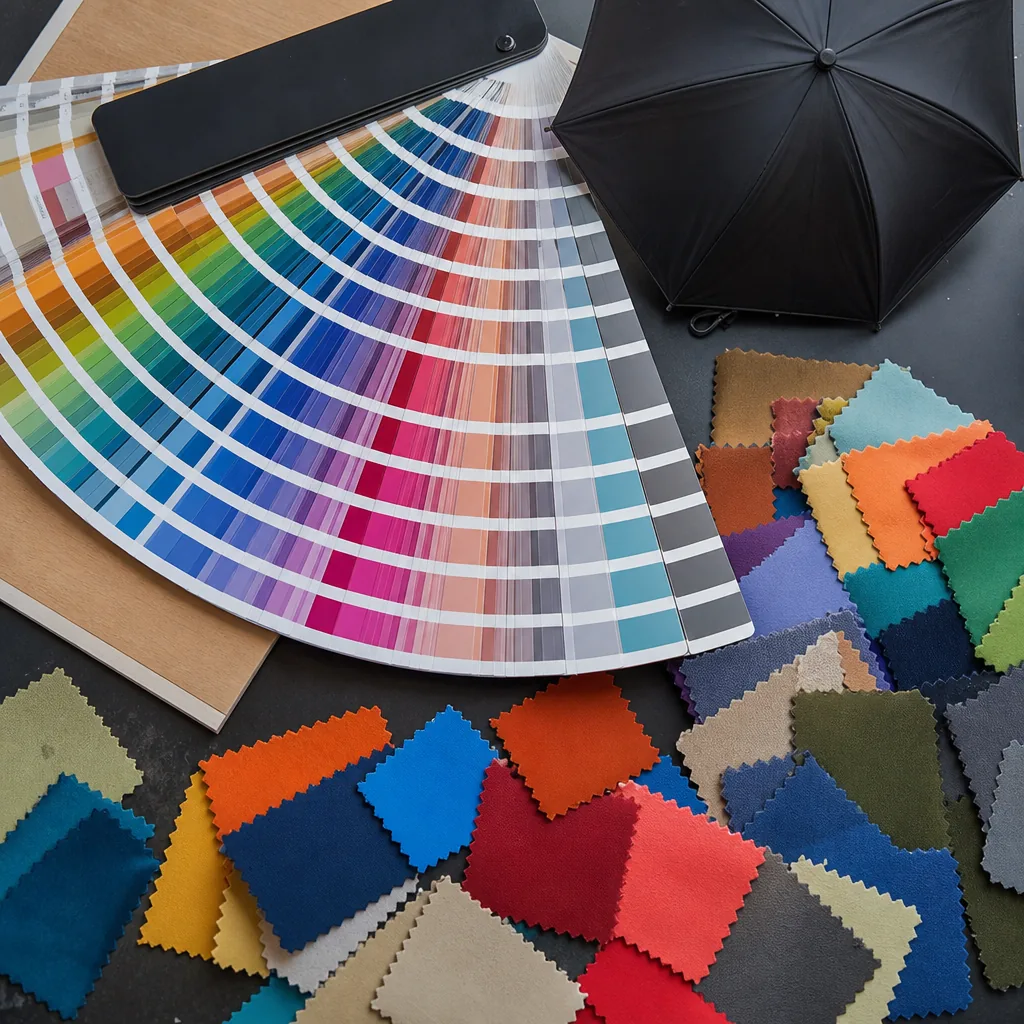
For retail umbrella programs, packaging has to sell the story without confusing the scan lane, the stockroom, or the inspector’s checklist. On our factory floor in Songxia, we see branded umbrella QR packaging work best when the QR code supports care instructions, warranty registration, and campaign content while leaving barcodes, warning labels, carton marks, and AQL inspection points clean and easy to verify.
Why QR Codes Belong on Umbrella Packaging
QR codes earn their place on umbrella retail packaging because the printable area is usually smaller than buyers expect. A 21" compact sleeve may only give you 60–90 square centimeters after the logo, barcode, warning text, and material callouts are placed. A 23" stick umbrella hangtag has more room, but it still gets crowded once you add 190T or 210T pongee, fiberglass ribs, auto-open or auto-open-close mechanism notes, and country-of-origin labeling. QR code product packaging lets the physical pack stay clean while the technical content moves online: opening and closing videos, canopy drying instructions, rust-prevention tips for steel shafts, and warnings against forcing an inverted frame. For private label umbrella branding, this is especially useful because the same sleeve or box can serve multiple SKUs while the QR destination changes by model, campaign, or market.
The biggest practical win is after-sale support. Many umbrella failures we see are not fabric defects; they come from misuse, such as collapsing an auto-open-close shaft by pushing the runner instead of compressing the handle and tip, or storing a wet POE/PVC/EVA canopy inside a sealed sleeve. Branded umbrella QR packaging can send customers to model-specific care instructions, warranty registration, spare-part requests, and short videos showing the correct operation for 8K, 10K, or double-canopy vented windproof frames. Branded umbrella care cards still have value, but I prefer using them for one or two critical reminders, then putting the QR code beside them. Our standard practice at ZheBrella is to test QR readability on curved sleeves, matte boxes, and coated hangtags before mass production, because glossy lamination and dark ink backgrounds can reduce scan reliability.
QR codes also give retail and promotional programs a way to connect the umbrella to a broader story without turning the package into a brochure. A supermarket buyer may want a sustainability page explaining recycled pongee, rPET content, FSC paper packaging, or reduced polybag use. A sports event distributor may want a campaign landing page with sponsor content, weather updates, or user-generated photo uploads. A retail brand owner may use the same 27" golf umbrella carton for spring and fall programs, switching only the QR destination rather than reprinting every panel. For umbrella retail packaging, I recommend a minimum printed QR size of 18 x 18 mm on hangtags and 22 x 22 mm on sleeves or boxes, with a quiet zone, high contrast, and a backup short URL. It is a low-cost detail, but it protects AQL presentation quality and reduces customer-service friction after delivery.
Where to Place QR Codes Without Hurting Retail Presentation
Gift boxes and instruction inserts are better for deeper content, including branded umbrella care cards, replacement policy, frame specifications, and private label umbrella branding stories. On gift boxes, put the QR code on a side or bottom information panel beside the UPC/EAN block, not on the top lid where it competes with the brand presentation. For instruction inserts, a 25–30 mm QR code is practical because buyers may scan it after purchase for opening instructions, auto-open-close cautions, or fabric care for 190T pongee, POE, PVC, or EVA canopies. Our standard practice at ZheBrella is to run a pre-production packaging proof and scan every code after lamination, matte varnish, or foil stamping, because finishing can lower contrast. For branded umbrella QR packaging, the code should serve the retail program quietly: visible enough to use, but never so dominant that it looks like a logistics label instead of consumer packaging.
Matching Digital Content to Umbrella Specs
The QR landing page must match the umbrella in the carton, not the most expensive model in the catalog. If the hangtag says 210T pongee but the bulk production is 190T, that discrepancy will show up in hand feel, opacity, and water shedding after a few uses. A 23-inch 8K steel-frame auto-open umbrella should not be described like a 27-inch fiberglass golf umbrella with a double-canopy vent. For branded umbrella QR packaging, I like to build the page from the approved pre-production sample sheet: canopy fabric, rib count, shaft material, opening mechanism, coating, closed length, arc size, and packed weight. That keeps marketing language tied to what AQL inspectors can actually verify on the line. It also prevents customer service problems when a retail buyer scans the code and compares the claims against the physical product.
Digital content should explain the specs in plain buyer language, especially for umbrella retail packaging where consumers may not understand factory terms. 190T pongee is a practical polyester canopy for promotional and mid-range retail programs; 210T pongee has a tighter weave and usually a smoother finish for better private label umbrella branding. Fiberglass ribs flex better in gusts than painted steel ribs, but steel can still be acceptable for budget 8K stick umbrellas if the tips, stretchers, and rivets are properly set. A 16K frame spreads load more evenly and looks premium, but it adds cost and weight. If the product has UV coating, the page should state UPF 50+ only when the fabric has test support, not just because the canopy is dark. QR code product packaging should turn these details into useful proof, not decoration.
For windproof or outdoor-positioned umbrellas, the landing page should be even more specific. A double-canopy vented design is different from a standard single-layer canopy with flexible ribs, and the page should show that airflow path with one clean diagram or short video. If the frame survives 50+ mph in a wind-tunnel test, say whether that was for a 23-inch compact, 27-inch stick, or 30-inch golf umbrella, because diameter changes the load dramatically. Auto-open and auto-open-close mechanisms also need clear instructions; many returns come from users forcing the runner by hand or not resetting the shaft in stages. Branded umbrella care cards can link to the same QR page and show drying, folding, and storage steps, which reduces mildew complaints and broken mechanism claims after retail sale.
Production Checks for Scannable Packaging
Scannability has to be proven on printed material, not approved from a PDF on a bright office monitor. For branded umbrella QR packaging, I require a wet proof or digital printed sample using the same substrate, ink, and lamination planned for mass production. We scan with at least three phone models, including one older Android, under warehouse lighting around 300–500 lux and at a normal retail distance of 8–16 inches. The QR code should remain readable after carton handling, shrink-wrap glare, and slight curvature on hangtags or care-card inserts. If the code sits on umbrella retail packaging with dark brand colors, keep enough quiet zone around the code and avoid placing it across folds, perforations, barcode labels, or hang-tab holes. A 25 mm code may work on a flat care card, but retail boxes and belly bands usually need 30–35 mm to scan reliably after printing tolerance.
Matte versus gloss lamination should be checked before bulk approval because the wrong finish can make good QR code product packaging fail in-store. Gloss film looks premium on a retail gift box, but it reflects LED light and can wash out small black modules, especially when the box is wrapped in OPP or stacked under shelf lighting. Matte lamination is safer for scanning, but heavy matte film can soften edges if the print shop uses too much heat or pressure. On branded umbrella care cards, I prefer black QR on white or very light background with no metallic ink, spot UV, embossing, or textured paper inside the scan area. If private label umbrella branding requires a colored code, the contrast should still be tested by scanning the actual printed piece, not just checking CMYK values. Our standard practice at ZheBrella is to reject any artwork where the QR code is placed too close to die-cut edges or sewing accessory holes.
Carton-level inspection matters because packaging errors often happen after the box and insert are approved. The inspector should verify that each inner box, hangtag, care card, and master carton label matches the correct SKU, canopy size, color, handle type, and destination market. For mixed programs, a 21-inch auto-open compact and a 27-inch golf umbrella may share similar branding but need different QR landing pages, care instructions, UPCs, and carton marks. During final inspection, use AQL 2.5 sampling for print clarity, QR scan success, label accuracy, and placement tolerance, with major defects assigned to wrong QR links, unreadable codes, incorrect barcode numbers, or mismatched private-label artwork. Minor defects can include slight color drift or lamination scuffing if the code still scans cleanly. For branded umbrella QR packaging, I also recommend scanning one sample from every opened carton, because a packing-line mix-up is harder to catch than a printing defect once goods are FOB or moving DDP.
MOQ, Lead Time, and Data Handover for Buyers
QR work usually does not change the umbrella MOQ by itself; the MOQ pressure comes from printed components. A plain 23" auto-open umbrella with 190T pongee canopy may have a 500–1,000 pcs MOQ, but custom color box, belly band, hangtag, insert card, or branded umbrella care cards often push the practical MOQ to 1,000–3,000 pcs per artwork. If a buyer needs one umbrella body but three markets with different QR landing pages, we treat each packaging version as a separate print lot unless variable-data printing is approved. For umbrella retail packaging, the cleanest approach is to keep the master carton and color box common, then change only a small sticker or care card. That reduces plate cost, avoids mixed-carton mistakes, and makes AQL 2.5 inspection easier because inspectors can verify SKU, barcode, QR code, canopy color, and handle type without opening every unit.
Sample approval needs one extra control point: scan testing before mass print. Our standard practice at ZheBrella is to submit the umbrella sample and packaging proof together, including QR size, contrast, quiet zone, final URL, and the exact printed position on the box or hangtag. For branded umbrella QR packaging, I prefer a minimum 18–22 mm code on matte-coated paper; glossy lamination can reflect under retail lighting and cause failed scans. Normal umbrella sampling takes 5–7 days for existing frames and 10–15 days if a new handle, 10K fiberglass frame, or special canopy coating is involved. Add 2–4 days for packaging mockups and another 3–5 days if the buyer’s legal, brand, or IT team must approve different URLs for the U.S., EU, and Japan markets.
Mass production lead time should be counted only after three things are frozen: umbrella specification, packaging artwork, and live QR destination. A typical private label umbrella branding order runs 30–45 days after deposit and approval, but QR code product packaging with multiple SKUs can add 5–10 days for artwork separation, print scheduling, and carton-mark checking. For FOB shipments, the commercial invoice, packing list, carton marks, and HS code must match the SKU structure shown on the packaging. For DDP orders, buyers should also provide destination-specific compliance text, importer details, and any marketplace labeling rules early, not after sewing. Final URL ownership must stay with the buyer’s domain or a buyer-controlled redirect service; factories should not own the landing page. If the supplier hosts the link, a reorder two years later can fail because a web account expired.
Frequently Asked Questions
Can each umbrella SKU have a different QR code?
Yes, but each code should be treated as a separate artwork version. Buyers should confirm SKU mapping before mass production to avoid mixed cartons or incorrect links.
Should the QR code be printed on the umbrella canopy or the packaging?
For retail and gifting programs, packaging is usually better because it scans more reliably and does not interfere with canopy branding. Canopy QR printing is possible but needs larger artwork and stronger contrast.
Where should the QR code go on umbrella packaging so it does not interfere with retail scanning?
Place the QR code on a hang tag, care card, or side panel away from the UPC/EAN barcode quiet zone. Most retailers want the sellable barcode to remain the primary scannable code, so keeping at least one separate panel or tag face for the QR code reduces checkout errors.
What should a QR-linked care page include for a private label umbrella program?
A useful care page usually covers open-and-close instructions, drying and storage guidance, wind-use limitations, fabric cleaning steps, and warranty claim workflow. For B2B programs, importers often add multilingual content, replacement part policy, and a batch or PO reference for traceability.
Can QR packaging be added without slowing umbrella production lead times?
Yes, if the QR artwork and landing page are approved with the packaging dieline before sampling closes. For most OEM orders, adding a QR code to inserts or hang tags has little impact, but changing printed boxes after approval can add about 3-7 days depending on print method and carton supplier MOQ.
Looking to Launch Your Custom Umbrella Line?
ZheBrella is a Zhejiang-based OEM/ODM umbrella manufacturer with 17 years of export experience. Free design, low MOQ from 100 pieces, windproof construction, full-color print.
Get Free Quote Now »People Also Search For
Related Articles
Retail Umbrella Header Cards That Improve Shelf Branding
Design retail umbrella header cards that carry brand identity, product claims, barcodes, and planogram needs without slo...
Read More »QR Warranty Cards for Branded Umbrella Retail Programs
Build QR warranty cards that support after-sales service, authenticate retail umbrellas, and connect buyers to care, reg...
Read More »
Umbrella Insert Cards for Private-Label Brand Storytelling
Use insert cards to explain fabric, frame, care, warranty, and brand values while improving perceived value in private-l...
Read More »