Merchandising Umbrellas in Retail: Display and Range Planning
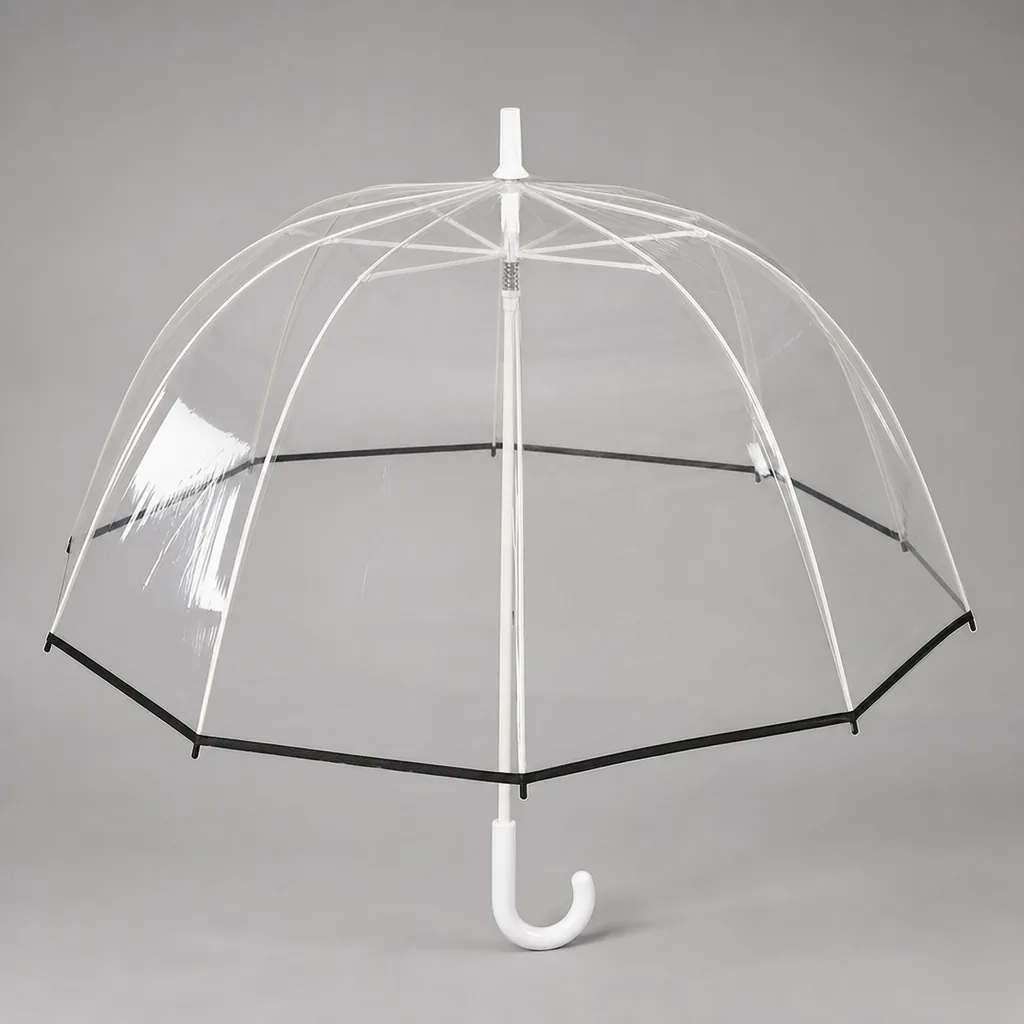
Retail umbrella merchandising works best when the range is planned around how the product actually moves on the sales floor, not just how it looks in a line sheet. Buyers need clear good-better-best tiers, seasonal depth, and packaging that can survive stacking, hanging, and impulse pickup without turning the display into clutter. From factory production, the difference is usually in small choices like carton size, handle shape, canopy print density, and how consistently the assortment can be replenished.
Building a good-better-best range
A good-better-best umbrella assortment works because shoppers do not buy umbrellas by canopy size alone; they buy by pain point and price tolerance. In retail umbrella merchandising, the entry tier should cover the basic need with a manual open 21" or 23" umbrella, steel shaft, 190T pongee, and a simple screen print panel. The middle tier should add the features people actually notice at shelf: auto-open, fiberglass ribs, better wind flex, UV coating, and cleaner finishing on the handle and tips. The top tier is where you justify margin with double-canopy venting, auto-open-close, 10K or 16K rib construction, 210T pongee, Teflon coating, and a stronger frame that can survive real wind instead of just looking premium in a product photo. If the line is too flat, the buyer has no reason to trade up, and the store display turns into a wall of near-identical black umbrellas.
Umbrella range planning should start with role, not style. A retail umbrella buyer usually needs one range for commute, one for travel, one for golf or oversized coverage, and sometimes one giftable fashion line; those roles should not be mixed in one price band. For example, compact folding umbrellas sell on packability and low carry weight, while stick umbrellas sell on presence, durability, and print area. A 30" golf model with fiberglass ribs belongs in a different tier than a 23" compact with an auto-open-close mechanism, because the customer is paying for different use cases. At ZheBrella, the most common mistake we see is overloading the mid-tier with too many variants and not enough clear feature gaps. The cleaner approach is to keep one or two hero SKUs per tier, then add colorways or cover art only after the structure is set.
The umbrella store display should make the trade-up obvious in three seconds. Put the entry price at eye level only if volume matters, then place the better tier beside it with a visible cue such as vented canopy, fiberglass ribs, or UPF 50+ labeling; the best tier needs a physical difference, not just a higher ticket. A shopper should be able to touch the handle, open the frame, and immediately feel why one model costs more. For an umbrella retail buyer, the practical rule is to protect gross margin with a tight core assortment: one price leader, one feature leader, one premium leader, each with a clear material story and a separate job on the shelf. That makes replenishment easier, reduces dead stock, and gives the store a ladder instead of a pile of competing umbrellas.
Seasonal and weather-driven demand
For retail umbrella merchandising, weather is not a background variable; it is the demand curve. In rainy season, the store has to carry enough 21" and 23" compact umbrellas, auto-open models, and vented windproof styles with fiberglass ribs because shoppers buy for immediate use, not for comparison shopping. A practical umbrella store display puts the best-selling black, navy, and clear POE options at eye level, with a smaller block of premium 16K fiberglass and Teflon-coated pongee 190T or 210T models to protect margin. The umbrella retail buyer should not overcommit to deep color runs in one size, because rainy demand spikes fast and then collapses when the forecast clears. ZheBrella’s standard practice is to separate core replenishment stock from seasonal fashion stock so the buyer can reorder the basics without dragging along slow-moving printed novelty styles.
Sunny season needs a different range plan, and that is where umbrella range planning usually gets sloppy. When the weather turns hot, UV-protection sales shift toward larger 27" and 30" canopies, golf styles, and sticks with UPF 50+ coatings, while bright colors and reflective or sublimation prints sell better than dark rain basics. A retail umbrella merchandising plan should reserve display space for sun umbrellas before the first heat wave, because by then the shopper is looking for shade, not a generic umbrella. The buyer should also watch lead times and size depth: a sunny-season assortment often needs fewer SKUs but more units per SKU, especially in white, beige, and high-visibility fashion colors. For FOB or DDP planning, the right move is to lock core sun models early, then keep a narrow fast-reorder lane for weather-driven restocks instead of chasing every forecast swing.
Display and impulse placement
For retail umbrella merchandising, put the product where weather creates the decision, not where the planogram looks tidy. The best selling spots are the store entrance, the queue line, and the endcap closest to outerwear or rainwear, because umbrellas are usually a same-day need. A floor bin with 21" compact models, a vertical clip strip for travel umbrellas, and a small counter tray for premium auto-open-close styles gives shoppers three price points without clutter. Keep the display facing forward and tall enough to show canopy size and handle shape, because buyers judge umbrellas by silhouette first. In umbrella store display work, visibility beats depth: six to twelve facings with clear signage will outsell a deep pile of mixed SKUs that customers have to dig through.
Assortment planning should be simple enough for a store team to maintain, but broad enough to cover weather, commute, and gift buying. An umbrella retail buyer usually needs one value tier in POE or EVA, one mid-tier pongee 190T or 210T with fiberglass ribs, and one premium windproof style with a vented double canopy and Teflon or UV coating. That mix supports umbrella range planning without overloading the shelf with similar black stick umbrellas. I would keep color families tight: black, navy, clear, and one seasonal accent, then use a small card to call out manual, auto-open, and auto-open-close mechanisms. At ZheBrella, we see stores lose margin when they overbuy novelty prints and underbuy core commuter styles; the core sells through faster and is easier to replenish.
Point-of-sale positioning should answer two questions fast: will this umbrella survive the weather, and is it easy to carry today? Use small shelf talkers with real claims like 8K or 10K fiberglass ribs, UPF 50+ coating, or wind-tested construction, but only when the product actually has that build. If the store has room, hang one open sample near the entrance so shoppers can see canopy span and venting instead of reading a spec card. For impulse placement, a slim rack near checkout works better than a crowded basket because umbrellas are long, awkward items; people will pick them up if the handle is visible and the price is clear. Keep replenishment disciplined: one forward-facing sample, one stock-facing unit behind it, and a restock box nearby so the display never looks empty during rain spikes.
Packaging for shelf and discovery
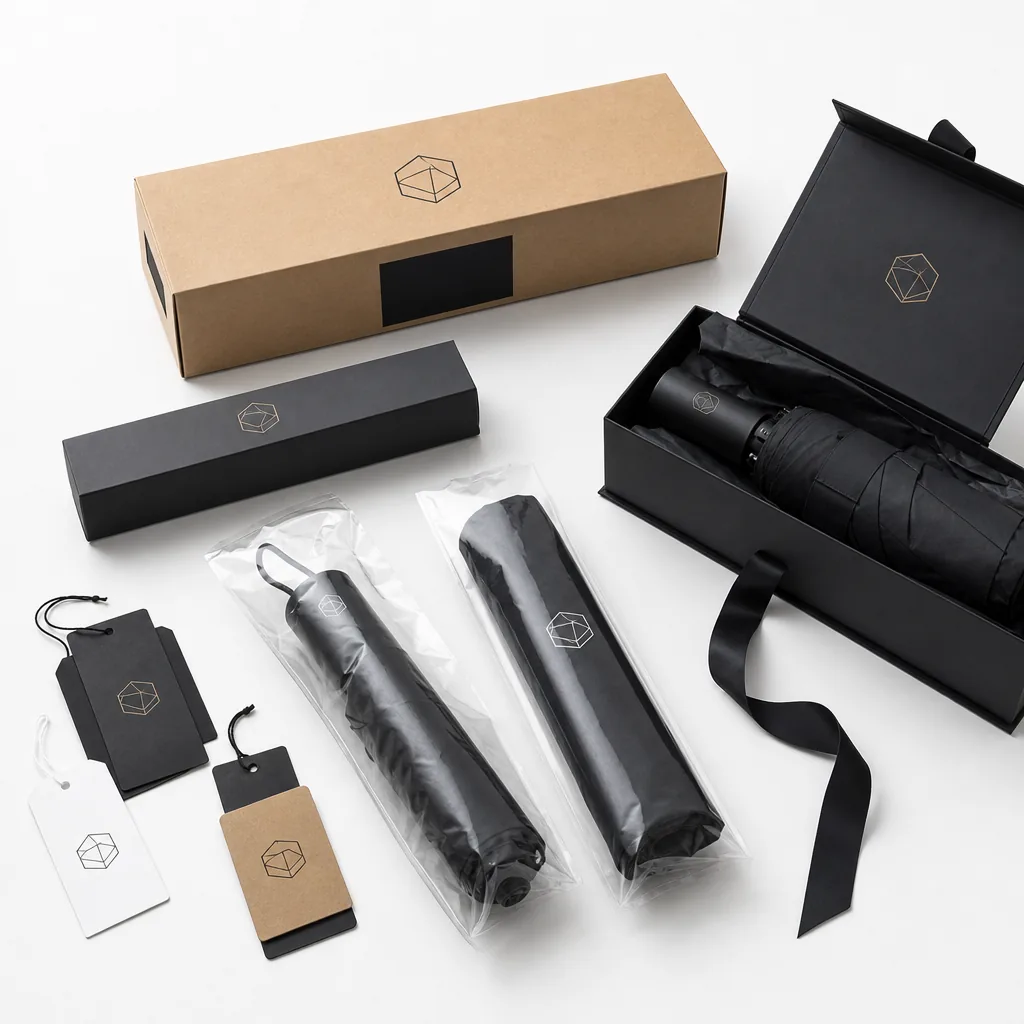
For retail umbrella merchandising, packaging has to do two jobs at once: protect the product and sell the shape when the canopy is folded. A good hang tag gives the buyer what they need in three seconds: size, mechanism, fabric, rib material, and weather claim. I prefer a tag that shows 21-inch, 23-inch, or 27-inch size, auto-open or auto-open-close action, pongee 190T or 210T fabric, and whether the frame uses fiberglass or steel ribs. If the umbrella is vented or UV-coated, say it plainly with UPF 50+ or double-canopy construction. A retail umbrella buyer does not want poetry here; they want fast comparison data that supports range planning across price tiers.
Sleeves matter more than many brands admit. A clear PE sleeve makes low-cost stock easier to scan on shelf, but it also hides the canopy color and pattern, which hurts impulse pickup. Printed fabric sleeves, paper wraps, and barcode stickers can turn the folded umbrella into a real shelf unit instead of a loose bundle. In umbrella store display, the best sleeve is usually short enough to expose the handle shape and closure strap, because shoppers read build quality from those details. For a basic department-store program, I would keep the sleeve simple and reserve heavier card inserts for gift sets or premium lines where the packaging has to justify a higher ticket.
Range planning should treat packaging as part of the assortment, not an afterthought. If one colorway uses a bright printed belly band and another uses a plain sleeve, the store floor will look inconsistent even when the product specs are balanced. That creates confusion for the umbrella retail buyer and makes replenishment harder, especially when the line mixes manual, auto-open, and auto-open-close mechanisms across 8K, 10K, and 16K frames. Strong retail umbrella merchandising depends on packaging that codes the range clearly: budget, mid-tier, and premium should be obvious from a distance. The goal is simple, controlled shelf appeal that helps the shopper compare options without opening every unit.
Replenishment and bestseller focus
For retail umbrella merchandising, sell-through beats gut feel every time. A buyer should track which sizes, mechanisms, and canopy constructions move first by door count, store format, and weather region, then reorder only the winners before the rack goes cold. In practice, that means separating 21-inch compact styles from 23-inch commuter pieces and 27-inch golf umbrellas, because they do not turn at the same rate and they do not belong in the same replenishment logic. Manual open styles usually sit longer than auto-open or auto-open-close models, but the margin can work if the price ladder is set correctly. The right umbrella store display makes this easier: keep the fastest movers at eye level, tag them clearly by feature, and avoid mixing fashion colors with emergency rain basics. A retail umbrella merchandising program fails when buyers treat umbrellas like a one-time seasonal buy instead of a weather-dependent replenishment category.
Umbrella range planning should be built around repeats, not just first orders. A retail umbrella buyer needs a tight read on which frames and fabrics are worth reordering, especially fiberglass-rib models, double-canopy vented windproof designs, and 190T or 210T pongee styles with Teflon or UV coating. Those are the products that usually justify deeper stock because they reduce complaints and have fewer returns when the forecast turns ugly. Track weekly sell-through, days of supply, and stockout frequency by SKU, then keep a shorter list of core colors and constructions that can be replenished fast instead of overextending the assortment. ZheBrella’s standard practice is to separate promotional, mass-market, and premium tiers so reorders do not blur into one bloated mix. If the data says one black auto-open compact and one vented golf umbrella are carrying the category, reorder them aggressively and cut the rest back before dead stock eats the season.
Frequently Asked Questions
How should a retailer plan an umbrella range?
Build a good-better-best tier: an entry promotional umbrella, a mid windproof model, and a premium gift or designer piece. This captures different budgets and lets you upsell while keeping the assortment clear for shoppers.
When does umbrella demand peak in retail?
Demand spikes around rainy seasons and weather events, and sun parasols peak in summer. Plan stock and reorders ahead of these windows, since lead times mean you must commit before the season starts.
How many umbrella SKUs should a retail buyer launch with for one season?
Most retail buyers start with 6 to 12 SKUs per season: 2 to 3 entry price umbrellas, 2 to 4 core sellers, and 2 to 3 premium or promotional styles. That keeps the range broad enough for choice but tight enough for shelf space and replenishment control.
What packaging works best for off-the-shelf umbrella sales?
For shelf selling, a retail sleeve, belly band, or hang tag usually works better than loose bulk packing because the buyer can show price and key features immediately. For small stores, shelf-ready trays or PDQ displays in packs of 6 or 12 help speed up replenishment.
What MOQ and lead time should a buyer expect for custom retail umbrella packaging?
For OEM or ODM programs, MOQ is commonly 500 to 1,000 pieces per style or color, depending on fabric, handle, and print complexity. Standard production is often 30 to 45 days after sample approval, and custom packaging can add about 5 to 10 days.
Looking to Launch Your Custom Umbrella Line?
ZheBrella is a Zhejiang-based OEM/ODM umbrella manufacturer with 17 years of export experience. Free design, low MOQ from 100 pieces, windproof construction, full-color print.
Get Free Quote Now »People Also Search For
Related Articles
Branded Umbrellas for Retail Merchandising and Storefront Sales
Plan a retail-ready umbrella line with the right sizes, materials, and display mix to improve sell-through, margins, and...
Read More »
Umbrella Solutions for Retail Private Label Collections
Create private label umbrella collections with the right frame, fabric, packaging, MOQ, and delivery terms for retail sh...
Read More »
Umbrella Programs for Pharmacies and Convenience Chains
Plan pharmacy and convenience-chain umbrella assortments with practical specs, packaging, and replenishment logic for we...
Read More »