Spot-Color Umbrella Logos for Promotions and Events
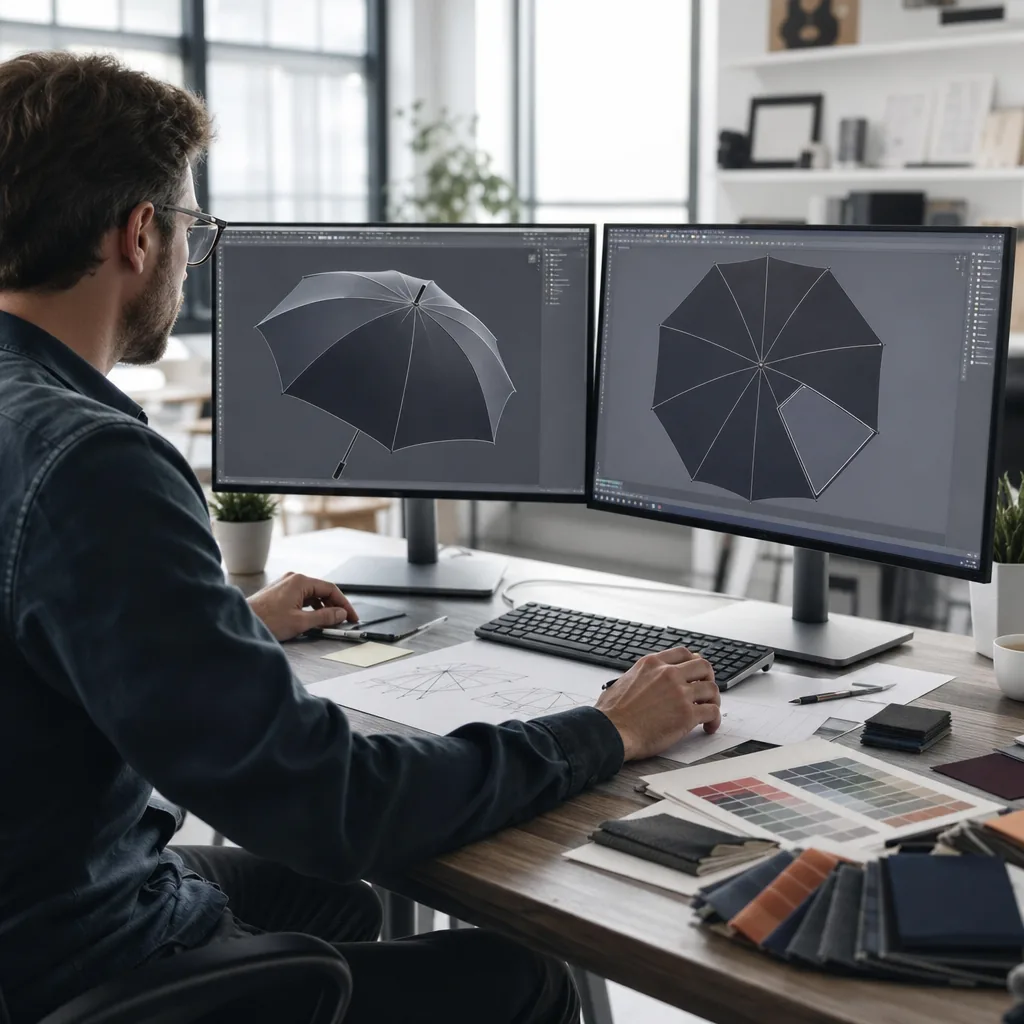
When branded umbrellas need to move fast for a promotion or event, buyers usually face the same tradeoff: keep the logo sharp and readable without pushing decoration costs or lead times out of range. From the factory floor, the most reliable answer is spot-color umbrella logo printing, which uses controlled ink mixes and clean screen setup to hold strong color separation on curved, weather-exposed panels while staying practical for bulk runs.
When spot-color printing makes sense
Spot-color umbrella logo printing makes sense when the artwork is built from clean shapes, not gradients. Simple wordmarks, block lettering, one-icon marks, and high-contrast layouts reproduce sharply on canopy panels because the ink sits as a solid layer instead of trying to simulate shading. That is the right umbrella logo print method for promotional umbrella branding when the buyer needs the logo readable from a distance on 23" or 27" canopies, especially with black-on-white, white-on-navy, or other two-color logo setup work that does not depend on fine halftones.
Compared with digital printing on 190T or 210T pongee, spot-color printing usually gives lower setup cost and a faster approval cycle because the artwork only needs color separation and a layout check, not full-file image tuning. For buyers with a tight MOQ for printed umbrellas, that matters more than chasing photographic detail; a two-color logo can move through sampling quickly and hold its edge after repeated folding if the panel construction is correct. In practice, spot-color umbrella logo printing is the safer choice when the brand mark must look consistent across 500, 1,000, or more pieces and there is no need for full-spectrum rendering.
I would avoid spot-color printing for logos that rely on shadows, blends, or very thin strokes, because those elements often break once the canopy is stretched over the frame. If the design already works in one or two flat colors, it usually prints cleaner and survives production variation better than a full digital file pushed onto textured pongee. For event buyers, that usually means quicker sign-off, fewer revision rounds, and fewer surprises when the first pilot cartons are checked against the approved artwork.
Ink coverage, fabric, and edge sharpness
Spot-color umbrella logo printing is much less forgiving than apparel printing because the canopy moves, flexes, and sheds ink at the edges if the mesh count or curing is off. On 190T pongee, the weave is a little more open, so fine text and hairline strokes tend to break up sooner than on 210T pongee, which gives you a cleaner surface and better edge definition. In practice, I treat 210T as the safer choice for a sharp umbrella logo print method when the artwork includes small type, thin outlines, or tight internal counters.
For promotional umbrella branding, the real limit is not just artwork resolution but registration control between colors and panels. A two-color logo setup should allow at least 1.0 to 1.5 mm stroke thickness on the thinnest elements, and I would not promise perfect alignment tighter than about 1.5 mm on a curved canopy seam. The fabric weave also matters more after heat setting, because ink can spread slightly into the yarn valleys; that is why a logo that looks fine on screen may still lose legibility at small sizes on 190T.
Avoid gradients when the logo must stay readable from a distance or when the MOQ for printed umbrellas is low and you want repeatable production across mixed lots. Gradients look soft on coated fabrics, but on pongee they often band, especially near seam lines and panel peaks where the surface tension changes. If the design relies on very small lettering, a solid spot-color build with clean knockouts usually prints more consistently than trying to simulate shading, and that is the version I would submit for approval before cutting screens.
Brand consistency across repeat orders
For repeat programs, the only way to keep spot-color umbrella logo printing stable is to lock three things in writing: exact logo placement on the panel or sleeve, Pantone references for each ink, and the finished print size measured in millimeters, not “roughly the same.” On umbrellas, a 5 mm shift is visible because the canopy curves and the artwork sits on a moving seam line. For promotional umbrella branding, I also force buyers to confirm whether the artwork is centered on the panel, aligned to the rib pocket, or adjusted for a left- or right-handed carry orientation; those details matter more than people expect once the order hits production.
The common drift points are boring but real: sample panels are often printed on flatter fabric, while mass production goes onto stitched canopy panels with tension already in the cloth; ink density changes when the mesh count, squeegee pressure, or flash-dry settings change; and a two-color logo setup can separate if one color is slightly expanded to hide registration error. Our standard practice is to treat the approved artwork file as the master, then verify against the physical sign-off sample before cutting the bulk screens. Buyers should confirm the final AI, PDF, or vector file because low-resolution JPGs cause edge stair-stepping, bad traps, and inconsistent logo shape when the factory scales the design for different umbrella sizes.
For repeat production, I recommend one production sheet per style that includes panel position, print width, Pantone codes, substrate type, and whether the umbrella uses manual-open, auto-open, or auto-open-close construction, because handle style affects where the logo can sit on the shaft sleeve or tie strap. AQL 2.5 inspection should cover placement deviation, ink strike-through, missing spots, and color mismatch, with color tolerance agreed before mass production starts; for spot inks, most buyers accept a narrow visual delta, but they still need to define whether a slight shift in tone is allowed under indoor light only or under daylight too. That is the cleanest way to avoid arguments when the MOQ for printed umbrellas is repeated six months later and the buyer expects the second order to match the first exactly.
Cost, MOQ, and lead-time planning
Spot-color umbrella logo printing is usually the cheapest and cleanest option when the artwork is simple, but the economics depend on how many screens you need to burn and how many panels you want printed. A one-color mark on a single panel may only need one manual screen, while a two-color logo setup means two separations, two registrations, and more press time. On the factory floor, that extra setup matters more than the ink itself: if the order is only 100 to 300 pieces, the setup cost gets spread over very few units, so the per-unit price stays stubbornly high. For promotional umbrella branding, I usually tell buyers to decide early whether they really need a spot-color umbrella logo printing approach or whether a simplified one-color version will get the same visibility at a lower cost.
The MOQ for printed umbrellas rises and falls with the print method, canopy color, and panel count. For a basic manual screen job on polyester pongee, the minimum is often driven by the labor to align the frames, prepare the mesh, and test color on a first article, not by the ink. Small orders can work, but the MOQ for printed umbrellas becomes much more sensible at 500 pieces or more because the setup gets diluted and the unit price drops fast after that. A standard sample usually takes 5 to 7 days because we are making a single decorated piece and checking registration by hand, while bulk production is more like 20 to 30 days depending on canopy fabric, handle stock, and carton schedule. That gap is why buyers comparing spot-color umbrella logo printing should separate prototype timing from real mass-production timing.
For buying terms, FOB is usually the cleaner comparison point because it isolates the factory price, port handling, and export paperwork from destination costs. DDP can look easier on paper, but it hides freight, duty, and local delivery inside one landed figure, so it is harder to benchmark different vendors honestly. If you are quoting multiple suppliers for the same umbrella logo print method, ask for both FOB and DDP so you can see whether the difference is just logistics or actual manufacturing cost. In practice, the cheapest per-unit offer is not always the best value if the supplier is underquoting setup time, because rushed screen prep on a two-color logo setup is where misregistration and wash-off usually show up later.
How to brief the factory for approval
Send the factory a clean vector logo first, not a screenshot. For spot-color umbrella logo printing, ask procurement to provide AI, EPS, or editable PDF files with Pantone references for every ink, plus a simple mockup showing the exact panel placement, print width and height, and whether the mark sits on one panel or repeats across multiple panels. Also state the umbrella type up front: 21" or 23" folding, 27" golf, manual, auto-open, or auto-open-close, because the canopy curvature and shaft hardware change what an umbrella logo print method can realistically hold without distortion.
Include the canopy fabric color, fabric spec, and quantity in the same brief. Pongee 190T and 210T take ink differently from POE, and dark fabrics usually need an underbase or a tighter two-color logo setup if you want clean edges; that matters for promotional umbrella branding more than people admit. Put the target quantity, MOQ for printed umbrellas, target ship date, and destination port or DDP address on the same sheet so the factory can lock material booking and production slots instead of quoting off incomplete assumptions.
Flag any frame features that affect print placement, especially auto-open styles and windproof double-canopy frames. On those models, seams, vent openings, and rib channels can shift the safe print zone, so a logo placed too close to the vent edge or rib path will either warp after sewing or get hidden when the umbrella opens. ZheBrella’s standard practice is to approve a flat-panel artwork proof first, then confirm the final print position against the assembled frame drawing before sampling, because that is the only reliable way to avoid a two-color logo setup turning into a misaligned reprint.
Frequently Asked Questions
How many logo colors are practical on a branded umbrella?
One or two spot colors are usually the most efficient for promotional orders because they keep setup simple and legibility high. More colors are possible, but cost, registration risk, and MOQ often rise.
What artwork details should buyers confirm before production?
Confirm the exact logo size, placement panel, color references, and file format before sampling. For repeat orders, keep the approved file and print reference tied to the same umbrella model and fabric spec.
What is the usual MOQ for spot-color umbrella logo printing?
For most OEM/ODM umbrella factories, spot-color logo printing starts around 300-500 pieces per design and colorway, depending on the umbrella model and print position. If the logo uses only 1-2 solid colors, setup is simpler and the MOQ is often lower than for full-color printing.
How many colors can be used before the print setup becomes more expensive?
Cost usually rises once a logo goes beyond 2 spot colors because each color needs its own screen or setup. For promotional umbrellas, 1-2 colors is typically the sweet spot for keeping legibility high and unit cost under control.
What artwork file is best for a two-color umbrella logo setup?
Vector files such as AI, EPS, or editable PDF are preferred because they let the factory separate the colors cleanly and size the logo accurately. If the logo has fine text or thin lines, the print team may recommend simplifying it to improve readability on curved umbrella panels.
Looking to Launch Your Custom Umbrella Line?
ZheBrella is a Zhejiang-based OEM/ODM umbrella manufacturer with 17 years of export experience. Free design, low MOQ from 100 pieces, windproof construction, full-color print.
Get Free Quote Now »People Also Search For
Related Articles
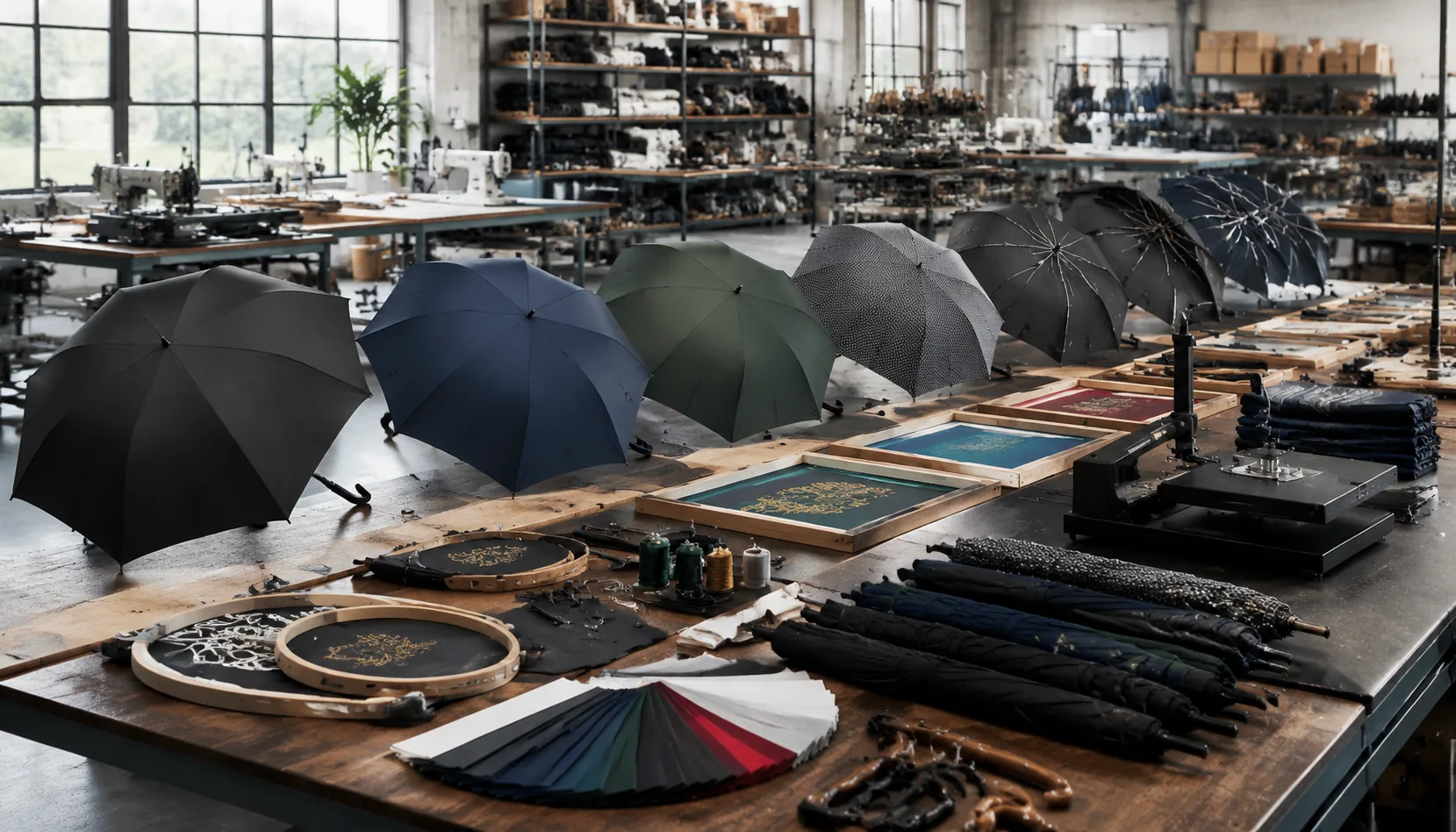
Matching Logo Methods to Umbrella Order Volume and SKU Mix
Compare logo methods by MOQ, SKU count, and lead time so buyers can choose a cost-efficient umbrella branding setup for ...
Read More »Debossed vs Printed Logos on Umbrella Components
Compare debossed, printed, and molded branding on umbrella parts, with durability, MOQ, and artwork setup guidance for b...
Read More »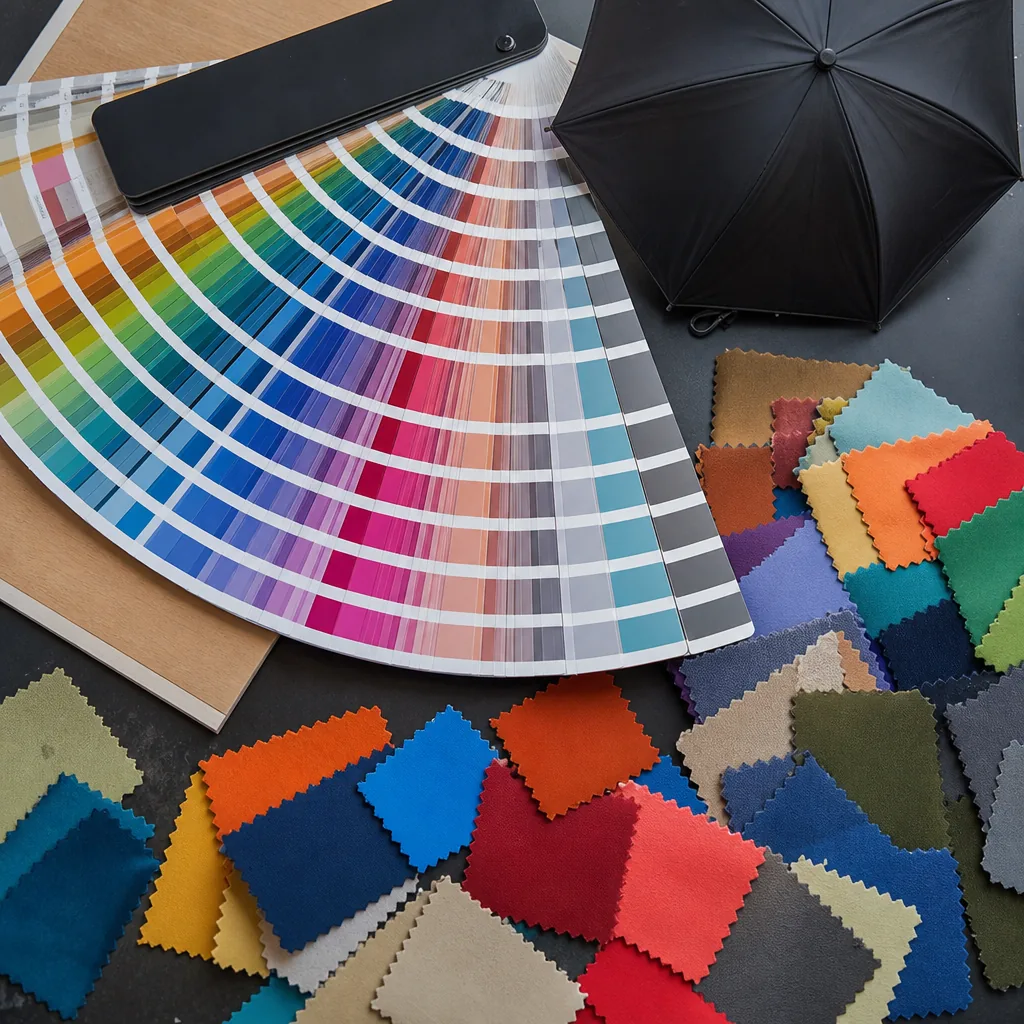
Multi-Color Logo Setup for Umbrella Brand Programs
Plan multi-color umbrella logos with clean registration, strong contrast, and realistic production limits to protect bra...
Read More »