Umbrella Handle Materials and Grip Options for OEM Buyers
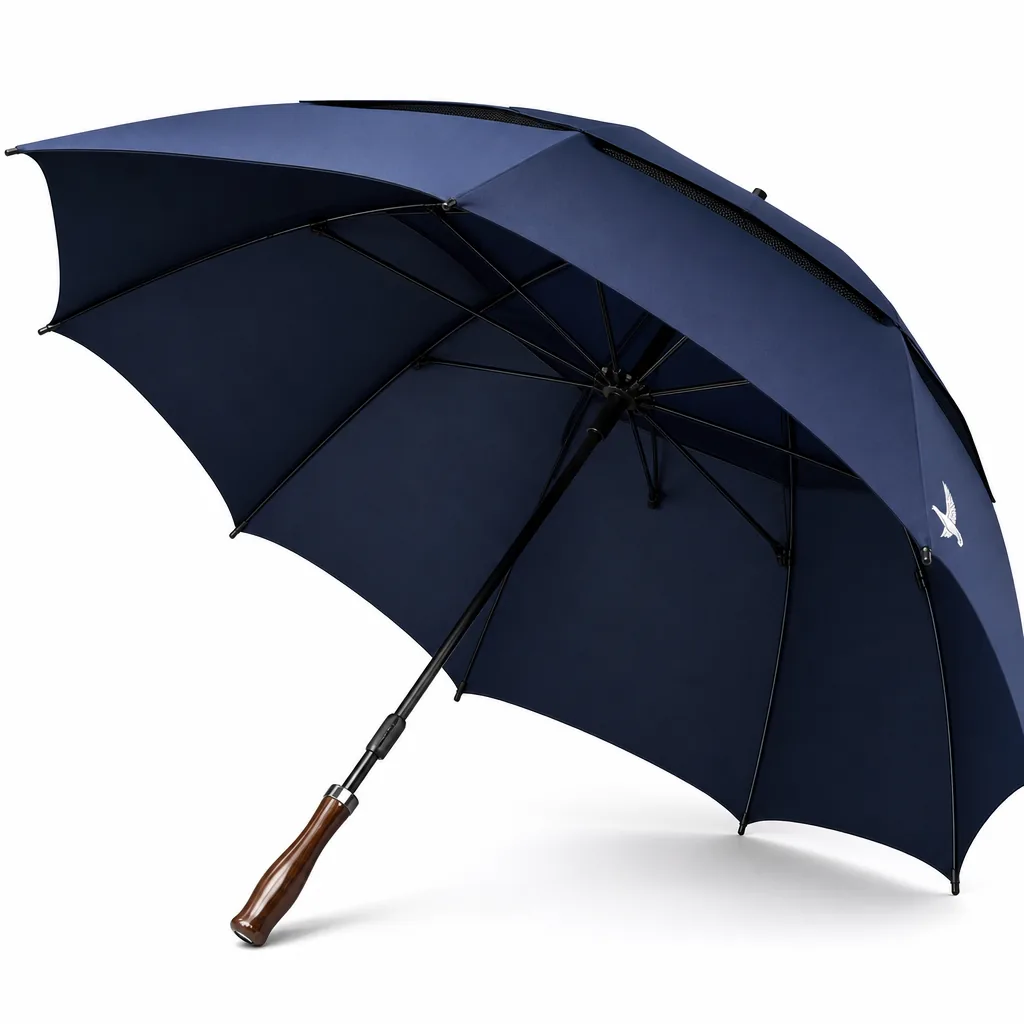
A handle choice that looks simple on a sample table can change the feel, failure rate, and brand impression of an entire OEM umbrella order. On our factory floor, we see umbrella handle materials behave differently during molding, bonding, logo application, packing, and humidity exposure, especially when buyers mix rubber, EVA, wood, ABS, and soft-touch finishes across one program. The right spec starts with grip comfort, but it has to end with repeatable production control.
Handle material choices and what each one changes
Handle choice changes landed cost before the canopy is priced because the mold, insert, finish, logo method, and assembly step sit outside the fabric and frame BOM. ABS plastic is still the default for cost-driven promotional umbrella specs: it is light, color-stable, easy to mold into straight, crook, pistol, or C-shape profiles, and a basic J-handle on a 23 inch auto-open umbrella can stay around USD 0.20-0.35 at volume when the factory uses an existing mold. Glossy ABS fits giveaway builds with 190T pongee, steel shafts, and 8K steel ribs; it looks weak on retail umbrellas unless the whole product is positioned as economy grade. Soft-touch paint, two-shot molding, custom color matching, or a badge insert raises unit cost and sampling risk, so buyers should confirm Pantone tolerance, logo method, and cosmetic AQL before approving mass production.
Rubberized and EVA handles move the decision from lowest cost to grip control. A rubber handle umbrella usually uses TPR, TPU coating, or a rubber-like overmold on ABS, giving better wet-hand control than smooth plastic on compact auto-open-close models. EVA is lighter and softer, common on 27 inch, 30 inch, and 62 inch arc golf umbrellas with fiberglass shafts and 8K or 16K ribs; it reduces hand pressure but can dent, collect dust, or fade if the compound is weak. For an ergonomic grip umbrella on a windproof double-canopy model rated around 50+ mph, shaped EVA or rubberized ABS usually outperforms decorative metal. Lock Shore hardness, coating adhesion, and logo execution in the tech pack, because molded marks, pad prints, laser marks, and fitted badges age differently in use.
Wood and metal increase perceived value but add inspection, packing, and lead-time risk. A wooden umbrella handle, usually beech, maple, bamboo, or rubberwood, suits executive gifts, boutique retail, and 23 inch straight umbrellas using 210T pongee or RPET canopy fabric. Because real wood varies, AQL 2.5 inspection should check grain range, color tolerance, cracking, varnish bubbles, and shaft-joint tightness, not only surface scratches. Metal handles, typically aluminum alloy or zinc alloy, support anodizing, brushing, or chrome plating and feel premium, but they add weight, can make compact umbrellas tail-heavy, and feel cold in wet weather. In OEM umbrella sourcing, match umbrella handle materials to the sales channel first: ABS for high-volume promotions, rubberized or EVA for outdoor function, wood for classic retail, and metal only when the buyer accepts extra weight and stronger carton protection.
Grip shape, size, and carrying comfort
Grip geometry should follow the umbrella format and use case, not the artwork. Straight handles fit 21" and 23" folding umbrellas, especially auto-open-close models, because the shaft, push button, and closing stroke stay aligned. J-hook and curved handles make more sense on 23" and 27" stick umbrellas, where users expect to hang the umbrella from a wrist, retail rack, desk edge, or cafe chair. The curve must leave knuckle clearance: a tight hook may look refined on a pre-production sample but becomes awkward during a crowded, wet commute. For an ergonomic grip umbrella, specify a palm swell, softened thumb rest, and clean mold parting line before adding decorative texture. Those details reduce finger pressure and wrist fatigue after about 20 minutes in rain, especially when the user is also carrying a laptop bag, phone, or shopping tote.
Handle diameter is a comfort and cost decision within umbrella handle materials, not a minor trim choice. A slim 22-24 mm plastic grip keeps promotional umbrella specs compact and lowers resin use, but it forces users to pinch harder in wind and raises fatigue on longer commutes. For adult stick umbrellas, 28-32 mm is usually the safer range. For 27" and 30" golf umbrellas with 8K or 10K fiberglass ribs, 34-38 mm can be justified because the larger canopy creates more wrist leverage. Oversizing still needs weight control. A dense wooden umbrella handle can support a premium retail position, but with a lightweight 190T pongee canopy it may feel handle-heavy and poorly balanced. In OEM umbrella sourcing, approve the full assembly weight and balance point, not the loose handle sample.
Wet-weather handling is the main complaint risk. A rubber handle umbrella gives better control when palms are wet, oily from sunscreen, or cold, and it helps on double-canopy vented windproof models rated around 50+ mph because twisting force transfers through the grip. EVA foam feels warmer in cold weather, but low-density foam can dent under carton compression during storage or ocean freight. TPR overmold on ABS is usually more durable for repeat retail use because it combines structure with slip resistance. ZheBrella checks handle comfort with wet hands because dry sample-room handling misses the real failure modes: a grip that rotates on the shaft, turns slick after one storm, or feels unstable under canopy load. A slightly higher FOB price is easier to defend than preventable returns caused by poor grip control.
Branding methods for handles and shafts
Lock handle and shaft branding before sample approval because the right process depends on umbrella handle materials, grip radius, and the wear point. Pad printing is the broadest choice for ABS, PP, EVA, and rubberized coated handles, especially straight stick handles, flat trigger buttons, and auto-open-close grip panels. For a rubber handle umbrella, test ink adhesion on the actual soft-touch oil or TPR compound; low surface energy may require primer, a different coating, or simplified artwork. Buyers should provide vector artwork, Pantone reference, logo size in millimeters, and placement measured from a fixed reference point such as the butt end, button center, or shaft joint. On an ergonomic grip umbrella, a compact 25-35 mm logo usually stays sharper than a long horizontal mark that wraps around the curve and distorts under hand contact.
Use laser engraving when abrasion resistance matters more than full-color reproduction. It performs best on aluminum shafts, anodized ferrules, metal nameplates, bamboo, and a wooden umbrella handle with a dense sealed surface. The mark lasts longer than ordinary pad printing because the laser cuts into the base material or removes the coating layer, which suits retail umbrellas, golf umbrellas, and executive gift programs handled repeatedly. On matte black aluminum, engraving may expose silver base metal; on plated parts, contrast depends on coating thickness. For promotional umbrella specs, state whether the result should be subtle tone-on-tone or high contrast, because that choice affects surface finish, engraving file setup, and approval sampling. Inspect engraving depth, edge burn, readability, and shaft marks after dry rub testing and opening-closing cycles where the runner contacts the shaft.
Choose embossing or debossing for EVA foam, PU leather wraps, silicone sleeves, and molded TPR grips; avoid it on hard ABS unless the order can absorb a dedicated mold insert. For OEM umbrella sourcing, color-matched molding is the most stable route when the handle itself must hit a brand color: compound the plastic or TPR resin to the Pantone target before injection, then mold the logo in relief, pad print it, or fill it with contrast paint. This improves durability versus printing over a soft coating, but it can raise MOQ because resin mixing, mold setup, and color purge waste are tied to one production order. Specify logo height, relief depth such as 0.3-0.6 mm, Pantone deviation tolerance, and abrasion acceptance: 100, 300, or 500 rub cycles with no visible logo loss.
Durability, safety, and component pairing
Handle durability depends on the shaft-frame-handle system, not the grip material alone. A 23-inch manual straight umbrella with 8K steel ribs and a black steel shaft loads the handle differently than a 30-inch golf umbrella with 10K fiberglass ribs, an aluminum shaft, and a double-canopy vented frame. Heavier frames need deeper shaft insertion, a reinforced screw boss, or a metal insert; thin hollow plastic handles often crack at the rivet or loosen during shake and open-close tests. Compact auto-open-close designs add another constraint: the handle must hold the spring button, lock plate, and release travel without binding. For these models, ABS or rubberized ABS is usually more stable than a wooden umbrella handle. When comparing umbrella handle materials, buyers should confirm shaft OD, insertion depth, fixing method, and cycle-test target before approving shape or finish.
Safety checks should focus on early failure points. A rubber handle umbrella can improve grip, but TPR overmolding needs heat-exposure checks for oil bleed, odor, and edge lifting, especially after 30 to 45 days in polybags during ocean transit. Wood suits executive and retail programs, but the handle needs smooth sanding, sealed grain, consistent varnish, and no gap around the shaft joint; moisture at that joint can cause swelling or cracking. For an ergonomic grip umbrella, finger grooves should fit normal hand sizes without pressure points, and the button area must be reachable without pinching. Promotional umbrella specs should also test logo printing, laser engraving, or heat transfer for rub resistance, because a durable frame still fails the buyer if branding flakes during normal handling.
At ZheBrella, handle QC is inspected with the shaft, runner, and frame under AQL 2.5 because most defects appear at the connection point. Inspectors twist the handle by hand, pull along the shaft axis, open and close the umbrella repeatedly, and reject looseness, visible cracks, sharp parting lines, exposed metal burrs, poor button rebound, or glue overflow. Packaging is part of the approval, not an afterthought: wooden handles need sleeve protection, hooked handles need separation inside cartons, and soft-touch rubber grips should not press against wet printed canopies, POE/PVC windows, or other surfaces that can transfer ink. For OEM umbrella sourcing, approve the pre-production sample only after branding and final carton packing are confirmed, since tight carton compression can create transit damage even when the handle design passes factory testing.
How to write a handle specification for quotation
A quotation-ready RFQ should turn “good handle” into a buildable spec: umbrella handle materials, shape, finish, color, logo method, target FOB or DDP price, MOQ, and sample approval path. Write the line item the way production will build it: “23 inch auto-open straight umbrella, black 190T pongee canopy, fiberglass ribs, matte black ABS J-handle, one-color pad printed logo, target FOB Ningbo USD 3.20 at 3,000 pcs.” That gives the factory enough detail to check mold availability, shaft compatibility, assembly time, carton impact, and cost fit. For an ergonomic grip umbrella, state the construction: EVA foam, TPR rubber, soft-touch coated plastic, or dual-material PP plus TPR. A rubber handle umbrella usually costs more than plain PP because TPR carries higher shrinkage risk and slower molding cycles. For a wooden umbrella handle, specify beech, maple, bamboo, or rubberwood, plus varnish or stain reference; “wood color” is not a production standard.
Treat color and branding as controlled production requirements. Provide Pantone codes for molded plastic, sprayed coating, PU leather wrap, TPR, EVA, or wood stain, and name the logo process: pad printing, laser engraving, hot stamping, metal badge, epoxy dome, woven label, or custom molded insert. These promotional umbrella specs affect both unit cost and schedule. Pad printing on ABS may add only 2 to 3 days after canopy approval, while a debossed rubber insert or plated metal logo plate can add 10 to 18 days because the insert needs separate tooling and trial fitting. If color matching is required, allow one or two lab dips before the pre-production sample. At ZheBrella, handle color is checked under D65 light and rechecked after assembly, because black ribs and dark canopy fabric can change the perceived tone.
For OEM umbrella sourcing, include target FOB or DDP price, MOQ, destination country, carton requirements, and the exact approval sequence. FOB fits buyers managing freight; DDP requires delivery address, carton size, gross weight, and HS code handling because a 30 inch golf umbrella with a thick rubberized handle ships very differently from a 21 inch compact auto-open-close model. State whether approval requires a material chip, 3D drawing, blank handle sample, printed logo sample, or full pre-production sample. Existing handle molds usually keep sampling at 5 to 7 days and bulk lead time at 25 to 35 days after deposit. New tooling for a custom handle shape, embedded color insert, or proprietary ergonomic profile can push sampling to 15 to 25 days and bulk production to 40 to 55 days. Add inspection criteria, typically AQL 2.5 for major defects covering handle looseness, sharp edges, logo rub resistance, and color deviation.
Frequently Asked Questions
Which umbrella handle material is best for premium retail programs?
Wood and soft-touch rubberized handles are common for premium positioning because they improve perceived value and grip comfort. Buyers should still confirm moisture resistance and logo durability before approving mass production.
What handle details should be included in an OEM purchase order?
Specify handle material, shape, finish, logo method, color Pantone if needed, and whether a wrist strap or hook is required. Also confirm MOQ, sample lead time, and if the offer is FOB or DDP.
Which handle material is best if we need a logo that stays sharp in high-volume promotional orders?
ABS and lacquered wood usually give the cleanest logo results for pad printing or laser engraving because the surface is stable and consistent. Soft-touch and rubberized finishes can look premium, but artwork may need larger line widths and adhesion testing before mass production.
What handle specifications should buyers confirm before approving an OEM umbrella sample?
Confirm handle material, finish, color code, grip diameter, attachment method, logo process, and pull-force fit to the shaft. Buyers should also ask for a signed sample or pre-production sample, because a 2-3 mm change in grip diameter or a finish change can affect both comfort and carton packing.
Do different handle materials affect MOQ or lead time for custom umbrellas?
Yes. Standard ABS or EVA handle options often fit the base umbrella MOQ, while custom-molded or special-finish handles may require separate tooling and a higher MOQ, often 1,000-3,000 pieces depending on the factory setup. Custom handle development can also add about 7-15 days to sampling and 10-20 days to bulk production.
Looking to Launch Your Custom Umbrella Line?
ZheBrella is a Zhejiang-based OEM/ODM umbrella manufacturer with 17 years of export experience. Free design, low MOQ from 100 pieces, windproof construction, full-color print.
Get Free Quote Now »People Also Search For
Related Articles
Umbrella Handle and Tip Options for Retail and Promo Buyers
Compare handle shapes, grip materials, and tip constructions so buyers can match comfort, branding, and durability to ea...
Read More »
Best Stick Umbrella Specs for Retail and Corporate Buyers
Compare stick umbrella frames, canopies, handles, and QC checkpoints for retail, corporate gift, and uniformed service s...
Read More »
Wooden Handle vs EVA Grip Umbrellas for Retail and Promo
Choose between wooden handles and EVA grips by comparing feel, durability, branding options, cost, and buyer specs for r...
Read More »