Umbrella Handle Molds and Tooling Costs for OEM Projects
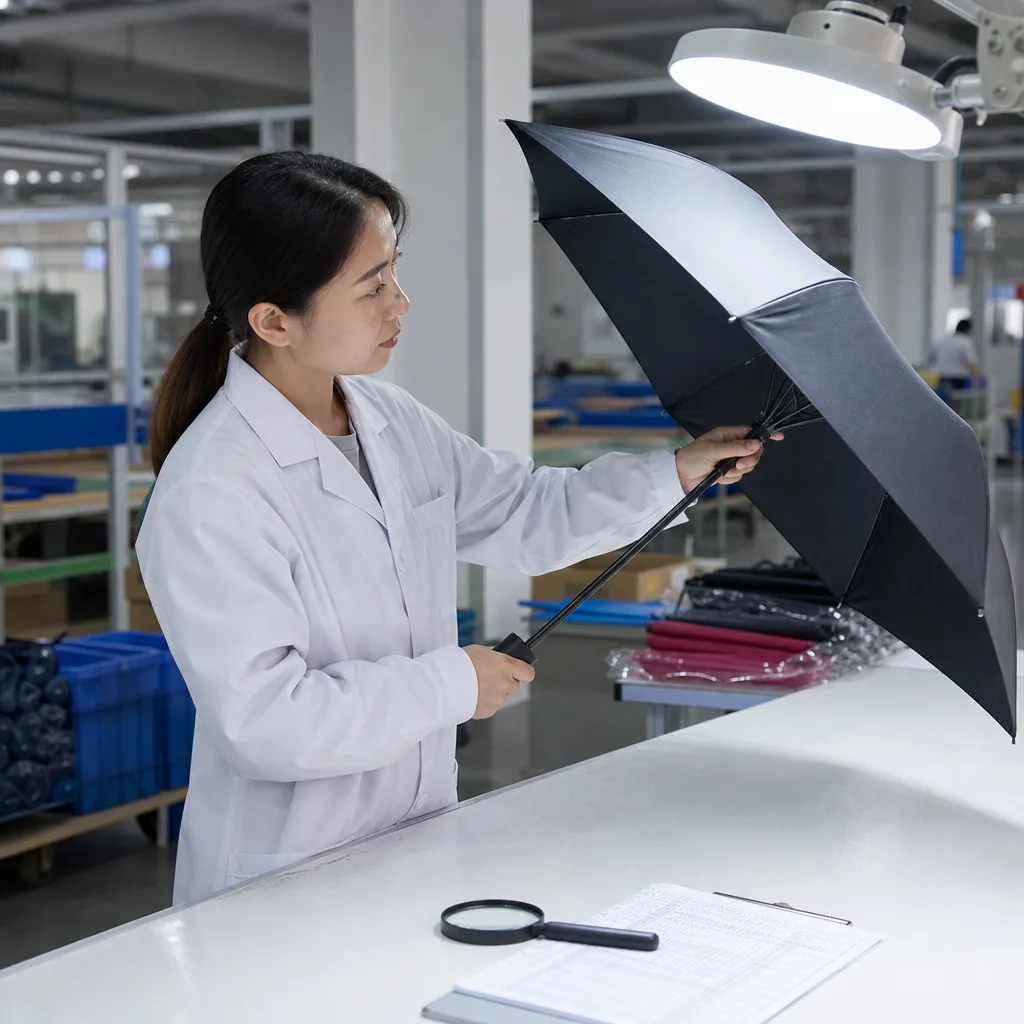
For OEM umbrellas, the handle is often where cost, MOQ, and timing start to move, because a new shape can require fresh tooling, trial shots, and fit checks against the shaft and runner. Buyers asking about umbrella handle mold cost usually need more than a tooling quote; they need to know how 3D drawings, cavity count, material choice, and sample approval will affect unit price and production lead time once the mold reaches the factory floor.
When a Custom Handle Needs New Tooling
A custom handle does not automatically require new OEM umbrella tooling. If you keep the same straight, crook, or bottle-style handle body and only change decoration, the factory can often run an existing mold. Typical no-tool or low-tool changes include pad printing, laser marking on a plated cap, or replacing a shallow logo on a removable badge insert. Some surface textures can also be revised with EDM rework or interchangeable inserts, but only when the core geometry stays fixed: parting line, wall thickness, draft angle, gate position, and ejection layout. The line where cost changes is usually structural, not graphic. A deeper embossed or recessed logo, wraparound branding, finger grooves, a new silhouette, or a different end-cap diameter can alter resin flow and release, which usually means new tooling. On auto-open-close umbrellas, tolerances are tighter because the handle cavity must align with the button housing and spring channel, so even small dimensional changes can trigger new-tool review. That is where umbrella handle mold cost shifts from a minor design choice to a real sourcing decision affecting lead time, risk, and MOQ.
Material drives that decision. ABS and PP handles are the standard choices for folding and golf umbrellas because both mold reliably at scale; ABS gives a cleaner cosmetic surface and plates better, while PP is tougher and usually lower cost but holds fine detail less sharply. Add an EVA overmold for a soft-touch grip and the project typically moves from one tool to a hard-substrate mold plus a second overmold tool, with tighter alignment control to avoid seam flash. Mixed-material builds such as an ABS core with PP trim, a TPR button, or a metal badge also add assembly jigs and stricter dimensional control. Wood handles follow a different cost model: many crook styles are shaped rather than injection molded, so mold spend can be lower, but sanding, lacquer finishing, and natural color variation raise unit cost and sample approval risk. MOQ usually follows the tooling path: insert or logo changes can work at 500 to 1,000 pieces; a new injection mold is easier to justify at 2,000 to 3,000; EVA overmold or dual-material custom handle development often needs 3,000 to 5,000. The safest sample approval process is 3D drawing signoff, then a CNC or 3D-printed appearance sample, then the T1 molded sample, and finally a sealed pre-production sample before mass production.
Typical Mold Costs, Timelines, and Sampling Steps
For OEM programs, the first cost split is simple edits to an existing handle family versus a new steel tool. If you only change a logo insert, texture plate, or end cap on an existing mold, the umbrella handle mold cost is typically USD 300-1,200, provided shaft diameter, push-button position, and core geometry stay the same. Once the grip profile, finger grooves, strap slot, or internal bore changes, it becomes OEM umbrella tooling rather than a minor revision. In Songxia, a basic single-color straight-handle mold for ABS PP handles usually lands at USD 1,500-3,500. Crook handles or ergonomic pistol-grip designs with side actions, higher polish, or a two-cavity tool are more often USD 3,500-8,000. Add TPR overmolding, hidden button channels for auto-open-close frames, or a matched top-cap and handle set, and custom handle development can push tooling to USD 8,000-12,000. For buyers, the decision is straightforward: only fund a new tool when the new grip materially improves user comfort, branding, or frame compatibility enough to offset higher tooling risk and a longer launch timeline.
Lead time follows the same pattern. Insert work can be finished in 7-12 days if the mold base already exists and outsourced EDM or laser texturing does not slip. A full new handle mold usually takes 18-30 days for drawing approval, steel purchase, CNC machining, fitting, T1 trial shots, and corrections; undercuts or soft-touch overmolding often extend that to 35-45 days. Plan for 2-3 sample rounds, not one, in the sample approval process. Round one is usually a 3D print or T1 molded handle to confirm shape and hand feel. Round two is the corrected pre-production sample assembled on the actual umbrella, normally ready 5-7 days after tool adjustment. A third round is usually limited to branding position, gloss, paint color, or button action issues. T1 parts can still show sink near the strap hole, parting-line mismatch, gate vestige, or loose tube fit, especially on 21 inch and 23 inch folding frames with tighter tolerances. If the handle, canopy print, and trim colors all change together, budget 3-6 weeks for tooling, 1-2 weeks for approvals, and about 25-35 days for bulk production after sign-off at MOQ 1,000-3,000 pieces. The best control on umbrella handle mold cost is to freeze CAD early and keep each sample round limited to one change set.
How Handle Design Affects Assembly and Durability
Handle durability is set at the shaft interface, not by the surface finish. In OEM umbrella tooling, the handle bore, shaft OD, tube wall thickness, and bore depth have to match the full frame stack before styling is frozen. A straight handle on a 14 mm shaft uses a different seat and anti-rotation layout than a crook or pistol grip on a 12 mm folding shaft. Auto-open and auto-open-close frames add another requirement: internal clearance for the spring tube, release button, and housing, or assembly slows and misfires increase. On 21 inch tri-fold and five-fold umbrellas, the handle also has to lock the telescopic shaft without rattle, so latch position, cavity depth, and strap-anchor placement become structural dimensions, not cosmetic details. That is often where umbrella handle mold cost increases during custom handle development, because even a minor geometry change can force new core pins, revised inserts, or a different assembly jig and add days to the tooling schedule.
Material selection changes how the handle fails under load. ABS and PP handles are both standard, but ABS usually gives sharper logo detail and a cleaner cosmetic surface, while PP handles impact better and are less likely to crack at the shaft entry on lower-cost folding umbrellas. Poor bore-to-shaft fit leads first to rotation, then enlarged rivet holes, adhesive failure, and a loose handle in use. Crook handles need controlled wall transitions as well; thick-to-thin sections shrink unevenly, which can create knit lines and cold-weather cracking. Overmolded EVA or rubberized grips fail when adhesion is weak, typically from low surface energy, mold-release residue, or too little mechanical undercut. Frame choice changes the requirement again: steel frames, especially 23 inch and 27 inch auto-open styles, transmit more closing shock into the neck and socket, so reinforcement matters more; fiberglass ribs reduce rebound stress but can flex enough in gusts to twist an undersized anti-rotation flat. The sample approval process should therefore include repeated open-close cycling, torque checks, and drop testing before sign-off, because a low umbrella handle mold cost can quickly become a warranty problem.
Branding Options Beyond Basic Logo Printing
Pad print is usually the lowest-risk branding method when the handle geometry is fixed and you only need a logo on ABS PP handles. On smooth ABS, 1-color or 2-color pad print gives the sharpest edges, and the setup cost is typically limited to a cliché plate at about $150-$400 rather than new OEM umbrella tooling. Buyers often compare that spend with umbrella handle mold cost, but the decision is simple: pad print decorates an existing part; tooling changes the part itself. The limitations are substrate and curvature. Matte PP, soft-touch coatings, and deeply curved pistol grips are more likely to show adhesion failure or image distortion unless you add primer or a clear protective varnish, which raises unit cost and adds another checkpoint in the sample approval process. For dark ABS, laser engraving is often the safer long-life option because the mark will not rub off in normal handling. The tradeoff is contrast. Some ABS grades burn to a clean light mark, while many black PP compounds only turn dull gray, which is durable but may not hold small logos or fine text clearly.
Debossing is the most durable choice when the brand mark should survive abrasion, but it belongs to custom handle development, not post-decoration. On injection-molded handles, a debossed logo is cut into the steel and usually looks more premium than surface print, but it requires mold modification, added sampling time, and a new sample approval process before production. Detail limits matter: lines below about 0.25 mm can soften or fill after mold texturing, especially on pebbled PP. Metal badges are the typical upgrade for ABS PP handles or mixed-material grips when buyers want a longer-life branded element without relying on print adhesion. Zinc alloy, stainless, and aluminum badges can be recessed, glued, pinned, or overmolded, but assembly tolerances are tighter; a badge pocket off by 0.2 mm can look visibly crooked on a straight handle, so first-article review should be stricter than for pad print. Color-matched inserts are a practical middle ground when you need stronger branding without paying full umbrella handle mold cost for a new shape. Pantone matching is realistic on virgin ABS and some PP masterbatch systems within normal production tolerance, but wood-grain finishes, recycled resin, rubberized coatings, textured plastics, and natural wood will shift color. In those cases, expect visual variation rather than exact chip matching; laser, foil stamp, or a metal badge is usually the safer specification.
Questions Buyers Should Settle Before Paying Tooling Fees
Before paying any umbrella handle mold cost, define ownership in the tooling agreement, not just on a tooling invoice. Many suppliers treat OEM umbrella tooling as factory-controlled unless the PO or contract states that the buyer owns the steel mold. Lock down five items: mold ownership, exclusivity, transfer rights, permitted use for other customers, and the exact CAD scope covered. Tie exclusivity to the approved 2D drawing and 3D file, not a broad description like a curved golf grip. The agreement should also identify the mold number, cavity count, steel grade, and storage location, plus whether the quoted scope covers ABS PP handles only or also texture etching, logo inserts, color masterbatch, and any overmolded TPR parts. That level of detail matters because the biggest cost overruns usually come after approval, when the factory bills separately for logo revisions, texture changes, or secondary inserts the buyer assumed were included.
Storage and change-control terms are just as important as the initial custom handle development quote. Put in writing how long the mold will be stored after the last shipment, who pays for preventive maintenance, how rust protection is handled, and how the mold can be retrieved if the project goes inactive for 12 to 24 months. Separate no-charge functional corrections from billable buyer-driven revisions. If first shots show a shaft bore off by 0.3 mm, poor draft causing drag marks, or fit problems on a 14 mm versus 16 mm shaft, those issues should not be treated the same as styling changes to handle length, finger grooves, logo depth, or neck profile. For the sample approval process, require loose handles and at least one assembled umbrella from the same trial run. Approve against measurable standards: handle weight, color match, gloss, push-button alignment on auto-open or auto-open-close frames, and fit consistency on the shaft without wobble, cracking, sink marks, or weak bonding. During bulk production, inspect appearance and fit to AQL 2.5, with defect limits for flash, gate marks, sharp parting lines, logo blur, and color streaking; if goods ship retail packed, add a simple carton drop check to screen for brittle handles before shipment.
Frequently Asked Questions
Can I avoid a new mold if I only want my logo on the handle?
Often yes if the factory can use pad printing, laser engraving, or a metal badge on an existing handle. A new mold is usually needed when you change the handle shape, add deep embossed branding, or redesign the grip structure.
Does a custom handle usually increase MOQ?
Yes, in many OEM projects a custom handle raises MOQ because the factory needs to amortize tooling and manage dedicated components. The exact MOQ depends on the handle material, whether the mold is exclusive, and whether the umbrella uses a standard or custom frame.
What files should a buyer send to quote a new umbrella handle mold accurately?
A factory can quote faster with a 3D STEP or IGES file, 2D dimension drawing, target material such as ABS or PP, surface finish requirement, logo artwork, and the handle's fit to the shaft diameter. If only reference photos are available, expect an extra design-confirmation step before tooling starts.
When does a handle mold require more than one cavity, and how does that affect cost?
Single-cavity molds are common for trial orders or lower annual volume, while 2-cavity or 4-cavity molds are typically considered when repeat demand justifies faster output. Multi-cavity tooling raises the upfront mold cost but usually lowers per-unit molding cost and helps shorten production time on larger orders.
What changes after sample approval can still be made without cutting a new mold?
Minor changes such as color, logo print, or small texture adjustments may be possible after approval, depending on the decoration method. Structural changes like grip shape, finger grooves, wall thickness, or shaft-fit dimensions usually require mold modification or a new mold, which can add 7-15 days or more.
Looking to Launch Your Custom Umbrella Line?
ZheBrella is a Zhejiang-based OEM/ODM umbrella manufacturer with 17 years of export experience. Free design, low MOQ from 100 pieces, windproof construction, full-color print.
Get Free Quote Now »People Also Search For
Related Articles
How Custom Umbrella Molds Affect Cost, MOQ, and Lead Time
Learn when new umbrella molds make sense, what tooling changes cost, and how they affect MOQ, sampling, and production t...
Read More »
Umbrella Handle Mold Development for Custom OEM Projects
Learn how custom umbrella handle molds are quoted, sampled, textured, tested, and scaled for OEM programs without delayi...
Read More »ODM Umbrella Tooling and Molds: Cost, Ownership, and DFM Rules
Plan ODM umbrella tooling with clearer mold scope, DFM checkpoints, and ownership terms to reduce delays, fit issues, an...
Read More »