ODM Umbrella Tooling and Molds: Cost, Ownership, and DFM Rules
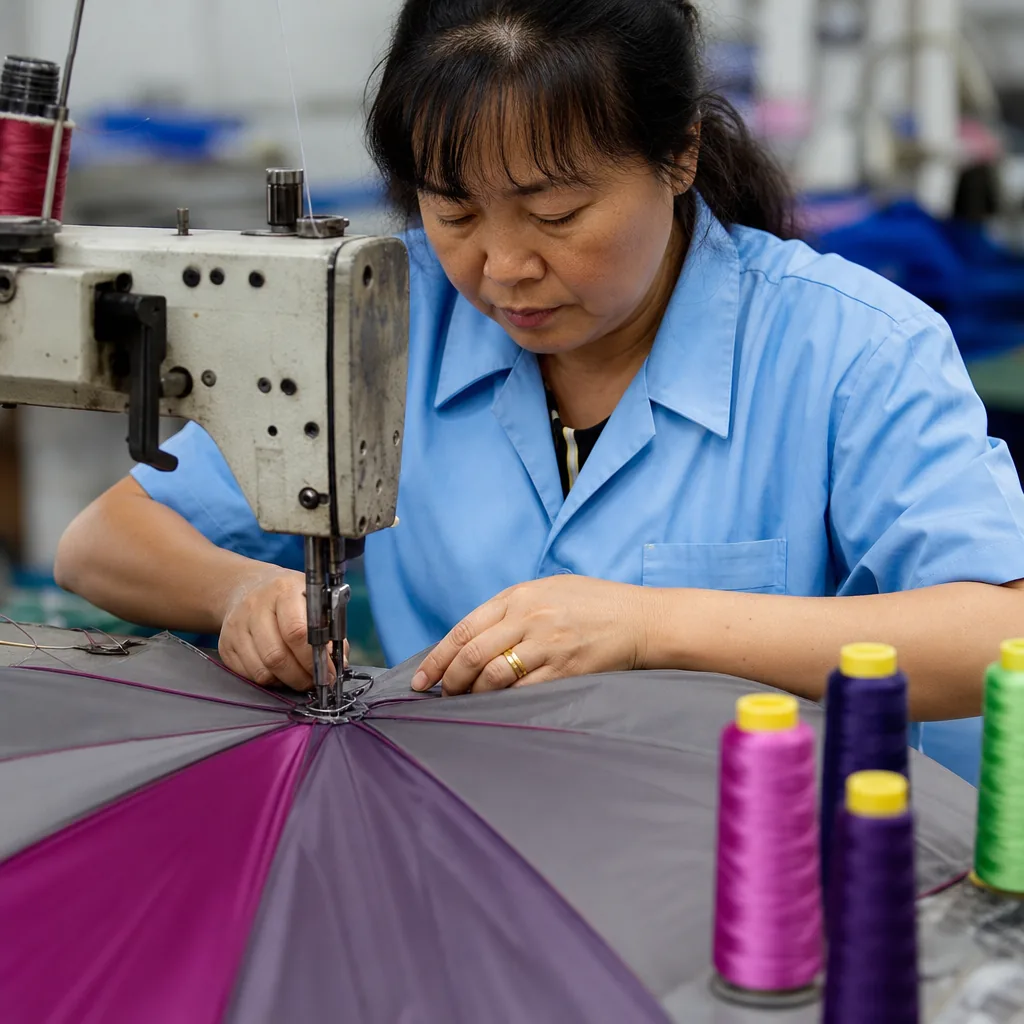
When an ODM umbrella project stalls, it is usually not because the buyer lacks ideas, but because the tooling scope, DFM assumptions, and ownership terms were never pinned down before steel was cut. In our factory, the first budget shock often comes from the umbrella handle mold cost, followed by late changes that ripple through ribs, shafts, and assembly fit. Clear mold responsibility, measurable drawings, and early process review are what keep development moving and prevent avoidable rework.
Which Umbrella Parts Need Tooling in ODM Development
In ODM umbrella development, the parts that usually need tooling are the ones that affect hand feel, assembly fit, or shelf differentiation: handles, top caps, runners, ferrules, push-button housings, and some packaging inserts. The canopy itself is normally not molded; it is cut and sewn from pongee 190T or 210T, sometimes with a POE or PVC panel for transparent styles. If you stay with standard factory components on a 21" folding umbrella — for example, a stock PP or ABS handle, a common runner, and a standard top cap — you can use existing molds and shorten lead time. Once you ask for a logo-embedded grip, a custom contour, or a proprietary open-close button, you move into umbrella tooling and should plan for higher upfront cost, longer sampling, and more risk in umbrella product development.
The biggest line item is usually the umbrella handle mold cost. A simple straight handle may already exist in the factory library, but a sculpted retail handle, soft-touch overmold, or hidden badge typically requires a new mold and a higher MOQ to spread the cost. In practice, a two-cavity mold is common for basic parts; deep texture, undercuts, or two-shot construction add cost and can slow first samples. That is why custom handle mold ownership matters: some buyers let the factory keep the mold for repeated production, while others pay for exclusive use or transfer the tool after amortization. In design for manufacturing umbrellas, the decision comes down to margin and reorder volume, not aesthetics alone.
Top caps, ferrules, and runners are smaller parts, but they still control durability and assembly quality. A stock top cap or ferrule is often adequate for 8K or 10K steel-rib stick umbrellas and basic promotional folding umbrellas, while fiberglass frames, auto-open models, and 16K wind-rated designs usually need tighter tolerances so the stem, spring, and rib ends do not rattle or wear early. Packaging inserts follow the same logic: standard polybags and cartons are enough for bulk programs, but e-commerce trays or blister-style inserts make sense when the buyer needs the umbrella locked in place for retail or direct-to-consumer shipping. The practical rule is simple: use standard factory parts when speed and low cost matter, and invest in exclusive molds only when the design is locked, the program is large enough to recover tooling, and the retail difference is worth the added lead time and risk.
How Tooling Choices Affect Cost, MOQ, and Lead Time
The fastest way to inflate an ODM umbrella tooling budget is to treat the handle as a decorative part instead of a production part. For a standard PP or ABS handle, the umbrella handle mold cost is usually driven by cavity count, wall thickness, draft angles, and whether the shape has undercuts, engraved logos, or a soft-touch overmold. Once you add TPE grips, chrome-look plating, deep texture, or a two-shot finish, the tool needs more steel, more polishing, and more T0/T1 sampling time. That is where NRE rises: design freeze, DFM review, mold steel, first articles, and correction shots are all part of custom handle mold ownership. If the buyer keeps changing grip diameter, hook radius, or logo depth after sampling, the mold is no longer a one-time expense; it becomes a moving target with more rework and more cost exposure.
MOQ and lead time usually follow the same curve. A simple handle with a standard matte finish can support a lower MOQ because it needs fewer trial shots and less process control, while a complex part with inserts, color matching, or coating often pushes the first run higher. In umbrella product development, the handle material should be locked early because PP, ABS, TPR, and EVA each change mold shrink, surface quality, and handling feel. That choice also affects whether the part can come out cleanly without scuffing in export packing. In practice, sampling rounds often take longer than the tool build itself: a clean mold may move from steel to pilot samples in 25 to 35 days, but each extra correction round adds days before bulk release. Buyers should budget for several T0/T1 iterations, not just the mold cut.
The handle decision also affects the rest of the umbrella. If the new grip changes the shaft interface, push-button geometry, or auto-open spring load, you are no longer buying only a handle tool; you are changing the frame stack as well. The same is true when moving from steel ribs to fiberglass ribs or switching to auto-open or auto-open-close systems, because the load path, button location, and user force all change. Good design for manufacturing umbrellas means freezing the handle, shaft, and opening system together before tooling starts, or the mold and frame specs will fight each other during assembly. For buyers, the real risk is schedule drift: a handle mold revision plus frame validation can add 10 to 20 days to bulk timing, especially if samples must still clear AQL 2.5, function cycling, and carton drop checks before PO release.
DFM Checks That Prevent Fit and Durability Problems
Before steel is cut, freeze the handle-to-shaft stack-up in the DFM review: shaft OD, ferrule OD, button boss depth, grip bore, insert depth, glue allowance, and draft on every pull face. For odm umbrella tooling, the common failures are predictable: a bore that is 0.5 mm too tight can scrape a plated shaft and slow assembly, while a bore that is too loose lets the handle rotate under torque and drives warranty returns. Validate the CAD stack with a 3D interference check, then confirm it with a physical sample, because mold release angle, ejector access, and steel insert wear all change the real part. Add anti-slip ribs, a lanyard groove, or a retention clip only after proving they do not block shaft insertion or the assembly fixture. That is where umbrella handle mold cost should be evaluated: the lowest quote is not lower if it causes hand fitting, sample delays, or a second insert revision.
Runner clearance and rib folding path need the same discipline, especially when comparing 8K and 16K geometry. An 8K frame usually leaves more room for the runner, stretcher, and rib tips, so small tolerance errors may still close cleanly. A 16K frame folds into a tighter bundle, which raises collision risk if slider travel, rib nesting, or tip orientation is not modeled in the closed position. Check the frame with the canopy installed, not just as bare metal, because 190T and 210T pongee change seam thickness and hem bulk; 210T adds more thickness and can shift the fold line. A double-canopy build adds even more bulk at the vent and crown, which can change rib stacking and final closed diameter. In design for manufacturing umbrellas, review fold direction, canopy tie placement, and closing force before tooling release, not after first articles.
Packing dimensions should be locked before mold approval, because carton-fit problems are expensive to fix after custom handle mold ownership is already tied to steel. Confirm the closed length with the canopy tied, hangtag attached, tip cap installed, and all fabric layers compressed the way they will ship. If the handle profile is too wide or the tie tape sits too high, the umbrella can miss carton clearance by 5 to 8 mm; if the ferrule or tip cap is oversized, the packed length can exceed shelf or freight limits. Set the outer carton first, then give the mold team the target closed length and side-clearance margin, usually at least 3 mm per side, so the handle, runner, and canopy stack fit the same package. Require a signed DFM sheet, closed-length mockup, and packaging gauge before tooling release; otherwise the real umbrella handle mold cost often rises through rework, re-cut inserts, and delayed samples during umbrella product development.
Sample Validation After Tooling: What Buyers Should Test
T1 and T2 review should confirm that the tool repeats the approved part, not just one good-looking sample. For umbrella product development, buyers need to check appearance, texture, gloss, parting line, sink marks, flash, and color match on the handle, runner, tip, ferrule, and push button against the signed drawing and master sample. Compare each molded part with the planned AQL 2.5 cosmetic standard before mass production. A sample that looks acceptable on the bench can still fail once it is assembled with the shaft, ribs, and canopy, so this is where umbrella handle mold cost must be judged against rework risk, not only the first tooling invoice. If surface texture, draft angle, or color shift needs correction after steel is cut, the change usually costs more than the original adjustment.
Assembly testing should use real frame parts, not loose hand samples. Check button travel, locking sound, opening and closing force, ferrule engagement, shaft tolerance, and full-mechanism fit with the actual umbrella size, whether 21", 23", 27", or 30". A proper DFM review for design for manufacturing umbrellas also includes drop resistance: the handle should not crack, loosen, or misalign after a floor drop, and the push button should still function normally after impact. Buyers should also verify compatibility with labels, hang tags, polybags, and cartons; if a molded hanger hole, boss, or handle shape blocks packaging, that is a tooling issue, not a warehouse problem.
Before release to mass production, compare every T2 part against the approved drawings and agreed cosmetic limits, not against the factory’s best-looking sample. Define acceptable marks, rejectable scratch length, and color tolerance under daylight and warehouse lighting, then record the result in the sampling report. For odm umbrella tooling, this is also the point to confirm custom handle mold ownership, cavity count, and whether steel changes are included before pilot sign-off. If the molded handle, button, and accessories pass appearance, assembly fit, opening feel, drop resistance, and carton compatibility together, the tool is ready for full production and export packing.
Tool Ownership, Storage, and Exit Terms to Put in Writing
The first item to lock down is custom handle mold ownership, because a tool with no named owner becomes leverage the moment a program scales or changes suppliers. In any ODM umbrella tooling agreement, identify the mold by tool number, cavity count, steel grade, and the exact handle family it makes, then state ownership in one sentence. If the buyer pays the umbrella handle mold cost, say the mold is buyer-owned property and the factory holds it only as a bailee, with no lien, pledge, or collateral right. Put the storage address, access rules, photo documentation, and a 5-business-day return deadline after written notice into the contract. If the program moves factories, require release of the mold, the last approved samples, and the full inspection record set so the next supplier can match the original dimensions, surface finish, and assembly fit without guessing.
Maintenance needs the same level of precision. Separate routine upkeep from charged repairs: the factory handles cleaning, rust prevention, and minor polishing, but the buyer must approve any welding, EDM re-cutting, re-sinking, cavity insert change, or gate modification that could affect dimensions or grip texture. For umbrella product development, add a mold-life statement with expected shot count or production-cycle range, inspection intervals, and the trigger for retirement or rework. Spell out whether routine upkeep, spare inserts, and storage fees are included in the quoted umbrella handle mold cost or billed separately, and confirm that FOB or DDP pricing excludes future tooling upkeep unless the quote says otherwise. That point matters because freight terms cover shipment, not long-term mold maintenance. Keep the confidentiality language blunt: no CAD sharing, no duplicate cavities, no unauthorized repairs, and no production after termination except for a defined run-off quantity.
If the program changes factories, write the exit terms before first sample approval. State who pays for cleaning, packaging, inland transport, insurance, and requalification at the new site, and who bears the risk if the handle geometry shifts during transfer. For design for manufacturing umbrellas, require the outgoing factory to provide the latest approved CAD, tool drawings, maintenance log, and critical dimensions, but prohibit retention of spare inserts or sale of the same cavity to another buyer. Also specify whether a third-party mold maker can inspect the tool on site and whether repair work needs written approval before any steel is touched. If the buyer owns the mold, the contract should require immediate release on breach of payment, quality, or confidentiality terms, plus return of any spare parts and a written scrap-value allocation if the tool is retired. Those clauses control cost, lead time, and launch risk better than negotiating a lower piece price.
Frequently Asked Questions
Does paying for a custom umbrella handle mold automatically mean the buyer owns it?
Not automatically. Ownership, storage location, access rights, and transfer terms should be written into the tooling agreement and referenced on invoices or POs.
How long does a custom umbrella mold usually add to development?
Simple handle tooling may add a few weeks, while more complex textured or multi-part designs can take longer when T1 and T2 revisions are needed. Bulk lead time should start only after the final tooling sample is approved.
What parts of an ODM umbrella usually need separate molds?
Most ODM programs need separate tooling for the handle, runner components, tip parts, and sometimes the canopy cap or shaft fittings. If the handle is custom shaped, that mold usually drives the highest upfront cost because it is the most design-specific part.
What is a practical DFM checkpoint before approving umbrella tooling?
A useful DFM review should confirm wall thickness, draft angles, parting line location, and how the handle will assemble with the shaft and ribs. Many factories also require a 2D drawing or 3D CAD file plus target material and color specs before cutting steel.
How are mold ownership terms usually handled in custom umbrella development?
In many B2B projects, the buyer pays for the tool but the contract should state whether the mold is exclusive, factory-held, or transferable after payment. It is common to define ownership in writing before tooling starts, including who can use the mold, where it is stored, and whether maintenance fees apply.
Looking to Launch Your Custom Umbrella Line?
ZheBrella is a Zhejiang-based OEM/ODM umbrella manufacturer with 17 years of export experience. Free design, low MOQ from 100 pieces, windproof construction, full-color print.
Get Free Quote Now »People Also Search For
Related Articles

How Custom Umbrella Molds Affect Cost, MOQ, and Lead Time
Learn when new umbrella molds make sense, what tooling changes cost, and how they affect MOQ, sampling, and production t...
Read More »Umbrella Handle Molds and Tooling Costs for OEM Projects
Learn how handle molds affect OEM umbrella cost, MOQ, and lead time, from 3D drawings and tooling fees to sample approva...
Read More »Umbrella Handle Overmolding: Grip Design, Tooling, and Cost
Understand how overmolded umbrella handles are made, what tooling adds to cost, and how grip design affects durability a...
Read More »