Umbrella Handle Overmolding: Grip Design, Tooling, and Cost
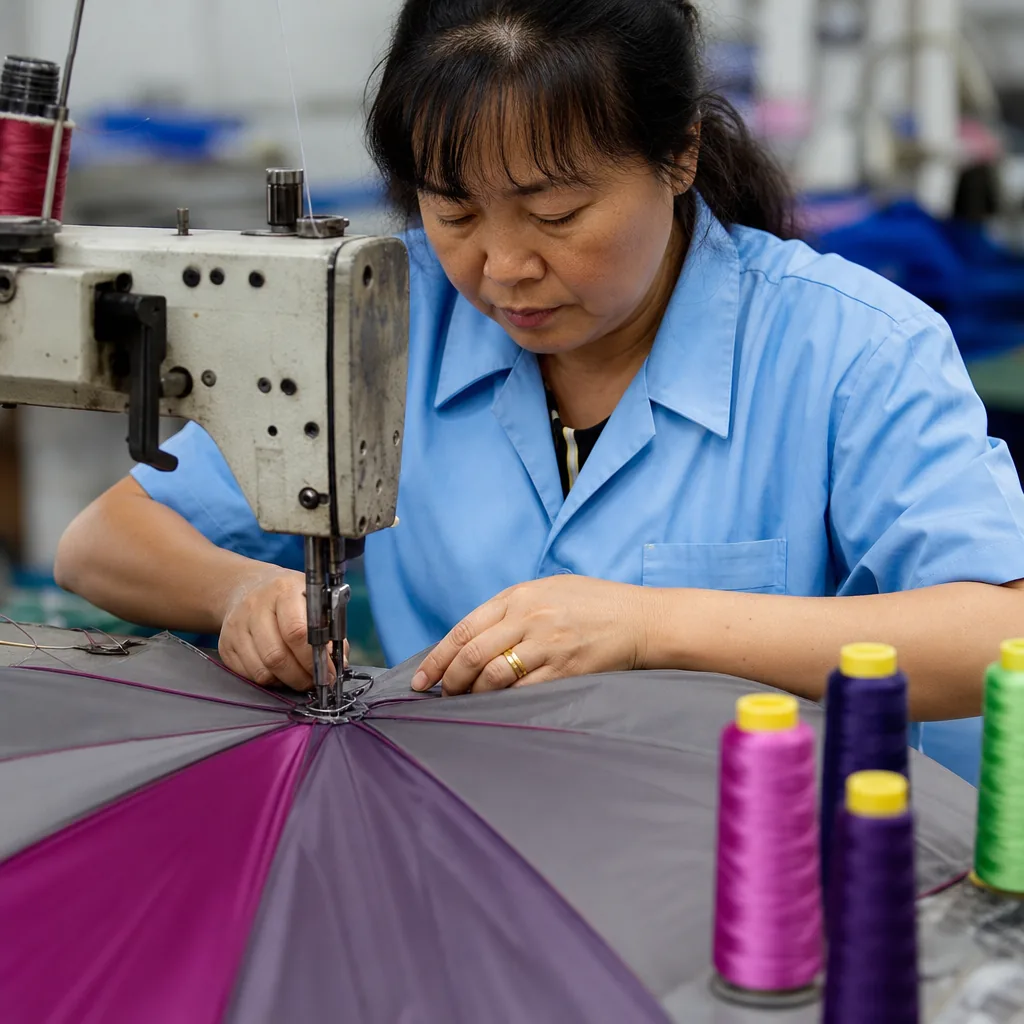
For a sourcing team, umbrella handle overmolding looks simple until the first samples show weak bonding, sink marks, color bleed, or a grip that feels good in a drawing but slips in wet hands. On the factory floor, the real cost is shaped by handle substrate choice, TPE hardness, gate location, mold alignment, cycle time, and how tightly the grip design must carry your brand detail without hurting durability.
Handle Types Used in OEM Umbrella Production
Handle choice should start with sales channel, target FOB/DDP price, and tooling risk. Straight PP or ABS handles are the safest fit for promotional orders because existing molds usually support fast Pantone color matching, pad printing, logo inserts, and MOQ near 500 to 1,000 pieces. They work best on 21-inch and 23-inch manual or auto-open umbrellas where the buyer is paying for canopy exposure, often 190T pongee printing, rather than premium hand feel. EVA foam handles fit event staff, golf, and outdoor programs, especially 27-inch and 30-inch fiberglass-frame umbrellas, because EVA stays comfortable in rain and cold conditions. The quality risk is compression: low-density EVA can dent in export cartons, so firmer grades and AQL 2.5 checks for handle deformation reduce shipment claims.
Rubberized handles give retail buyers better grip design without the cost of new injection tooling. Soft-touch spray, matte PU coating, or a TPR sleeve can upgrade 8K and 10K automatic umbrellas while keeping MOQ close to existing-handle levels, which suits seasonal retail SKUs before annual volume is proven. Wood-look handles fit hotels, resorts, gift shops, and lifestyle retailers that want a warmer finish than plain plastic without real wood’s moisture movement and cost variation. Most use ABS or PS with water-transfer grain, often with a plated ring or metal ferrule. If the handle mold and grain pattern already exist, MOQ can start near 1,000 pieces; a new shape usually raises practical MOQ to 3,000 to 5,000 pieces.
Umbrella handle overmolding fits orders that need controlled grip zones, brand-owned geometry, or a tactile surface that coating cannot achieve. The process molds a rigid PP, ABS, or nylon core first, then shoots TPR or TPU over the grip area in a second operation. It improves wet-hand control on double-canopy vented windproof umbrellas rated around 50+ mph, but it raises OEM manufacturing cost through extra tooling, longer cycle time, material loss, and stricter bond testing. ZheBrella recommends overmolded custom umbrella handles when volume is stable, usually 5,000 pieces or more, or when the same handle can be shared across compact, stick, and golf umbrella programs. For lower-volume hospitality replenishment, existing EVA, rubberized, or wood-look handles usually reduce cost and lead-time risk.
How Overmolding Is Built on the Production Line
Umbrella handle overmolding starts with a rigid substrate, usually PP, ABS, or nylon; premium stick umbrellas may add a zinc-alloy insert for weight and balance. The base handle is injection molded first, then checked for flash, sink marks, gate vestige, and shaft-hole accuracy before any soft grip is added. Bore control matters most on 23 inch and 27 inch auto-open or auto-open-close frames: excess clearance lets the handle rotate under opening load, creating warranty risk even when the canopy and ribs pass inspection. Any added part, such as a metal logo plate, hanging loop, or threaded collar, must be positioned before the second shot. Operators also clean the substrate to remove release agent, polishing compound, and skin oil. Skipping that step is a common cause of TPE peel after roughly 500 to 1,000 grip cycles.
The secondary injection stage fixes the molded core in a locating nest or on pins, then injects TPE, TPU, or soft PVC only onto the grip zones. Material choice should follow grip design and price target: TPE at Shore A 55-75 fits most daily rain umbrellas, TPU gives better abrasion resistance for retail golf umbrellas, and soft PVC can reduce OEM manufacturing cost but may feel tacky after hot storage. Cooling time is not a minor detail. Finger grooves and thick ergonomic ribs hold heat, so early ejection can warp the soft skin or leave the handle out of square on a fiberglass or steel shaft. Single-shot production molds one material in one cycle, keeping injection tooling cost, cycle time, and MOQ lower for basic J handles and promotional orders. Two-shot production uses a rotary two-component press or two tools in sequence. Tooling can cost 1.8 to 3 times more, but bond consistency, clean color separation, and repeatability justify it for custom umbrella handles above about 5,000 to 10,000 pieces.
Grip Geometry, Texture, and Ergonomics
Lock the grip geometry before selecting texture or TPR softness. For 21" and 23" compact umbrellas, a 24-28 mm handle diameter usually fits adult hands while keeping the folded unit slim enough for handbags, backpacks, and glove boxes. For 27" and 30" golf umbrellas, move to 30-36 mm to control the higher canopy load, especially on 8K or 10K fiberglass-rib frames where the user feels more torque in wind. Deep finger grooves may look ergonomic in CAD, but they force one hand position and fit a narrow hand-size range. For retail and promotional programs, shallow indexing flats, a soft oval section, or a lightly tapered barrel gives better comfort across users while still signaling orientation. In umbrella handle overmolding, these geometry choices affect perceived quality more than simply choosing a softer compound.
Specify texture and tack for wet-hand grip, not dry showroom feel. A polished TPR surface can look clean in samples, but rainwater, sunscreen, and cold hands reduce friction quickly. For custom umbrella handles, a fine matte texture, light leather grain, or micro-dimple pattern usually gives better slip resistance without making the handle look cheap. Shore A hardness around 55-70 is a practical range, depending on whether the insert is PP, ABS, or nylon. Below 50A, the overmold can feel sticky, collect dust, and tear near the parting line after repeated auto-open impact; above 75A, the grip loses the soft-touch value even if OEM manufacturing cost improves. Ergonomic details also change injection tooling cost: a straight cylinder can run in a simple two-plate mold, while deep grooves, hook shapes, logo recesses, and hard-soft transitions add slides, tighter shutoffs, longer tuning, and higher scrap risk. At AQL 2.5 inspection, flash, sink, color streaks, and uneven softness are visible immediately because the handle is the buyer's first touchpoint.
Tooling, Lead Time, and Unit Cost Implications
In umbrella handle overmolding, the main cost is engineering control before injection tooling starts, not the TPU or TPR weight. A new handle shape needs 2D grip design sign-off, 3D CAD, parting-line review, shrinkage allowance, draft-angle checks, and a bonding plan for the PP, ABS, or nylon core. Those steps decide whether a straight grip can use a simpler single-cavity tool or whether an ergonomic handle with logo recesses, finger grooves, a lanyard slot, or a tight shaft socket needs sliders, extra venting, and closer tolerance control. Each added feature increases machining hours and raises the chance that T0 samples need correction. A typical new handle mold takes 18 to 30 days, then 5 to 7 days for T0 review. If texture, logo depth, or socket fit fails review, allow another 7 to 12 days for adjustment. Buyers should price those changes as schedule risk, sample cost, and delayed production, not as minor design edits.
Color and finish changes affect sampling risk as much as final appearance. Black matte is usually the lowest-risk option; Pantone-matched colors, translucent effects, metallic soft-touch finishes, and two-color overmolding require material trials because Shore hardness, pigment loading, mold texture, and bond quality interact. If custom umbrella handles must match a 190T or 210T pongee canopy, approve molded color chips under showroom light and daylight before building full sample umbrellas. A gloss-to-matte change may require EDM texture or chemical etching, while late revisions can force polishing, re-texturing, or a new masterbatch. Final pricing also needs assembly and logistics review. A bulky grip may add only cents in resin but still raise OEM manufacturing cost if it slows installation on an 8K or 10K frame, needs sleeve protection, or reduces carton pack-out on a 27-inch or 30-inch umbrella from 36 pieces to 24. FOB mainly reflects factory cost and export packing; DDP also absorbs freight, duty, destination delivery, and the cost penalty from larger packaging volume and extra assembly labor.
Quality Checks for Handle Durability and Finish
Verify handle strength before packing, while defects can still be isolated by cavity, shift, or material lot. For umbrella handle overmolding, buyers should require three checks on finished umbrellas: a handle-to-shaft pull test, a twist check on the grip, and a carton-height drop test. A practical factory pull-load range for straight handles is 15 to 25 kg; crook, hook, and ergonomic grips also need controlled torque checks because curved geometry can hide weak insert contact. Steel, aluminum, and fiberglass shafts do not behave the same, so the inspection should confirm insertion depth, adhesive coverage, or the mechanical lock designed into the handle cavity. Soft TPR or silicone overmold on custom umbrella handles should not rotate, creep, peel, or separate after repeated open-close cycling, especially on auto-open and auto-open-close frames where release impact transfers directly into the grip.
Treat finish defects as injection tooling signals, not late packing-line surprises. Inspect sink marks, flow lines, short shots, flash, color streaking, oily residue, rough parting lines, and sharp edges around the grip design. A visible parting line can pass only if it matches the signed sample; a raised ridge on a daily-use handle feels low grade and can cut into a soft-touch layer during shipping abrasion. For overmold layers, specify edge peel attempts, cross-cut adhesion checks where practical, and fingernail scrape tests around logos, texture grooves, lanyard holes, and mold split areas. If the handle uses screen printing, heat-transfer branding, rubber paint, or metallic coating, add tape adhesion and alcohol rub tests because a clean approval sample can still fail after two weeks in a humid warehouse.
Before bulk release, request pre-shipment inspection using AQL 2.5 for major defects and AQL 4.0 or tighter for cosmetic defects, depending on retail price point. The report should include pull-test readings, twist-check photos, overmold adhesion samples, surface-defect classification, and carton-drop results from finished umbrellas, not loose handles. Keep approved golden samples and first-off-tool samples beside the packing line so inspectors can compare texture, hardness, color, and parting-line position against the signed standard. These checks add to OEM manufacturing cost, but they reduce the larger risk of replacing 5,000 umbrellas after soft-touch handles turn sticky, split at the seam, or detach from the shaft. For high-volume orders, repeat first-article inspection after any injection tooling adjustment, resin change, color masterbatch change, or mold maintenance.
Frequently Asked Questions
Why do overmolded umbrella handles cost more than standard plastic handles?
They require extra tooling, more process steps, and tighter control over material bonding and cosmetic finish. The cost increase is usually justified when grip performance or retail presentation matters.
What should buyers specify for a custom handle order?
They should specify handle shape, surface texture, color code, branding method, material preference, and whether the handle must pass pull or twist testing. Clear drawings reduce sampling rounds and keep MOQ planning realistic.
What tooling is usually required for an overmolded umbrella handle?
Most projects need a hard plastic core mold plus a second overmold tool for the soft TPE or rubber layer. If the handle shape is unique, buyers should budget for separate injection tooling instead of only a color or logo setup charge.
What MOQ makes custom overmolded handles practical for umbrella orders?
Custom overmolded handles are usually more cost-effective from about 3,000 to 5,000 umbrellas per style because tooling and setup costs can be spread across the order. Lower quantities may be possible if using an existing handle mold with custom color or logo.
How does grip design affect umbrella handle durability?
Deep grooves, thin soft-touch edges, and sharp transitions can wear or peel faster under repeated use. A durable design usually keeps the overmold thickness consistent, uses rounded transitions, and specifies a TPE hardness suitable for wet-hand grip.
Looking to Launch Your Custom Umbrella Line?
ZheBrella is a Zhejiang-based OEM/ODM umbrella manufacturer with 17 years of export experience. Free design, low MOQ from 100 pieces, windproof construction, full-color print.
Get Free Quote Now »People Also Search For
Related Articles
Umbrella Handle Mold Design for Comfortable, Repeatable Branding
Learn how handle shape, texture, and tooling choices affect comfort, branding, and unit cost in custom umbrella producti...
Read More »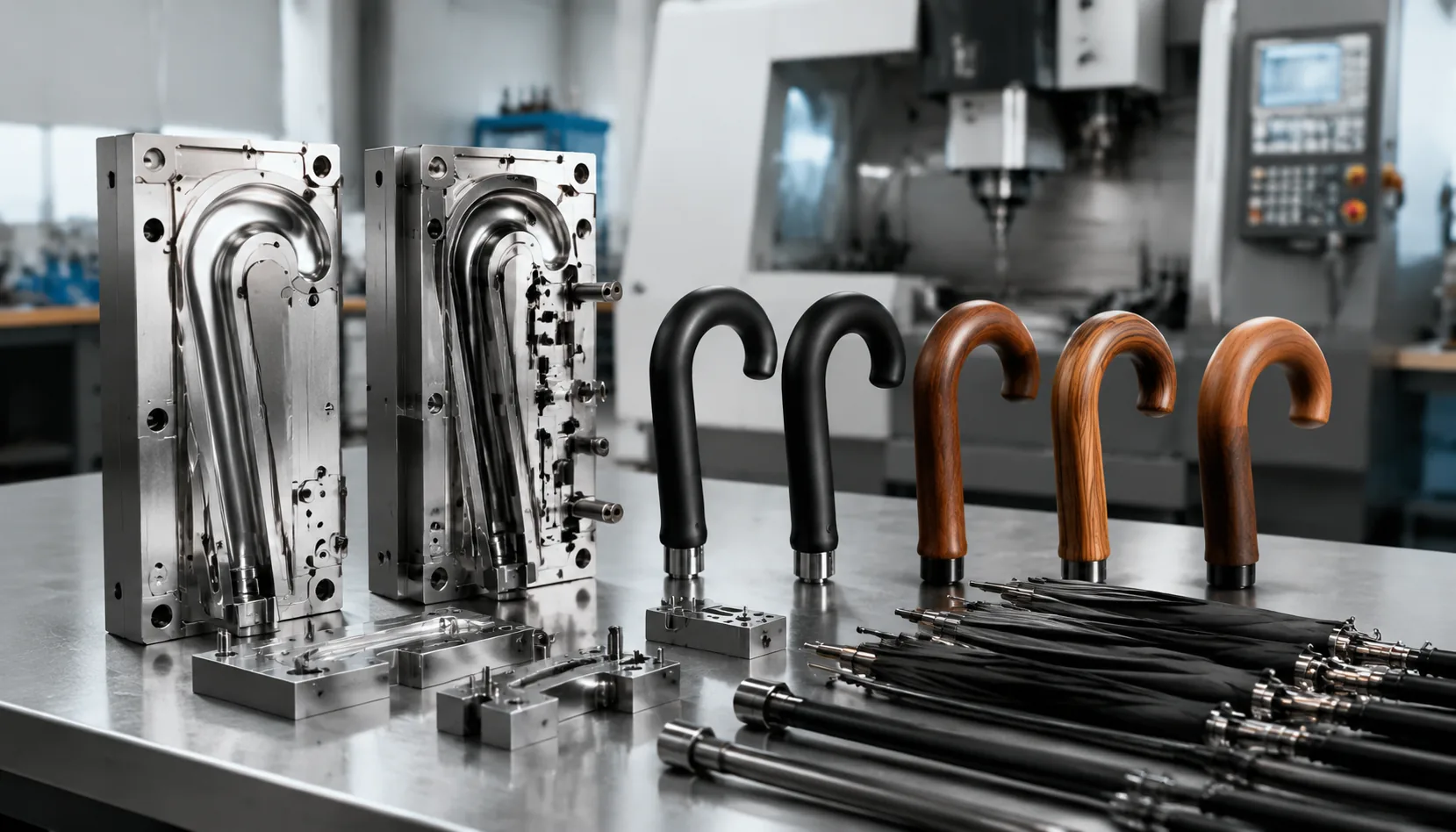
Custom Umbrella Handle Tooling and Mold Cost Guide
Understand custom umbrella handle tooling, mold fees, materials, MOQ, sampling steps, and quality checks before approvin...
Read More »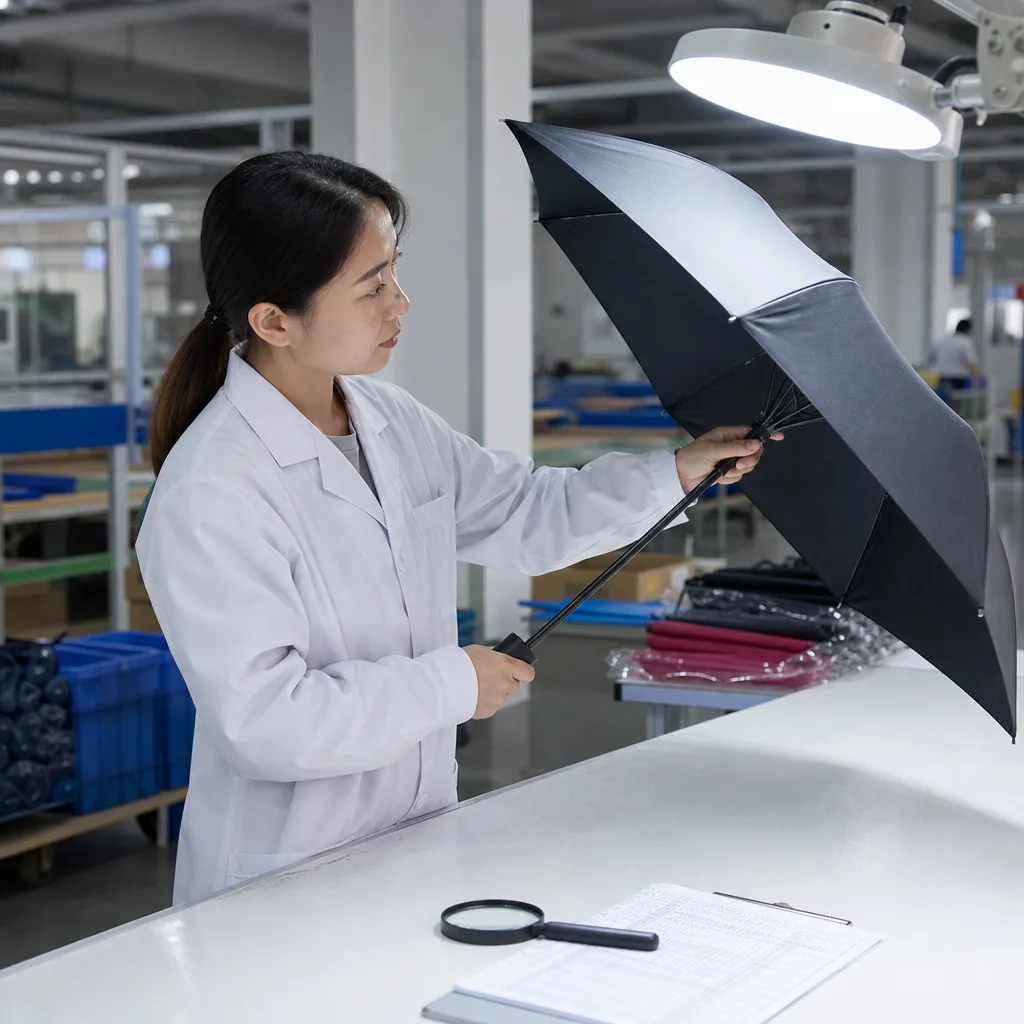
Umbrella Handle Molds and Tooling Costs for OEM Projects
Learn how handle molds affect OEM umbrella cost, MOQ, and lead time, from 3D drawings and tooling fees to sample approva...
Read More »