Umbrella Handle Types: EVA, Wood, Plastic, and Branding Options
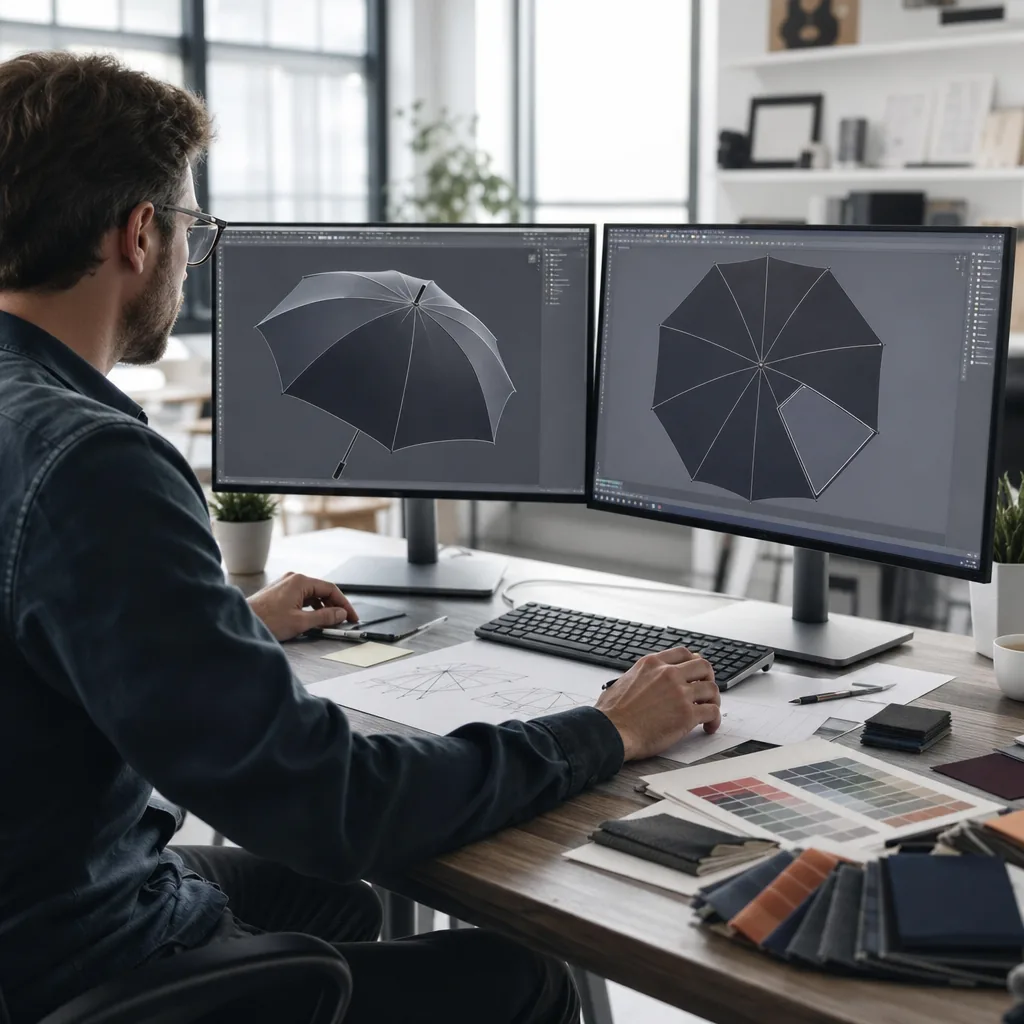
Choosing among umbrella handle types is not just a catalog decision; it affects grip, shipping durability, perceived quality, and how your logo actually presents in hand. On the factory floor, we see the tradeoffs clearly: EVA and rubber improve comfort and control, wood adds a premium feel, and plastic keeps cost and molding options flexible. The right handle depends on how the umbrella will be used, branded, and judged by the buyer at first touch.
Handle shapes: straight, crook, C-handle, knob
The four umbrella handle shapes solve different jobs, and umbrella handle types should be chosen from the use case first, not from what looks expensive. A straight handle is the default for folding umbrellas and compact 21" or 23" promotional pieces because it packs cleanly and stacks well in cartons. A crook handle belongs on golf umbrellas and classic stick umbrellas; the curve gives a secure hang point on a wrist, cart handle, or chair back, which matters when the user is carrying bags. A C-handle is the most practical for hands-free use in travel or outdoor events because it can hook over the forearm, but it adds mold complexity and usually increases weight. A knob handle is the simplest option for lightweight kids' umbrellas, giveaway items, and low-cost auto-open models where grip comfort is secondary to price and volume.
Material choice changes the feel more than the shape does. A good eva umbrella grip gives better wet-hand control than glossy PP or hard ABS, and it is the right answer for auto-open-close city umbrellas that get used in rain, not just carried for show. Wood and bamboo still make sense on premium stick umbrellas because they give a warmer hand feel and better perceived value, but they need tighter moisture control in finishing and storage or the grain will move. A wooden umbrella handle is also heavier, so it pairs better with 27" or 30" golf frames than with travel compacts. For the factory side, the handle core, plating, and shaft interface must be matched early, because a beautiful handle that loosens after 200 opens is a bad product no matter how nice it looks.
Branding should follow the handle geometry, not fight it. Flat straight handles take pad print, laser mark on metal inserts, or small molded logos on the end cap; crook handles are better for debossed rings, metal badges, or printed sleeves because the curve gives limited flat area. On EVA and rubberized grips, deep embossing works better than surface ink because abrasion from wet hands will wear print quickly. For a custom umbrella handle, I usually push clients to define the handle first, then the coating, then the logo position, because that sequence avoids retooling and keeps MOQ under control. If the product is a 190T pongee promo umbrella, use a simple straight or knob handle; if it is a 16K windproof golf umbrella with fiberglass ribs, a crook or C-handle is the more usable choice and feels consistent with the rest of the build.
Material options and what they signal
Among umbrella handle types, plastic is the cheapest and easiest to mass-produce, but it also signals the lowest perceived value. A plain PP or ABS handle works for giveaway umbrellas and price-driven promotions because the tooling is simple, the cycle time is fast, and you can color-match it with the canopy or shaft at very low added cost. Rubberized EVA sits one step up: a good eva umbrella grip softens the hand feel, hides small molding marks, and gives better purchase in rain, so it reads as more deliberate even when the umbrella itself is still an entry-level 21" or 23" model. Metal handles, usually aluminum or plated zinc alloy, send a stronger premium signal because they feel dense and cold in the hand, but they increase unit cost, scratch more easily in transit, and are less forgiving if the buyer wants a lightweight retail umbrella. The practical rule is simple: plastic sells on price, EVA sells on comfort, and metal sells on perceived durability.
Wood and bamboo are different from the usual umbrella handle types because they are chosen for appearance first and handling second. A wooden umbrella handle, especially ash, beech, or acacia, usually lands in mid- to high-tier retail because buyers associate it with classic dress umbrellas, even though the actual cost depends on grain selection, sanding, staining, and whether the shape is lathe-turned or bent. Bamboo is a similar story: it looks natural and sustainable, but it needs better moisture control and tighter inspection to avoid splitting, warping, or inconsistent color. For a custom umbrella handle, the branding options matter as much as the base material. Plastic takes pad print, laser, or debossed inserts; EVA can be molded with logos or fitted with printed sleeves; wood usually takes laser engraving or a metal badge; metal can use engraving, etching, or a small domed label. In our standard practice at ZheBrella, the handle material is matched to the buyer's price point and brand image first, then we confirm the logo method and mold detail last, because that is what keeps the landed cost predictable and the sample consistent with production.
Branding the handle: pad print, engraving, labels
Pad printing is the most practical way to brand a custom umbrella handle when you need sharp logos on EVA, ABS, or PP surfaces. For an eva umbrella grip, the ink sits on the molded texture, so the artwork has to be simplified: one- to two-color marks, solid strokes, and no tiny reversed text. On smooth plastic handles, pad print holds up better than stickers, but it still needs a proper primer and cure cycle or it will scuff during packing and transit. On the factory floor, we treat handle decoration as a separate operation from canopy printing because the grip shape changes the fixture, ink transfer, and drying time. For umbrella handle types that are touched constantly, the useful test is abrasion, not just first-pass appearance. A wooden umbrella handle gives you a different branding path. Laser engraving is the cleanest option because it burns the logo into the surface instead of sitting on top of it, which avoids peeling and ink edge wear. The catch is that wood grain, moisture content, and lacquer thickness all affect contrast, so the same file can look deeper on ash than on beech or bamboo. A wooden umbrella handle also needs careful positioning; a curved crook or hook changes focal distance, and a rushed setup leaves uneven burn depth. Our standard practice is to confirm the engraving sample after finishing, because varnish color can make the logo read too dark or too light once the handle is fully cured. This is the better choice when the buyer wants a more premium tactile feel instead of a loud printed mark. Woven label sleeves are the most flexible branding option when the handle itself should stay unmarked. They work well on umbrella handle types where the buyer wants retail presentation, gifting, or multi-language branding without changing the molding tooling. A woven sleeve can carry a small logo, website, or care note, and it is useful for a custom umbrella handle on lower-cost plastic models where pad printing would be too small or too inconsistent. The downside is that the sleeve adds a sewing or attachment step, so it needs to be specified early with the handle diameter and grip length; if the fit is loose, it shifts in packing, and if it is too tight, it wrinkles. In practice, pad print, engraving, and label sleeves are not interchangeable. Each one matches a different handle material, target price, and durability expectation, and that is usually where the real product decision gets made.
Grip comfort and slip resistance
Grip comfort starts with surface chemistry, not shape alone. On umbrella handle types, the difference between a basic hard ABS handle and a soft-touch overmold is obvious in the hand after a 10-minute walk in rain. For a premium feel, we usually spec TPE or rubberized coatings with a matte finish and fine micro-texture, because glossy surfaces look cheap and get slick as soon as they pick up condensation. An eva umbrella grip is still popular for promotional programs because it is light, comfortable, and easy to color-match, but the foam density matters; too soft and it tears at the neck, too hard and it loses the point of EVA. For a custom umbrella handle, the practical target is a grip that stays secure with wet palms, gloves, or repeated use in transit, not just one that photographs well.
Slip resistance is mostly a geometry and finishing problem. Deep knurling, shallow wave texture, and molded finger grooves each behave differently depending on whether the umbrella is a 21-inch compact, a 23-inch automatic, or a larger golf model with a longer handle leverage point. Smooth handles become slippery when coated with rainwater, sunscreen, or hand sanitizer residue, so we prefer a controlled texture that gives friction without chewing up the palm. On higher-end umbrella handle types, we also check the transition between the shaft and the grip, because a sharp step or exposed mold seam will rub during repeated carrying. ZheBrella typically tests sample handles with wet-glove handling and swing motion before approving a production finish, since a grip that feels fine dry can fail fast in real use.
Material choice changes both comfort and branding. A wooden umbrella handle gives a warmer hand feel and can carry laser engraving, hot-stamping, or a small metal badge without looking overworked, but the lacquer has to stay thin enough to preserve grip and not turn glassy when wet. Plastic handles are cheaper and easier to mold into ergonomic shapes, while a soft-touch coating on top can lift them into a more premium tier if the coating thickness and cure are controlled. For retail or corporate programs, the best custom umbrella handle is usually the one that balances tactile grip, logo visibility, and durability under AQL 2.5 inspection, not the one with the most decoration. If the umbrella will be used daily, we prioritize slip resistance first, then branding, because a handle that feels secure in the hand protects the entire product impression.
Matching handle to canopy and brand tier
The handle should not be chosen in isolation. It has to match the canopy material, frame grade, and the brand tier the umbrella is supposed to sell at. On a basic POE or PVC promotional umbrella, a straight plastic handle with a matte or rubberized finish is usually the right call: low cost, easy to color-match, and fast to assemble at scale. Once you move into pongee 190T or 210T with fiberglass ribs and UV coating, the handle needs more presence, so an eva umbrella grip or a shaped plastic handle reads better than a thin economy hook. For premium retail programs, umbrella handle types should support the rest of the build, not fight it.
A wooden umbrella handle works when the product is being positioned as a higher-tier retail item, a gift SKU, or a fashion umbrella with a more traditional look. Wood pairs well with deep canopy colors, vented double-canopy frames, and manual or auto-open-close mechanisms because the whole product feels more deliberate and less disposable. The problem is that wood is less forgiving in humid storage and export transit, so the finishing, sealing, and tolerance control matter. If the canopy is a low-cost printed polyester and the frame is an 8K steel structure, a wooden handle can look out of place and raise cost without improving the buyer’s perception enough to justify it.
For branding, the handle surface area and shape determine what decoration methods actually work. A custom umbrella handle can take pad print, laser engraving, debossed inserts, molded logos, or a simple color ring, but the best method depends on the material and the customer’s price point. On premium builds, keep the branding restrained and let the material do the work; on promotional programs, use larger print zones and bright color contrast so the SKU is easy to identify at a distance. Our standard practice is to align handle selection with canopy print method, target MOQ, and expected retail price before sampling, because changing the handle late usually forces a full recheck of balance, grip comfort, and packaging fit.
Frequently Asked Questions
Can I put my logo on the umbrella handle?
Yes. Common methods are pad printing on plastic/EVA handles, laser engraving on wood, and a branded woven sleeve or hang tag. Engraving on wood reads as the most premium.
Which umbrella handle feels most premium?
Real wood or bamboo crook handles, and soft-touch rubberized grips, both signal higher quality than hard plastic. They suit gift and retail programs where perceived value matters.
Which umbrella handle material is easiest to brand for OEM orders?
Wood is usually the easiest for laser engraving, while plastic and EVA work better for pad printing or molded logos. If you need a premium look, wood and matte-finished rubber handles usually give the best perceived value.
What MOQ is typical for custom umbrella handle branding?
For logo printing on standard handles, factories often support lower MOQs, sometimes around 300-500 pieces per design. If you need a custom mold or a new handle shape, the MOQ is usually higher because tooling and setup costs have to be spread across the order.
How long does custom handle production usually take?
Sample lead time is often 7-10 days, depending on the material and branding method. Mass production commonly takes 25-35 days after sample approval, with custom molded handles taking longer if new tooling is required.
Looking to Launch Your Custom Umbrella Line?
ZheBrella is a Zhejiang-based OEM/ODM umbrella manufacturer with 17 years of export experience. Free design, low MOQ from 100 pieces, windproof construction, full-color print.
Get Free Quote Now »People Also Search For
Related Articles
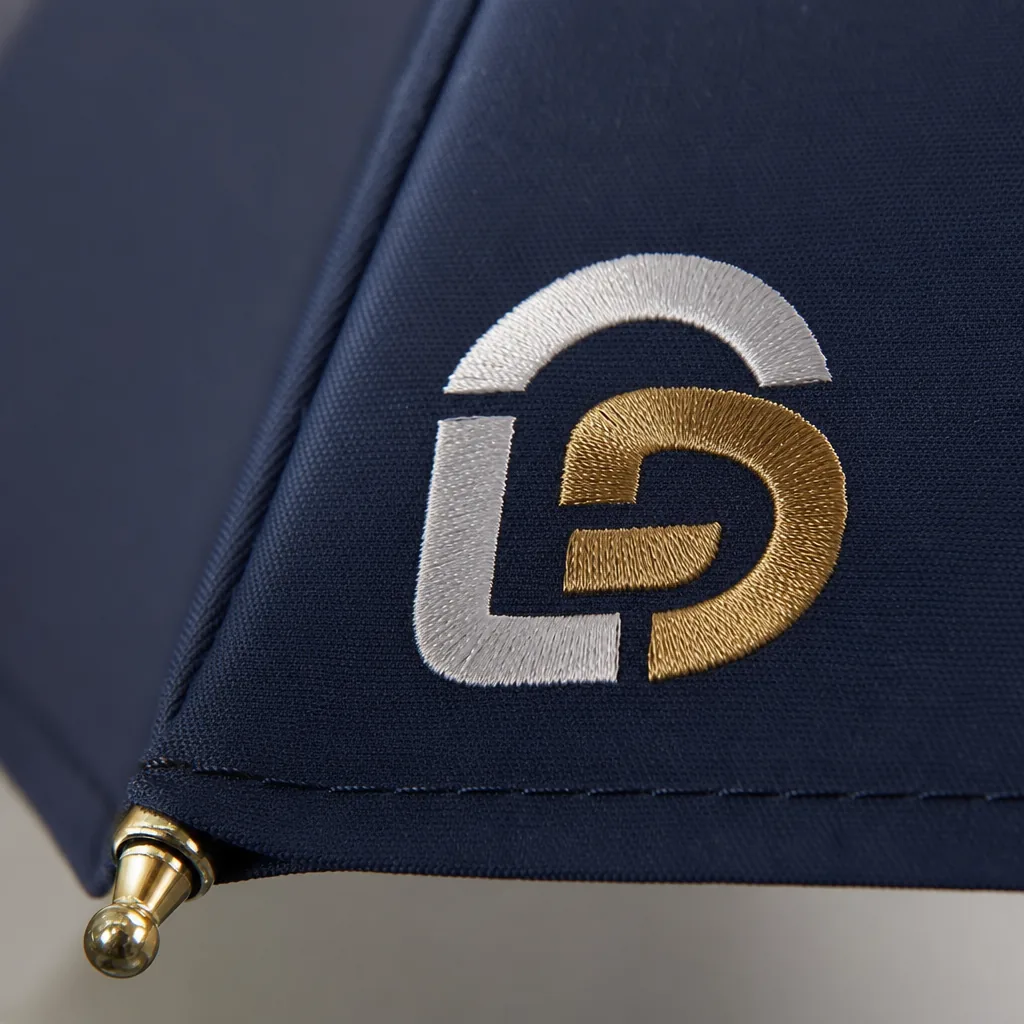
Embossed Handle Logos on Umbrellas: OEM Options and Limits
Compare embossed, debossed, and molded handle logo options by material, MOQ, tooling, and lead time to choose a workable...
Read More »
Branded Umbrella Handle Logo Options for OEM Programs
Compare debossed, molded, and cap-logo handle branding for umbrellas, with MOQ, tooling, lead time, and durability facto...
Read More »Custom Umbrella Handle and Strap Branding Options for OEM
Compare logo branding on handles and closure straps, with MOQ, tooling, print limits, and lead times for cleaner OEM umb...
Read More »