Umbrella Programs for Outdoor Dining and Patio Restaurants
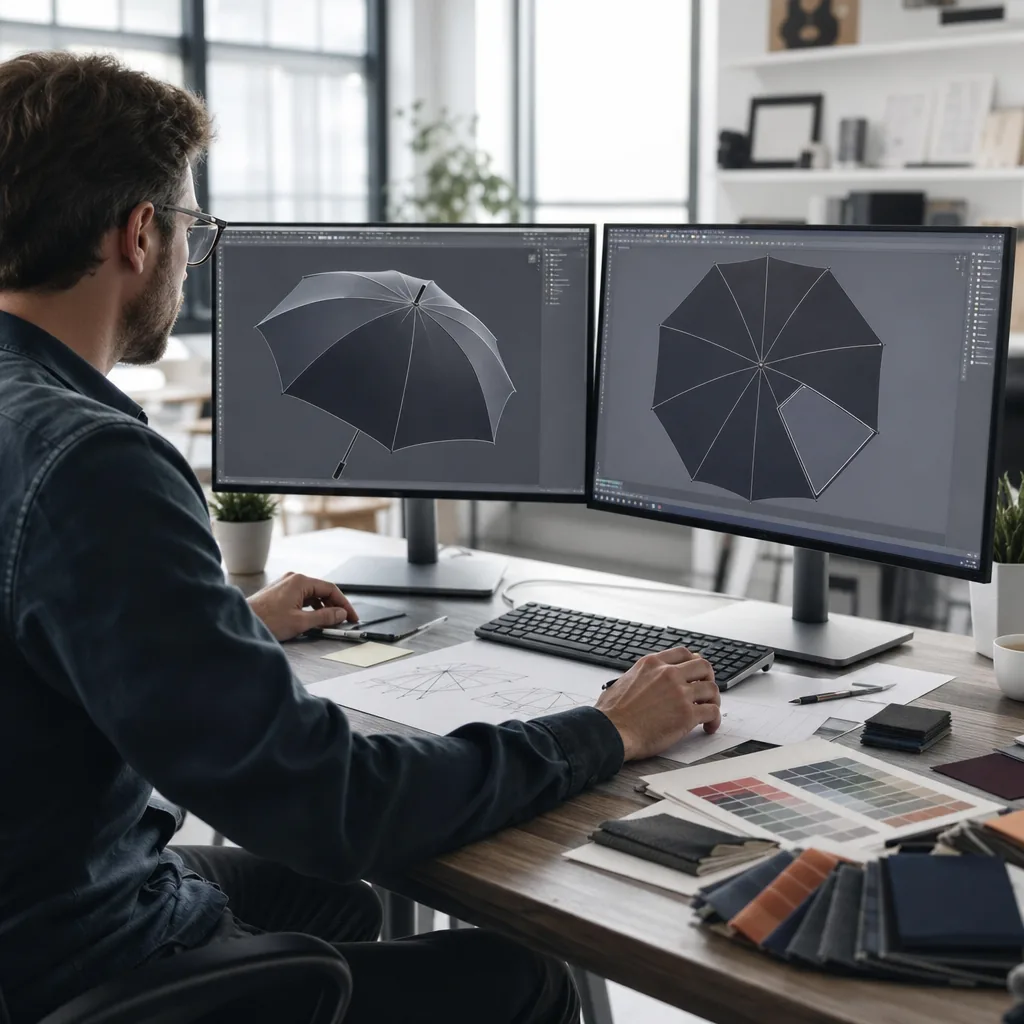
For a restaurant buyer, outdoor shade is not just decor; it has to survive wind, sun, rain, nightly handling, and constant guest visibility without turning into a maintenance problem. On our factory floor in Songxia, we build restaurant patio umbrellas by looking first at frame strength, fabric behavior, printing durability, packing method, and how the product will be stored, moved, and reordered across a full dining season.
Why outdoor dining needs commercial-grade umbrellas
Restaurant patio umbrellas are operating equipment because they directly affect seat usage, guest comfort, and table turns. A 23" or 27" market-style umbrella sized for a two- to four-seat table can decide whether a lunch table is usable from 12:00 to 3:00 or avoided because of glare and heat. Buyers should start with layout, not color: canopy diameter, center-pole position, and base weight need to fit the table footprint and aisle width so servers can move trays without hitting ribs or handles. For daily commercial use, 8K or 10K fiberglass ribs are usually the safer specification than thin steel ribs; fiberglass flexes back after minor impacts from chairs, trays, and routine gusts, while light steel deforms more easily. Canopy fabric matters just as much. 210T solution-dyed polyester or acrylic-look fabric holds color and fold memory far better than 170T promotional fabric, which is cheaper up front but fades faster and breaks down sooner under repeated opening, closing, and sun exposure.
Outdoor dining umbrellas also need to survive cleaning and weather without becoming a maintenance problem. Patio staff wipe off spilled drinks, bird droppings, grease mist, and dust almost every day, so specify canopy fabric that tolerates neutral-detergent wipe-downs and hardware with stainless or zinc-plated fasteners rather than untreated screws that can rust within weeks near sprinklers, salt air, or frequent washdowns. For sun-heavy sites, ask for UPF 50+ treatment and a water-repellent finish such as a Teflon-style coating to reduce fading and staining. For windy corners, a vented double-canopy is a better control for uplift than simply adding a heavier base, though suppliers should still state clearly that umbrellas must be closed in storms. Brand presentation should be planned at the same stage as structure: a custom logo canopy prints best when seams, panel breaks, and valance depth are set before sampling. In most street-facing layouts, a 6" to 8" valance delivers better logo visibility than artwork placed high on the crown. Before FOB or DDP shipment, AQL 2.5 inspection is a reasonable control point for appearance and assembly quality.
Frame, canopy, and wind resistance specifications
Lock the frame spec before choosing fabric, because most field failures start at ribs, joints, runners, or undersized poles, not the canopy cloth. Fiberglass ribs flex under gust load and recover, making them the better default for restaurant patio umbrellas that face repeated opening, staff handling, and side wind. Steel ribs reduce FOB cost and feel rigid in the hand, but they add weight and can bend permanently after side loading, especially on wider patio shade umbrellas. Center-pole frames fit fixed table layouts and smaller 21-inch or 23-inch units; market-style frames with heavier runners, thicker poles, and stable freestanding bases are better for 27-inch to 30-inch umbrellas used all season. Specify 8K ribs for standard round or square canopies when replacement speed and cost control matter. Move to 16K ribs for large canopies, coastal or rooftop venues, tighter fabric tension, or a custom logo canopy where panel distortion will be visible.
Match canopy fabric to service life, branding method, and abuse level. Pongee 190T is appropriate for promotional outdoor dining umbrellas where low weight, compact storage, and lower unit cost matter more than multi-season durability. For daily restaurant service, step up to 210T pongee or solution-dyed polyester with PU, Teflon, or UV treatment, then confirm GSM, colorfastness, and print compatibility before sampling. Specify UPF 50+ when guests sit outside for 45 to 90 minutes; darker fabrics reduce glare but need stricter colorfastness review before bulk approval. Use screen printing for standard logo panels, heat transfer for gradients, and sublimation only when full-canopy artwork is planned before cutting. For wind exposure, add a double-canopy vent and test the complete frame, fabric, and base together; wind resistance is a system rating, not a fabric claim. Before purchase order release, confirm MOQ, spare canopy availability, FOB or DDP lead times in days, and AQL 2.5 inspection criteria.
Branding for terrace visibility and upscale presentation
Place branding for the two sightlines that drive revenue: guests seated under the canopy and foot or vehicle traffic reading the terrace from roughly 30 to 80 feet. On restaurant patio umbrellas, the highest-value print zones are the valance and the lower third of selected canopy panels; a center-top logo is usually wasted unless nearby upper floors can see it. For a 9 ft market style, keep valance logos in the 18 to 28 in range and repeat them on four sides, but leave clearance from rib seams, binding tape, and any scalloped edge so the mark stays legible after sewing. If the site is a narrow sidewalk café, one street-facing panel logo plus smaller valance marks often reads better than printing every panel. That approach preserves visibility without turning a terrace into an event-tent graphic. For outdoor dining umbrellas on traffic corridors, a two-color canopy with branding oriented to the main pedestrian or vehicle approach usually delivers better read distance than full-panel decoration on all sides.
Color consistency and print life depend on production controls, not artwork alone. PMS matching on 210T polyester pongee is practical, but the final shade can shift with PU, silver, or UV coatings and with the base cloth color. A navy logo on white 190T pongee typically stays crisp; metallic or low-contrast colors on dark fabric may require an underbase or heat-transfer film so the fabric does not mute the mark. Keep logos inside a single triangular panel, centered between ribs, instead of crossing seams; once the canopy is tensioned on the frame, a split logo can look crooked even when sewing is within tolerance. For high-sun hospitality use, screen printing is the most cost-effective choice for solid one- or two-color logos if the ink is formulated for coated polyester and fully cured to resist fold-line cracking. Heat transfer gives cleaner detail but lower-grade films can yellow, lift, or soften around 95 F. For commercial hospitality umbrellas, approve a daylight strike-off, recheck color after the canopy is mounted, and use AQL 2.5 inspection for registration, color variance, ink adhesion, fold marks, and frame-contact stains so repeat patio shade umbrellas stay visually consistent across later reorders.
Operational buying: MOQ, lead time, and replacements
Set MOQ by construction, not canopy diameter. A standard 7.5 ft or 9 ft center-pole model with an aluminum pole, steel ribs, and 190T or 210T polyester canopy often starts at 100 to 200 units per color because mills and frame shops already stock those components. Heavier commercial hospitality umbrellas move differently: fiberglass ribs, double air vents, crank lift, tilt hardware, or 10 ft to 11 ft square canopies usually push MOQ to 200 to 300 units because rib lengths, hubs, runners, and export cartons are less interchangeable. For a custom logo canopy, confirm the MOQ by print method before quoting: screen printing fits simple one-color marks, heat transfer works for smaller placements, and full-panel digital sublimation needs a printed strike-off before bulk cutting. Require one physical pre-production sample when brand color, valance height, logo position, pole finish, or base fit must match a restaurant design package.
Treat lead time as a gated procurement schedule. Allow 3 to 7 days for artwork review and material confirmation, 7 to 12 days for a sample after deposit, and 25 to 40 days for bulk production after written sample approval. Outdoor dining umbrellas using stock fabric and standard frames ship fastest. Custom-dyed canopy fabric, powder-coated poles, fiberglass rib upgrades, UPF 50+ treatment, or water-repellent finishing add time because dyeing, coating, curing, and color matching happen before cutting and sewing. Seasonal capacity is a real risk for restaurant patio umbrellas: release spring or May-opening programs in February or early March to avoid fabric mill congestion and frame-line pressure. FOB Ningbo or Shanghai is easier to schedule and control. DDP delivery to the United States or Europe usually adds 25 to 45 days for ocean freight, customs clearance, and final trucking, depending on port conditions and carton volume.
Buy replacements with the opening order, not after the first failure report. For restaurant patio umbrellas, plan 5% to 10% spare complete units, plus extra canopies, finials, hubs, crank handles, and lower poles when the design uses replaceable parts. Coastal patios, rooftop bars, and windy sidewalk seating should budget near 10% because salt air, abrasion, guest handling, and sudden gusts shorten service life faster than rain exposure alone. Set reorder triggers in the purchasing file: replenish when complete spare units fall below 3% of installed quantity or when replacement canopies drop below one piece per 10 active umbrellas. Put inspection standards in the PO, including AQL 2.5 for major defects, AQL 4.0 for minor defects, export carton drop testing, open-close function checks, rib symmetry, seam tension, logo placement tolerance, and color comparison under standard light. Before shipment, verify pole diameter and base compatibility; a clean canopy still fails operationally if it cannot fit the installed base system.
Import terms and maintenance considerations
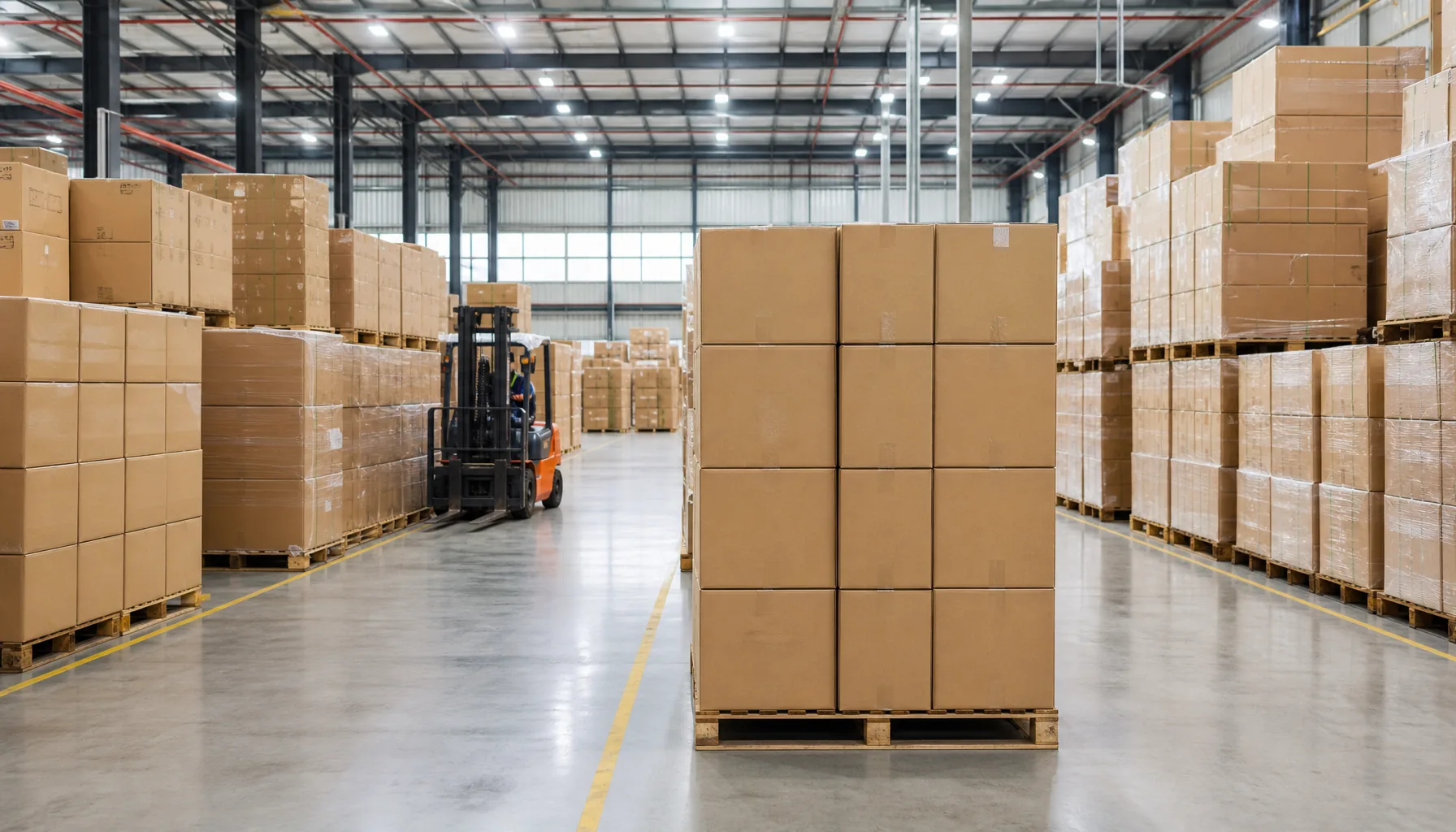
For multi-location foodservice programs, the shipping term matters as much as the frame spec. FOB works well when the buyer already has a U.S. forwarder, a consolidation warehouse, and staff who can split deliveries by restaurant count, but it pushes customs clearance, duty payment, demurrage risk, and inland scheduling onto the importer. DDP is usually cleaner for restaurant patio umbrellas going to 20, 50, or 200 sites because the cartons can be pre-labeled by store code, palletized by route, and delivered as a final-mile program instead of a single port pickup headache. In practice, DDP also reduces internal handling damage: every extra touch point between Ningbo and the patio increases the chance of bent hubs, scratched poles, or cracked resin bases. For commercial hospitality umbrellas with mixed sizes—say 2.7 m center-pole for sidewalk seating and 3 x 3 m square units for larger patio zones—buyers should lock the pack list to exact location counts before production, not after vessel booking. Packaging has a direct effect on damage rates, especially on long ribs and heavy poles. A single-wall export carton is often the cheapest line item and the most expensive mistake; for larger outdoor dining umbrellas, I prefer 5-ply corrugated at minimum, and 7-ply for poles above 48 mm diameter or cartons longer than 1.7 m. Inside the carton, the important details are rib tip caps, hub immobilizers, foam sleeves on powder-coated aluminum, and a separate hardware pouch so bolts do not grind through the canopy during transit. If the order includes a custom logo canopy, insist on PE bag separation between canopies and frames to prevent print offset in hot containers. Our standard practice is to run a carton drop check and compression check before mass packing, because weak master cartons collapse in stack and turn perfectly good patio shade umbrellas into concealed freight claims three weeks later.
Spare-parts planning should be built into the PO, not handled after units start failing in the field. For a chain rollout, I usually recommend ordering 2% spare frames for manual units and 3% for crank-lift or tilt models, plus 5% extra replacement canopies if the color is custom dyed or printed. The parts that actually save a season are not glamorous: runners, top finials, rib end caps, stretchers, rope-and-pulley sets, and matching touch-up paint for the pole finish. If the canopy fabric is solution-dyed acrylic or 190T/210T polyester with PU or UV coating, replacement skins need to be pattern-matched to the exact rib geometry—8-rib and 10-rib frames are not interchangeable just because the open diameter is similar. Buyers of restaurant patio umbrellas should also ask for a simple illustrated parts map with SKU codes; that prevents a site manager from ordering an entire frame when only one fiberglass rib and two screws are needed. Replacement canopy policy affects long-term program cost more than many buyers expect. A low-cost frame with no spare skins becomes dead stock after one tear, one bleach stain, or one branding update. For custom logo canopy programs, keep digital print files, panel layout, Pantone references, and seam allowances on record so repeat canopies can be cut without a new sampling cycle. If branding is screen printed, reserve ink formulas and panel registration notes as well. AQL 2.5 final inspection should include not only opening and closing function, but also spare-part count verification and carton marking accuracy, because one missing hardware kit can idle an entire installation crew.
Off-season storage is where many patio programs lose a year of service life. Umbrellas should be dried fully before bagging; even a small amount of trapped moisture will mildew polyester, stain stitching, and corrode steel components at the rivet points. Commercial hospitality umbrellas stored assembled with the canopy under tension tend to develop panel distortion, stretched pockets, and permanent lean in the ribs, so the better practice is to remove the canopy if the design allows, collapse the frame, and store it horizontally on racks or vertically with full support under the ferrule. Clear PVC, POE, or EVA weather panels used with some patio setups should never be folded tightly in cold weather because they crack at the crease lines. Carton strength also matters after arrival, not just in ocean transit. If stores plan to keep reserve stock through winter, specify dry indoor storage and avoid direct contact with concrete floors, which wick moisture into the bottom carton layer. For seasonal operators, I advise adding woven storage sleeves, silica gel packs for replacement canopies, and a small maintenance kit with thread-lock, spare screws, and care instructions. Frames used near salt air need fresh-water wipe-downs on hinges and runners every few weeks, and bases should be checked for standing water, especially on wheeled fillable types. Lead times for replacement parts are usually 7 to 15 days if stocked, while replacement canopies run more like 20 to 35 days depending on fabric, printing method, and MOQ, so buyers should carry safety stock before peak spring openings rather than after the first failure call.
Frequently Asked Questions
What umbrella features matter most for restaurant patios exposed to wind?
A fiberglass-rib frame with a double-canopy windproof design is usually the safest spec. For larger shade coverage, 16K ribs can improve structure, but the full setup should still be tested for local wind conditions.
How should restaurant buyers manage reorder timing?
Plan reorders before the busy season and allow enough time for sampling, production, and freight. For standardized programs, keeping one approved spec and one backup color can shorten future lead times.
What umbrella size works best for standard restaurant table layouts?
For most 4-seat tables, 2.7 m to 3.0 m umbrellas provide practical coverage without blocking walkways. For 6-seat layouts or lounge groupings, buyers often choose 3.0 m round or 2 x 3 m rectangular canopies depending on table spacing.
What base weight is typically needed for commercial outdoor dining umbrellas?
A common guideline is 50-70 kg for freestanding center-pole umbrellas around 2.7 m to 3.0 m, depending on local wind exposure and whether the unit goes through a table. Larger canopies, open corners, and coastal sites usually require heavier bases or fixed mounting plates.
How are custom logo canopies usually approved for a restaurant roll-out?
Most B2B orders use vector artwork such as AI or PDF files, followed by a digital mockup showing panel placement, print size, and color references like Pantone codes. Sample lead time is often 7-14 days after artwork confirmation, with bulk production commonly taking 25-45 days depending on quantity and print method.
Looking to Launch Your Custom Umbrella Line?
ZheBrella is a Zhejiang-based OEM/ODM umbrella manufacturer with 17 years of export experience. Free design, low MOQ from 100 pieces, windproof construction, full-color print.
Get Free Quote Now »People Also Search For
Related Articles
Umbrella Programs for Outdoor Dining and Hospitality Venues
Learn how hospitality buyers specify umbrellas for patios, terraces, and resort spaces with wind resistance, sizing, bra...
Read More »
Umbrella Programs for Outdoor Dining and Patio Hospitality
Learn what specs, fabrics, and MOQ levels work for patio programs, from fiberglass ribs and 210T pongee to windproof fra...
Read More »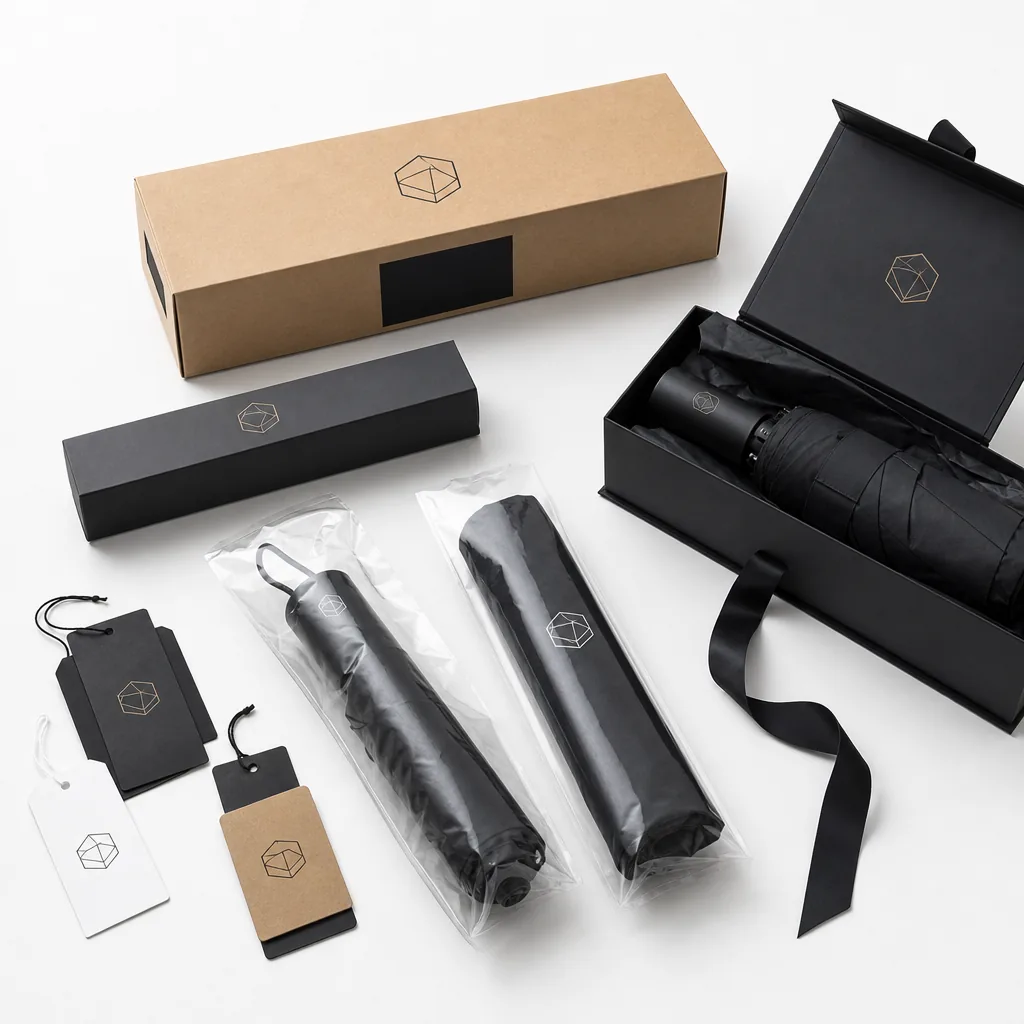
Custom Umbrellas for Outdoor Dining Operators and Venues
Plan umbrella programs for patios and terraces with durable frames, windproof canopies, and ordering terms that fit hosp...
Read More »