Umbrella Sourcing for Sports Venues and Fan Shops
Sourcing umbrellas for a stadium or fan shop is not just a purchasing decision; it affects licensed retail margins, sponsor visibility, and how well you serve crowds when weather turns fast. For sports venue umbrellas, buyers need consistent quality, clean decoration, dependable lead times, and factory control over materials and assembly so every shipment matches the spec and the margin model.
How umbrellas fit sports venue revenue streams
Sports venue umbrellas sell for four different reasons, and the buyer should treat each one differently. In team stores and fan shops, the fastest mover is usually a compact automatic style with a printed logo or wordmark, while premium seating and club areas can support larger statement pieces such as a 23" or 27" windproof golf umbrella with fiberglass ribs and a double-canopy vented top. For sports venue umbrellas, the product mix has to cover both impulse purchases near the gate and higher-ticket items that feel closer to apparel than to a throwaway rain accessory.
Sponsor giveaways are a separate channel, and they work best when the decoration is simple and the unit cost stays low enough for mass distribution. Rainy-day concession sales are often the most overlooked revenue stream because demand appears suddenly and buyers are forced to stock practical sizes, usually 21" or 23", in neutral colors that still carry team branding. In licensed umbrella OEM programs, the merchandising team should not rely on one SKU; they need a range that includes low-cost stadium merchandise umbrellas for impulse buyers and more polished pieces for season-ticket holders and corporate guests.
Fan shop sourcing gets more reliable when the assortment is built around margin tiers instead of just canopy size. The entry tier should be easy to grab at checkout, while the premium tier can use pongee 190T or 210T, Teflon or UV coating, and stronger frames that justify a higher ticket. Licensed merchandise buyers usually want both, because the small items turn inventory quickly and the statement pieces protect average order value when weather is bad and foot traffic is already high.
Construction choices for outdoor crowd use
For sports venue umbrellas, the first decision is rib material, not print. Fiberglass ribs flex under gusts and recover instead of kinking, which matters when fans are walking through exposed concourses or queuing outside a stadium gate. Steel ribs feel stiffer and usually cost less, but once they start deforming they stay bent; in crowd use that means more broken tips, more canopy misalignment, and a shorter service life. For fan shop sourcing, I would treat fiberglass as the default for outdoor retail SKUs and reserve steel for low-cost giveaway items or sheltered use. A licensed umbrella OEM should also match the runner, stretcher, and shaft strength to the rib material, because a weak center pole can ruin an otherwise decent frame.
Rib count changes behavior more than most buyers expect. An 8K frame uses fewer support points, so the canopy panels are larger and the look is cleaner, but the umbrella moves more in wind and the panel stress is higher around the tips. A 16K frame spreads load better, keeps the canopy rounder, and handles repeated opening and closing better in a venue environment where the same unit may be used all day. That is why stadium merchandise umbrellas built for resale usually favor 16K when the price point allows it. For a windproof golf umbrella, the larger frame is not just about size; the extra ribs improve canopy tension, reduce flutter, and make the product feel more substantial in hand.
Single-canopy builds are cheaper and lighter, but double-canopy vented construction is the practical choice when wind exposure is real. The vent gives air somewhere to escape, so the umbrella does not invert as easily during sudden gusts, which is exactly what happens on open bridges, parking lots, and upper-level seating areas. Compact umbrellas may work for commuting, but in venue retail they often disappear visually and are more likely to fail at the hinge or stretcher because buyers open and shut them quickly. Golf-sized formats in 23-inch to 27-inch, and sometimes 30-inch, outperform compact umbrellas for visibility, print area, and durability; they also merchandise better at the gate and in the fan shop because the larger silhouette reads clearly with team colors and sponsor graphics.
Branding and licensing constraints to manage
Licensed programs are where a lot of umbrella orders get slowed down, not by the canopy construction but by artwork control. For sports venue umbrellas, the licensor usually wants every logo file approved in vector format, every color pinned to a Pantone reference, and every panel placement checked against a layout drawing before cutting can start. That applies whether you are buying a compact event umbrella or a full-size windproof golf umbrella for premium resale, because the legal team treats the decoration as part of the product, not an afterthought. In practice, the factory has to lock the panel count, logo scale, print method, and even the contrast ratio against the base fabric before anyone signs off on sampling.
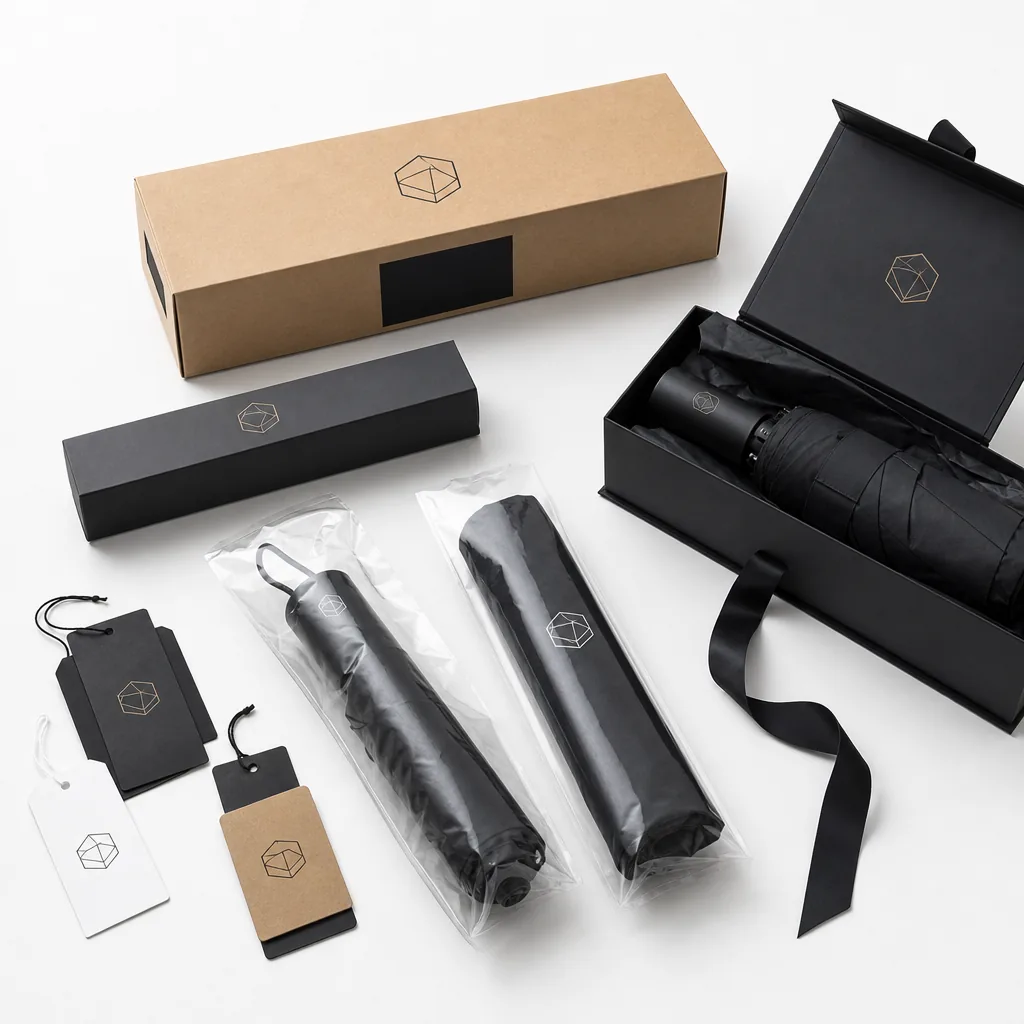
Swing tags and packaging are another trap for fan shop sourcing. Licensed teams and leagues often specify hangtag size, barcode location, warning copy, country-of-origin marking, retail carton artwork, and sometimes even whether the polybag can show the team name before approval. With stadium merchandise umbrellas, those details can add one or two extra sample rounds because the buyer needs physical mockups, not just renderings, and every revision resets the clock. If the order uses a licensed umbrella OEM setup, MOQ also tends to rise because separate print plates, special labels, and custom cartons make small runs uneconomical, especially when each SKU has to be approved as a distinct colorway or retail pack.
The cleanest way to keep the schedule under control is to freeze the brand rules before sampling starts: one master Pantone sheet, one approved logo position per panel, and one packaging spec that covers retail and export cartons. ZheBrella’s standard practice is to treat the first sample as a compliance check, not a sales sample, because sports venue umbrellas can fail approval on tiny issues like logo bleed, tag stock weight, or a league mark sitting 5 mm too close to a seam. Buyers should expect longer lead times when the licensor is involved, and they should budget for higher MOQs if the product mix includes multiple teams, multiple languages, or separate packaging for club stores versus e-commerce fulfillment.
Ordering models for match-day demand
Match-day buying works best when you treat umbrellas as a scheduled replenishment item, not an impulse accessory. For sports venue umbrellas, I usually tell buyers to build the order calendar backward from the fixture list: regular-season dates, rivalry matches, playoff windows, and any indoor-outdoor event transitions where rain can move units in a hurry. A practical starting point is 30 to 45 days for repeat production on stock colors, and 45 to 60 days if the order needs custom canopy printing, private labeling, or licensed artwork approval. For stadium merchandise umbrellas, the demand curve is rarely flat; one wet weekend can pull through two or three weeks of normal sales, so safety stock should cover at least one full rain event plus a second shipment buffer.
The shape of the product matters as much as the schedule. A 23" or 27" auto-open model with fiberglass ribs is usually the better sell-through item for fan shops because it is lighter to carry and easier to price for retail, while a windproof golf umbrella can handle premium positioning for clubs that want a larger canopy and a stronger frame. If you are doing licensed umbrella OEM work, approvals often add more time than production, especially when multiple team marks or sponsor logos are involved, so lock artwork before you promise delivery dates. Fan shop sourcing should also separate core stock from event-specific builds: keep plain team-color units in reserve, then run short, tight replenishment lots for playoff spikes instead of chasing one giant order that sits in inventory.
FOB makes more sense when one importer controls the warehouse and can consolidate a few venues into one inbound shipment, because you keep freight visible and can redistribute locally after customs clearance. DDP is cleaner when the buyer is supporting multiple stadiums, team stores, or pop-up fan shops and does not want to manage import paperwork, duty, and last-mile delivery to each location. In practice, I see FOB work better for centralized distribution and DDP work better for scattered venue networks with small reorder quantities. The key is to reserve enough pipeline stock before the first weather spike; once rain is on the forecast, lead time disappears fast, and the order that looked comfortable on paper becomes late by the time the first gate opens.
Quality control for high-touch retail channels
For sports venue umbrellas, I would not accept a retail program without AQL 2.5 inspection at minimum, because high-touch channels punish tiny defects fast. On the line, that means checking frame straightness, runner smoothness, tip retention, and print registration before cartons are sealed. A licensed umbrella OEM has to treat color consistency as a hard spec, not a suggestion; if the canopy shade shifts from sample to bulk, the display wall looks sloppy and the buyer loses trust. ZheBrella’s standard practice is to hold pre-shipment sampling against the approved Pantone reference and reject obvious shade drift, especially on stadium merchandise umbrellas that sit side by side under bright shop lighting.
Open-close cycle testing catches the failures that show up after the first weekend of sales. I want repeated operation on manual, auto-open, or auto-open-close mechanisms to expose weak springs, binding shafts, and loose ferrules before a fan ever handles the unit. For a windproof golf umbrella sold in a stadium shop, I also look closely at rib flex and hinge wear, because bent ribs and cracked connectors become returns, not just complaints. Canopy seam checks matter just as much: skipped stitches, puckering, and needle holes near stress points will open up during use, especially on pongee 190T or 210T fabric with UV coating or sublimation print.
Packaging durability is the last gate, and it is usually where fan shop sourcing gets lazy. Cartons need crush resistance, clear labeling, and inner protection that keeps tips from punching through during FOB or DDP transit, because a damaged outer box on arrival often means damaged stock inside. Weak tips, bent ribs, and color mismatch hurt venue sales most because they are visible from three feet away and they spread quickly through online reviews and event-day word of mouth. If the buyer wants a long shelf life, I recommend drop testing packed cartons, checking barcode legibility, and verifying that the retail pack survives repeated handling by staff, not just one clean warehouse move.
Frequently Asked Questions
Why are windproof umbrellas important in stadium retail?
Fans often buy umbrellas during active weather, so the product has to survive gusts and repeated use. Double-canopy and fiberglass-rib designs reduce failures and improve resale satisfaction.
What is a practical MOQ for a licensed umbrella program?
MOQ depends on decoration, colors, and packaging, but licensed orders often start higher because of approval complexity. Buyers should confirm sample timing, production capacity, and reorder flexibility before launch.
What compliance checks should buyers complete before ordering licensed umbrellas for team stores?
Confirm the factory can follow your brand style guide, approved Pantone colors, and licensed artwork controls before sampling. For U.S. retail, buyers typically also ask for CPSIA-relevant material declarations, labeling accuracy, and packaging approval before mass production.
What umbrella specifications work best for sponsor activations at stadium entrances or concourses?
Buyers commonly choose 27 to 30 inch golf umbrellas with fiberglass ribs and auto-open frames because they offer strong logo visibility and better wind performance. A practical activation order often starts around 500 to 1,000 units split across one sponsor design and one general venue design.
How do fan shops protect margin when sourcing umbrellas as licensed merchandise?
Many buyers tier the program into a value folding umbrella and a premium golf umbrella so they can hit different retail price points. Margin planning usually improves when cartons are packed with retail-ready hangtags, barcode stickers, and preapproved assortment ratios to reduce in-store handling costs.
Looking to Launch Your Custom Umbrella Line?
ZheBrella is a Zhejiang-based OEM/ODM umbrella manufacturer with 17 years of export experience. Free design, low MOQ from 100 pieces, windproof construction, full-color print.
Get Free Quote Now »People Also Search For
Related Articles
Branded Umbrellas for Stadium Retail and Fan Merchandise
Build profitable fan-gear umbrella assortments with durable frames, league-ready branding, and retail packaging that sup...
Read More »Umbrella Sourcing for Sports Clubs and Stadium Retail
Build stadium and club umbrella assortments with weather-ready specs, retail packaging, MOQ planning, and quality contro...
Read More »
Umbrellas for Sports Teams, Stadium Shops, and Fan Retail
Compare stadium-store and fan-retail umbrellas by size, canopy build, print area, and reorder economics for licensed mer...
Read More »