Branded Umbrellas for Stadium Retail and Fan Merchandise
A fan umbrella has to sell like merchandise and survive like outdoor equipment, which is where many stadium programs lose margin. For stadium retail umbrellas, we look first at wind load, rib material, logo placement, color matching, and carton specs because each choice affects returns, shelf presentation, and reorders. On the factory floor, the difference between a profitable game-day item and dead stock is usually decided before the first canopy is cut.
Where umbrellas fit in stadium and fan assortments
Demand for stadium retail umbrellas rises with event timing, not just rainfall. Rainy matchdays create the clearest spike, but the best sell-through also comes on opening day, rivalry games, playoff runs, concerts, fan festivals, and outdoor tailgates where fans often wait on asphalt for 2 to 4 hours before gates open. Match the frame and size to the buying moment: a 23-inch auto-open stick covers one fan and a bag, while a 27-inch or 30-inch golf umbrella suits two people in parking-lot lines. Inside the venue, 21-inch auto-open-close models are easier to carry, fit under seats more easily, and store better in clear-bag-policy totes than full-length sticks. Conversion is highest when weather shifts during ingress, because fans who did not prebuy will pay premium gate pricing to protect a jersey, phone, or signed program on the spot. That makes placement near gates, parking-lot shuttle stops, and concourse kiosks a practical convenience play, not just a weather impulse item.
The fastest-moving sports fan umbrellas pair team identity with retail-grade specs. Licensed artwork should match official Pantone team colors exactly; a stock navy or red that misses the jersey wall will slow full-price sales. A workable assortment is a steel-frame 8K manual umbrella for giveaways or student sections, plus a fiberglass 8K or 10K vented model for paid merchandise. For canopy fabric, 190T pongee fits higher-volume promotional runs, while 210T pongee with a water-repellent coating gives better hand feel and stronger perceived value. In open stadium districts where gusts can top 35 mph between buildings, double-canopy vented construction reduces failure risk and returns. Branded fan merchandise umbrellas also move faster when tied to a reason to buy: a rainy matchday, an opening-day bundle with a cap or scarf, a season-ticket-holder gift, or tailgate weather. To reduce retail risk, bulk logo umbrellas should arrive in individual polybags with barcode labels and replenishment-ready master cartons. For licensed sports sourcing, require strike-off approval, AQL 2.5 inspection, carton drop checks, and a realistic 30 to 45 day production lead time after artwork approval, plus FOB or DDP transit planning.
Product specs that survive crowds and weather
For fan retail, frame specification drives returns, not graphics. For stadium retail umbrellas, 16K frames are the best fit when buyers want a fuller round canopy and stronger shelf presence than a standard 8K build; the higher rib count distributes canopy tension more evenly and reduces the flat, uneven profile common on low-cost frames. The safest adult retail sizes are 23 inch and 27 inch, with 30 inch golf-style umbrellas reserved for premium team shops where venue carry-in rules permit larger canopies. Auto-open handles are the practical choice for concourses and parking lots because fans can deploy them one-handed while carrying drinks, tickets, or bags. By contrast, auto-open-close systems add spring complexity and tighter assembly tolerances, which increases after-sales risk when umbrellas are twisted in seat rows or forced under bleachers.
Rib material is the main durability tradeoff in sports fan umbrellas. Steel ribs lower unit cost and give a heavier hand feel, but repeated inversion in gusty stadium approaches can leave low-grade steel permanently bent. Fiberglass costs more, yet it flexes and recovers better, especially in 10K and 16K frames built with double-canopy vented construction. That vented layout relieves pressure through the upper canopy instead of forcing the runner, stretcher, and end tips to absorb the full load; on a balanced frame, that can be the difference between riding out 45 to 50+ mph gusts and failing on the first bad inversion. For bulk logo umbrellas and licensed sports sourcing, a fiberglass rib set with an optional reinforced steel shaft gives buyers better wind performance without losing the heavier retail feel some programs want.
Canopy fabric is where many branded fan merchandise umbrellas either justify their price point or do not. Pongee 210T typically outperforms lighter 170T or 190T fabrics because the tighter weave prints cleaner, wrinkles less after packing, and resists pinholing after repeated opening cycles. On dark team colors, 210T also improves color depth and reduces seam show-through, which matters when logos are checked against brand standards under retail lighting. If artwork includes sharp spot colors, test screen printing against heat transfer on 210T before bulk production, especially on double-canopy panels where ink behavior changes across vent seams. For stadium retail umbrellas sold through team stores, e-commerce, and game-day replenishment, pair 210T pongee with a water-repellent topcoat and require AQL 2.5 final inspection to reduce print, stitching, and frame defects before shipment.
Retail-ready branding, licensing, and packaging
For stadium retail umbrellas, brand control starts at panel layout, not final artwork review. A standard 8K canopy gives eight printable panels, but seams, rib pockets, and the runner can distort marks if the logo is centered on a flat dieline without curve compensation. On 21" and 23" folding umbrellas, use one or two primary logos on opposite panels and scale them for readability on the finished canopy. Full repeats, mascots, and sponsor lockups fit better on 27" or 30" golf frames, where the panel width reduces visual compression. For 190T or 210T pongee, approve Pantone color on the actual coated fabric under daylight and retail LED lighting. Navy, cardinal, and black shift most often when dyelot and ink standards are approved separately, so fabric strike-off and print standard should reference the same master before bulk cutting.
Licensed sports sourcing needs a tighter approval chain than generic bulk logo umbrellas because team marks, league marks, sponsor marks, and wordmarks may have different placement rules. Require approved vector files with Pantone references, clear-space rules, minimum logo size, and written guidance on which marks can share a panel. For 1-3 spot colors, screen printing is usually the most stable choice across repeat orders; use heat transfer or sublimation for gradients, all-over graphics, and detailed mascot art, with extra proofing for edge alignment across seams. The approval sequence should be digital mockup, pre-production sample, and top-of-production sample before mass sewing, so mirrored logos, upside-down panels, and color drift are caught before 5,000 units are cut.
Retail packaging should help stadium shops scan, hang, replenish, and return sports fan umbrellas without opening each unit. Pack each umbrella in an individual polybag with suffocation warning, branded hang tag, and barcode label showing UPC or EAN, item name, team name, color, country of origin, and carton quantity. For e-commerce fulfillment, add a scannable sleeve sticker or mail-ready unit carton so warehouse staff can verify the SKU at pick-and-pack. Keep master cartons uniform, mark them with PO numbers and assortment labels, and inspect finished branded fan merchandise umbrellas to AQL 2.5 before shipment to reduce receiving errors, license compliance disputes, and retailer chargebacks.
Margin planning and inventory size mix
Plan the assortment around three sellable roles, not a full wall of options. A practical core for stadium retail umbrellas is a 21-inch auto-open compact for bag carry and rain-delay impulse buys, a 23-inch stick umbrella for the main team-color SKU, and a 27- to 30-inch vented golf umbrella for premium seats, tailgates, and higher price points. Keep frames, shafts, handles, and trims standard unless the license requires otherwise: a 21-inch 190T pongee compact with 8K fiberglass ribs can often run at 500 pieces per colorway, a 23-inch stick with screen print typically sits at 300 to 500 pieces, and a standard-layout golf model can start near 300 pieces. MOQ usually rises toward 1,000 pieces when molded handles, woven labels, retail hangtags, or multi-SKU packaging reviews are added, because licensed sports sourcing adds art approvals and more failure points before production.
Set margin by use case, then set stock depth by the schedule. Compacts sold as bulk logo umbrellas usually support a 68 to 75 percent initial markup; 23-inch stick models often land at 65 to 72 percent; and double-canopy golf styles tend to run 60 to 68 percent because fiberglass frames, larger canopy panels, and freight cube raise landed cost. A 21-inch compact in 190T pongee with auto-open and a black steel shaft can protect margin if you avoid auto-open-close hardware that fans may not pay for. By contrast, sports fan umbrellas promoted for 50+ mph gust resistance need fiberglass ribs, stronger runners, and tighter sewing tolerance, so margin percentage can fall even when dollar profit per unit improves.
For opening buys, start with 50 percent 23-inch stick, 30 percent compact, and 20 percent golf-style for football or baseball, then shift compact toward 40 percent on college campuses or transit-heavy venues. Build depth around the six to eight home games with the highest rain risk, not the full season average. Repeat orders commonly need 35 to 50 days, while new licensed builds with artwork, packaging, and approval steps often require 55 to 70 days. Quote FOB and DDP together so the retail team sees both unit margin and landed margin. Place core team-color bodies early, and when the license allows it, hold final print allocation or sleeve packaging until late demand signals are clearer for branded fan merchandise umbrellas.
Import, QC, and replenishment for event retail
For event retail, the shipment clock starts only after the sealed pre-production sample is approved. For stadium retail umbrellas, lock four items in writing before confirming ex-factory dates: frame specification, canopy material, print standard, and retail pack. A 23-inch auto-open with 8K fiberglass ribs and 190T pongee uses different carton counts and print setup than a 27-inch vented golf umbrella or a clear POE dome with colored binding, so vague approvals create avoidable delay. In licensed sports sourcing, the approval pack should also fix PMS colors, logo placement by panel, hangtag copy, barcode format, and photo references for medallions or woven labels. The clean sequence is digital mockup, counter sample, pre-production sample, then sealed sample. Sampling usually runs 5 to 10 days, depending on screen print, heat transfer, or sublimation. Skipping the sealed sample is where most preventable claims begin: off-shade team colors, incorrect carton assortments, or a canopy that matches the art file but fails under store lighting.
QC needs a defined method, not a supplier promise. Standard final random inspection at AQL 2.5 should be done when at least 80 percent of goods are packed, with checks on opening force, runner lock, rib symmetry, stitching, canopy tension, print registration, and carton quantity. For sports fan umbrellas going into stadium stores, add functional tests that reflect retail use: 20 to 30 open-close cycles per sampled unit, ferrule and tip security, handle pull strength, strap snap function, and salt-humidity review on plated steel parts if stock will sit in coastal venues. Carton labeling should match the same discipline: item number, team name, quantity, color, PO number, country of origin, gross and net weight, carton dimensions, barcode, and destination mark by DC or gate merchandiser when required. Repeat orders on approved 21-inch or 23-inch styles typically need 20 to 30 days production after deposit and sample reconfirmation; new handle molds, custom tip sets, or 210T pongee with UPF 50+ or Teflon finish usually extend lead time to 35 to 45 days. FOB Ningbo suits buyers with stable freight control; DDP reduces risk on smaller programs or rush drops. To avoid stockouts before rivalry games or playoffs, split volume into an initial floor set and a replenishment lot, reserve greige fabric and frame components, pre-approve carton marks, and hold 10 to 15 percent safety stock on the top two team designs. That lowers out-of-stock risk without overcommitting on slower SKUs.
Frequently Asked Questions
Are stick umbrellas or compact umbrellas better for stadium stores?
Both have a place, but stick umbrellas usually present better on retail walls and deliver stronger perceived value. Compact versions help with carry convenience and can be used as lower-price add-ons.
What is the most practical canopy fabric for fan umbrellas?
Pongee 210T is a strong choice because it balances print quality and durability. For lower-cost programs, 190T can work, but it may not feel as premium in a retail setting.
What packaging works best for selling fan umbrellas in stadium stores versus ecommerce?
For stadium retail, most buyers use individual polybags with barcode stickers or hook-ready sleeves for fast shelf replenishment. For ecommerce, a branded paper wrap or mail-safe carton reduces damage claims and helps protect licensed graphics during parcel shipping.
How do licensed sports programs usually approve umbrella artwork before production?
Most require layered vector files, exact PMS or Pantone color references, logo placement mockups, and a preproduction sample or photo approval. Buyers should allow about 7-14 days for artwork review when league or university licensing teams are involved.
What order volumes are typical for a stadium fan umbrella program?
A common MOQ is 500-1,000 pieces per design for custom printing, depending on canopy style, frame specification, and packaging. If you need multiple teams or colorways, factories often quote by total volume with split quantities per SKU subject to carton and material minimums.
Looking to Launch Your Custom Umbrella Line?
ZheBrella is a Zhejiang-based OEM/ODM umbrella manufacturer with 17 years of export experience. Free design, low MOQ from 100 pieces, windproof construction, full-color print.
Get Free Quote Now »People Also Search For
Related Articles
Umbrellas for Sports Teams, Stadium Shops, and Fan Retail
Compare stadium-store and fan-retail umbrellas by size, canopy build, print area, and reorder economics for licensed mer...
Read More »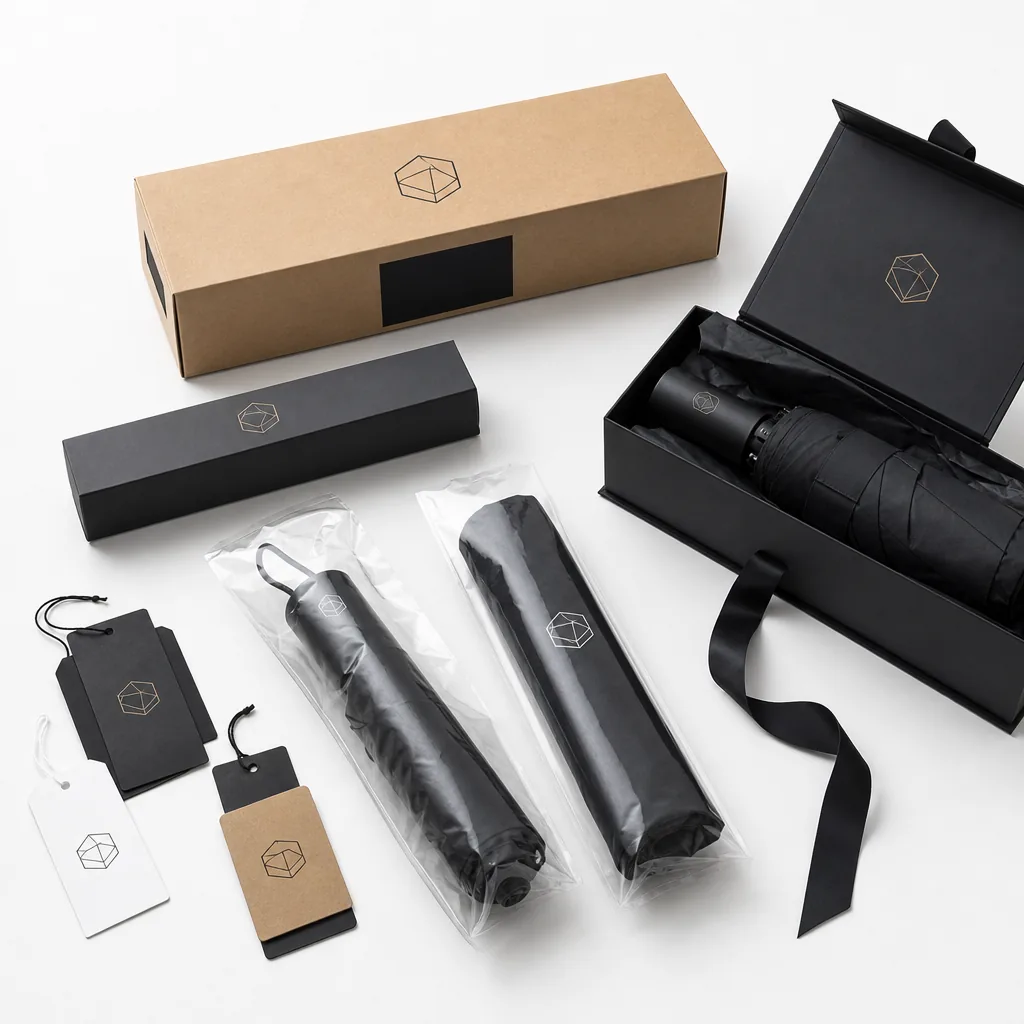
Umbrella Sourcing for Sports Venues and Fan Shops
Learn how stadium operators and fan shops source umbrellas for licensed retail, sponsor activations, and weather protect...
Read More »
Using Branded Umbrellas in Sports Venues and Fan Retail
Explore how stadiums and sports retailers use branded umbrellas for gate giveaways, premium fan retail, and weather-read...
Read More »