Umbrella Tie Strap and Closure Branding for Cleaner Retail IDs
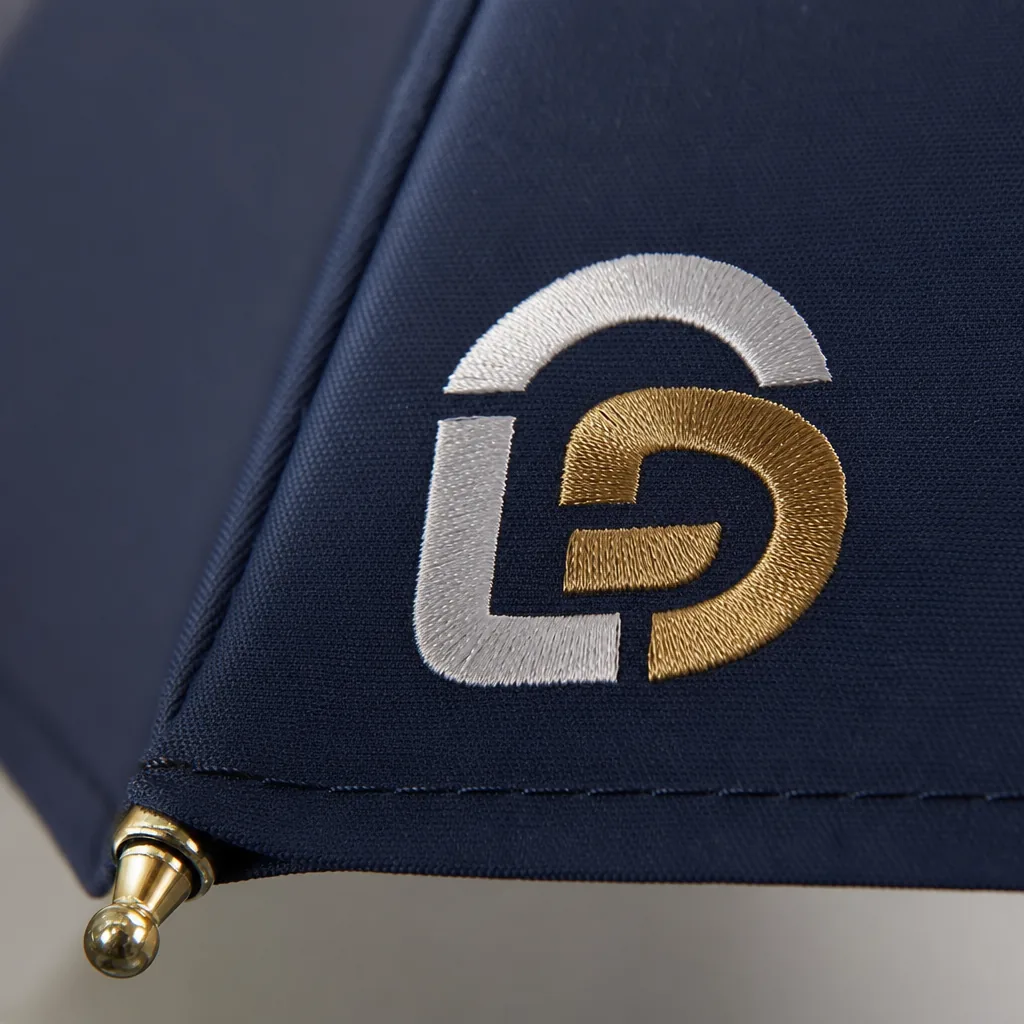
When strap branding fails, retail staff cannot read the ID at a glance, cartons get mixed in transit, and the product loses shelf discipline before the canopy is even opened. On our Songxia lines, clean umbrella strap logo printing depends on matching print area, tape weave, and closure construction early, then holding tight QC on registration, rub resistance, and fold position so the mark stays sharp from packing to store display.
Why the Closure Strap Is a High-Value Branding Area
For 21" and 23" folding umbrellas, the closure strap is usually the only branded surface a shopper sees before purchase. In dump bins, checkout racks, poly sleeves, and export master cartons, compact umbrellas are stored rolled, so the tie strap faces outward while the canopy artwork is hidden under the wrap. That is why umbrella strap logo printing works well for private-label retail and promotional programs: it puts the mark on the visible side of the product in closed storage. A 1-color or 2-color logo on a 15-20 mm polyester or 190T/210T pongee strap is typically large enough to stay legible at first glance without adding canopy complexity or new tooling. The same advantage carries into welcome kits, event packs, and gift sets, where the first brand cue is often the closure tab, not a printed canopy panel.
Canopy branding still matters, but canopy-only branding is a weak choice for telescopic umbrellas that spend most of their service life folded. On 190T or 210T pongee, even a clean single-panel print can disappear once the canopy is rolled and secured with hook-and-loop, especially on compact styles packed closed for retail display. A branded umbrella closure strap keeps the logo at the point of handling during picking, packing, bin display, and resale, which makes it one of the more efficient retail umbrella branding details to specify. It is also a lower-risk upgrade for buyers: the strap print area is flat and repeatable, so registration is easier than on a curved canopy, and simple high-contrast artwork generally produces fewer rejects. For umbrella tie wrap customization, buyers often pair the strap print with a woven label, handle badge, or hangtag to improve shelf recognition without changing frame tooling or the canopy print layout. Standard QC is to check the logo print on umbrella strap for abrasion and color transfer after repeated folding, hook-and-loop contact, and transit compression.
Print Methods and Strap Construction Options
Pick the print method to match the strap build, because the closure strap has limited usable space and punishes detailed artwork. For umbrella strap logo printing, the two standard constructions are woven polyester tape and self-fabric straps made from the same 190T or 210T pongee as the canopy. A typical strap starts at 20-25 mm wide and 80-100 mm long before folding and hook-and-loop attachment, but sewing and overlap usually cut the visible print field to about 20 x 45 mm. On woven polyester tape, 1-color or 2-color screen printing is usually the safest choice because the tape stays dimensionally stable and gives cleaner edges. On matching pongee straps, heat transfer generally outperforms basic screen print when the logo has tight curves, small knockout areas, or compact letterforms. If the brand wants a neater retail presentation than a direct logo print on umbrella strap, a folded woven label or molded rubber patch is a workable upgrade, but both add sewing operations, raise unit cost, and create extra bulk on compact 21 inch and 23 inch folding umbrellas.
Print quality depends heavily on fabric density and artwork discipline. A 210T pongee strap normally prints sharper than 190T because the tighter weave limits ink spread after coating and pressing, which improves edge definition on small copy. For matching-fabric straps, keep capital letters at least 2.5-3 mm tall and line weight at 0.3 mm or heavier for stable mass production; anything finer is likely to break up, especially white ink on dark colors. Woven polyester tape tolerates fine sans-serif logos better than cut pongee because it stretches less, but the space is still too small for a logo, URL, and slogan in one layout. Strap construction matters too: a single-layer self-fabric strap is common, while a double-layer fold or internal webbing improves curl resistance and reduces stitch-point failure. For 27 inch and 30 inch umbrellas, confirm the wrap length on a production sample so the printed area stays visible instead of disappearing into the overlap. Rubber patches suit bold icons and raised branding on a branded umbrella closure strap, not tiny text or hairline details.
Closure Type, Umbrella Style, and User Experience
Closure choice determines whether buyers keep seeing the brand after the canopy print is forgotten. For umbrella strap logo printing, hook-and-loop is the most tolerant option on 21-inch and 23-inch folding umbrellas, especially auto-open and auto-open-close frames that users secure one-handed while the canopy is wet. A strap that lands a few millimeters off still closes, which reduces frustration in high-volume promotional orders using 190T pongee and a 1-color screen print. The downside is wear and perception: low-grade hook tape loses grip sooner than the frame, collects lint, and makes the umbrella feel promotional rather than retail-ready. If you specify hook-and-loop, the execution matters more than the closure itself—tight stitch spacing at the strap root, straight sewing, and a clean woven label or logo print on umbrella strap do more to protect retail umbrella branding details than a cheap oversized tab ever will.
Snap closures usually present better at retail because the branded umbrella closure strap lies flatter and keeps the logo panel facing outward on the rolled canopy. That makes snaps a stronger fit for 27-inch stick umbrellas, golf models, and 30-inch executive styles, where the strap acts as a visible brand tab instead of just a fastener. They also suit premium windproof umbrellas with double-canopy construction, but only when the snap position is sampled against the actual packed diameter: 210T pongee, vented layers, and Teflon or UV coating buildup all change the bulk. A poorly placed snap will feel either strained or loose, which hurts perceived quality faster than any canopy graphic can fix. Button tabs are less common, but on fiberglass-rib stick umbrellas with manual or auto-open frames they still signal a more classic, higher-grade finish when paired with cleaner sewing and better handles. On compact 3-fold umbrellas, though, button closures slow the user down under spring tension. In buying terms, hook-and-loop wins on cost and convenience, while snap and button options justify a more premium position only if closure fit, logo orientation, and packing consistency are held to AQL 2.5.
MOQ, Sampling, and Cost Control for Strap Customization
For most programs, the lowest-risk option for umbrella strap logo printing is a standard polyester hook-and-loop closure strap with a one-color silk-screen or heat-transfer logo. On a 21", 23", or 27" umbrella built on an existing frame and canopy specification, MOQ typically starts at 1,000 to 3,000 pieces per colorway because the factory is adding only print setup and sewing, not sourcing a new trim category. MOQ increases when the buyer switches to a branded umbrella closure strap with a woven label, rubber patch, metal badge, embossed PU tab, or any custom width, edge binding, stitching detail, or molded component. In those cases, 3,000 to 5,000 pieces is more common, and the true minimum can move higher if the trim supplier sets separate MOQs by color, material, or mold. The key cost driver is usually not the strap itself. It is the extra handling: incoming trim inspection, line changeover, manual placement, and slower assembly whenever non-standard parts break normal OEM flow.
Lead time follows the same logic. A printed strap sample on an existing umbrella body is usually ready in 5 to 7 days after artwork approval because the sample room only needs to cut the strap, apply the print, and sew it at the closing point. Custom patches, woven labels, and special pull tabs more often need 10 to 15 days, and up to 18 days when the accessory vendor requires lab dips or mold approval. Unit cost also rises with complexity: a simple logo print on umbrella strap may add only a few cents, while multi-part trims add sewing time and raise rejection risk for crooked placement, inconsistent stitch lines, or reversed logo direction under AQL 2.5 inspection. For cost control, keep umbrella tie wrap customization consistent across SKUs by standardizing hook-and-loop length, label format, and stitch specification, then vary canopy print or hangtags instead. That reduces trim purchasing risk, supports cleaner retail umbrella branding details, and makes FOB or DDP booking easier because one delayed accessory is less likely to hold the full shipment.
Inspection Standards for Strap Branding Consistency
Apply AQL 2.5 inspection to the closure strap as a retail-facing component, not a trim detail. On 21 inch and 23 inch folding umbrellas, inspectors should check finished, folded units because umbrella strap logo printing is judged in the wrapped position, not on flat cut parts. Stitching alignment comes first: the branded umbrella closure strap should sit square to the canopy seam, with even topstitch spacing, no root twist, and trimmed thread ends. A strap logo that lands 2-3 mm off center is often more obvious at shelf distance than a minor canopy print shift, so centering should be checked only after the umbrella is fully closed and fastened. Confirm that hook-and-loop overlap, snap position, or elastic tension does not pull the visible mark left or right. For direct print or woven-label applications, the visual center should stay consistent unit to unit in the closed position, because that is what appears in retail pack-out photos and on peg display.
Function and color need the same control level as alignment. Compare strap artwork on nylon webbing, pongee offcut, or PU-wrapped tabs to the approved master under consistent lighting, with extra attention to dark navy, warm red, and metallic-look inks, which show batch drift fastest. If the canopy uses 190T or 210T pongee, the strap color should still stay within the same approved brand family even when ink absorption differs by substrate. For umbrella tie wrap customization, verify closure strength with repeated open-close cycle testing plus peel or pull checks for hook-and-loop, snaps, or press buttons; a hand tug is not enough. This matters more on auto-open-close frames, where the thicker folded body puts higher stress on the strap. Low-grade closures can reduce unit cost by a few cents, but they usually increase replacement rates through edge fray, weak adhesion, and early fatigue. Final AQL 2.5 pack-out checks should confirm uniform folding, equal strap tension, outward-facing logos, correct hook-and-loop engagement, and no crushed straps, loose threads, or mixed orientation in inner packs.
Frequently Asked Questions
Does strap branding work well on compact umbrellas?
Yes, especially on folding umbrellas that spend most of their life closed in a bag, car, or display bin. In many retail settings, the strap logo is seen before the canopy logo.
What is the best fabric for a printed closure strap?
Most programs use polyester or matching pongee for cost and consistency. Smoother, tighter materials generally hold cleaner print edges than coarse strap fabrics, especially for small logos.
What print area is realistic for a closure strap logo without losing legibility?
For most folding and straight umbrellas, the usable flat print area is about 45-70 mm long and 10-18 mm high after seam allowance and wrap overlap are considered. For small text, buyers usually keep letter height above 2.5 mm and limit the design to one color for cleaner shelf readability.
Which closure construction is better when the umbrella will be opened frequently for in-store customer handling?
Hook-and-loop closures are the most common for repeated handling because they are fast to use and easy to align, but they need stronger stitch reinforcement at the strap base. Snap closures give a cleaner retail look, though they require tighter tolerance control and usually add a bit more unit cost and sampling time.
What QC checkpoints should be added specifically for strap branding before mass production?
Approve a sealed standard covering logo position tolerance, print color, strap cut length, and closure alignment before bulk starts. For production QC, many buyers check rub resistance, stitch security at the strap joint, and whether the printed logo remains visible when the umbrella is fully tied; a common inline sample size is 5-10 pieces per colorway per batch.
Looking to Launch Your Custom Umbrella Line?
ZheBrella is a Zhejiang-based OEM/ODM umbrella manufacturer with 17 years of export experience. Free design, low MOQ from 100 pieces, windproof construction, full-color print.
Get Free Quote Now »People Also Search For
Related Articles
Debossed Branding on Umbrella Straps and Closures
Use straps and closures to add subtle branding, protect the canopy design, and keep retail umbrellas consistent across r...
Read More »Umbrella Strap Printing for Stronger Brand Recall
Learn how printed closure straps add repeat logo exposure, what artwork works best, and how MOQ, lead time, and QC affec...
Read More »
Umbrella Tie Strap Branding for Repeat Retail Programs
Learn how printed and woven tie-strap branding improves retail consistency, with guidance on materials, logo limits, MOQ...
Read More »