Debossed Branding on Umbrella Straps and Closures
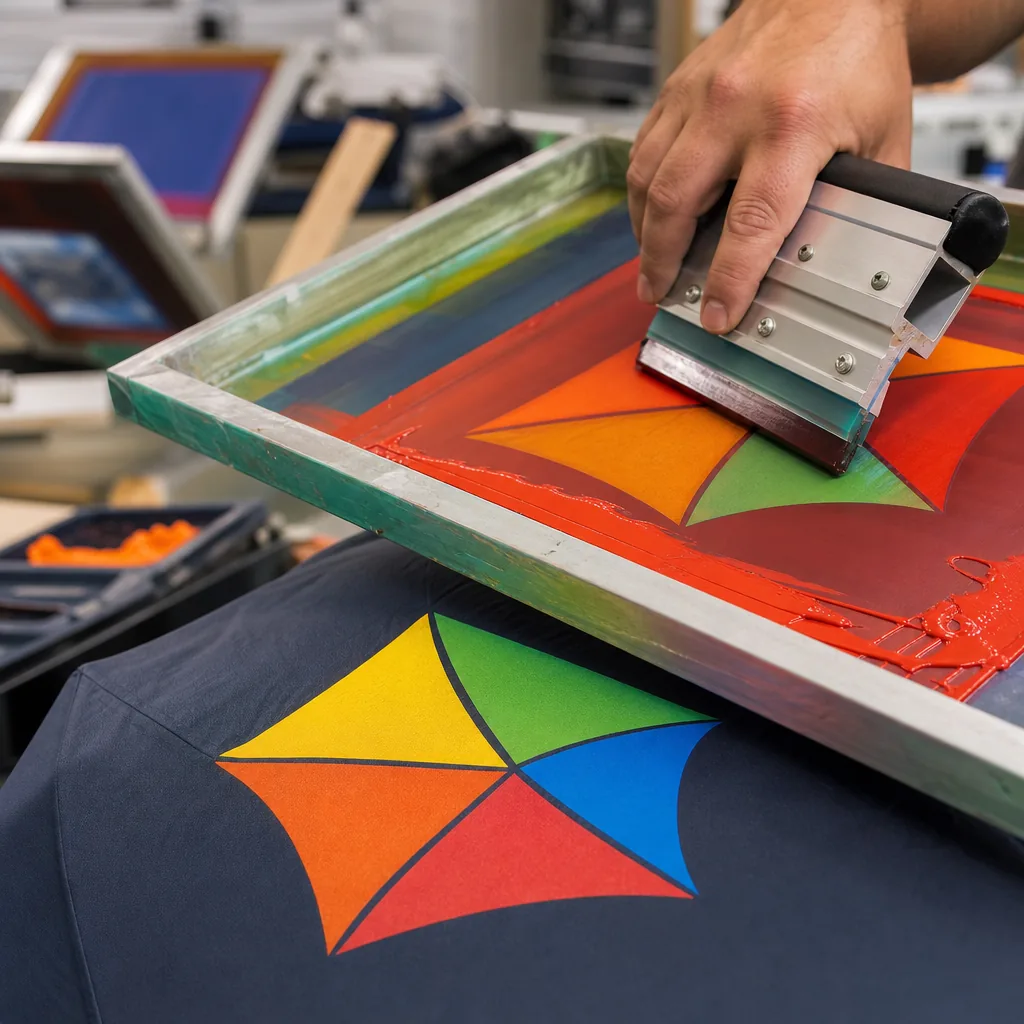
Buyers ordering retail umbrellas often need branding that stays visible without overpowering the canopy art, and the strap or closure is usually the cleanest place to do it. Done well, `debossed umbrella branding` keeps the mark subtle, durable, and repeatable across reorder runs, but it only works when the mold depth, strap material, and pressing temperature are controlled on the factory floor.
Why straps and closures work for branding
Tie straps, hook-and-loop tabs, and fastening bands are small parts, but they get touched every time the umbrella is opened, folded, and stored, so they are efficient places for debossed umbrella branding. On woven polyester straps, a deboss or blind press gives a clean, permanent mark without adding ink thickness that can crack or flake after repeated flexing. On wider closure bands, closure logo customization can also be done with screen print, heat-transfer, or even woven labels, but debossing is usually the better choice when the buyer wants a quieter, more premium finish. We usually place the mark near the stitched end or on the visible outer face, where the branding is legible without interfering with the fold line or the snap point.
For premium retail umbrellas, subtle branded umbrella details matter more than loud graphics because the strap is part of the product experience, not just packaging. A clean deboss on a 10 mm to 20 mm strap looks more expensive on POE, pongee 190T, or 210T canopies than a heavy print that competes with the canopy artwork. This is where OEM umbrella decoration needs restraint: one logo, one position, good edge control, and no distortion when the strap is tensioned. If the frame, canopy color, and handle already carry strong brand cues, the strap should support the system rather than fight it, especially on 21" and 23" retail auto-open-close models.
For high-volume promo programs, umbrella strap printing is often the cheaper route because it scales fast and reads from a distance, especially when the logo is simple and the order runs into tens of thousands of pieces. A printed closure band works well on basic manual folding umbrellas, event giveaways, and price-sensitive retail packs where the buyer wants visible branding without adding tooling or extra sewing complexity. Debossing still has a place here, but only when the artwork is simple enough to survive compression and the factory can hold repeatability across large lots; otherwise, print is safer for speed and consistency. In practice, the best method depends on the target shelf price, the strap material, and whether the umbrella is being sold as a premium accessory or a mass-market promo item.
Material and decoration limits to specify
For debossed umbrella branding, the strap material matters more than the artwork file. Elastic straps give the cleanest debossed or embossed look because the surface has enough body to hold a pressed logo, but the weave must be tight or the mark blurs after stretching. Woven polyester is the safest for standard umbrella strap printing and woven-label style decoration, but it is not the best candidate for a deep deboss; the texture breaks up fine edges. PU strap material takes hot-stamp well and can also carry a crisp press mark, but only if the PU skin is thick enough; thin PU wrinkles and recovers poorly after repeated folding, so it is weaker for premium closure logo customization that needs a long service life.
The practical limits are straightforward: do not specify tiny text below about 1.5 mm stroke width, and keep normal logo height above 4 mm if you want the mark to read after stitching and daily handling. Repeated logo elements, like a row of small icons or thin separator lines, need more spacing than buyers expect; on straps, I usually tell clients to leave at least 2 mm between repeated elements and avoid reverse text unless the strap is PU or a very dense elastic. For OEM umbrella decoration, the best result is a simple mark with one focal icon, short wordmark, and no hairline details, because the folding stress at the strap bends any weak line first.
If the closure detail is part of the brand story, choose the decoration method by material instead of forcing one spec across all styles. Hot-stamp is best on PU when you want a sharp, flat metallic or matte effect; embossing is best on elastic when you want texture without ink wear; print is best on woven polyester when the logo needs color accuracy and faster production. Our standard practice is to approve strap art with actual material swatches, because branded umbrella details that look fine on screen often fail once the strap is stretched, sewn, or heat-set. For production control, I would lock the strap width, logo area, and stroke limit on the drawing before sampling, then confirm whether the logo must survive abrasion, water exposure, or repeated folding under daily use.
How to keep logos legible at small sizes
On a narrow umbrella strap, debossed umbrella branding only stays legible if the mark is kept brutally simple. In production, I treat 12 mm to 15 mm as the practical minimum height for a one-line wordmark, and around 18 mm to 22 mm if you want a small icon plus text. Anything finer tends to disappear once the PU or webbing compresses under heat, stitching tension, and daily flexing. Safe margins matter just as much: leave at least 1.5 mm to 2 mm of clear space on both sides so the edges of the deboss do not run into bar tacks, end folds, or the strap’s seam allowance. That is the difference between clean branded umbrella details and a logo that looks crushed after the first sewing pass.
Contrast rules are less forgiving on straps than on canopy panels because the surface is narrow and the texture is already busy. Deep debossing works best on matte black, dark navy, or medium-tone straps where the recessed mark still catches light; on glossy PVC or heavily coated webbing, shallow details blur fast. For umbrella strap printing, I usually recommend either a single-color logo or a plain deboss with no thin strokes under 0.3 mm, because hairline elements fill in once the material stretches. If the customer wants closure logo customization, the logo should be redesigned for one-direction viewing only, not copied from a hangtag or canopy file without simplification.
The construction method changes everything. If the strap is stitched flat onto the canopy tie, you can usually keep a slightly larger logo and tighter placement control; once it is folded back on itself or sewn into an automatic-open umbrella sleeve, the visible face shrinks and the usable area can drop by 20% to 40%. On sleeve-integrated closures, the logo must avoid the fold line and any snap or Velcro overlap, or the deboss will distort after repeated opening cycles. For OEM umbrella decoration, I always ask for the final sewing pattern before approving artwork, because a design that looks fine on paper can lose legibility once it passes through bartacking, edge folding, and post-sew trimming.
Sampling, color control, and approval checks
Pre-production samples are the only honest way to lock down `debossed umbrella branding` on a strap or closure because rubber, PU, and woven webbing all behave differently under heat, pressure, and mold depth. Ask for a physical sample before bulk run, not just a flat artwork proof, and confirm the exact Pantone reference in daylight and under indoor white light. If the closure uses a separate label, check whether the logo is molded into the material or applied afterward; those two methods age differently and affect `closure logo customization` and `OEM umbrella decoration` decisions.
For color control, I always ask buyers to approve one master reference for the strap body and one for the debossed logo, because dark-on-dark combinations can hide poor relief depth. The sample should show the logo on both sides of the strap or closure if the construction allows it, with registration centered and mirrored correctly, especially for text and small icons. That is where `umbrella strap printing` and branded umbrella details often go wrong: the front looks acceptable, while the reverse side shifts, stretches, or loses edge sharpness.
At AQL 2.5, the inspection focus should be placement, finish, and stitching quality, not just whether the logo is visible. Measure offset from center, compare logo depth and edge crispness against the approved sample, and reject any strap with burnt marks, gloss mismatch, or incomplete deboss fill. Also check the stitching bite at both ends of the strap or closure, because loose thread tension and crooked seams are common on small parts; if the closure is sewn crooked, the branding looks off even when the logo itself is correct.
MOQ, lead time, and shipping terms for branded trims
For straps and closures, don’t ask for a generic umbrella MOQ and assume it covers trim work. `debossed umbrella branding` on a webbing strap, hook-and-loop closure, or snap tab usually has its own setup charge, and the real MOQ depends on the decoration method, strap material, and whether the trim is attached at the factory. A plain woven strap can sometimes run at 500-1,000 pieces per artwork, while a debossed or molded logo often needs a higher tooling minimum because the mold, plate, or embossing die has to be amortized. If the order includes canopy print plus trim branding, confirm whether the supplier is charging one combined decoration fee or separate charges for each position, because `umbrella strap printing` and `closure logo customization` are often priced independently.
For lead time, trim decoration is rarely the bottleneck by itself; the delay usually comes from sample approval, mold making, and color matching across the canopy, strap, and closure. A practical production window for standard `OEM umbrella decoration` is often 20-30 days after deposit and artwork approval, but add 5-10 days if the strap requires a new debossed mold or if the logo sits on a special PU patch, rubber label, or metal snap. Mixed-brand programs are where buyers get burned: if you have multiple retailer logos in one carton mix, ask the factory to separate by PO, because `branded umbrella details` like strap art, belly band, and hangtag can force extra sorting and slower packing.
On shipping terms, FOB is usually cleaner when the buyer has a freight forwarder, consolidated cartons, and separate brand owners, because it keeps the factory focused on production and export documents. DDP becomes more practical when the umbrella order is mixed-brand, drop-shipped to multiple destinations, or sold through ecommerce channels where the importer wants landed cost clarity and no customs handling. For both terms, confirm carton breakdown by artwork, HS code, and whether the strap/closure decoration counts as part of the umbrella price or as a separate accessory line; that affects invoice value, duty treatment, and how your MOQ is interpreted in the purchase order.
Frequently Asked Questions
Can a logo be debossed on a small umbrella strap without losing detail?
Yes, if the logo is simplified and the line weight is strong enough for the strap width. Thin strokes and tiny text usually need to be removed or enlarged in the artwork stage.
Do branded straps add much to MOQ or lead time?
Usually they add a separate decoration step, so the MOQ can be higher than a plain strap. Lead time commonly extends by several days, especially if a new mold, embossing plate, or color-matched trim is required.
What materials work best for debossed branding on umbrella straps?
Debossing works best on PU leather, PVC, rubber patches, and some synthetic leather trims. Standard polyester straps usually require printing, woven labels, or sewn-on patches instead of true debossing.
Can the same debossed strap design be repeated across multiple umbrella styles?
Yes. Many buyers use the same strap width, snap color, logo plate, or PU patch across stick umbrellas, folding umbrellas, and golf umbrellas to keep retail branding consistent. Confirm strap length and closure position during sampling because canopy diameter affects fit.
What is the typical MOQ and lead time for custom umbrella closure logos?
For printed or woven strap logos, MOQ is often 500 to 1,000 pieces per design. Debossed PU or rubber logo closures may require a mold, with sample development around 7 to 10 days and bulk production commonly 30 to 45 days after approval.
Looking to Launch Your Custom Umbrella Line?
ZheBrella is a Zhejiang-based OEM/ODM umbrella manufacturer with 17 years of export experience. Free design, low MOQ from 100 pieces, windproof construction, full-color print.
Get Free Quote Now »People Also Search For
Related Articles
Umbrella Strap Printing for Stronger Brand Recall
Learn how printed closure straps add repeat logo exposure, what artwork works best, and how MOQ, lead time, and QC affec...
Read More »Umbrella Tie Strap and Closure Branding for Cleaner Retail IDs
Plan umbrella strap branding that stays legible in stores and transit, with guidance on print area, fabric choice, closu...
Read More »
Branded Umbrella Closures: Custom Straps, Snaps, and Tabs
Plan branded closure straps and tabs with the right fabric, fastening method, print treatment, MOQ, and QC standards for...
Read More »