Umbrellas for Stadium Shops and Fan Retail Programs
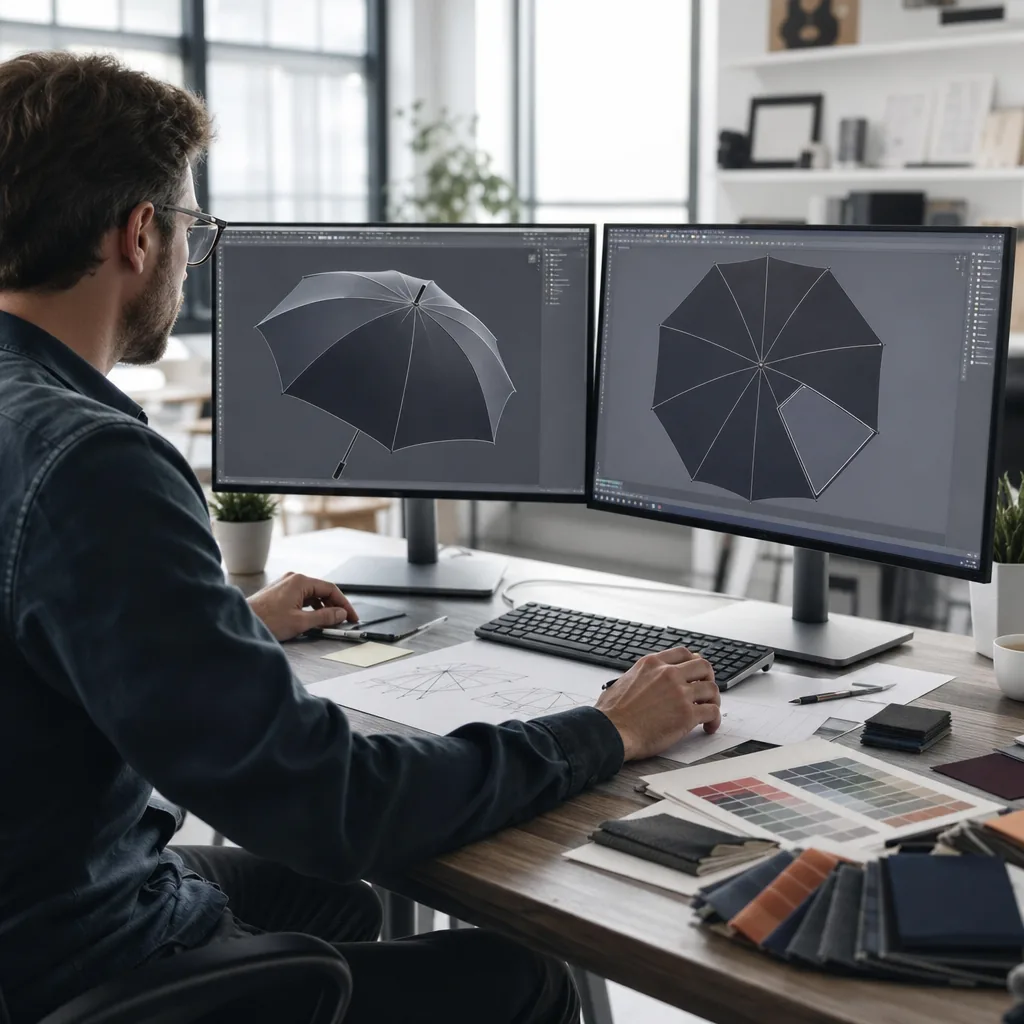
Buying umbrellas for stadium stores and fan-retail programs looks simple until you have to balance team branding, shelf appeal, freight cost, and the abuse of real game-day use. As a factory in Songxia, we see that the right stadium shop umbrellas depend on more than print quality: frame strength, opening feel, wind performance, and packaging all have to match the retailer’s price point and the fan’s impulse-buy expectations.
Why stadium retail needs umbrellas as year-round merchandise
stadium shop umbrellas sell for reasons that go well beyond rain. Fans use them for shade on open concourses, wind protection at exposed venues, and the walk from parking lots, transit stops, and tailgate zones to the gate. That path usually means carrying tickets, drinks, and gear, so the product has to feel useful at first glance and hold up after one season, not one game. Team colors and a crisp logo drive the purchase because buyers want something that looks official in the stadium and still works in the car. For retail, a 23" or 27" auto-open umbrella with a fiberglass frame and 190T or 210T pongee canopy is a stronger item than a giveaway umbrella, and it supports a higher retail price with lower breakage risk.
For fan retail umbrellas, demand peaks around tailgates, parking lots, campus walks, and outdoor venue traffic, even in dry weather. That makes assortment a merchandising issue, not just a weather play: 21" compact models for bags, 23" everyday carry, 27" golf-style coverage, and vented double-canopy versions for windy stadiums. UPF 50+ or Teflon-coated canopies give the product a summer-use story, while screen print or heat-transfer decoration keeps team marks clean across repeated opens and closes. A retail umbrella supplier should also plan to commercial terms: consistent sizing, AQL 2.5 inspection, realistic MOQ, and replenishment lead times that fit home-game calendars. For stadium shop umbrellas, the decision usually comes down to durability, fan appeal, margin, and whether the stock can turn reliably across the full season, not just on rainy days.
Product structures that fit retail price tiers
For stadium shop umbrellas at the entry price point, the most sellable format is a compact auto-open foldable in 21" or 23". A steel shaft with 8K ribs keeps the BOM low and still gives the product enough structure to sit above giveaway stock. Use 190T pongee when the print is simple and the buyer is chasing the lowest landed cost; step up to 210T pongee when opacity, hand feel, and better color coverage matter more. Steel ribs are acceptable for short sell-through cycles and lower ticket retail, but they add weight and flex less than fiberglass, so they suit price-led fan retail umbrellas better than heavy daily use. For this tier, the buyer is usually balancing shelf price, shipping cost, and a reasonable return rate, not premium storm performance.
Premium golf umbrellas belong in the higher-margin lane because the larger canopy and stronger frame justify a higher retail price. A 27" or 30" branded sports umbrella with 16K fiberglass ribs, auto-open or auto-open-close, and a vented double-canopy build gives clear value separation from the compact line. Use 210T pongee here: it is denser, prints cleaner on larger panels, and presents team graphics with less show-through than 190T. Fiberglass ribs are worth the added cost because they flex under wind load instead of bending permanently like low-cost steel, which reduces breakage complaints and support issues for the retail umbrella supplier. In practice, the structure does more to defend margin than decoration alone, especially for stadium shop umbrellas sold as fan-facing merchandise.
A practical assortment for a promotional umbrella factory is simple: 190T/8K steel for entry-level impulse purchases, and 210T/16K fiberglass for premium tailgate, gift, and car-use programs. The jump from 8K to 16K is not cosmetic; it changes canopy shape, frame stability, and how premium the umbrella looks on the wall. Buyers should set MOQ, decoration method, and lead time after they choose the margin target, because a compact auto-open model and a golf umbrella do not carry the same material cost or freight risk. That structure gives stadium shop umbrellas a clearer price ladder, fewer frame failures, and a cleaner retail story from the first ticket price to the top-margin SKU.
Design choices that protect brand integrity and resale value
For stadium shop umbrellas, brand integrity starts with color control and print geometry. Match official team colors to Pantone references or buyer-approved physical swatches, then specify solution-dyed or lab-dyed 190T or 210T pongee for solid panels instead of relying on flood printing that can drift batch to batch. Under stadium lighting and in retail aisles, even a small shade mismatch shows. On 8K or 10K frames, rib spacing and seam placement determine whether a crest lands cleanly or breaks across a panel, so artwork should be proofed on the exact panel map before cutting. Logo placement also has to respect licensed safe zones and opening clearance on auto-open styles; if the mark crosses the shaft path or runner travel, it will crack faster and may fail approval.
Licensed artwork usually carries tighter limits than buyers expect. Team marks, player signatures, sponsor logos, and championship graphics often need separate sign-off, and rights holders may cap edge-to-edge coverage, panel overfill, or oversized crests that compete with the primary mark. A retail umbrella supplier should keep the front-facing panel clean for shelf reading and place secondary marks on the reverse panel, tie strap, or hangtag so the umbrella still resells as official merchandise. Packaging should support that positioning: a printed belly band, barcode label, hanging loop, and clear size callout help on peg walls, while a window box or rigid sleeve gives higher perceived value for premium SKUs. Double-canopy vented models can be sold as performance-led fan retail umbrellas when the pack calls out fiberglass ribs, UPF 50+ fabric, and wind resistance above 50 mph, turning the product into branded sports umbrellas rather than low-margin souvenirs.
Buying terms, MOQ, and inventory planning for venue stores
Plan MOQ by SKU, decoration method, and frame spec, not by one blanket quantity. For stadium shop umbrellas, a 21-inch compact auto-open with a one-color screen print commonly starts around 500-1,000 pieces per colorway. A 23-inch or 27-inch golf-style model with fiberglass ribs, a vented double canopy, and full-panel sublimation usually requires a higher run because panel cutting, print setup, and assembly time are higher. If you are buying for multiple teams, stores, or concessions, freeze the high-risk variables first: artwork, rib construction, canopy fabric, and opening mechanism. Then vary only low-cost details such as handle color, sleeve print, or hangtag. That keeps tooling and replenishment manageable. In practice, one 2,000-piece SKU is usually lower risk than four 500-piece variants that create leftover stock after the season. Ask the retail umbrella supplier or promotional umbrella factory for an MOQ matrix by size, print method, and packaging so you can compare true landed cost by SKU before issuing the PO.
Use AQL 2.5 as the incoming inspection baseline and apply it to both pre-shipment and receiving checks. For fan retail umbrellas, the sample plan should verify print registration, color consistency, open-close function, rib alignment, tip finishing, seam quality, carton count, and retail-pack accuracy. If the build uses fiberglass ribs, 190T or 210T pongee, POE, PVC, or Teflon-coated canopy materials, add checks for coating uniformity and seam integrity because those failures drive returns in high-traffic venue retail. Build lead times from the home-game calendar backward: 25-35 days for production after artwork approval, plus roughly 7-20 days for ocean transit depending on route and customs. Add about one more week if the order includes auto-open-close frames, POE canopies, or premium retail packaging. FOB usually fits centralized import programs shipping into one warehouse; DDP is often the safer choice when branded sports umbrellas must land at multiple stores or concessions with one predictable landed cost. Hold a small reserve for replenishment ahead of rivalry games, playoff runs, or weather-driven demand spikes.
How to assess supplier capability for licensed retail
For licensed retail, the real test is repeatability, not a good-looking prototype. For stadium shop umbrellas, require three checkpoints before bulk production: a buyer-approved pre-production sample, a sealed gold sample kept on the line, and a final bulk standard tied to the exact artwork revision. Compare PMS color, logo position, panel count, seam alignment, edge binding, and print registration against the approved file. In practice, even a 3-5 mm logo shift, a dark PMS match, or a broken repeat across a seam can trigger store rejects. The print method must also fit the fabric and order size. Screen printing suits solid artwork on 190T or 210T pongee; heat transfer is more practical for short runs or SKU testing; sublimation is only reliable when the canopy fabric and layout can hold full-coverage graphics without distortion at panel seams. Ask how the factory locks artwork revisions, sample sign-off, and line instructions by SKU. One outdated logo file or mixed team graphic can contaminate an entire fan retail umbrellas program.
Before expanding from one team to a multi-SKU licensed range, verify that the supplier can execute retail operations with the same discipline as production. Carton labels should match your warehouse format and include style number, color, size, PO number, SKU, and country of origin, with scannable data confirmed before packing. Barcode readiness is non-negotiable: hangtags, inner packs, and master cartons should carry the correct UPC or GTIN structure, especially when one PO includes 21 inch compact auto-open-close units alongside 23 inch or 27 inch branded sports umbrellas. On compliance and shipping, the retail umbrella supplier should issue the commercial invoice, packing list, HS code declaration, and origin documents on schedule, and pass AQL 2.5 on a pilot run before volume release. Also confirm rib material consistency, open-close cycle performance, carton counts, assortment ratios, and line segregation for each team or event graphic. A capable promotional umbrella factory should quote lead times by SKU, confirm FOB or DDP terms, and provide carton photos and barcode samples before release. If documentation, change control, or reorder consistency sounds vague, do not scale the program.
Frequently Asked Questions
What umbrella style sells best in stadium shops?
Compact auto-open umbrellas usually work well for entry-level purchases, while golf umbrellas perform better as premium fan merchandise. The best mix depends on ticket price, store size, and local weather.
How can a stadium shop avoid quality issues on repeat orders?
Lock the approved fabric, rib count, canopy size, and print files before production starts. For repeat orders, ask the factory to keep the same material lot or closely matched color standard when possible.
What umbrella styles usually work best for stadium shop programs?
Compact folding umbrellas and 42- to 48-inch vented golf umbrellas are the most common retail choices. Folding models are easier for impulse buys and shelf display, while larger golf-style umbrellas usually perform better for premium team or sponsor programs.
What packaging is most suitable for fan retail umbrellas sold in stadium stores?
For retail shelves, many buyers choose a printed sleeve with a hang tag or a PVC case with barcode labeling. If the umbrella is part of a licensed program, add retail-ready packaging details early because carton count, barcode placement, and gift-box sizing can affect your final production plan.
What lead time should a distributor expect for a custom stadium retail umbrella order?
Typical production lead time is about 30 to 45 days after artwork approval and deposit, depending on canopy printing, handle customization, and packaging. New mold parts or complex licensed graphics can add time, so buyers usually plan at least 60 days before a sports season launch.
Looking to Launch Your Custom Umbrella Line?
ZheBrella is a Zhejiang-based OEM/ODM umbrella manufacturer with 17 years of export experience. Free design, low MOQ from 100 pieces, windproof construction, full-color print.
Get Free Quote Now »People Also Search For
Related Articles
Umbrella Sourcing for Sports Clubs and Stadium Retail
Build stadium and club umbrella assortments with weather-ready specs, retail packaging, MOQ planning, and quality contro...
Read More »
Branded Umbrellas for Stadiums and Fan Retail Programs
Build stadium umbrella assortments that handle crowd use and weather. Learn the specs, decoration limits, and buying ter...
Read More »Using Branded Umbrellas in Sports Venues and Fan Retail
Explore how stadiums and sports retailers use branded umbrellas for gate giveaways, premium fan retail, and weather-read...
Read More »