Wooden Stick Umbrellas: OEM Spec Guide for Retail Brands
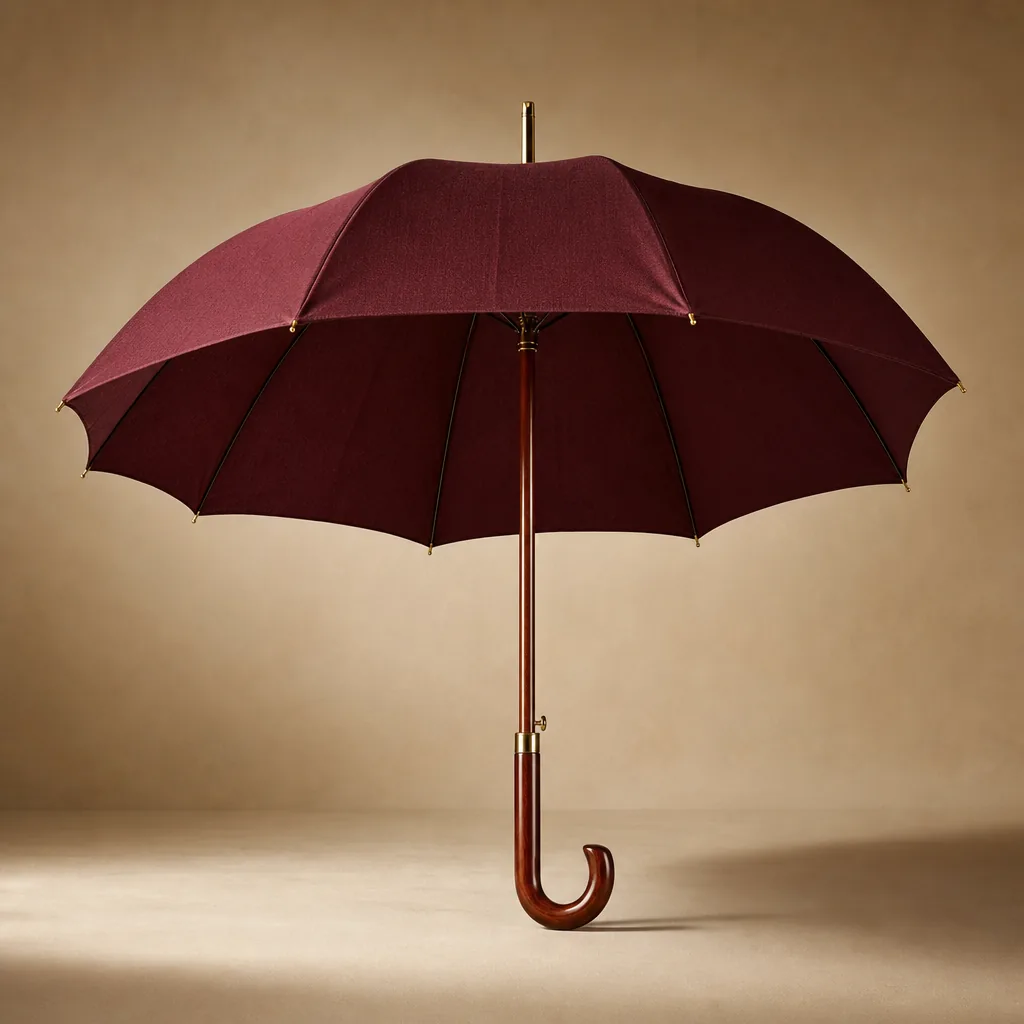
Premium wooden stick umbrellas look simple on a retail wall, but small spec choices in the shaft, rib set, canopy tension, handle coating, and carton packing decide whether they feel solid or come back as claims. On our Songxia factory floor, the problems we see most often start with vague OEM briefs: wood moisture not defined, ribs mismatched to canopy size, or finishes that rub during transit. A clear spec sheet turns the product from a sample-room idea into repeatable production.
Define the Retail Positioning Before Choosing Specs
Retail positioning should be fixed before anyone argues about rib count, fabric, or handle shape, because wooden stick umbrellas sell by shelf impression as much as rain performance. For premium fashion, lifestyle shops, museum stores, and department store private labels, the straight wooden shaft and curved wood handle create a more deliberate look than a compact folding umbrella. A 23-inch model is the safest retail size: it covers one adult well, fits standard display buckets, and keeps carton weight reasonable for FOB or DDP shipping. For menswear, golf-adjacent lifestyle, or higher-ticket department store lines, 25-inch gives a stronger silhouette without becoming as bulky as a 27-inch rain umbrella.
For OEM stick umbrellas, I usually separate the build into two retail tiers. An 8K frame with steel ribs is cost-efficient and acceptable for museum gift shops, seasonal fashion drops, and branded stick umbrellas where the print or handle is the main selling point. If the buyer wants a more durable premium feel, use 8K fiberglass ribs or a mixed fiberglass-steel frame; it improves wind recovery and reduces bent-rib complaints. A 16K build looks fuller under the canopy and feels more substantial in the hand, but it adds labor, material cost, and sewing tolerance risk, so it is best reserved for department store collections or high-margin wood handle umbrellas.
The canopy fabric should match the retail story, not just the target cost. 190T pongee is adequate for entry premium lines, while 210T pongee has a denser hand feel and takes solid colors, woven-look prints, and heat-transfer logos better. For art museums or licensed lifestyle prints, panel alignment matters more than saving a few cents; crooked artwork across 8 or 16 panels is what customers notice first. As a retail umbrella supplier, our standard practice at ZheBrella is to confirm size, rib count, fabric weight, handle finish, logo method, and AQL 2.5 inspection criteria before sampling, because changing any of those after approval can shift both unit cost and lead time by several days.
Compare Wood Shaft, Metal Shaft, and Hybrid Builds
For wooden stick umbrellas, a true solid wood shaft is mainly a styling and positioning decision, not the cheapest engineering route. Beech, maple, ash, and occasionally bamboo give the umbrella a warmer retail feel than painted steel, especially on 23" and 27" straight umbrellas sold as lifestyle, hotel, golf-club, or heritage branded stick umbrellas. The tradeoff is tolerance control: wood shafts must be properly dried, straightened, sealed, and color-matched, otherwise you see bending, grain variation, or small lacquer cracks after humid container transit. A typical solid wood shaft build adds weight compared with aluminum and costs more than a steel shaft with a wood handle, but it feels rigid in hand and supports a premium price point. For retail programs, I usually specify a 14 mm or 16 mm shaft, metal runner, reinforced tip cup, and a canopy in 190T or 210T pongee rather than thin polyester, because a premium shaft looks wrong under a weak fabric.
Metal shaft plus wooden handle is the practical choice for most OEM stick umbrellas when the buyer wants a wood appearance but has a tighter FOB target. The shaft can be black electroplated steel, powder-coated steel, or aluminum, paired with a crook, straight, or J-shaped wood handle. Steel is cheaper and stiff, but it raises finished weight; aluminum is lighter but less rigid and can dent more easily in rough retail handling. On a 23" umbrella, this build may save meaningful cost versus a full wood shaft while keeping the shelf impression close, especially if the handle is real wood rather than plastic with wood-grain printing. For promotional distributors and mid-tier retail, this is often the sweet spot: manual open for cost control, auto-open if convenience matters, and a 190T pongee canopy with screen print or heat-transfer logo. A retail umbrella supplier should confirm handle pull strength, runner smoothness, and shaft coating adhesion, not just quote by appearance.
Rib material changes durability more than the shaft does. Standard steel ribs are inexpensive and hold shape well, but they can invert permanently or rust at the rivet points if plating is weak. Fiberglass ribs cost more, usually adding a visible price step, but they flex back after gusts and are the better upgrade for umbrellas marketed as wind-resistant. For 8K everyday wood handle umbrellas, fiberglass ribs with a metal shaft are already a solid retail spec; for 16K or double-canopy vented models, fiberglass becomes almost mandatory if you want credible wind performance around 50 mph testing. Hybrid builds are common: wood handle, steel or aluminum shaft, fiberglass ribs, and sometimes a fiberglass center shaft for golf sizes like 27" or 30". The key is balance. A heavy solid wood shaft with steel ribs can feel traditional but tiring; a metal shaft with fiberglass ribs feels lighter and more durable; a full premium wooden stick umbrellas build should justify its higher price through fabric, finishing, and AQL 2.5 inspection standards.
Select Canopy Fabric for Look and Performance
For wooden stick umbrellas sold at retail, 190T pongee is usually the floor, not the premium choice. It gives a cleaner hand feel than basic polyester, folds around the ribs without looking bulky, and takes screen printing or heat-transfer logos with acceptable edge definition. On a 23" or 27" stick frame, 190T pongee also keeps the canopy weight reasonable, which matters because the wooden shaft and crook handle already add mass compared with aluminum golf umbrellas. If the target is a department-store shelf or a corporate gift program, I would not spec plain 170T polyester unless price is the only driver. Polyester can pass a basic water-spray test with a PU or water-repellent finish, but it often looks flatter, wrinkles more after compression packing, and shows weaker color depth under store lighting.
210T pongee is the better fabric when the umbrella must look structured and branded, especially for OEM stick umbrellas with full-panel artwork, step-and-repeat logos, or PMS-matched solid colors. The tighter weave gives sharper print definition, less ink bleeding at fine text, and a smoother drape from tip to tip, which improves the first impression when customers open the umbrella in-store. On dark navy, burgundy, forest green, and black canopies, 210T also tends to hide seam puckering better than cheaper polyester. Our standard practice at ZheBrella is to check printed panels before sewing, because a good fabric still fails commercially if the logo crosses a rib seam poorly or if heat-transfer film changes the fabric hand on one panel only.
Black coating and UPF 50+ treatments should be selected by selling channel, not added blindly. A black inner coating improves sun blocking, makes wood handle umbrellas feel more protective, and can help the product qualify for UPF 50+ claims when tested properly, but it stiffens the canopy and can make the inside look more utilitarian. Silver coating is cheaper but looks dated on many fashion programs. For branded stick umbrellas aimed at outdoor events, resorts, schools, or lifestyle retail, a high-density 210T pongee with Teflon-style water repellency and optional UV treatment is a stronger shelf story than generic polyester with a logo. A serious retail umbrella supplier should also confirm colorfastness, hydrostatic performance, and coating adhesion after wet folding, because failures usually appear after the first rainy use, not during the showroom sample review.
Specify Handle Shape, Finish, and Branding
Handle geometry should be locked before you approve canopy artwork, because it affects carton size, perceived price point, and how the umbrella hangs at retail. For wooden stick umbrellas, the classic crook handle is still the strongest choice for department stores, hotels, and fashion brands because it hooks cleanly over a forearm or display rail. A straight wood grip feels more modern and works well on 23" and 27" OEM stick umbrellas, especially when paired with a black electroplated shaft or fiberglass ribs. In production, we check the handle bore diameter, glue depth, and alignment against the shaft; a beautiful beech or maple handle is useless if it rotates after 200 open-close cycles or sits 3 mm off-center.
Finish is where many retail programs lose consistency. Natural wood shows grain variation, which is attractive but harder to control across 3,000 or 10,000 pieces; stained finishes give a more uniform look but need a defined tolerance against an approved master sample. I recommend setting an acceptable color range under D65 light, not just approving photos from a phone. Gloss, semi-matte, and matte lacquer also age differently during sea freight, especially if cartons sit in humid Ningbo or Shanghai warehouses for two weeks. Our standard practice at ZheBrella is to inspect handle finish for color drift, exposed sanding marks, bubbles, scratches, and lacquer pooling at the crook curve before final AQL 2.5 inspection.
Branding on wood handle umbrellas should be specified by durability, not just appearance. Laser engraving is clean and permanent, but shallow engraving disappears on dark stains unless the contrast is tested. Metal badges look premium on branded stick umbrellas, though the recess depth and adhesive must be controlled so badges do not lift in cold weather. Printed wrist straps are lower cost and useful for campaign messaging, but the strap material, PMS color, and attachment stitch need approval with the canopy. A serious retail umbrella supplier should provide pre-production samples showing handle shape, finish, logo method, and strap printing together, because small mismatches between wood tone, badge plating, and canopy color are very visible on wooden stick umbrellas.
Build the Purchase Spec Sheet and QC Plan
A workable spec sheet for wooden stick umbrellas should start with the frame, not the logo. For retail programs, I would lock the size first: 23" is the common city umbrella, 27" gives better coverage for golf or premium outdoor use, and 30" becomes freight-sensitive because carton dimensions jump. Specify 8K, 10K, or 16K ribs clearly; 8K steel ribs are economical, while 10K or 16K fiberglass ribs improve wind recovery but raise cost and assembly time. The wooden shaft should list diameter, usually 14 mm for standard 23" styles and 16 mm for heavier 27" models, plus the wood type, stain color, varnish finish, and handle shape. For canopy, call out 190T or 210T pongee, polyester, or RPET, with optional Teflon water-repellent treatment or UPF 50+ coating. If the brand wants a classic retail look, wood handle umbrellas need consistent grain matching and no rough varnish around the ferrule or runner.
Printing and packing details should be written like a production order, not a mood board. For branded stick umbrellas, specify screen printing for simple 1–3 color logos, heat transfer for fine gradients, and digital sublimation when full-panel artwork or photographic designs are required. Pantone references must be tied to fabric type because the same PMS color looks different on 190T pongee versus coated polyester. Packaging should state whether the umbrella uses a matching fabric sleeve, PVC sleeve, paper belly band, hangtag, barcode label, inner box, or retail display carton. A normal MOQ for OEM stick umbrellas is often 500–1,000 pieces per color for solid dyed fabric, but custom-dyed canopy lots may require 1,200–3,000 pieces depending on mill availability. Lead time is typically 30–45 days after artwork approval and deposit, longer if custom wood parts or lab testing are included. Quote both FOB Ningbo or Shanghai and DDP to the buyer’s warehouse so freight and duty assumptions are visible.
The QC plan should be attached to the purchase spec, not negotiated after the goods are packed. Our standard practice at ZheBrella is AQL 2.5 for major defects and tighter internal patrol checks during frame assembly, canopy sewing, and final packing. For wooden stick umbrellas, opening and closing must be tested for runner smoothness, spring lock engagement, rib symmetry, and no shaft wobble. Finishing checks should cover wood varnish bubbles, scratches, exposed glue at the handle joint, loose tips, crooked top notch, and sharp burrs on rib ends. Stitching inspection should confirm 8 or more stitches per inch where specified, clean panel seams, secure tie wrap, reinforced tips, and no skipped stitches around the canopy edge. Color control needs approved pre-production samples, fabric lot comparison under D65 lighting, and logo color tolerance agreed before bulk print. Final inspection should also include carton drop condition, barcode scanning, unit count, moisture control, and shipping marks that match the FOB or DDP documents.
Frequently Asked Questions
Are wooden stick umbrellas suitable for rain, or mainly for fashion?
They can be fully functional rain umbrellas when built with water-repellent pongee and durable ribs. Many retail buyers choose them because they combine daily utility with a premium classic look.
Can the wooden handle be customized with a logo?
Yes. Common options include laser engraving, heat stamping, metal logo plates, or a printed strap near the handle, depending on the wood finish and order quantity.
What shaft and rib materials are best for premium wooden stick umbrellas?
For retail-grade umbrellas, a common setup is a steel or fiberglass shaft with fiberglass ribs for wind performance, or a full wooden shaft for a more classic look. If the program is positioned as premium, ask for rib gauge, corrosion-resistant tips, and flex testing to confirm durability.
What should I specify for the handle finish on branded wood handle umbrellas?
Specify wood species or wood-look finish, coating type, gloss level, and whether the handle is polished, matte, stained, or lacquered. For private label programs, also confirm logo application method such as laser engraving, pad printing, or metal plaque.
What is a typical MOQ and lead time for OEM wooden stick umbrellas?
Many factories set MOQ around 500 to 1,000 pieces per style, depending on canopy print and handle customization. Lead time is often 30 to 45 days after sample approval, with packaging changes or seasonal peaks sometimes adding extra time.
Looking to Launch Your Custom Umbrella Line?
ZheBrella is a Zhejiang-based OEM/ODM umbrella manufacturer with 17 years of export experience. Free design, low MOQ from 100 pieces, windproof construction, full-color print.
Get Free Quote Now »People Also Search For
Related Articles
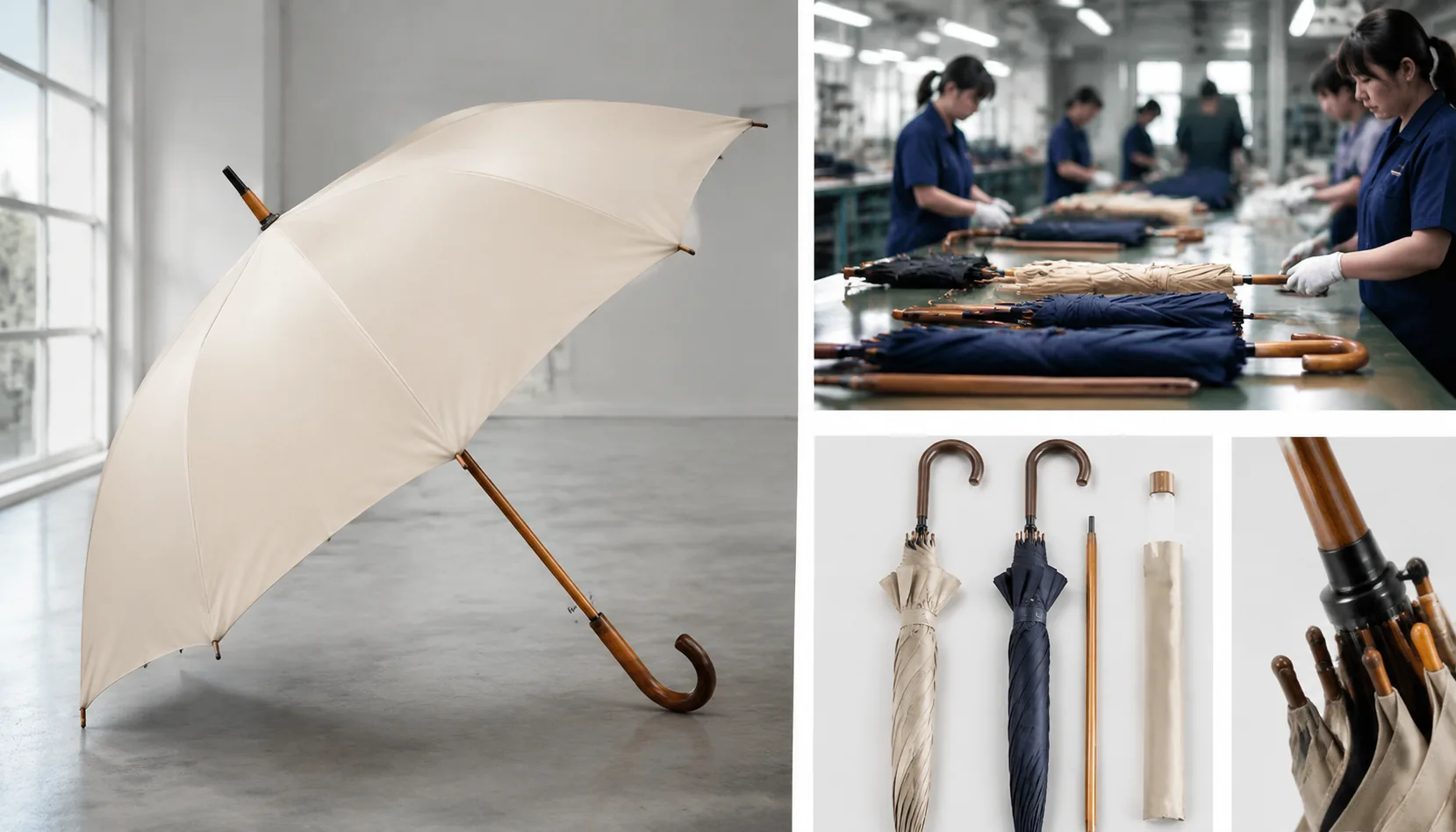
Wooden Stick Umbrellas for Retail Brands: Spec Guide
Learn how to specify wooden stick umbrellas with frame, fabric, handle, print, MOQ, and QC details for premium retail pr...
Read More »
Wooden Shaft Umbrellas: OEM Guide for Retail Brands
Specify wooden shaft umbrellas with the right rib count, canopy fabric, handle finish, branding method, packaging, MOQ, ...
Read More »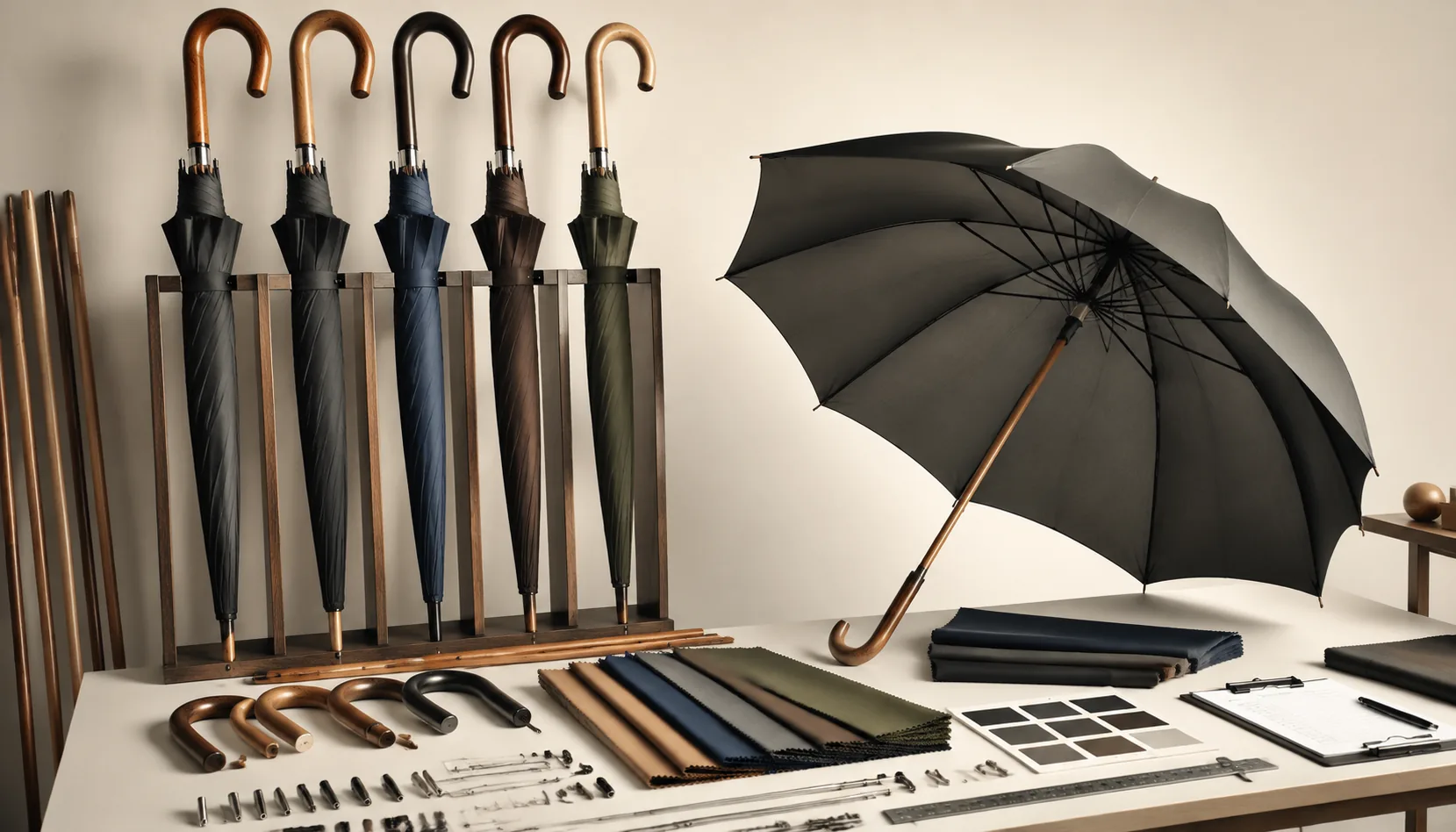
Executive Stick Umbrellas: Buyer Specs for Retail Brands
Compare executive stick umbrella specs, from 8K/16K frames and pongee fabrics to handles, QC, MOQs, and shipping terms f...
Read More »