All-Over Pattern Printing for Branded Umbrella Programs
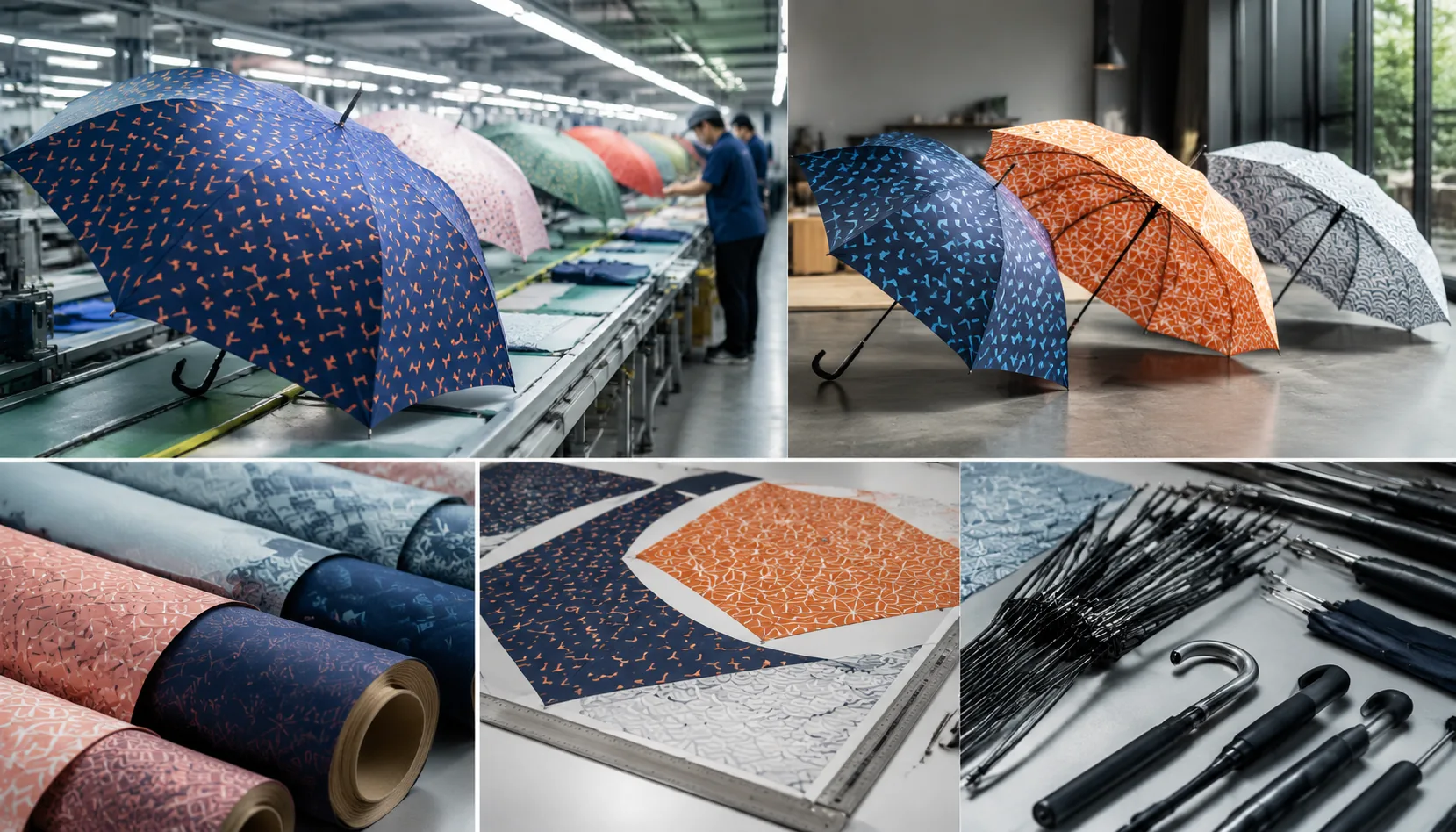
For branded umbrella programs, repeat patterns can look perfect on a screen and still drift badly once the canopy is cut, sewn, and tensioned on the frame. On our Songxia factory floor, all over print umbrellas are planned panel by panel, with artwork bleed, fabric shrinkage, rib alignment, and color tolerance checked before bulk printing. The goal is simple: keep the pattern continuous enough for retail inspection while protecting schedule, cost, and brand consistency.
Choosing Repeat Patterns Instead of Single Logos
All-over patterns make sense when the umbrella is expected to sell as a product, not just carry a sponsor mark. Retail chains, fashion labels, museum shops, sports clubs, and licensed character programs usually need shelf identity from three meters away, especially when umbrellas are displayed closed in a barrel, hung by J-handles, or packed in printed sleeves. A single 120 mm logo on one panel disappears once the canopy is folded; a repeat layout keeps color, motif, and brand language visible around the strap, sleeve, and exposed folds. That is why all over print umbrellas work well for tartans, florals, city maps, mascot icons, team patterns, and museum collection details where the buyer is choosing style first and brand second.
The production decision is not only graphic; it changes how we cut and sew the canopy. For repeat pattern umbrella printing, we normally ask for vector repeat files or 300 dpi raster artwork at final scale, with a clear repeat tile and color references. On 190T or 210T pongee, sublimation gives the cleanest edge and best hand feel for full-color retail umbrella artwork, while screen printing is better for fewer colors and heavy spot coverage. If the buyer wants exact motif placement across 8K or 10K panels, costs rise because cutting must be controlled panel by panel; if a random repeat is acceptable, waste is lower and the sewing line moves faster.
A repeat pattern also lets the brand mark stay discreet without becoming weak. On custom canopy pattern umbrellas, I prefer a small woven label on the closure strap, a tonal logo inside one panel, or a printed sleeve badge rather than forcing a large logo over the artwork. Sports and licensing programs often use this approach: the club crest, character name, or museum logo appears as part of the branded umbrella patterns, while the main visual remains wearable in public. Our standard practice at ZheBrella is to approve one strike-off panel before bulk cutting, then check pattern scale, color migration, panel alignment, and folding visibility under AQL 2.5 inspection.
Artwork Setup for Multi-Panel Canopies
Start artwork setup from the rib count and panel geometry, not from a flat circle. An 8K umbrella normally uses eight wedge panels, while a 16K golf or premium fashion umbrella uses sixteen narrower wedges; the printable image has to be split into those panel templates before cutting. For all over print umbrellas, I ask buyers to supply vector artwork or a 300 dpi raster file at final canopy scale, with the repeat size clearly stated, such as 120 mm, 180 mm, or 250 mm. Small repeats hide sewing variation better, while large logos or diagonal stripes expose every millimeter of panel drift. Each panel should include 10-15 mm seam allowance and 3-5 mm print bleed beyond the visible stitch line, because cutting tolerance, fabric stretch, and sewing take-up all eat into the theoretical layout.
Rotation matters more than many retail umbrella artwork files show. On a standard 23 inch 8K canopy, every panel rotates 45 degrees around the shaft; on a 16K canopy, the rotation changes to 22.5 degrees. If the designer drops a repeat pattern umbrella printing file straight across all panels without rotating each wedge correctly, the pattern will look twisted once the canopy is assembled. For branded umbrella patterns with text, icons, or mascots, decide whether the pattern should read upright from the handle, from the outside viewer, or as a non-directional scatter. Our standard practice at ZheBrella is to mark one master panel, one opposite panel, rib positions, top cap area, and strap location on the proof so the buyer understands where the eye naturally lands when the umbrella is opened.
Set alignment expectations before sampling, especially for custom canopy pattern umbrellas using stripes, plaids, monograms, or border repeats. Perfect seam matching is difficult because pongee 190T/210T, recycled PET, and polyester satin all move slightly during heat-transfer or sublimation printing, then move again during hand sewing. Even with CNC cutting and skilled operators, a practical seam-to-seam tolerance is usually ±2-4 mm on 8K umbrellas and tighter visually but harder mechanically on 16K umbrellas because there are twice as many seams. Large repeats can be matched near the outer hem or near the center cap, but rarely both at the same time. For all over print umbrellas, approve a realistic strike-off or pre-production sample under AQL 2.5 logic: judge overall visual continuity at arm’s length, not microscope-perfect registration at every sewn seam.
Fabric and Print Method Selection
Fabric choice decides whether a pattern looks retail-ready or muddy before the ink ever touches the canopy. For all over print umbrellas, 190T pongee is the practical baseline: tight enough for clean edges, soft enough to fold well on 21" and 23" compact models, and cost-stable for promotional MOQ runs. 210T pongee gives better color depth and a smoother hand, especially on dark navy, forest green, burgundy, and fine geometric branded umbrella patterns. Plain polyester is cheaper, but the looser face often causes slight ink spread on thin lines and small logos, so I avoid it for retail umbrella artwork with micro text or dense repeats. Recycled rPET pongee can print very well, but buyers should approve a strike-off because yarn source and whitening level affect the final shade. In production, we check fabric weight, yarn consistency, and shrinkage before cutting; a 2 mm repeat drift becomes obvious once eight panels are sewn into an 8K frame.
Digital printing is the best choice for complex artwork: watercolor effects, gradients, photographic florals, camouflage, city maps, or repeat pattern umbrella printing where the pattern crosses panel seams. Sublimation on white or light 190T/210T pongee gives sharp detail and good rub resistance because the dye bonds into the polyester fiber, not just on the surface. It is also the safer route for custom canopy pattern umbrellas with 10 or more colors, because screen setup costs and registration risk rise quickly. Screen printing still wins for simple repeats: one- to three-color dots, stripes, monograms, checkerboards, or a clean logo step-and-repeat. On darker canopies, screen print with opaque ink can look stronger than sublimation, but heavy ink coverage may stiffen folding lines and affect auto-open-close performance if the panels are not cured evenly.
Coatings must be planned before print approval, not added as an afterthought. A standard water-repellent finish is fine for most branded programs, but UPF 50+ canopies usually need a black or silver UV coating, and that changes both color perception and hand feel. If the coating is on the underside, the outside print stays cleaner, but light-colored panels may look slightly flatter because less light passes through the fabric. If the UV layer is integrated into the fabric or laminated after printing, we test adhesion, fold cracking, and hydrostatic pressure before bulk production. Our standard practice at ZheBrella is to run printed fabric through shade matching, dry/wet rub checks, and seam alignment review before approving bulk cutting. For AQL 2.5 inspection, we treat panel mismatch, coating scratches, ghosting, and pinholes as visible defects, especially on 27" golf umbrellas where the print area makes small errors easy to see.
Frame Specs That Support the Brand Position
Frame choice should be made before the artwork is tiled, because the same branded umbrella patterns look very different on a 21" compact canopy than on a 30" straight golf umbrella. For giveaway programs, I usually steer buyers toward 21" or 23" compact auto-open frames with 8K steel ribs, a three-fold shaft, and 190T pongee. They keep the unit cost controlled, pack efficiently in cartons, and fit conference bags or hotel welcome kits. The tradeoff is print distortion: repeat pattern umbrella printing has more seam breaks, tighter panel curves, and more visible alignment tolerance at the tips. If the artwork is a small logo scatter, that is acceptable; if the design uses geometric stripes or a large retail umbrella artwork layout, a compact frame will expose every 3-5 mm sewing shift.
Outdoor events and sponsor activations need a stronger architecture, especially when the umbrella becomes part of the visible brand environment. A 27" or 30" straight golf umbrella with 8K or 10K fiberglass ribs, fiberglass shaft, and 190T or 210T pongee gives the canopy a flatter print field and better wind recovery than steel. Steel ribs are cheaper and feel rigid on day one, but they bend permanently after gust loading and add weight in the hand. Fiberglass costs more, usually pushing the frame cost up by a noticeable margin, but it flexes back and helps the umbrella survive 40-50 mph wind-tunnel checks depending on canopy size and runner design. For custom canopy pattern umbrellas used at resorts, golf days, or outdoor retail displays, that durability supports the brand promise better than saving a few cents on ribs.
Premium all over print umbrellas should move to double-canopy vented builds when the pattern is part of a retail range, not just a promotional imprint. The vent layer reduces inversion risk, and a 16K fiberglass rib system gives a rounder silhouette for fashion patterns, dense logo repeats, and edge-to-edge sublimation. I would pair that with 210T pongee, Teflon water-repellent finishing, and optional UPF 50+ coating if the range is positioned for sun and rain. The bill of materials is heavier and the sewing labor is slower because the top and lower canopy must be matched carefully, but the finished product feels more engineered. For all over print umbrellas in a premium line, the frame is not hidden hardware; it is what keeps the artwork smooth, centered, and credible after the first windy day.
Approval Samples, MOQ, and Production QC
Approval has to start with a strike-off, not a full umbrella, because most problems in all over print umbrellas are color and repeat issues before they are sewing issues. For screen printing, we usually strike off the logo color on the actual canopy fabric, such as 190T or 210T pongee with the same Teflon, PU, or UV UPF 50+ coating planned for bulk. For sublimation, the strike-off should include at least one full repeat section, because tiny artwork errors multiply across 8 panels. A reasonable color tolerance is Delta E 2.0 to 3.0 for retail umbrella artwork, but buyers need to understand that coated pongee, recycled PET pongee, and POE/PVC/EVA transparent materials do not reflect color the same way. Pantone matching on white polyester is easier than matching a navy ground on a water-repellent coated fabric.
The pre-production sample is where branded umbrella patterns should be judged as an assembled product, not as a flat print. We review panel placement at the rib seams, top notch, tips, Velcro strap, and sleeve, because repeat pattern umbrella printing can look correct on the cutting table and still break badly after stitching. On 23 inch 8K umbrellas, small misalignment is usually more visible than on 27 inch golf umbrellas because the panel width is tighter; on 16K frames, the pattern has more seam interruptions. For custom canopy pattern umbrellas, I recommend approving one open umbrella photo from the top, one side-angle photo, one close-up of two adjacent seams, and one packed-unit photo with sleeve and hangtag. If the artwork has directional icons, diagonal stripes, or border graphics, the cutting marker must be locked before bulk fabric cutting starts.
MOQ and lead time depend more on print method and packing requirements than many buyers expect. Digital sublimation can start around 300 to 500 pieces per design if the factory has suitable white fabric in stock, while screen-printed all over print umbrellas often make better cost sense from 1,000 pieces because screens, ink setup, and fabric wastage are higher. A typical approval path is 5 to 7 days for artwork adjustment, 7 to 10 days for strike-off, 10 to 15 days for a pre-production sample, and 25 to 45 days for bulk after approval. During production QC, our standard practice is AQL 2.5 for major defects: print scratches, color shading between panels, rib distortion, auto-open failure, loose tips, wrong sleeve, carton marks, and barcode errors. FOB Ningbo or Shanghai is faster to close; DDP adds time for duty classification, carton measurement, final packing inspection, and last-mile booking.
Frequently Asked Questions
Can an all-over umbrella pattern line up perfectly at every seam?
Usually no. A factory can improve alignment with panel templates and sewing controls, but fabric stretch, cutting tolerance, and seam allowance make perfect matching unrealistic.
What file format is best for repeat-pattern umbrella artwork?
Vector AI or PDF files are best for simple repeats, while high-resolution layered PSD or TIFF files work for photographic designs. The factory should receive the repeat tile, panel mockup, and Pantone or CMYK targets.
How do you keep a repeat pattern aligned across umbrella panels?
We build a full canopy template first, then map the repeat across each panel seam before sampling. For production, QC checks should confirm seam-to-seam matching within about 1-3 mm, depending on the panel shape and print method.
What artwork file do you need for all-over printed umbrellas?
Vector files in AI, EPS, or editable PDF are best for repeat patterns. If the design is raster-based, supply at least 300 DPI at full canopy size so the repeat stays sharp after panel cutting and printing.
What is a typical MOQ and lead time for branded pattern umbrella programs?
For OEM/ODM all-over print umbrella orders, MOQ is often 500-1,000 pieces per design, depending on umbrella type and print complexity. Sampling usually takes 7-10 days, and bulk production is commonly 30-45 days after artwork approval.
Looking to Launch Your Custom Umbrella Line?
ZheBrella is a Zhejiang-based OEM/ODM umbrella manufacturer with 17 years of export experience. Free design, low MOQ from 100 pieces, windproof construction, full-color print.
Get Free Quote Now »People Also Search For
Related Articles
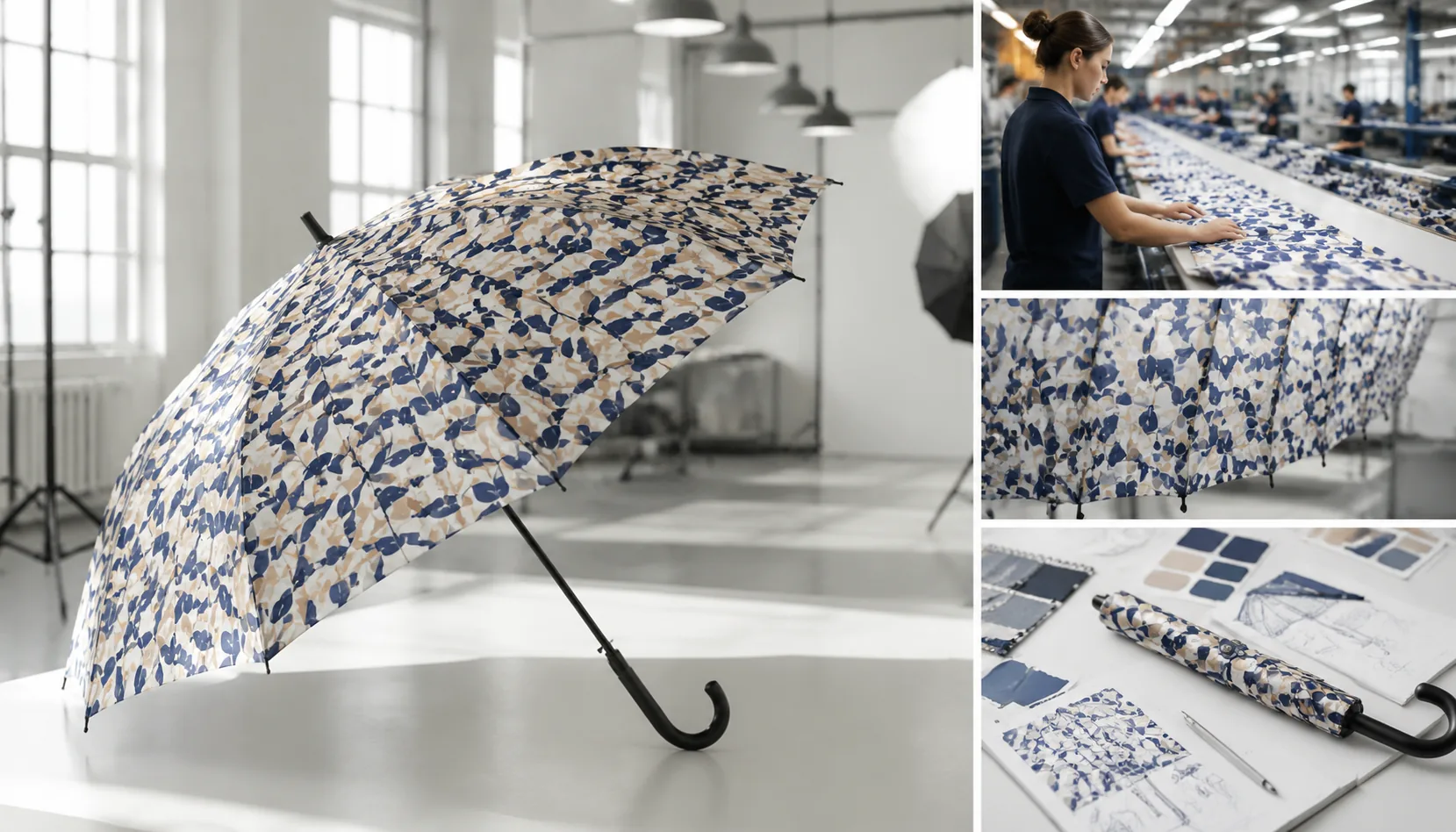
Repeat Pattern Umbrella Printing for Branded Collections
Plan repeat logo, monogram, or pattern umbrellas with clear rules for panel layout, fabric choice, sampling, MOQ, and pr...
Read More »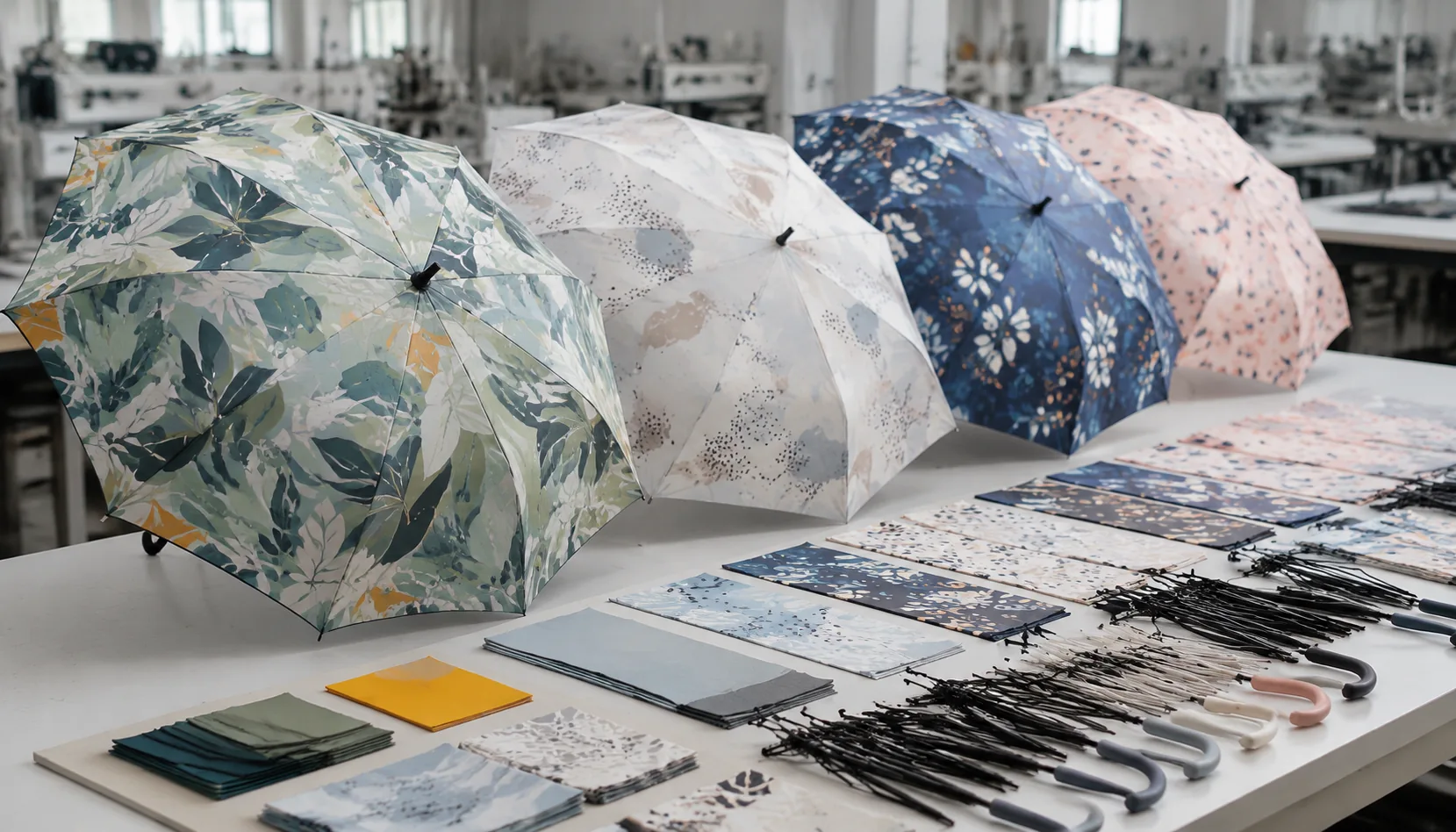
All-Over Pattern Printing for Retail Umbrella Collections
Build retail umbrella patterns with clean repeats, controlled panel alignment, and fabric choices that keep logos sharp ...
Read More »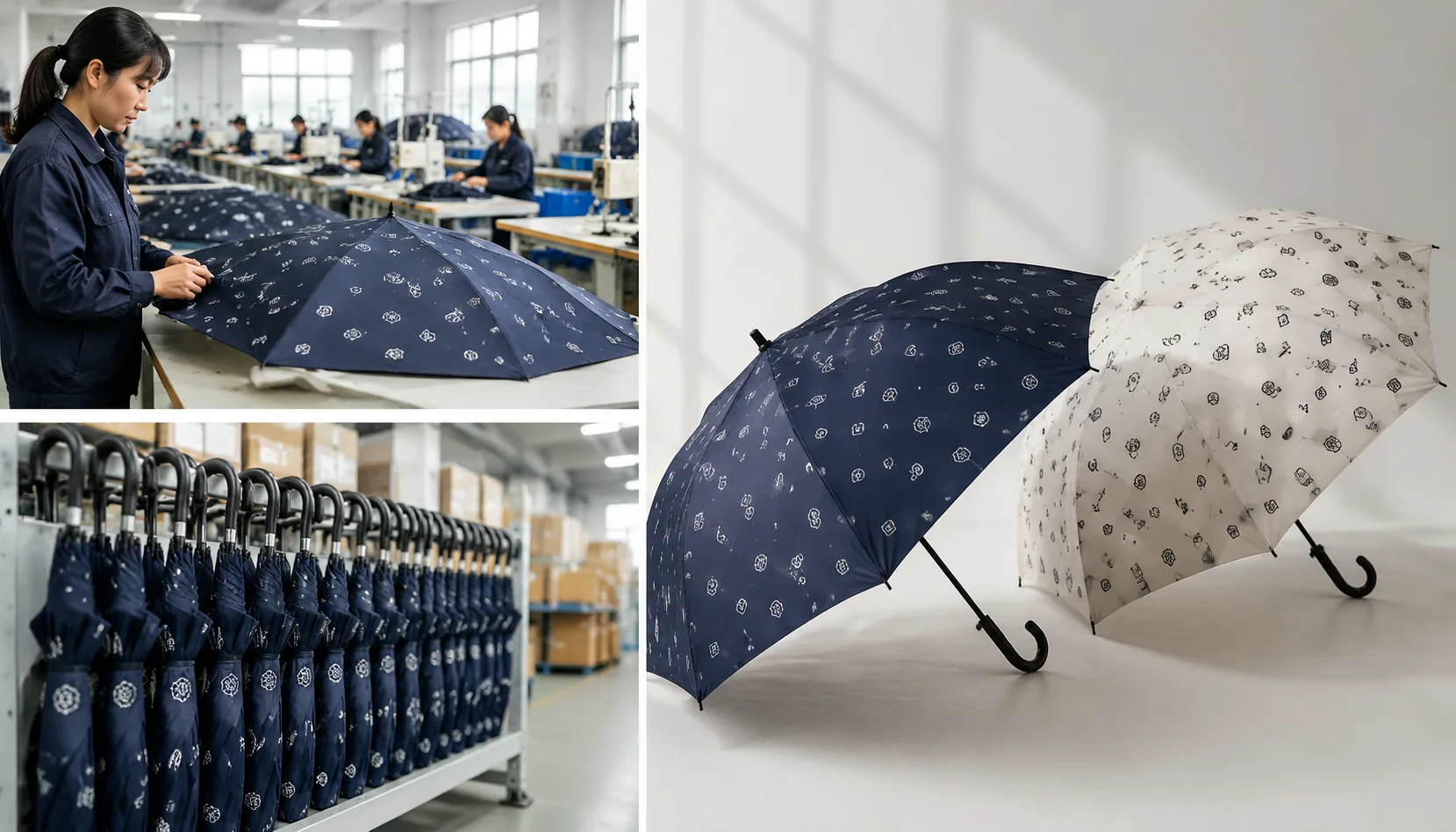
Repeat Logo Pattern Printing for Branded Umbrella Lines
Plan repeat logo umbrella prints with panel layout, fabric choice, sampling, and QC controls for retail, promo, and priv...
Read More »