Blind Debossing and Tonal Branding on Umbrella Handles
When a buyer wants a logo that feels premium without shouting for attention, the challenge is finding a marking method that survives daily grip, rain, and abrasion on a small curved surface. In our Songxia factory, we see that blind debossing umbrella handles works best when the handle material, cavity depth, and tooling tolerance are matched early, because the wrong finish, resin hardness, or logo size can flatten detail, slow production, or raise scrap.
When blind debossing fits the brand brief
Blind debossing umbrella handles works best when the brand wants recognition without shouting. I usually recommend it for premium retail programs, executive gifts, and client-facing kits where the umbrella is part of a larger brand system, not a giveaway that needs to be seen from across the room. On a good handle, especially wood or PU, the impression reads as restrained and expensive; it gives you tonal umbrella branding that feels intentional instead of printed-on. That matters when the buyer is trying to avoid a cheap promotional look and still wants the logo present on every unit.
The method is strongest on smooth wood, PU, and some molded grips with enough wall thickness and surface stability to hold a clean impression. It is not a fit for every handle profile: soft EVA, highly textured TPR, thin-walled plastics, and aggressive contour shapes usually distort the mark or make the tooling unreliable. For handle logo customization, the practical rule is simple: if the surface cannot accept a crisp, shallow displacement without collapsing the geometry, use another decoration method. That is why embossed umbrella branding is a niche choice, not a universal one, even on premium promo umbrellas.
From a production standpoint, blind debossing is easiest to control when the logo is small, the relief is shallow, and the handle shape is repeatable across the order. We can keep the branding understated and still legible, but buyers should not expect the same result on every handle style just because the artwork is the same. In practice, the best programs use blind debossing umbrella handles on SKUs with stable tooling, then reserve pad print or metal badges for profiles that cannot carry the impression cleanly.
Materials and surface limits by handle type
Blind debossing umbrella handles only works well when the handle surface can hold a clean shoulder around the impression. Hardwood gives the sharpest result because the grain is dense and the cutting edge can bite consistently; open-grain wood can still work, but coarse grain will soften small strokes and leave the logo looking tired instead of crisp. Soft-touch coatings are the opposite problem: they can take a nice-looking depth at first, but if the skin is too thick or rubbery, the edge compresses and rebounds unevenly. On premium promo umbrellas, I usually treat blind debossing umbrella handles as a surface-control job first and an artwork job second, because tonal umbrella branding fails fast when the substrate fights the tool.
EVA foam and low-density molded handles need extra caution. If the EVA is too light, the impression sinks in without a defined rim, so the mark reads as a dent rather than handle logo customization; if it is too dense, the surface can tear at the edge when the die is too sharp or the press pressure is too high. For plastic handles, hardness matters more than people expect: harder PP or ABS can hold embossed umbrella branding with decent edge definition, but brittle grades may show whitening or stress cracking at the corners of letters and thin icon strokes. In practice, I would not go below about 3.5 to 4 mm character height for simple sans-serif text, and fine lines under 0.4 mm usually blur or collapse once the handle is curved or coated.
The safest layouts keep the mark short, use wider stroke widths, and place the deboss on a flatter zone of the handle where the surface can accept pressure evenly. Deep impressions on thin-wall plastic or heavily coated soft-touch parts can crack the skin, while shallow impressions on smooth wood may disappear after varnish or hand wear. If the handle has a seam, parting line, or heavy taper, the die will not register uniformly and the left-right edges of the logo will drift; that is where a clean blind deboss becomes a messy blind mark. For production control, I check the first samples under side light, because that reveals whether the impression has enough depth to read without crossing into distortion, which is the difference between a usable custom finish and scrap.
Production method, tooling, and MOQ
Blind debossing umbrella handles starts with a hard tool decision, not a marketing decision. If the handle already exists in stock, we can usually run tonal umbrella branding with a simple deboss or emboss insert, then check the logo depth, edge sharpness, and hand feel on a first article sample before cutting full production. For premium promo umbrellas, the mark has to read cleanly in low contrast without making the grip uncomfortable, so I always insist on sample approval under real lighting; a logo that looks acceptable on screen can disappear on a glossy or textured handle once the cavity fills in.
When a new die is required, MOQ moves up because the tooling cost has to be amortized across the order. That is the difference between ordinary handle logo customization and true molded work: stock handles may only need a modest minimum, while custom molded handles usually require a higher MOQ and a longer approval chain for cavity depth, draft angle, and parting line. ZheBrella’s standard practice is to lock the artwork, cut a soft proof or 3D sample if needed, then proceed to hard-tool sampling only after the client signs off on the embossing direction and logo placement.
Lead time is shorter for stock handles because the factory is only changing the decoration step; once the sample is approved, production is often measured in days rather than weeks. Custom molded handles add mold fabrication, trial shots, and rework risk, so the schedule expands accordingly, especially if the handle shape itself is new. For quoting, FOB is preferred when the buyer controls freight and wants a cleaner ex-works product cost, while DDP makes more sense when the order is small, time-sensitive, or the importer wants landed pricing without handling customs and local delivery on their side.
Color strategies for tonal branding
Tonal branding works best when the handle finish and the logo treatment are designed as one system, not as separate decoration decisions. For blind debossing umbrella handles, the cleanest result is usually matte-on-matte: a matte black logo pressed into a matte black TPR, EVA, or soft-touch PU handle, or a sandblasted-looking mark on a satin woodgrain surface. That reads as understated rather than missing, which is the point. Gloss-on-matte is the next step up in visibility: a polished deboss or resin-filled mark on a dull handle catches light at certain angles without turning the handle into a billboard. Low-contrast ink fills, usually in charcoal, navy, or deep burgundy, are useful when the buyer wants tonal umbrella branding that is still visible in photos and at arm’s length.
Canopy color matters because the handle should feel coordinated, not duplicated. On black, charcoal, navy, and forest canopies, matte-on-matte or gloss-on-matte keeps the object premium; on lighter canopies like stone, silver, or sand, a dark filled deboss gives better separation and keeps the logo from disappearing. For handle logo customization on premium promo umbrellas, I usually avoid high-contrast white fills unless the brand needs retail-style punch, because they can look cheap against a refined handle texture. A small contrast accent is useful when the handle is dark and the mark is small: a thin silver fill, a muted copper line, or a tiny color dot can improve legibility without breaking the restrained look.
The mistake I see most often is chasing “invisible” branding too far and ending up with a mark nobody can read, especially on curved handles where light is inconsistent. Embossed umbrella branding should still be readable at 30 to 50 centimeters, because that is how people actually inspect a product in a showroom or after an event. Our standard practice is to test samples under daylight and warm indoor light against the planned canopy color before approving the final contrast level. If the logo is tiny, use stronger contrast; if the logo is larger and the handle texture is fine-grained, keep the fill closer to the base color. That balance gives premium promo umbrellas a controlled, expensive look instead of a vanished logo or a loud one.
Quality checks and repeat-order control
For an approval sample on blind debossing umbrella handles, I check four things first: logo depth, logo alignment to the handle centerline, surface cracking around the pressed area, and whether the mark reads the same after a few open-close cycles and a light rub test. On PU, EVA, and soft-touch plastic handles, too much pressure will leave a sharp edge or whitening; on harder ABS or wood-grain finishes, too little pressure makes the mark look lazy and unreadable. The sample should also show the exact position relative to the ferrule, push button, or wrist strap hole, because a 2-3 mm shift is obvious once the umbrella is in hand. This is where tonal umbrella branding usually succeeds or fails: the effect is subtle, but only if the die depth and placement are controlled.
For repeat orders, buyers should lock a handle spec instead of relying on a reference photo. I mean a written spec with handle material, hardness, deboss depth, logo width and height, artwork file version, and acceptable color or sheen variation if the handle is painted or overmolded. If the program uses embossed umbrella branding or handle logo customization across several sizes, the spec should also define whether the same die is reused or re-cut after wear, because old tooling can lose edge sharpness fast. Our standard practice is to tie the approved sample to the PO and keep one signed master sample in-house, so production cannot drift between lots.
For lot control, AQL 2.5 is a common benchmark for final inspection on premium promo umbrellas, especially when the handle logo is part of the buyer’s brand standard. That inspection should catch uneven deboss depth, twisted logo orientation, cracked surfaces, and inconsistent gloss from handle to handle; if the finish varies too much, the branding looks cheap even when the umbrella canopy is fine. For recurring orders, I tell buyers to freeze the handle supplier, resin grade, die number, and inspection photos in the spec pack. That is the only practical way to keep blind debossing umbrella handles looking consistent when you reorder months later and the production line has already changed operators or tooling wear has moved on.
Frequently Asked Questions
Which handle materials work best for blind debossing on umbrellas?
Wood and PU usually give the cleanest result because they hold an impression well. EVA and some soft plastics can work, but the logo may spring back or lose edge definition.
Can blind debossing be combined with another decoration method?
Yes. Many buyers pair a debossed handle with canopy print or a small metal plaque for clearer brand recognition. The key is to keep the second decoration visually restrained so the handle detail still feels premium.
Which umbrella handle materials work best for blind debossing?
Blind debossing works best on PU leather wrapped handles, soft-touch rubber coatings, EVA foam, and some synthetic grip materials. Hard plastic and glossy resin handles usually give less visible depth and may be better suited to pad printing or laser marking.
What MOQ should buyers expect for debossed umbrella handle logos?
For OEM umbrella orders, blind debossing typically starts around 500 to 1,000 pieces per design, depending on handle material and tooling. If a custom molded handle is required, the MOQ may increase to 2,000 pieces or more due to mold costs.
How much lead time does tonal handle branding add to production?
A standard debossed or embossed handle logo usually adds 3 to 7 days for sampling and tooling confirmation before bulk production. Total production lead time is commonly 25 to 45 days after artwork approval, depending on order quantity and umbrella style.
Looking to Launch Your Custom Umbrella Line?
ZheBrella is a Zhejiang-based OEM/ODM umbrella manufacturer with 17 years of export experience. Free design, low MOQ from 100 pieces, windproof construction, full-color print.
Get Free Quote Now »People Also Search For
Related Articles
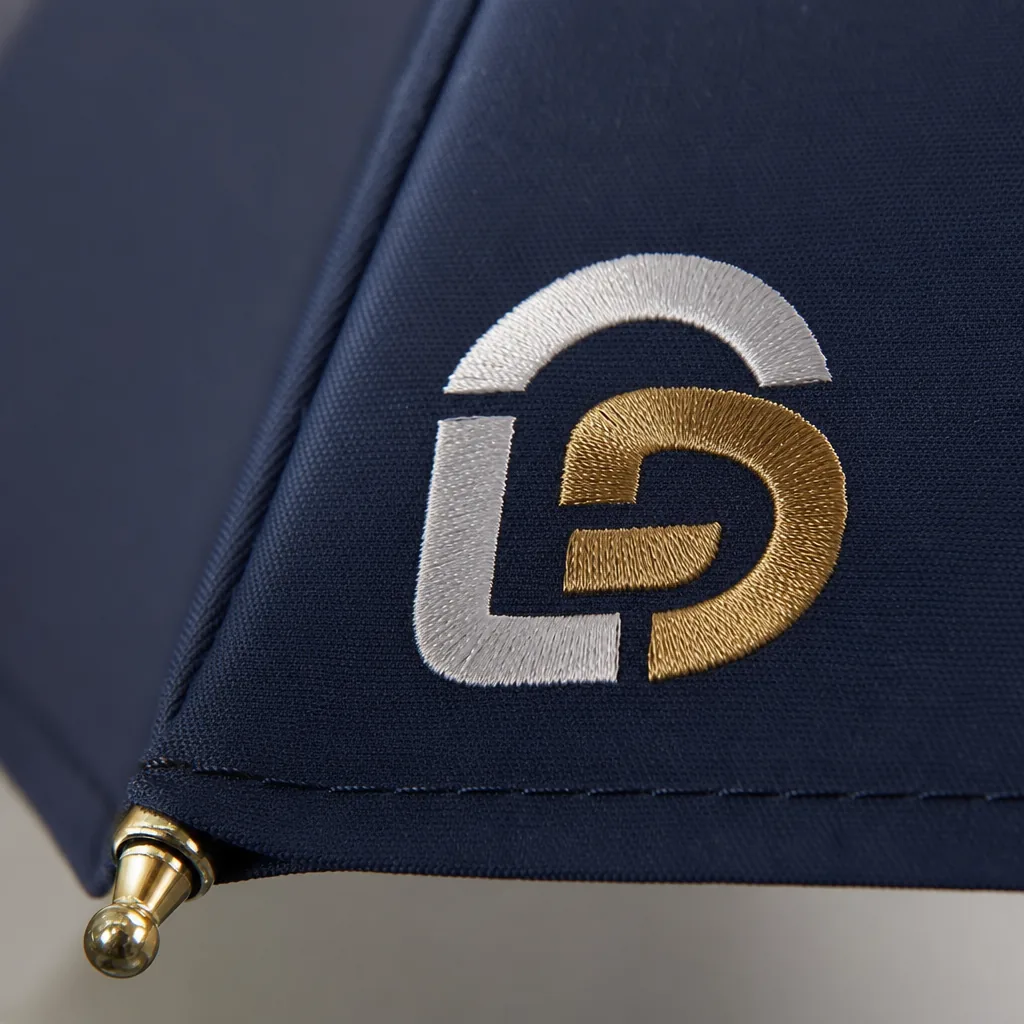
Debossed and Embossed Branding for Premium Umbrella Handles
Compare debossed and embossed handle branding for premium umbrellas, including tooling, MOQ, tactile finish, and cost im...
Read More »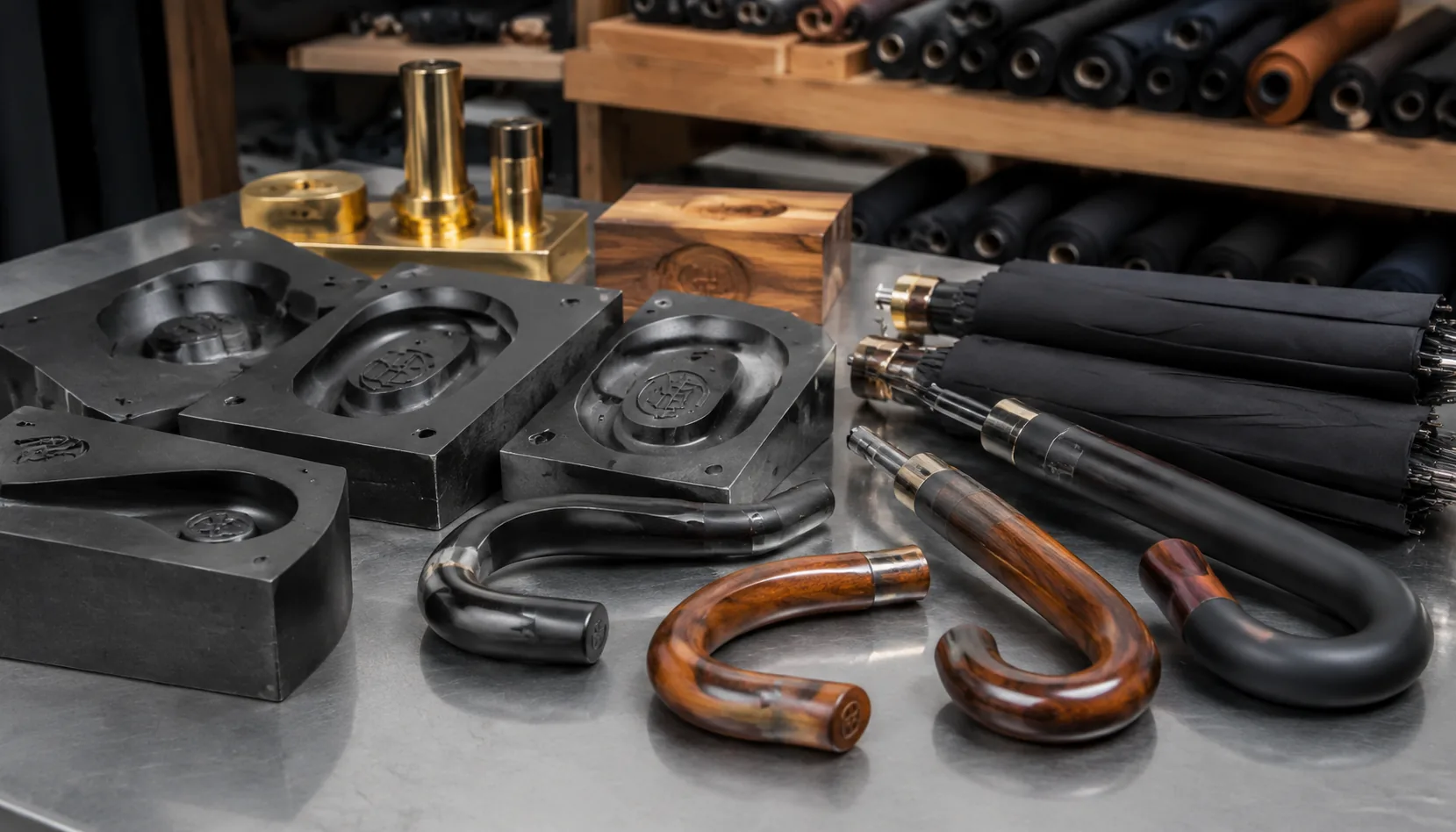
Debossed Logos on Umbrella Handles for Premium Branding
Use debossed or embossed handle branding to create a premium, durable identity on wood, EVA, or plastic umbrella handles...
Read More »Embossed Handle Logos on Umbrellas: OEM Options and Limits
Compare embossed, debossed, and molded handle logo options by material, MOQ, tooling, and lead time to choose a workable...
Read More »