Brand Color Matching for Umbrella Print Runs
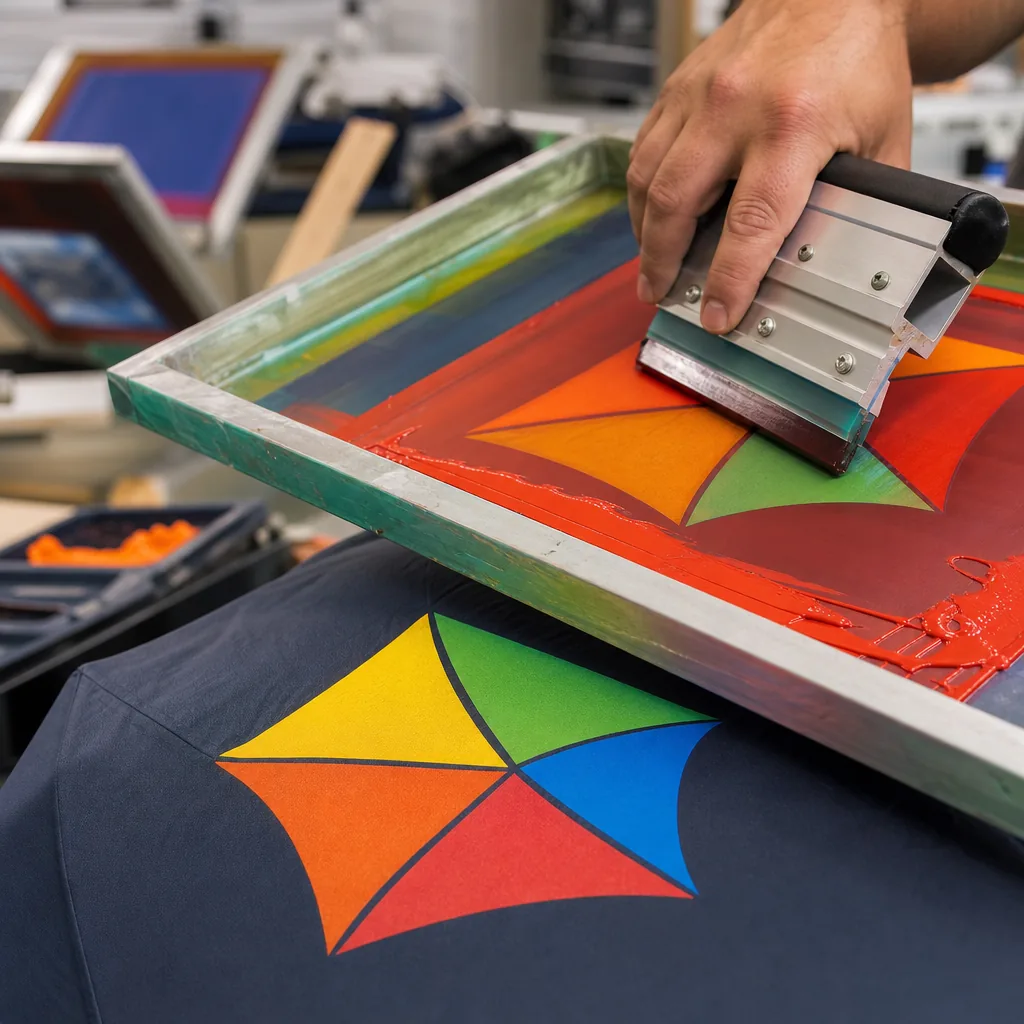
A brand color that looks right on a PDF can shift once it hits polyester, pongee, or coated canopy fabric, especially across different print methods and repeat orders. For buyers, umbrella color matching is about controlling variables before mass production: Pantone targets, ink mixing, fabric base shade, curing, and signed strike-offs. On the factory floor, the difference between a clean reorder and a costly dispute is usually decided before the first full run starts.
Setting a color target that production can hold
Define the target by component, not from the brand guideline PDF alone. A Pantone C callout may work for a silk-screened logo on 190T pongee, but the same ink can look flatter on 210T polyester with PU or Teflon water-repellent treatment because yarn density and coating change ink holdout. For umbrella color matching, approve separate references for the canopy, printed logo, binding or piping, closure strap, snap, handle, and any visible trim. Use a lab dip for solid canopy fabric under D65 light, then approve the logo on the actual canopy material with the final print method: silk screen, heat transfer, or sublimation. A pantone umbrella print target guides ink mixing; the signed branded umbrella strike-off controls bulk because it proves the fabric, coating, print process, thread, trim, and finish together.
Write color tolerance into the purchase order before fabric cutting starts. Buyers can request a close match, but promising an exact visual match across every treated pongee, POE, PVC, or EVA batch creates avoidable dispute risk. Material streams vary: fabric rolls, binding tape, straps, snap buttons, fiberglass ribs, steel shafts, and EVA handles rarely come from the same dye lot or supplier. A practical brand color proofing standard sets a Delta E band, often about 1.5 to 2.5 for solid dyed fabric, with a wider approved range for printed logos based on artwork size and print method. Confirm the signed target in a light box under D65 and TL84, since navy, red, and dark green can pass in office light but shift under retail or outdoor conditions. On a 23-inch auto-open 8K order with about 20,000 cut panels, a defined color tolerance turns inspection into a control point: check incoming rolls, keep the strike-off beside printing and sewing, and inspect finished goods under AQL 2.5 sampling.
How fabric, ink, and weave change color appearance
Start umbrella color matching with the exact canopy material, because fabric changes the color before production ink reaches the panel. 190T pongee has a slightly more open weave and softer hand; screen-printed solids can look less dense at logo edges, especially in red, navy, and warm gray. 210T pongee is tighter and smoother, so the same ink deposit usually gives cleaner line work and a deeper visual read. Clear POE, PVC, and EVA panels create a different risk: they reflect and transmit light, making print look brighter outdoors but weaker under indoor lighting. A paper Pantone chip or PDF mockup cannot predict these shifts. The same pantone umbrella print target can read differently on 190T promotional umbrellas, 210T retail canopies, and UV-coated panels even when the ink formula stays unchanged.
Treat coating as a separate color variable, not a finishing detail. Matte water-repellent finishes scatter light, so dark shades can look flatter and heavier; glossy coatings reflect more surface light, so the same navy may appear cleaner but lighter at certain angles. Silver UV backing, black-out coating, Teflon treatment, and UPF 50+ finishes also shift perceived shade by changing how much light passes through or bounces off the fabric. The same ink can read about a half-step different on uncoated white 210T pongee versus a coated panel from the same dye lot. For lower approval risk, ZheBrella runs brand color proofing on the actual canopy fabric, coating, and rib layout instead of spare fabric from another order.
Choose the print method by the buyer’s color tolerance, artwork detail, and approval risk. Screen printing gives the strongest spot-color control for logos and solid blocks, with typical approval around Delta E 2 to 3 when the fabric is stable. Heat transfer handles gradients and small text better, but the carrier film and adhesive layer can add gloss that changes black, white, and metallic tones. Sublimation works for light polyester and all-over artwork, but strict corporate colors are less predictable because heat, pressure, and fabric absorbency affect the final shade. Review the branded umbrella strike-off on the finished frame, opened at the actual 23-inch or 27-inch size, not flat on a table. Curved panels catch light unevenly, so approve samples under D65 daylight and office LED before bulk production.
Approval steps for first run and repeat orders
Approve the first run from a branded umbrella strike-off printed on the exact production substrate, not from a catalog image or digital mockup. Specify the canopy material upfront: 190T or 210T pongee, POE, PVC, or EVA. Ink adhesion, opacity, and color depth shift by surface; a PMS match that works on white pongee can look dull on navy fabric unless the printer adds an underbase. The strike-off record should list the print method, such as screen print, heat transfer, sublimation, or digital print, plus the agreed color tolerance. It should also capture the variables that can move shade in production: mesh count, drying time, heat press temperature, coating, and fabric lot. For umbrella color matching, procurement should sign off on the physical strike-off before bulk cutting, full-panel printing, or transfer film production begins.
Use photo approval for layout checks only: artwork placement, logo scale, panel direction, and obvious spelling or file errors. Do not use phone photos or chat-app images for final color approval; camera settings, LED office lighting, and compression can push red toward orange or royal blue toward purple. For the first order, request two physical approvals: an approved print swatch and one sealed sample umbrella built with the final frame, rib count, canopy fabric, handle, tips, sleeve, and packaging. The sealed sample should be signed, dated, and labeled with the PMS number, fabric lot, coating, and print process. ZheBrella keeps a retained counter-sample for line QC and compares bulk output against it under consistent lighting before AQL 2.5 final inspection.
For repeat orders, reference the master sample, not only the last purchase order number. After several months, fabric dye lots, ink batches, transfer film, and coating suppliers may change, so the reorder file should include the prior PMS code, approved color tolerance, canopy material, logo size, print position, and clear photos of the sealed sample label. For retail chains, event series, or replenishment after 6 months, ask for a fresh pre-production swatch before mass production. Also confirm whether any specification changed, such as 8K steel ribs to fiberglass ribs, 23 inch to 27 inch panels, UPF 50+ coating, or vented double-canopy construction. These changes affect weight, panel tension, light reflection, and how a pantone umbrella print reads on the finished umbrella.
Common failure points in multi-location branding
The first failure point in multi-location branding is assuming one Pantone callout controls every surface. It does not. A pantone umbrella print on 190T pongee will not visually match the same color on a matte paper sleeve, woven label, PVC window pouch, coated gift box, or carton mark unless each substrate is proofed separately. Even on one umbrella, a white logo screen-printed over navy 210T pongee can read cooler than the same white heat-transferred onto a polyester strap. For reliable umbrella color matching, approve the full set together: canopy fabric, logo process, colored handle insert, sleeve, hangtag, retail pack, and shipping marks, all reviewed under D65 light. A canopy strike-off alone is not enough for retail programs because buyers often reject the lot when the shelf-facing sleeve or gift box looks duller than the approved umbrella. That error belongs in brand color proofing, not final inspection.
Panel-to-panel variation usually comes from mixed fabric lots, coating shifts, and uncontrolled cutting. A 23 inch 8K umbrella may be cut from one roll, but larger programs often pull from several dyed rolls, especially when manual, auto-open, and auto-open-close models share one brand color. If one roll measures 0.8 Delta E darker after Teflon or UV coating, alternating panels can show under daylight even when each roll passed a loose incoming check. Prevent the problem before sewing: shade-band rolls, group panels from the same roll by umbrella, and set written color tolerance before cutting starts. For retail branded umbrellas, Delta E 1.5 to 2.0 is realistic on polyester fabric; tighter targets require lab dips, slower material release, and stricter lot segregation.
Color drift increases when multiple production lines or subcontractors work from the same branded umbrella strike-off. One line may use fresh screen ink, another may thin ink during the shift, and a packaging supplier may convert CMYK from a PDF instead of using the approved Pantone formula. Control the run with one master standard: sealed fabric swatches, signed approval sheets, wet and dry ink drawdowns, and retained production samples at every line. QC should compare first-piece, mid-line, and final-piece samples against the master in the same lightbox, then record any ink, curing, or print-profile adjustment before bulk continues. For FOB or DDP programs, lock the ink supplier, mesh count, squeegee angle, curing temperature, and packaging print profile in the production file so cartons from different workshops arrive with the same visible brand color.
Commercial terms that protect color consistency
Color control starts with factory process, but the purchase terms decide whether that process has enough time and budget to work. A 300-piece MOQ for a custom pantone umbrella print normally supports digital artwork approval and one branded umbrella strike-off, not yarn-dyed fabric, dedicated ink mixing, and repeated lab dips. For 1,000 to 3,000 pieces on 190T or 210T pongee, the specification can require a Pantone C or TCX target, wet ink drawdown, and review after curing, when the final shade is more reliable than fresh ink. Lead time must match the approval path. A 12- to 15-day deposit-to-shipment schedule leaves little room to reject a strike-off without delaying handover. A more workable timeline is 3 to 5 days for artwork checking, 5 to 7 days for brand color proofing, 12 to 20 days for production, and 2 to 3 days for final inspection and packing.
Inspection terms should define color tolerance before bulk production, not after cartons are closed. Put the approved standard inside the purchase specification: Pantone number, fabric type, coating, print method, viewing light, and acceptable Delta E or signed visual tolerance. The same ink will read differently on white 190T pongee, black 210T pongee, POE clear canopy, PVC, or silver UV-coated fabric, so the standard must be tied to the exact umbrella material. AQL 2.5 inspection can identify shade drift, ink bleeding, misregistration, and panel-to-panel mismatch, but it cannot fix an unclear approval basis. For umbrella color matching, the golden sample or signed strike-off should follow the order through cutting, sewing, printing, assembly, and final QC. ZheBrella keeps one approved sample at the print table and one in the inspection room so production and QC compare against the same reference.
Rework terms need to reflect how umbrellas are built. If a logo is printed before sewing, a failed color can require recutting canopy panels; if printed after assembly, rework may mean removing canopies from 8K, 10K, or 16K frames, adding risk of rib scratches and fabric tension problems. The PO should state who pays for reprint, replacement fabric, extra inspection, and shipment delays when the approved color tolerance is missed. Incoterms affect the risk window. Under FOB Ningbo or Shanghai, the buyer usually controls freight timing after factory handover, so a 3-day rework window may still be manageable. Under DDP, the supplier carries more schedule risk through customs and last-mile delivery, so late color approval can move the landed delivery date. The practical safeguard is to document umbrella color matching standards, approval steps, rework responsibility, and shipment cutoff dates in the purchase specification before deposit.
Frequently Asked Questions
How can a buyer reduce color drift between repeat umbrella orders?
Keep one approved master sample, one written color reference, and one print method on file. Reconfirm the fabric lot and request a strike-off when the order moves to a new production batch.
Is Pantone enough to control umbrella color?
Pantone is a useful target, but it is not enough by itself because fabric texture and coating change how the color reads. Buyers should pair the Pantone callout with a physical approved sample and a written tolerance note.
Can a factory match exact Pantone colors on umbrella fabric?
A factory can target a Pantone reference, but exact matching depends on fabric type, coating, ink system, and lighting conditions. For bulk production, buyers usually approve a strike-off sample and define an acceptable tolerance, often within a visual range or Delta E limit agreed before production.
What should be included in a branded umbrella color approval before mass production?
The approval should include the Pantone code, fabric color, logo print method, strike-off photo or physical sample, viewing light condition, and signed tolerance standard. For retail or distributor orders, physical strike-off approval is safer than approving by screen image only.
How can buyers keep umbrella colors consistent on repeat orders?
Keep the approved strike-off, Pantone references, fabric lot notes, ink formula, and production photos on file for reorders. For repeat runs after several months, request a new pre-production sample because fabric dye lots and ink batches can shift slightly.
Looking to Launch Your Custom Umbrella Line?
ZheBrella is a Zhejiang-based OEM/ODM umbrella manufacturer with 17 years of export experience. Free design, low MOQ from 100 pieces, windproof construction, full-color print.
Get Free Quote Now »People Also Search For
Related Articles
Color Accuracy for Branded Umbrellas Across Product Lines
Learn how to keep brand colors consistent across umbrella styles, fabrics, and factories with practical guidance on matc...
Read More »
Brand Color Consistency Across Umbrella Collections
Keep umbrella colors and logo finishes consistent across multiple SKUs with clear Pantone targets, fabric limits, and fa...
Read More »
Brand Color Control for Branded Umbrellas in Production
Learn how to control brand color on custom umbrellas, from Pantone matching and fabric dye limits to approval samples an...
Read More »