Branded Umbrellas for Tour Operators and Sightseeing Brands

Tour operators and sightseeing brands need umbrellas that do more than carry a logo: they have to cover guests in wind and rain, open smoothly during fast group stops, and arrive before peak season without quality drift between batches. On our Songxia production lines, the real decisions come down to canopy span, frame strength, print placement, and packing plan, especially when branded umbrellas for tour operators must balance visibility, durability, and tight delivery windows.
Use Cases Across Walking Tours, Bus Tours, and Day Trips
Tour operators should not buy one umbrella spec for every route. For shared emergency stock on city walks, the most efficient setup is usually a 21-inch or 23-inch auto-open umbrella with fiberglass ribs and a 190T pongee canopy: it opens fast at curbside, weighs less than steel-rib alternatives, and lets guides carry more units in a day pack or meet-and-greet kit. Vehicle-based itineraries have different constraints. Bus tours and day trips can step up to 27-inch or 30-inch straight umbrellas because coach or van storage is less restrictive, and the wider canopy gives better shoulder coverage during temple visits, winery stops, and attraction queues. On exposed summer routes, a silver-coated or black-coated UPF 50+ umbrella covers both rain and sun protection, which reduces the need to stock separate shade products. For most branded umbrellas for tour operators, the workable split is three-tiered: compact shared stock for fast handout, larger canopies for coach programs, and sun-rated units for destinations with long outdoor dwell times.
Guide identification is the second buying use case, and visibility should drive the spec. A raised canopy is easier to spot in a crowd than a handheld flag, so sightseeing tour umbrellas with high-contrast panels, oversized logo placement, or a 16K umbrella frame give guides a clearer visual marker across plazas and outside major attractions. For daily guide use, premium units should sit above basic emergency stock: 23-inch or 27-inch walking tour umbrellas with vented double-canopy construction, fiberglass ribs instead of steel, and smoother runner action hold shape better in gusts and can reach 50+ mph wind-test performance when built correctly. Retail resale is a separate program with different quality controls. Destination shops and pickup counters typically need 8K or 16K merchandise umbrellas in 190T or 210T pongee, with sharper print registration, individual sleeves, and swing tags for easier display. Shared stock may work at a 500- to 1,000-piece MOQ, but resale lines need tighter cosmetic inspection at AQL 2.5, with checks on print alignment, opening action, and rust resistance to reduce return risk.
Choosing the Right Format for Guest Groups
For coach-based itineraries, branded umbrellas for tour operators are usually safest in a 21" or 23" 3-fold format because they solve the storage problem first. A compact folding umbrella fits seat-back pockets, driver compartments, or welcome bags, which matters when one departure loads 40 to 50 guests at once. The tradeoff is canopy size and stability: most folding sightseeing tour umbrellas are built on an 8K frame with a smaller arc, so two adults walking side by side still lose edge coverage in hard rain. That compromise is acceptable when the route is mostly bus-to-attraction transfers rather than long outdoor segments. To cut bent-frame claims, specify fiberglass ribs instead of all-steel construction and keep finished weight around 330 to 420 grams; that range is easier for guests to carry and more forgiving when umbrellas are opened and closed repeatedly in tight loading zones.
For walking routes, straight walking tour umbrellas are the more durable choice because they deliver larger coverage, better balance, and less frame play at frequent stops. A 23" or 27" stick umbrella in manual-open or auto-open format, using 190T or 210T pongee with fiberglass ribs, protects shoulders better than a compact fold and handles coastal wind or shoulder-season weather with less distortion. The cost is storage volume: 40 straight umbrellas need a stand or buswell tube, while the same quantity of folding units packs far more densely in cartons. A 16K umbrella is usually selected when the operator wants a more premium city-tour look for heritage districts, museum programs, or luxury FIT groups. The rounder canopy photographs well, but it also adds weight, raises spare-part cost, and uses narrower panels that can limit oversized logo layouts. If sun exposure is part of the route, a straight 8K or 16K UPF 50+ umbrella with black or silver coating gives better face-and-shoulder shade than a 3-fold model. In practice, route pattern should decide the format before style does.
Materials and Weather Specs for Tourist Environments
For branded umbrellas for tour operators, start with the frame, because route exposure changes the cost equation more than unit price alone. Steel ribs with a steel shaft are usually the lowest-cost build and give a crisp opening feel, but they are heavier and more likely to stay deformed after a canopy inversion in a 30-40 mph gust. Fiberglass ribs flex and return to shape, so they last longer on exposed city squares, riverfront promenades, harbor pickup points, and waterfront walking routes. For walking tour umbrellas, 8K and 10K frames remain the standard for compact and straight-stick programs; a 16K umbrella spreads wind load across more ribs and gives a cleaner, more premium profile for hotel concierge desks, city tours, and upgraded sightseeing packages. For most fleet orders, fiberglass ribs paired with a steel shaft are the practical middle ground: better recovery than full steel, tighter canopy tension for logo placement, and lower replacement risk over a full season.
Convenience and weather performance should be specified together. Auto-open on a 23-inch or 27-inch straight umbrella lets guides deploy one-handed while carrying a radio, paddle, or guest list, which speeds boarding at bus doors, attraction entrances, and crowded street corners while reducing runner-related finger pinching. On exposed boulevards, waterfront routes, and open-top bus operations, a double-canopy vented frame is usually worth the added cost because it releases pressure instead of letting the canopy load up like a sail; with fiberglass ribs, that construction can reach 50+ mph wind resistance, while lower-grade single-canopy steel frames commonly fail first at the rib joint or runner. Fabric spec matters too: 190T pongee is the entry-level choice for light rain and shorter urban use, while 210T pongee is denser, resists wrinkling through repeated wet-dry cycles, and typically prints more cleanly on dark panels. In sunny destinations, sightseeing tour umbrellas should use UPF 50+ umbrella fabric or a black-UV coating, since rain coverage alone does not protect guests on winery routes, archaeological sites, beachside walks, or other direct-sun programs.
Branding Strategy for Operators, Guides, and Retail
For branded umbrellas for tour operators, fix canopy color to a Pantone reference and sign off on a strike-off made on the actual canopy fabric, not a paper proof. That step matters because 190T and 210T pongee absorb dye and hold print density differently, and a light canopy over black fiberglass ribs can appear darker in backlight during outdoor photography. Set logo scale by use case, not preference. A guide umbrella used as a visual marker in a crowd needs larger, simpler artwork on a 23-inch or 27-inch frame, while retail graphics can hold finer detail at closer viewing distance. Frame geometry also changes readability: an 8K frame gives wider panels, while a 16K umbrella splits the same logo across narrower gores and can make text or crests look compressed. If the operator runs both walking and coach-based routes, create separate layouts for walking tour umbrellas and sightseeing tour umbrellas instead of forcing one artwork file across all formats.
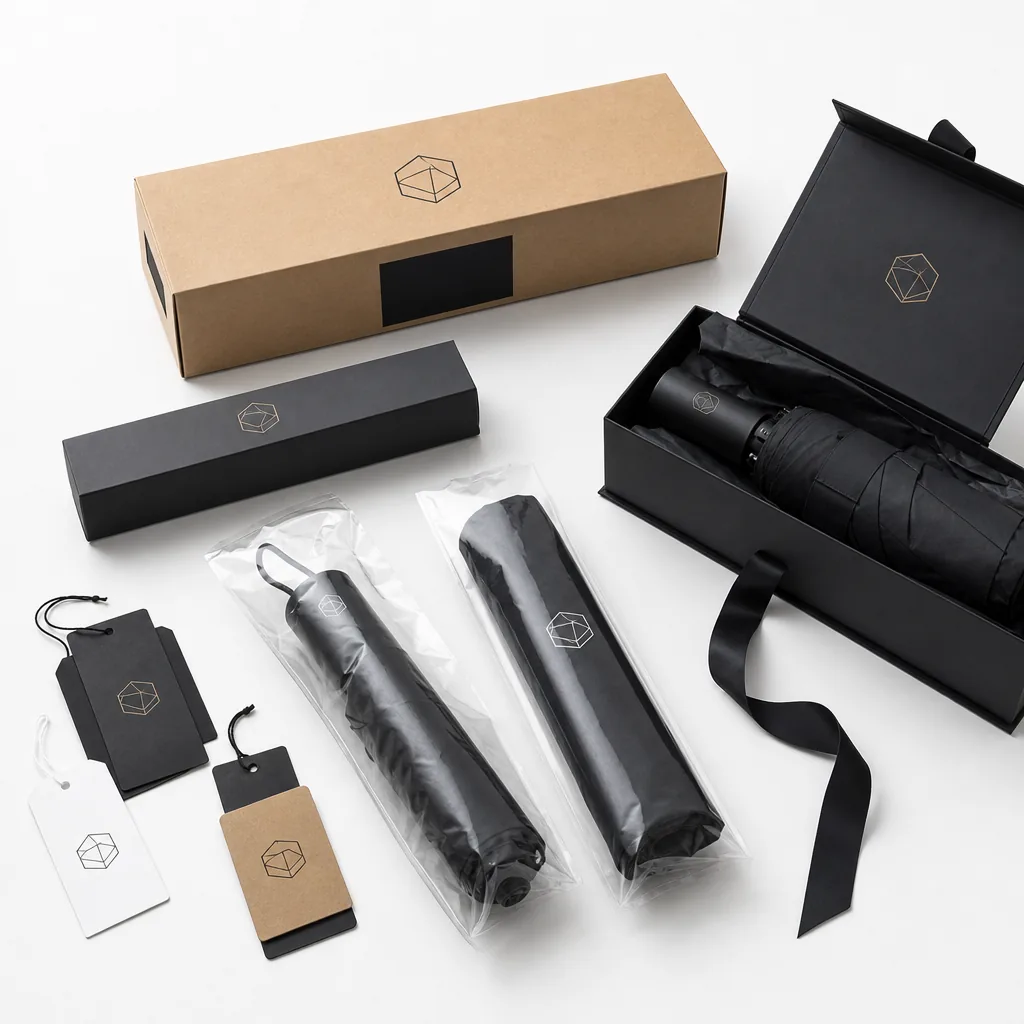
Packaging should speed staff issue, protect retail presentation, and avoid extra hand assembly. If product will ship into EU, North America, and Asia programs, lock multilingual packaging copy early, but keep the structure lean: a printed sleeve for SKU identification, a hangtag with icons for open mechanism, wind-resistant frame, and care, and a short multilingual insert only when retail display or customs requirements justify it. If sun protection is part of the offer, call it a UPF 50+ umbrella only after fabric testing confirms the claim. Keep operational stock and retail merchandise under separate SKUs even when canopy art is similar; that reduces picking errors and protects replenishment planning. Daily-use stock is usually best on 23-inch or 27-inch fiberglass frames with simple manual or auto-open construction and replacement-friendly parts. Retail versions can add a wood-look handle, matching sleeve, or giftable hangtag, but every upgrade adds packing variation and lead-time risk. To keep production manageable, cap handle choices at two or three standard options, use a self-fabric sleeve with a woven label or heat-transfer logo, and place route maps, QR codes, barcodes, and story content on the hangtag instead of spreading them across multiple packaging components.
Supply Planning Before Peak Season
For branded umbrellas for tour operators, the main peak-season risk is frame and print capacity, not canopy sewing. As spring and summer tourism orders stack up, 8K and 16K frame allocation, custom handle sourcing, and print-line slots tighten first across Songxia factories serving tour, resort, and promotional buyers. A practical MOQ is usually 300-500 pieces per color for a standard 23-inch or 27-inch straight umbrella. A custom-molded handle or a nonstandard 16K umbrella frame typically raises MOQ to 1,000 pieces or more because tooling, component matching, and slower replenishment add cost and supply risk. If you are sourcing sightseeing tour umbrellas for several city programs, keep the same frame, shaft, and 190T or 210T pongee canopy across colorways to pool volume and lower MOQ pressure. Standard fiberglass-rib manual-open or auto-open builds are easier to restock in season, and replacement ribs are easier to match than mixed-spec programs built around special trims.
Sample approval is where lead time and defect risk are controlled. A plain fit sample usually takes 3-5 days; a branded pre-production sample with screen print, heat transfer, or Pantone-matched panels normally needs 7-12 days after artwork approval. If the spec includes a UPF 50+ umbrella, confirm the coated or tested fabric during sampling rather than relying on canopy color alone. For walking tour umbrellas, approve both look and function: opening force, runner alignment, stitch density at panel joins, ferrule fit, canopy tension, rib symmetry, and stability in gusts. Final inspection should follow AQL 2.5, with checks for logo position, color consistency, print adhesion, and open-close performance. For spring peaks, book bulk production 35-50 days before ex-factory for standard specs, or 50-65 days for custom packaging, retail sleeves, or split shipments. FOB works best if you are consolidating stock through your own forwarder across multiple ports or countries; DDP is better for franchise partners or city depots that need landed delivery, but it requires earlier confirmation of carton marks, consignee data, tax details, and each ship-to split.
Frequently Asked Questions
Is a 16K umbrella better for sightseeing brands than an 8K umbrella?
A 16K umbrella often looks more refined and can suit premium city-tour branding. An 8K umbrella is usually more cost-efficient and widely available, so it may be the better fit for high-volume operational programs.
Should tour operators buy one umbrella style or multiple SKUs?
Many operators benefit from at least two SKUs: a compact operational umbrella and a more premium retail or VIP model. That split helps control cost while matching different guest and merchandising needs.
What canopy size works best for walking tours in dense city centers?
For most walking tours, a 23 to 27 inch straight umbrella gives enough coverage without crowding narrow sidewalks or crosswalks. If guides carry one umbrella as a visual marker, many buyers choose a larger 16-rib style for visibility while keeping guest umbrellas in a more compact size.
How far ahead should tour operators place umbrella orders before peak travel season?
A practical window is 60 to 90 days before the season starts, especially for custom canopy color matching and printed logos. For OEM orders with new packaging or molded handle details, buyers often allow 90 to 120 days including sampling, production, and ocean transit.
What specifications matter most for umbrellas used in both rain and high-UV sightseeing conditions?
B2B buyers usually ask for pongee or polyester canopy fabric with a black UV coating, tested UPF 50+ performance, and a fiberglass frame for better wind resistance. For daily tour use, it is also common to request manual-open straight umbrellas with replacement-friendly construction and MOQs starting around 300 to 500 pieces per style.
Looking to Launch Your Custom Umbrella Line?
ZheBrella is a Zhejiang-based OEM/ODM umbrella manufacturer with 17 years of export experience. Free design, low MOQ from 100 pieces, windproof construction, full-color print.
Get Free Quote Now »People Also Search For
Related Articles
Umbrella Programs for Tourism Operators and Sightseeing Brands
Learn how tourism brands use branded umbrellas for guest comfort, wayfinding, and retail sales with durable specs, MOQ, ...
Read More »
Branded Umbrellas for Cruise Lines and Tour Operators
Source cruise and tour umbrellas for shore excursions, onboard retail, and VIP service with compact specs, wind resistan...
Read More »
Branded Umbrellas for Outdoor Recreation Tour Operators
Source umbrellas for tour operators with windproof frames, UPF 50+ shade, compact packing, and lead-time planning for gu...
Read More »